





Your email address is required to begin the subscription process. We will use it for customer service and other communications from Milk Street. You can unsubscribe from receiving our emails at any time.
Episode 816
August 1, 2025
Originally aired on July 25, 2024
August 1, 2025
Originally aired on July 25, 2024
Welcome to Our Cocktail Hour! Bourbon Myths, Martini Crawls and Mixology Tips
It's a very happy hour of Milk Street Radio: Chef Edward Lee returns for a tour of Kentucky’s bourbon distilleries, where the water is sweeter, the barrels are (accidentally!) charred, and the rickhouses are sacred territory. Plus, Gary Shteyngart recounts his wet, dry, twisted and dirty martini tour of New York City; Grant Barrett and Martha Barnette of “A Way With Words” reveal the surprising origin of the word “cocktail”; and J.M. Hirsch offers an innovative mixology tip.
Questions in this episode:
"Help me nail down my basic vanilla ice cream recipe."
"How can I make my portobello mushroom caps cook up like hamburger patties?"
"I was blessed with a plethora of lobsters and I made a lobster stock - what should I use it for?"
"Do you have any suggestions for what to make with moonshine peaches?"
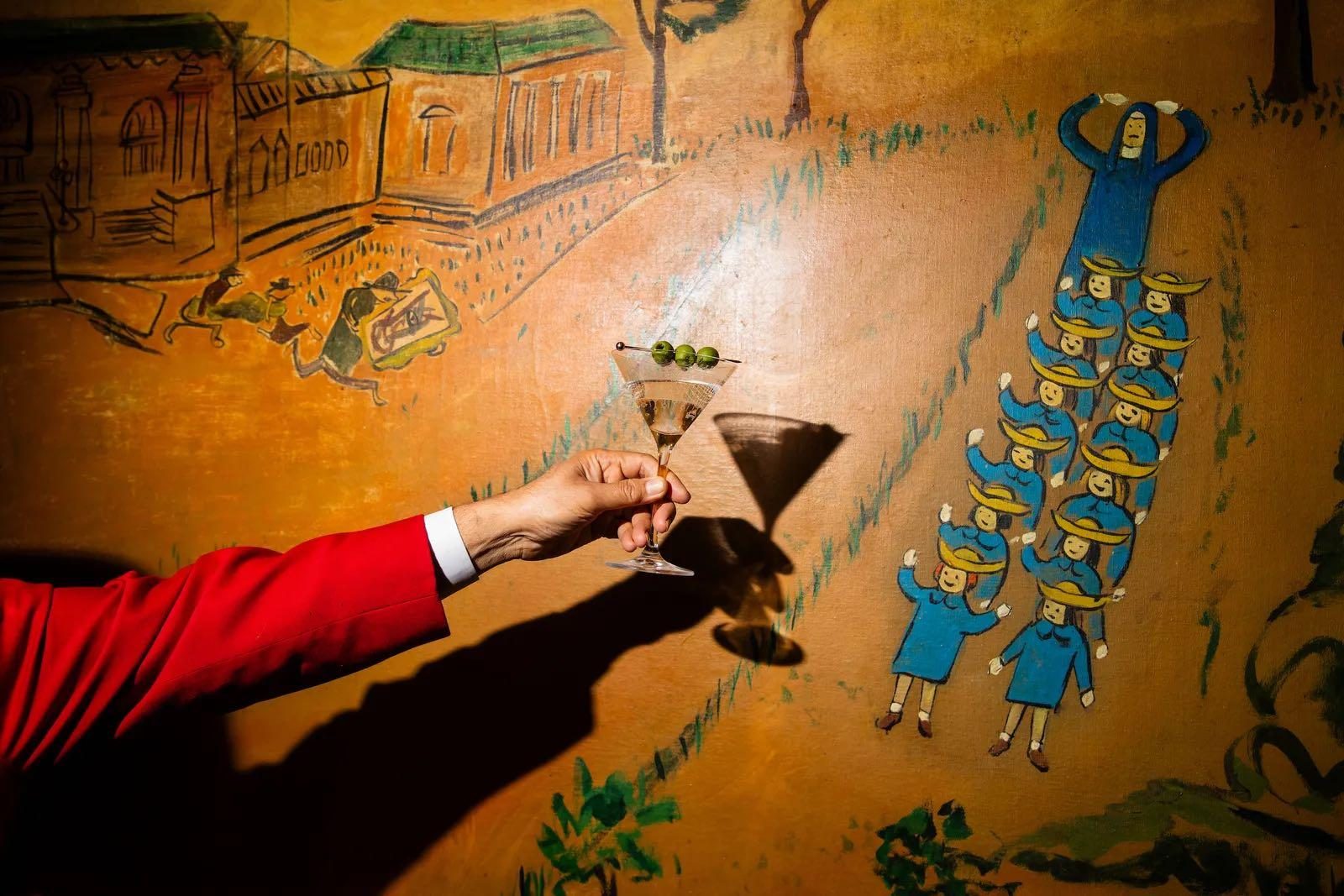
Christopher Kimball: This is Milk Street Radio from PRX. I'm your host Christopher Kimball. Today we're considering the cocktail from distillation to garnish. Every drink has a story, and then includes the happy accident that created Kentucky's signature smokey bourbon.
Edward Lee: One of the legends or stories goes that guy was sleeping on the job. Toasted the barrels too long till they burnt and didn't tell anyone and just kind of snuck it into production and they threw the whiskey in there. And lo and behold, someone said, Wait, this is actually delicious.
CK: We'll get to Bourbon later in the show up first, we're starting with a classic.
Jill Masterson: Can I do something for you, Mr. Bond?
Sean Connery (James Bond): Just a drink. A martini shaken not stirred. Won’t you join me?
Jill Masterson: I’m on duty. I'm Mr. Goldfinger’s personal client.
CK: We're joined now by Gary Steinguard. His article for The New Yorker is called A Martini Tour of New York City. Gary, welcome to Milk Street.
Gary Shteyngart: Thank you. Great to be here.
CK: So, I know people who are martini fanatics. I'm an old-fashioned fanatic. And I have extremely severe opinions about exactly how my drinks should be made. And the martini people I know, maybe you're one of them. Also feel very strongly that there is only one way to make a martini. So, you go on a martini crawl, and it seems like a lot of the things you're drinking would not be classified as a martini. There's something else entirely. So how do you juxtapose those two things sort of like the perfect martini with a martini crawl? Where you're you're drinking things that most normal people would not even say as a martini?
GS: Yeah, that's an interesting question. I mean, I think as my friend Adam Platt, the well-known food critic, a phrase that he said for him, the perfect martini is no bells and whistles, very simple delivery system of gin and vermouth with vermouth playing a very minor role. This is something you learn when you enter Martini land. And then of course, there's all you know, people can't just let something go and say, okay, this is the perfect drink we’ll stop now, they need to create many, many variations. There's, for example, something that's very popular with our constantly driven culture is the Espresso Martini, because people need Yeah, well, people need some kind of Red Bull variant where there's both alcohol and caffeine at play. I think it's because these people work really hard. I don't I'm a writer, I don't do much at all three hours, and I'm exhausted of work. I tried an Espresso Martini when I flew in from Asia and needed to do a bunch of stuff the next day. So, I had a couple of those. I just made me more of a wreck, honestly.
CK: Okay, so explain the crawl. So, you over what period of time, where were you, how many places did you go? Who did you drink martinis with etcetera?
GS: Well, the crawl took place over I think, weeks, if not months. And it began with my friend, Amor Towles who's a great writer. He lives right next to me. He's a big drinker of martinis. And I asked him, I said to him, where do you want to go? And he said, Chelsea Hotel, the bar there still does an incredible Martini. And what they've done is they have taken over the Martini from Dukes in London. And what that recipe is, and the reason I think it's so clear, crisp and cold is because they do a vermouth rinse, then they toss it out into a glass. In the old hotel, at Dukes in London, I think they actually would throw it onto the carpet. That's the legend of it. So that would create a very kind of cinematic thing, right when you're just going to toss it out on the carpet. And you know, it's very hard when you start out with the best you really kind of your mind is blown and it's wonderful. Then I went out with my friend, the actor J. Smith-Cameron, recently known as Jerry on succession. She's a great Martini drinker. She took me to a place Gotham, which was great. And Billy, the bartender is just amazing. And he's very old school. He believes in vermouth. He's a vermouth aficionado. So, then I went out with Adam Platt. He's great. He's kind of he said, you know, the thing a wasp likes the most as a big ass Martini. And then he proceeded to have many many big ass martinis with me. We started out at Tigre, which also is one of my favorite two or three places. There we had a drink that was very interesting, called a cigarette. It's somehow, I don't know how the hell they did. This combines things in a way that you feel like you're both drinking a vodka martini and having a cigarette at the same time, and I've stopped smoking cigarettes a long time ago. There's some kind of emulsion they use from ice slammed I wouldn't say but that's probably not even true. It really you feel so naughty as a former smoker. I don't know. It's incredible.
CK: I'm glad you find that appealing because I think, I don't know, having a martini that reminds you of your college habit of smoking two packs of Camel's a day. I'm not quite sure how that stands up. So, here's one. The Au Poivre, so you get the green peppercorn in there.
GS: Yes. And peppers and martinis I find are incredible together. I don't know what it is. One of you know, I also love thinking about which dishes go well with martinis. I love having like a few shishito peppers with martinis it really makes it come alive with the Au Poivre obviously, the peppers kind of introduced into the Martini. Really delicious. One of the best places we haven't talked about yet, but a place called Dante's and they just do this incredible homemade bread with this home churned butter. Again, so simple, but just Oh, I could I mean, it really, you know, also when you're having like I did, maybe 10 martinis a night, which I did on that particular crawl you really need, as my friend Matt ___ would always say protein layers.
CK: Wait, wait wait. You had 10 martinis in one night.
GS: Well, it was a long night. It was from about five till midnight. So yes. And it was funny because at the end of our crawl, I said, Matt, you know, I’ve got to hydrate and he said, Yeah, yeah, we should. And then he asked the waiter, he said, to gin and tonics, please. That was his idea of hydration was putting a little tonic into the gin. So yeah, that was that was I gave a lot to the New Yorker. That was a lot.
CK: So, were you able to walk home or get into a cab or, or something else at the end of that night?
GS: As a as a Russian? I can do that. Yeah, I can do that. I mean, my ancestors drink turpentine and shoe polish when they couldn't find vodka. So, this was okay for me. Yeah.
CK: If you were to give a recipe for your ideal martini. What exactly? I mean, I know there's lots of options but if you reduced it down to your idealized martini, what is that recipe?
GS: The vermouth I prefer is Noilly Prat and I just coat the glass. Now, let me tell you about glasses. I am firmly in the idea now that a coupe is better than a traditional martini glass. Although there's something obviously, you know, the martini glass is such a symbol of things. It's you're trying to find the lounge in an airport and you're looking for that big Martini sign because usually lounges come with that sign. But a coupe contains, first of all, there's I mean, unless you have a very small martini glass, there's a very small amount of gin that will go in there. But also, I drink a lot outside while I'm walking around talking to friends if I throw a party, so the coupe glass is very important I feel.
CK: The coupe glass is important if you're outside and walking around, because you don't spill it or because?
GS: Yes, because I don't spill it okay. (Yes) because if I have a martini glass half of it is going to be on my hand. And then in desperate moments, I'll even end up licking my hand which is not a good look, when you're throwing a party. It's just very sad to see a man like a dog laughing at his own appendage. So Noilly Prat washes out the glass, then is tossed into a sink. Then I will pour a Tanqueray 10, then I will peel a little bit of lemon, espresso it slightly over the glass, maybe take it around the rim once or twice. And that's it. Oh, and I'm sorry. The vermouth is in the refrigerator. The glass is in the freezer, and the gin is also in there.
CK: So, what I love about the old fashioned is you have to get the shaker and the ice and then you have the bitters, and you have the cube of sugar, and you have to muddle them. And then you have to shake it and then you have to strain it. And then the sound the ice cubes make in the your beautiful old fashioned, double old fashioned glass. All of those things for me are part of the old-fashioned experience the martini is is the purity of the experience the experience.
GS: I used to use a shaker quite a bit. Well, actually. I was more of a stirrer than a shaker. I'm sorry, Mr. Bonds. I don't know. I've seen so much and heard so many shakers in my life that I think I can almost create that soundtrack in my mind as I do this shaker less thing. But I understand especially for younger listeners, I understand that you may want to do this that way. One of my favorite bartenders in New York who was at La Rock, she just moved to a wonderful weirdly enough a Korean fried chicken champagne bar that's very popular in New York, but she's the mixologist there. It's very very fancy and kind of almost like a club. Very cool. She shakes oh my god. I mean she it's like a performance you know, there's something very performative about that she has great percussive skills, because she does this really beautifully in a way I could never do. And again, I was more of a stirrer than a shaker, but I'm very impressed by that. But yeah, for me now, I just want, you know, it's a question of the journey versus the destination. I'm 51. But in Russian years, that's like, 107, you know, so I've seen it all, heard it all. I'm just ready for an excellent Martini now.
CK: Don't give me the 51 year you're old. You're a kid.
GS: In Russia. I'd be settling my affairs such as they were by now. You know, I'd be sort of saying who gets the shaker who gets the vodka. Who gets everything
CK: Martin Scorsese. He's in his 90s. He's still doing movies. Come on.
GS: Yeah, but he's Italian. This is a different genetic genetic set.
CK: Gary, thank you very much. We've got the best martini. We've got the weirdest martini and we've got plenty of places to go in a martini crawl Manhattan. Thank you.
GS: Thank you so much. What a pleasure it was.
CK: That was Gary Shteyngart, author of The New Yorker article on Martini Tour of New York City. Now it's time to take your calls with my co-host, Sara Moulton, Sara is of course the star of Sara's Weeknight Meals on public television, also author of Home Cooking 101. Sara, so this is alcohol day here at Milk straight talking about cocktails and booze and other stuff. Are you a Barfly? Do you like to sit in bars? Is that something you do I see you more sort of a wine bar person than a real bar person.
Sara Moulton: Well, you know, there's bars, and then there's the bar in a restaurant. And I'm huge fan of the bar. (Me too). You know, like when I'm traveling, a lot of times, I love to sit at the bar and read a book and have a glass of wine. And recently, my daughter who's become a mental health professional, and is overwhelmed you know, as you are in the beginning, we try once a week to go and sit at a bar, and she'll have a cocktail, and I'll have a glass of wine. And there's something about sitting at a bar that just, I don't know, it feels like it's so conducive to conversation.
CK: When my wife and I go out for dinner, like twice a year, whatever it is now, (well you're in the trenches with the little guys). Now we always sit at the bar in a restaurant.
SM: There's just something I feel like I'm in Casablanca or something I don't know,
CK: Well, there's something about sitting at a table across from someone. I feel like I'm on some awful cruise ship or something. There's something too formal about it. At a bar, you're sitting next to each other. You can talk to the person behind the bar, (right) It's more convivial, there are people at the bar. Sometimes there are people standing behind you. It's more relaxed, it's more fun. You feel like you're more part of the restaurant. I don't like being served particularly. So, I don't like the idea of being a guest, it's like I don't like the idea of being a tourist even though I’ve spent a fair amount of my life being a tourist. If you're at the bar, you feel like you're more like part of what's going on. Yeah, I agree with you.
SM: Yeah, I agree with you. It's more casual.
CK: It's the only thing I would do is drink a cocktail instead of a glass of wine but.
SM: That's all right. My daughter drinks the cocktail. She does it to us. Yeah, she does. She does. So it's all good. Yeah.
CK: All right. Let's take some calls.
SM: Welcome to Milk Street who's calling?
Caller: This is Anthony Howe in New Richmond, Wisconsin.
SM: Hi, Anthony. How can we help you today?
Caller: My question is about ice cream. A couple of years ago, my wife bought me a canister style ice cream maker kind of ___Blue was a really nice thing to do, because I eat a lot of ice cream. And I've gotten a lot of use out of it. But it's been a little torturous, just in one respect. And that is that I can't nail a basic vanilla base ice cream. The result is always less than smooth, because of the size of the ice crystal from what I understand. Chocolate ice creams, however, always turn out great. But vanilla ice creams not so much. always a struggle.
SM: Well, let's start with what's your recipe.
Caller: I think it's pretty standard. So, it's a cup and three quarters heavy cream, one and a quarter cups milk, half a cup of sugar, vanilla, about a third of a cup of light corn syrup, little salt and then six egg yolks.
SM: You make a custard right?
Caller: Yep, pretty standard. Heat the milk, cream, sugar corn syrup to about 175 degrees. Temper the yolks add the yolk mixture back, heat that to about 180 and then I've tried a method before that has me freeze about a cup of the custard and then refrigerate the rest and then before you go to turn that you combine the two which is supposed to like super cool that mixture so that when you go to churn it, it doesn't take nearly as much time to get that down to temperature that has helped maybe a hair but not notably so. the faster
CK: The faster you freeze, the smaller the crystals but
SM: But but it's not working for Anthony here. So frankly, everything you said just now sounded right. I mean, I was wondering If you didn't have a high enough fat content, you're using heavy cream, I was going to suggest you add corn syrup, you're adding corn syrup, I was going to suggest you make sure the customer is really cold before you freeze it, you're doing that.
Caller: And honestly, the vanilla ice cream is fine. It's just not as good as I can get with a chocolate ice cream with a 10th of the effort. It’s just kind of irksome.
CK: I can solve this for you in about 10 seconds. And it wasn't my idea. Go buy a cookbook from Gjelina restaurant in Venice, California G-J-E-L-I-N-A Gjelina. And they have a recipe for ice cream in that book, which I think it's honey ginger ice cream, but it's essentially a vanilla ice cream. And there are two things about it that are remarkable, it uses creme fraiche, a cup of creme fraiche, a cup of half and half. And you don't have to make a custard. You heat up the milk the half and half and add it to the yolk mixture, etc. But you don't have to actually cook a custard on top of the stove and the creme fraiche there's a little science to it, but it essentially acts like a stabilizer, which means that it lowers the freezing point of water. So, it's absolutely tremendous. (no eggs?) It has eggs, but you don't have to cook a custard on top of the stove. You heat up the half and a half and pour it into the rest. So, it's easy to do. And you get this amazing texture out of it. You know, I could go into the science, but I'm not sure I really understand the science, but Gjelina is a great place and it's a great book.
SM: Okay.
Caller: That's super. That’s music to my ears.
CK: Yeah, it works great.
SM: All right, Anthony.
CK: Take care.
SM: Yes.
Caller: Well, thanks. You too. Take care. Bye. Bye.
SM: Bye.
CK: This is Milk Street Radio. If you have a question, give us a ring. We're here to help that number 855-426-9843. 855-426-9843 or simply email us at questions at Milk Street.radio.com Welcome to Milk Street. who's calling?
Caller: Hi, this is Joe K__ from Massillon, Ohio,
CK: How can we help you?
Caller: Well, I would like to know how to prepare portabella mushroom caps to be like a hamburger patty. When I do it, they are tough, and they don't get juicy and full of umami. And I've tried several ways of handling it, discovered how to marinate them and how to score them. And I've done all that. They're still chewy and stringy and I was wondering, what am I doing?
CK: Well, the first question I would ask is, are you starting off with a tried out portobello because you may have already started with a portobello. It's way past its prime, it's dried out, it's going to be leathery. Couple things, I would probably sauté them in a sauté pan, obviously, probably with a combination of oil and butter. Do not salt them until you're finished cooking them because otherwise, that'll drive a lot of the moisture out. And I would not overcook them. You can grill them, although they'll tend to be a little drier. Just crosshatch the tops and grill them pretty quickly, I think fat in a pan and add the salt at the end and make sure you're starting with a fresh portobello. If you're storing a portabella, throw in a paper bag with a wet paper towel inside, don't put it in a closed container and use it as fast as you can. But those will be my three thoughts.
SM: I'm wondering if maybe you're overcooking them a bit. I'm wondering if maybe you're overcooking them a bit. How long do you cook them?
Caller: I have done mine on the Foreman Grill
SM: and you cook them until what?
Caller: Well, you know, I oil to grill. And then I've marinated them for 30 minutes in Italian salad dressing. So, it's got oil on it. And then you know I let it drain and then I put it right on the grill surface and close the grill and cook them for five minutes.
CK: I would think that marinade may end up steaming
SM: Let me just say Chris, it's here's the thing. I have two recipes for portobello burgers or whatever and two different cookbooks. And both of them are marinated. But they come out pretty tender. Foreman grill is sort of two grills, right. It's one on the bottom one on the top. Is that right?
Caller: Correct
SM: Yeah, I think you might be overcooking them. I don't know. So, I boil them but I boil them in till a knife goes through easily and no more. And they do get tender and they're always juicy. So,
CK: I think Sara's right
SM: I think probably the problem is that you're over cooking them inadvertently.
Caller: I will definitely try your methods.
CK: Cook them in a pan with some fat.
SM: Yes. And I liked the idea that you're making your own marinade which does have fat and it has the oil in it. So, mushrooms even though they're like 80 90% water, absorb every last bit of that liquid. It's dry when I take them out. They've retained that liquid in that flavor. And as long as you don't overcook them, they're going to be good and just do the old knife test.
CK: Well, we hope that's somewhat helpful.
Caller: Absolutely. I'm going to try both your suggestions and I know eventually I'm going to be able to make them and I will enjoy them, and my kids will as well.
SM: Well report back also.
CK: Yeah, we'd like to know
SM: Yeah, we'd like to know.
Caller: Okay, thank you. I certainly shall.
SM: Thanks, Joseph.
Caller: Thank you so much.
CK: You're listening to Milk Street Radio after the break why bourbon tastes better in Kentucky? That's in just a moment. This is Milk Street Radio. I'm your host, Christopher Kimball. Everyone knows that the best peaches come from Georgia and the best blueberries come from Maine. But if you're searching for bourbon, you have to go to Kentucky. Chef Edward Lee has sipped his way through Kentucky's distilleries, and compiled his research into his latest book, Bourbon Land, a Spirited Love Letter to my Old Kentucky Whiskey. He joins us now. Edward, welcome back to Milk Street.
Edward Lee: Thank you. Thank you for having me.
CK: So, one thing I love about your book is that you answer all these questions like where the word proof came from. But my favorite is why the barrels were charred originally. I thought that was really interesting.
EL: So, there are tons of different stories about why it's charred on the inside one of the stories is, barrels are expensive. And so, you stored everything from nails to fish in it. And then once it was over, you would charge the inside to get rid of flavor. And then you know, add the bourbon and another story goes well, in the old days, you'd have to toast the wood stays to get them to a certain temperature so that you can bend them into the barrel shape. And so, one of the legends, you know, myths or stories goes that guy was sleeping on the job. And they toasted the barrels too long till they burnt and didn't tell anyone and just kind of snuck it into production. Then they threw the whiskey in there. And lo and behold, someone said, wait, this is actually delicious. And what I love about bourbon is that there is so much of this lore. And I love the fact that in this day and age, there's still some things that are just unknown and they never will be figured out because we didn't have a recorded history of it.
CK: So, the unaged distillate, the bourbon is called white dog or white lightning or moonshine, which you talk about having tasted. I once had someone worked for me from Kentucky. She brought me out a jar of it for Christmas and I was shocked because I thought it was going to be rough. Right? It was really smooth. I mean (it’s delicious). Yeah, it's really good. I would like god why don't I get more of this though. And you write up you say this this on age distillate is so sweet. It makes your teeth hurt. It's reminiscent of candy corn and shoots through your insides like a jolt of fire.
EL: Yes. And you know, if you drink that white lightning, that white dog next to let's say a five-year aged bourbon. It's incredible to see the transformation that happens over years in a barrel. You're like the corn mellows it picks up all this leather and hay and butterscotch like all these flavors are just incredible. It's like magic to me.
CK: In wine, obviously terroir is everything. But terroir, and I know this is about Kentucky, but the corn is like cow corn. It's like dead corn. It's very starchy. Does it matter where it's grown? Because I've never heard many people talk about terroir in bourbon. I mean, they sort of do they talk about, you know, Kentucky's got the best bourbon. But is there any terroir there or corn is just so unlike grapes, it doesn't matter.
EL: Depending on who you ask. You'll get different answers. In the olden days they didn't care about it. They just you know, they got field corn from wherever they would, they could buy from, you know, some of the old timers would say doesn't make that much of a difference once you you know, distill it and age it, others argue that it does make a difference. And so that's the exciting thing about bourbon right now it's it's really going through this transformation and getting very specific about the terroir, everything from the water, which does make a huge difference to the corn. But then, you know, there's terroir in the fact that you need four seasons to age bourbon, right? Because in the winter, the wood contracts, the liquid goes into the wood. And the summer, when the wood expands, liquid comes out, and you get you know, what they call a cycle, right? And this is why, for example, you can make bourbon anywhere in America. But if you're making bourbon in the Pacific Northwest, you're not going to have as much of that seasonality as you do in Kentucky. So, in that sense, I think it’s very much terroir driven.
CK: So, what's going to happen with bourbon? There's so many different brands and labels out there right now, are we at the point where it's going to have to see some winnowing out because there's just too much out there. And it's, you know, when there's more supply than demand or too many different brands?
EL: I don't think that we've reached peak bourbon just yet. Right now, demand is very much bigger than supply. But right now, you know, there's varying degrees of success in the bourbon that I see being made outside of Kentucky. And I don't say this just because I'm from Kentucky, but Kentucky bourbon is better just because they've had a 200-year head start. And so, part of this book is also a bit of a love letter to Kentucky, and sort of planting a flag and saying, you know, this is the rich heritage of bourbon is from here. So, I think it's important to understand the touchstone of bourbon, the base the foundation words from the heritage, and that's Kentucky bourbon.
CK: Well, I noticed that in that quote, at the beginning of one of your chapters from Andrew Jackson, I've never in my life seen a Kentuckian who did not have a gun, a pack of cards and a jug of whiskey. So there was I mean, there, there's bias is the wrong word. But as you say, it's sort of the touchstone for the industry. So, there is some romance about Kentucky and bourbon, right? I mean, quite a lot of it.
EL: Oh, I think it's 90% romance. It's a beautiful thing. And, you know, it's funny if you live in Kentucky bourbon, I think for most of the world, Bourbon is an, it's a spirit, it's a cocktail, it's a drink, and here, you know, like, it's a lifestyle. You know, it's people, people live it, people breathe it
CK: Wait, wait, wait, wait, wait, how do you live the lifestyle of bourbon? I don't even know what that means
EL: Oh, come join me for a weekend. My good, sir, I'll show you.
CK: Let's talk about the bottles and the labels. So, what is it I should look for on the label? Let's start with proof.
EL: Yeah, so proof is obviously the strength of alcohol. Most of the time and entry level, you're going to see like 80 proof 90 proof is pretty decent, you know, entry level, then you'll see things that are barrel strength, or single barrel sometimes, they’ll write. And so, a lot of times the proof will be sort of handwritten on there. Because each barrel, they evaporate at different levels, right, depending on where in the rick house it is. And so that evaporation will affect how much alcohol is left in the barrel. So, some are very high proof somebody and I've seen bourbons that are 128 proof. That's a really hot, strong whiskey. And if that's not your thing, then don't do that. Because it's really burns going down. Some people like that.
CK: So today, in the 21st century, different barrels in different spots in the Rick house will evaporate at different rates, depending on the temperature with a position where it is well I would think at this point that so temperature controlled. Are these not no, no temperature control?
EL: No. None of the Rick houses in Kentucky have a narrow and air conditioner in there. Now. It's all done naturally.
CK: Why is it called Rick house by the way
EL: Basically, a Rick house is a huge warehouse with windows. And they're just if you ended up it's one of God's most loveliest places on the planet when you wreck house, because you can smell like you know, 1000s and 1000s of barrels just slowly aging and the smell is intense and addictive. And what happens is so if the obviously as you go higher up on the brick house, it's warmer than it is on bottom. The barrels are closer to the windows, get more sunlight will evaporate faster. So, the barrels, you know on the ground floor in the middle will evaporate slower. So, what the master distiller does, he or she has to go around, taste all the barrels and then blend them to make the same flavor whiskey that was in that bottle last year. It's an incredible thing, but most of the work of flavors still done by hand and taste.
CK: So, a lot of the names of these bourbons come from real people like Pappy Van Winkle. I was surprised there was a Basil Hayden and there was a Blanton.
EL: Yeah, so Pappy van Winkle was a real person. And his picture is on the label. And, you know, Old Crow is named after Doc Crow (really?) And so yeah, and it was like, I've been drinking this forever thing. Oh, it's just named after a bird. Actually, it was named after someone who was integral in inventing the process of distilling bourbon. Jim Beam, James Beauregard Beam was a real person. And so, it's fascinating when you when you start to look at the history, I mean, people were farmers and preachers and ministers and missionaries. And they all made whiskey on the side, because that's what you did. And they grew this thing from literally a backyard hobby into this huge industry that it is today.
CK: So, let's talk a little bit about prohibition that went on from the early 20s to 1933, whatever it was, Does that just mean there was just a ton of moonshine being produced? What how did that affect the bourbon industry?
EL: Yeah, so bourbon has always had this huge, let's say fight or, you know, frustration with with government regulations. You know, people were not going to stop drinking alcohol during Prohibition. And so it created a huge underground market. And the mafia also in places like Chicago and New York, figured out ways to drive down to the country, pick up these barrels and then drive it often at night, under the light of the moon, you know, hence the name moonshine, and bring it back to all the like speakeasies and underground bars that were serving it. And so, they needed cars, that could outrun the cop cars and little-known fact that these cars were all souped up and, and that's the birth of what we now know as Nascar.
CK: Let's do a couple of drinks. The Lapsang souchong Manhattan. interested me and the Bouvier also. The two that sort of stuck out in your book.
EL: Yeah. So, I had this theory. So, bourbon has lots of different flavors in it, right? Everything from the sweeter flavors like dried fruit and butterscotch and caramel to things that are more earthier, like hay and leather. And using the black tea makes you take notice of how smoky bourbon is. Obviously, it's being added in accentuated by the black tea, but it goes so well together and it kind of just like brings it all out in a little bit. You know, one of the other things that we do is we do a peanut butter washed bourbon. And it just is so delicious. And it kind of just brings out the nutty characteristics of bourbon, you just start to notice like oh, yeah, it goes really well with nuts. And I think that's the beauty of bourbon is that you do have so many different flavors to play with.
CK: Bourbon onion jam also really appealed to me. I like making a quick jam sort of sweet and sour Onion Jam. And you also have bourbon pork chops, which makes sense to me. But I really the bourbon soy butter seems to me like one of those master recipes you could use for so many different things, right?
EL: It's so versatile. I literally use it on everything. And one of the things, you know that that there's a lot of bourbon cookbooks out there. And I don't know for lack of a better word, it’s like a lot of the bourbon cookbooks are like masculine. You know, it's like we're going to grill and we're going to barbecue and we're going to add some bourbon to our Jack Daniels barbecue sauce. And that's fine. And I do some of that in this book as well. But I really wanted to explore him like there's so many ways to use bourbon. And I feel like it's a shame to just reduce bourbon to barbecue. One of the things like you know, you can cure salmon with it, it goes well with bass it goes well, you know, with a with a grilled cheese sandwich, like we have a recipe for corn ice cream, corn and bourbon ice cream, which is fantastic. And then lo and behold, it kind of works well with Asian flavors. We have another butter, it's like a bourbon and miso butter. In the book, we melt it over a roasted sweet potato, that bourbon that it just like takes it over the edge for me. And I always say like, you know, these people spend a lot of years and a lot of expertise making this fantastic tasting thing in a bottle. And it's kind of you can cheat your cooking because you're taking this thing as packed with flavor and just adding it to your recipe and it just adds a level of smoking, smokiness, and age and umami. And it just adds that deeper flavor to anything that you use it.
CK: I’ve got my bourbon butter in the fridge my bourbon vinaigrette. I'm all set to go. Edward, thank you. This was a really fun book. I really loved it. Thanks.
EL: Thanks, I really appreciate it
CK: That was chef Edward Lee, author of Bourbon Land. You can find his recipe for roasted sweet potato with bourbon miso butter at Milk Street Radio.com. Bourbon and beer have something in common. A few big distilleries make many small brands. For example, Pappy Van Winkle is made by the same distillery that makes Blanton's Buffalo Trace, Eagle Rare and Weller. Jim Beam has the same producer as Knob Creek, Booker's Basil Hayden and Old Crow. And the same is true of course of beer. Heineken owns Newcastle Brown, Red Stripe Murphy's Irish stout. Cronenberg fosters the list goes on. So, everyone says that the small things in life are really the most important and that's because at least here in America, though small things are actually quite big. You're listening to Milk Street Radio coming up how horse racing helped invent the cocktail, that's when we continue. I'm Christopher Kimball and this is Milk Street Radio right now Milk Street’s JM Hirsch is here to step up your happy hour.
J M Hirsch: Want to make a more flavorful cocktail, all you need is a blender. But don't worry, we're not making frozen daiquiris. Not that there's anything wrong with that. Now we're going to do what's called a speed infusion. Now this is where you take a really flavorful ingredient. And you infuse its flavor into a liquor such as say vodka or gin. The benefit of this is that you add the flavor of that ingredient without adding anything else. Like for example, if you wanted to add lemon flavor to a cocktail, traditionally, you might add lemon juice, but that juice adds liquid to the cocktail, it also adds acidity. But we're going to do just takes the flavor out of the lemon. So, here's how it works. It's really simple. Take a cup, let's say a vodka, put it in the blender, then you're going to choose your flavor in green. This should be something that you want to build a cocktail around. So, lemongrass is a great example. Or citrus zest, orange or lime or fresh herbs such as basil or rosemary or fresh ginger. You put a bit of that in the blender with your vodka or liquor, put the cover on and then pulse it for maybe 5 10 seconds. Now the important part here is you don't want to puree it just looking to chop it up. Then walk away for two or three minutes. Just let it steep. Strain it out and then use the now infused and very flavorful liquor to make your cocktail. With lemongrass for example, I make a lemongrass vodka martini, throw a little bit of dry vermouth in there and is wonderful. It's such a simple way to add tons of flavor to whatever cocktail you're making.
CK: For more cocktail inspiration, please go to Milk Street Radio.com I'm Christopher Kimball, you're listening to Milk Street Radio. Right now, my co-host Sara Moulton and I will answer a few more of your cooking questions.
SM: Welcome to Milk Street who's calling?
Caller: Hi, this is Roseanne. How are you?
SM: I'm good Roseanne, how can we help you?
Caller: So, I was blessed with a plethora of lobsters courtesy of a gift from my dad. I couldn't just sort of toss all the shells and there was still a bunch of goodies in the legs and in the caribe. So, I decided I was going to make a lobster stock. And the stock itself is phenomenal. But you know, I'm not a person who really likes heavy bisques and all the cream-based soups. And so, I wanted to talk to you guys to see if you had any recommendations about how I can use this lobster stock I have about two and a half quarts. I also have some raw lobster meats in the freezer that I could use. Can I make a good hearty soup that's not cream based with this stock and my fresh lobster?
SM: Of course you can. So, you know there's a clam chowder an New England Clam Chowder and there's in Manhattan clam chowder and the difference between the two is one is tomato based and one is cream based. So, you could take this lobster soup, take it in the tomaty direction, that's one thought and the other one is just don't add so much cream. So, when my son turned 13, which was many years ago, and asked me if I would make a menu, and I hadn't made lobster bisque since I'd been in cooking school, so I went back to Julia Child’s Mastering the Art of French Cooking and 11 pages later, I said to heck with this. I have no interest in grinding up the shells and everything, but one thing stands out about that recipe was how she thickened the bisque was with rice. So that would be something to consider is throwing in some rice when you know say you saw the lobster with some onions and you know, maybe add garlic maybe don't and some butter, you know, get it just barely cooked, take it out, add some other vegetables, some carrots, whatever you feel like you'd want to have in there, then some rice and then cook it until the rice is done. Or you could add precooked rice just added in there so picks up the flavor of broth, and then puree it and the rice will thicken it and or if you put a fair amount of vegetables in there, puree it and the vegetables will thicken it and or potatoes, all of these things will thicken it without having to add a lot of cream. And then you could just add cream to finish a little bit. Or here's the third idea, which is to make it sort of a tomato-based soup and then in the very end, add a little bit of cream.
CK: If I see a recipe for two or three cups of cream, you know for bisque or soup obviously I am like you I go No way. So, I agree with Sarah that just a little bit of cream half a cup at the end, I would do what she said I would do the sofrito the vegetables, the onions, shallots probably be very good here. I would deglaze the pan with some cognac or something like that. Then I would add stock to it, which you have already obviously with lobster shells, and I would reduce that down until it gets concentrated. And then I would add at the very end If you have lobster meat, add that and add a half a cup of cream to finish. That's what I would suggest do it at the end. Yeah, but I would concentrate that stock down by half after you've done the sofrito and the brandy to clear the pan.
SM: I think that's a great idea. I agree with you about the two cups of cream by the way. I mean cream does a lot of really great things. But it also can tamp down flavor. So, your instincts are good I'd say.
Caller: You can't see me but I'm nodding along
CK: but don't forget the brandy or something.
SM: Yeah, no I think brandy and some other wine like little white wine in there will be nice too
CK: It'll cut through the richness.
SM: Yeah, absolutely. Okay,
CK: Very good.
SM: Thanks. Roseanne.
Caller: Thank you.
CK: Yeah, thank you. This is Milk Street Radio. If you need a hand in the kitchen, give us a ring anytime our number 855-426-9843 one more time 855-426-9843 Or simply email us at questions at Milk Street Radio.com. Welcome to Milk Street who's calling?
SM: Welcome to Milk Street, whose calling?
Caller: This is Ismael from Antonio, Texas
SM: How can we help you today?
Caller: Yes, I was calling because I do sampling for alcohol sales. And I was at a store, and I picked up a bottle of moonshine peaches. And I thought you know it'd be really good for like baking or something or putting it in ice cream. And I ate them, and they were really alcoholic like very little peach flavor. And other than what I've seen online mixing them up in drinks. Is there anything I can do with them? You know, can I bake with them or can I cook with them or something?
\
SM: So, moonshine peaches are like when you have poor William and you have the pear in the bottle and it infuses the alcohol with the flavor of the pear. Is that right?
Caller: Yeah. And they're all sliced up, but they kind of look like the canned peaches in the jar.
SM: Yeah. So, if you're going to say make a puree and then do something with it for a recipe, cook them down and puree it and then add it to dried peaches because dried peaches will have tons of flavor and be essence of peach. But it's just pure alcohol. So, anything that had alcohol, a dessert for example that you know has a lot of alcohol in it like you know, a peach version of Bananas Foster, but perhaps with some peaches that have flavor as well or the dried peaches. I don't know Chris, what do you think?
CK: Three ideas, peaches Foster, butter, sugar, Dutch oven, cook it down, throw these things in. And when you cook them, a lot of that alcohol is going to be driven off. If you cook it long enough, you can get rid of about 90% of the alcohol, you won't get rid of all of it but then you could also add sugar to when the butter number one. Number two, you could also just cook them down and add a fair amount of sugar to it to get a nice thick mixture and you drizzle that in. You could do an upside-down cake for example, you could do almost a tarte tatin, you could have that concentrated mixture there. Or you know you can do a simple loaf cake. Friend of mine Claire Patek does this in London, at her bakery and she will just put that in the bottom like a caramel sauce, essentially, the bottom of a loaf pan, put the cake batter on top, bake it, turn it upside down when it comes out, and it's absolutely terrific. I think reducing it getting rid of as much alcohol as possible. And then supplementing the flavor and using it in ice cream or whatever would be great.
SM: I was going to say I love the idea of caramel and also in ice cream
Caller: Yeah, that sounds great. So, I just cook it low and slow kind of to get the alcohol out of it?
CK: Simmer it and just keep cooking it until you get some of the alcohol out, you’re going to have to add a fair amount of sugar to it I would think, butter would also be nice (okay) but then you may have to add something maybe a little vanilla flavor to it, might work or whatever or you could add dried peaches until you get something with real flavor but you want to concentrate it down because as you said now there’s not much flavor.
Caller: Yeah, you open the jar and you see the spirits fly out of it so
CK: Or these are just nasty things things leftover, you know, I mean, they may have no useful purpose in the real world
SM: Right, this is possible. I was going to say, I think you're maybe trying to stray away from cocktails, but you could make it so it’s the base of a blini. Cook it way down, add the dried peaches, cook them together, add some sugar, puree the whole thing and then put it in the bottom of a cocktail. Yes.
CK: If you bought some good peaches, you'd be so much better off than trying to resuscitate these alcohol-soaked things at 45 proof on the jar, you’re probably better off just with real peaches
SM: Well, here’s the thing Ishmael if you do any of the things we said and it comes out well, please let us know I'd love to hear what you do and how it comes out.
Caller: Yes. Thank you so much.
CK: Hopefully some of that's useful. Thanks for calling. Take care
SM: Take care
CK: This is Milk Street Radio. Now it's time to check in with our friends, Grant Barrett and Martha Barnette of A Way with Words. Grant, Martha, how are you?
Martha Barnette: We're doing great, Chris.
Grant Barrett: Fantastic. Chris, how are you?
CK: I'm good. This week on the show. We're talking about alcohol and drinks. And we thought the two of you might have something to add on that topic.
MB: Oh, we certainly do. You know, many times people ask us about the origin of the word cocktail.
CK: What's a good question I've always wondered
MB: Well, we can help you out here. Now, of course, cocktails have a lot of great names themselves, like whiskey and church or sex on the beach. But when it comes to the term cocktail itself, there have been a lot of explanations that have been proposed but the real story has to do with horses (What?) yes, yes, horses and the old practice of docking their tails. And that's when you cut a tail really short so that the hair stick up there kind of brushy or they look like a cocks tail, you know, like a roosters tail with the feathers. And over time cocktail came to refer to the entire horse. And that's a linguistic process. It's called metonymy, where one feature is used to describe the whole thing. So, cocktail came to denote a horse with a Cocks tail, which of course looks very perky. And for a long time, people suggested that because a docked tail looks perky that the drink called the cocktail got its name because the beverage perks you up. But the story is more interesting than that. And it makes a lot more sense because I don't know about you, but when I sip a cocktail, I tend to relax not
CK: You had me till you got into the perky part. I don’t know
GB: Right. So why did they dock the tails in the first place? Well, it was a visual signal that these horses weren't pedigreed. That is that they're kind of the Heinz 57 horses, mutts of a sort, they had a strain of something other than the finest dams and sires. So, the horsey folks would want to know which horses were unpadded greed because it couldn't make racing more interesting and more unpredictable. So, you might have a horse that looks like an Arabian, but it would race like a draft horse. So, the betting would be really vigorous. And so, they would have races just for the cocktails. You can actually find ads in newspapers from the 1700s that say cocktail rates, or they might say no cocktails, meaning this race is only for pedigreed horses.
MB: So, the first type of beverage that we might think of as a cocktail today was back in the 1790s. It was actually called a sling and that was a combination of a spirit like brandy or rum mixed with water or sugar or maybe some herbal flavoring, (like a mint julep). Yeah, yeah, speaking of horses, and in other words, it wasn't just straight bourbon or straight gin. It was a mix of ingredients. And people started making that comparison to those mixed horses those cocktail horses, so they were got it Yeah, finally
CK: Yeah, finally dawns on me
MB: Yeah, so you never knew what you were going to get until you tried one of these drinks. It might be wonderful. Or it might be awful. And so, the drink took on that name cocktail just like the horse carrying with it the idea of something that's not purebred
CK: They were mongrel drinks.
MB: Yeah, they weren't thoroughbreds,
GB: A question that might be lingering in your mind is why did people mind so much about the cocktail they drink? Why did they mind that people were doing something other than drinking their alcohol straight and but it was a it was a big debate. People look down on this stuff. They thought these were abominations.
MB: In fact, there was a British diplomat in the 1930s who said cocktails have all the disagree ability without the utility of a disinfectant
CK: Oh, the English. Nicely said sir,
GB: So that was kind of really typical of the attitude towards cocktails and by the 1800s we see cocktail as a drink showing up in print. And we get terms extending from that drink that fruit cocktails and shrimp cocktails which retain that idea of a mixture.
CK: Well, most whisky for a long period of time, it wasn't very good. And so and so especially in America in the 1800s, you know, a lot of that whiskey was pretty raunchy stuff. So, mixing it with something else was probably an excellent concept.
MB: Yeah,
GB: But, Chris, before we go, there's one last little bit of dog roll. The singer Benny Fields came up with this and I think it summarizes cocktails for all of us.
MB: Yes, it does. It goes. The glances over cocktails that seemed so sweet. Don't seem so amorous over shredded wheat.
GB: I think that's fear goggles. That’s what Benny Fields is talking about God.
MB: Cocktail goggles
CK: I think I got it. Well, it's time for my old fashioned. So, I will say goodbye. Grant and Martha, thank you very much. And that was a good one.
GB: I'm hoisting my Shirley Temple to your Chris.
CK: Oh lord
MB: Cheers to you Chris.
CK: That was Grant Barrett and Martha Burnette of A Way with Words. That's it for this week's show. Please don't forget you can find more than 250 episodes of Milk Street Radio at our website, no street, radio.com or wherever you get your podcasts. You can find out more about Milk Street at 177 Milk Street.com. There you can become a member and get 1000s of recipes, access our online cooking classes, and get free shipping on all orders for the Milk Street store. can also learn about our latest book, Milk Street 365 the All-Purpose Cookbook for Every Day of the Year. Please check us out on Facebook and Christopher Kimball's Milk Street on Instagram and 177 Milk Street. We'll be back next week and thanks as always for listening.
Christopher Kimball's Milk Street Radio is produced by Milk Street in association with GBH co-founder Melissa Baldino, executive producer Annie Sensabaugh, senior editor Melissa Allison, producer Sarah Clapp, Assistant Producer Caroline Davis with production help from Debby Paddock. Additional editing by Sidney Lewis, audio mixing by Jay Allison and Atlantic Public Media in Woods Hole Massachusetts. Theme music by Toubab Krewe, additional music by George Brandl Egloff, Christopher Kimball’s Milk Street Radio is distributed by PRX.
In this episode
ADVERTISEMENT
ADVERTISEMENT

Simple, Bold Recipes

Digital Access
12 weeks for$1
- EVERY MILK STREET RECIPE
- STREAMING OF TV AND RADIO SHOWS
- ACCESS TO COMPLETE VIDEO ARCHIVES

Insider Membership
12 weeks for$1
- EVERYTHING INCLUDED IN PRINT & DIGITAL ACCESS, PLUS:
- FREE STANDARD SHIPPING, MILK STREET STORE,
to contiguous US addresses - ADVANCE NOTIFICATION OF SPECIAL STORE SALES
- RECEIVE ACCESS TO ALL LIVE STREAM COOKING CLASSES (EXCLUDING WORKSHOPS & INTENSIVES)
- GET YOUR QUESTIONS ANSWERED BY MILK STREET STAFF
- PLUS, MUCH MORE

Print & Digital Access
12 weeks for$1
- EVERYTHING INCLUDED IN DIGITAL ACCESS, PLUS:
- PRINT MAGAZINE SUBSCRIPTION
- 6 ISSUES PER YEAR

