





Your email address is required to begin the subscription process. We will use it for customer service and other communications from Milk Street. You can unsubscribe from receiving our emails at any time.
Episode 917
July 25, 2025
July 25, 2025
100 Years of Food Writing at the New Yorker: M.F.K. Fisher, Calvin Trillin and A.J. Liebling
Adam Gopnik takes us on a tour of great food writing from the New Yorker in celebration of the magazine's centennial. We hear A.J. Liebling’s tip for finding a good restaurant in Paris, M.F.K. Fisher’s fantasy about potato chips and Calvin Trillin’s obsession over constructing the perfect bagel. Plus, Matt Goulding shares why paella is a hotbed of controversy; we explain why a cold oven is the secret to the best creme brûlée; and Christopher Kimball and Sara Moulton answer your questions and share their favorite things to do with tomatoes.
Questions in this episode:
"I’m taking a solo road trip and would like to find good places to eat along my route. How do you go about finding places when you travel? Is Google the way to go or is there another resource?
"What are some ways to use rose water in savory dishes?"
"I frequently make cocktail sauce, and after a day or two, it gels. Why does that happen and is there anything I can do to prevent it?"
"I had this chocolate chip cookie at a coffee shop in Utah that was unlike any cookie I've ever had before. It was p sizable, about an inch tall, vegan, and crunchy. I've been trying to remake it, but every time I try to recreate this cookie, it comes out flat or chewy."
"I've developed an allergy to blackberries, but I can eat them if they've been heat treated. What can I make with cooked blackberries that are not just pie or cobbler?"
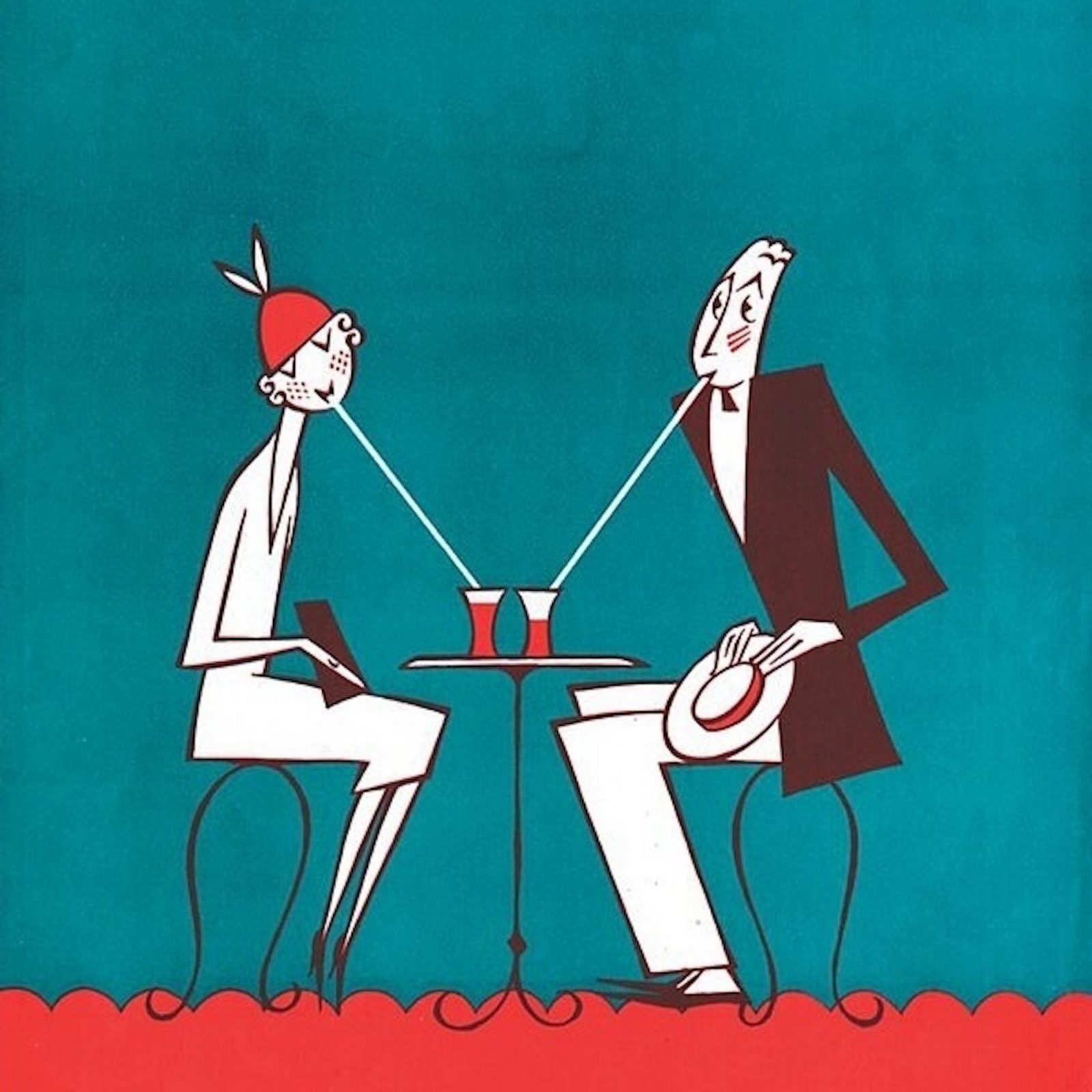
Christopher Kimball: This is Milk Street Radio from PRX I’m your host, Christopher Kimball. Today, Adam Gopnik takes us on a tour of great food writing to celebrate the centennial of the New Yorker, we hear what priests know about dining in Paris, as well as the passion of MFK Fisher for champagne and caviar.
Adam Gopnik: That's what James Beard described to me once was a nude meal with Mary Fisher, where what they ate was champagne and caviar, I think, on the principle that when you have something that transcendently sensual, all other sensuality can join in.
CK: But first, I'm joined by my co-host, Sara Moulton to answer a few of your cooking questions. Sara is, of course, the star of Sara's Weeknight Meals on public television. Her latest book is Home Cooking 101. So Sara, we talk a lot about tomatoes here on the show. You, I guess can get good ones in the season. So, I assume you don't really cook them, right? You just serve them raw, or what?
Sara Moulton: There's two ways I really like to use them in the summertime. One is in tarts, a tomato tart, (that's a good idea). So, I slice them about a third of an inch thick, and then I salt them and leave them for 20 minutes, you know, pre-shrink them, get rid of all that excess liquid. And then there's one tart I make with just a regular pastry dough that you put mustard in and gruyere cheese and the tomatoes on top, and it's just so delicious. And another one I make with basil, mozzarella and ricotta, again, salted tomatoes and parm, and it's just yummy. And you puree the basil with the filling, and it gets it's green. But another thing I like to do with tomatoes is to make a tomato vinaigrette, and put the tomatoes into the vinaigrette, you know, so put it in a blender, really ripe, yummy tomato with some sherry vinegar, a little Dijon mustard, and then whisk in some beautiful olive oil, and that's a nice way to have tomatoes too. How about you?
CK: I have not eaten a great tomato in 10 years, so I don't know how to answer that. I mean, everything I know about tomatoes is how to enhance their flavor by roasting them, salting them, grilling them, whatever need to do. But I still remember growing them as a kid. We always have big gardens, and that smell, I mean, it was strong, and you like, walk in the garden, (yeah) we just knock you over. It was just like one of the best aromas in the world.
SM: Well, maybe the answer is, we have to grow our own tomatoes. Chris
CK: No, the answer is, I need to buy an aromatherapy thing and get fresh tomato flavor in my house. But, yeah, it's, you know, Those all sound like good ideas. Okay,
SM: Okay, well, let's take a call. (Okay) Welcome to Milk Street who's calling?
Caller: Well, hi Sara and Christopher. This is Erica calling from Pittsburgh, Pennsylvania.
SM: Hi, Erica. How can we help you?
Caller: This is not a cooking question, it's an eating question. I'm going to be taking a long drive, and I will be by myself on this trip, and I would like to find good places to eat along my route. I know about Googling, obviously, I've asked chat GPT, but I'm having trouble. How do you go about doing this? When you do all your traveling at Milk Street, how does one go about finding good restaurants along the routes?
SM: Are you looking for high end or? Are you looking for
Caller: No, it can just be anything, diners, really.
SM: When's your trip?
Caller: My daughter's expecting a baby in South Carolina, and so driving from Pennsylvania, it'll be about nine hours, and I'm leaving on Monday.
SM: Oh, wow. Okay, well, I'm glad I'm talking to you. There you go.
Caller: I guess my question also is, is Google the way to go, or is there a website or some kind of other resource to consult about this, rather than just Yelp or Google. Is there something that specializes in this.
CK: I think the problem with Googling, especially if you're leaving Monday, is they're just too many options, right? And so, I agree you could do the research. But here are two things I would do. I would go to the state or city magazine, like Texas Monthly or New York Magazine, and they always have restaurant reviews or cheap eats or whatever. And I would go into their database online and look at it. They're usually pretty good, because these people do it all the time. I mean, they do cheap eats here in Boston, and they give me tips, and they're outstanding. The second thing I would do is I would find someone in around the food world you admire who lives or is from that area and go on their Instagram account, because they're always posting where they're eating all the time. (Oh), and where they eat is probably a pretty good indication. So, if there's a cookbook author, for example, who lives in North Carolina or Pennsylvania or whatever, somebody you sort of trust a writer, author, chef. I always look at people's Instagram account, because that'll tell you where they spend their time. I would not trust any online source of restaurant reviews ever. (Okay) you don't know how many of those reviews are real. You know, you don't know if someone has a grudge. You have to start with someone you trust.
SM: I would say not an influencer, because a lot of they get paid, if they get paid to say nice things about restaurants. So
Caller: Okay, well, that's great. This is really going to get me going on the right track here. I don't have much time, so I got to go guys sorry
SM: Yeah, you’ve got to go, you’ve got to go right now
CK: You don't have time for this call.
SM: No, you don't.
CK: Erica, have a good trip.
Caller: All right. I really appreciate the help. Thanks again, both of you. All right, bye, bye.
SM: Bye, bye.
CK: Welcome to Milk Street. Who's calling?
Caller: Oh, hi. This is Rochelle in Texas.
CK: How is Rochelle in Texas doing?
Caller: Hot.
CK: How can we help you?
Caller: I recently purchased a bottle of rose water, and I was looking for ways to use it in more savory dishes instead of sweet dishes.
CK: I would think if you want to use a savory application, I love watermelon salads. You see those all over the Middle East, you know, cucumber etc. sort of a fresh summer salad would be great. But I would just be careful, because, as you know, it's pretty concentrated, and you don't want to end up with a tablespoon of it, and it's something that will be overwhelming. So what have you done with it so far? What have you tried it with?
Caller: Well, a friend of mine sent me a really nice Persian recipe that I would like to try. It's lamb with a yellow split peas called Khoresht gheimeh I would like to try that. I attempted because I am in Central Texas, and Tex Mex is everywhere. I failed. But I attempted to try it with mole, and it was just the chilies were really too overpowering, and it didn't work out too well. So, I don't recommend it. I wanted to consider trying it in maybe something with a little bit more spice to it. But I think I like your idea with the watermelon.
CK: Yeah, I think it would really go with cucumber watermelon. I think that would be really delicious again, just a little bit of it.
Caller: That's a great idea.
CK: Well, Sara Moulton is here. She may have a way to use it in French cooking. I don't know.
SM: I wouldn't say French. I'd say stick in the lane of Middle Eastern because, for a couple of reasons. One is that there are a lot of what I consider sweet spices, you know, that they use. And I think it would go nicely with the sweeter spices that they use. Also true for Indian cooking, you know, where you have many layers of flavors and many spices. So that's where I would add it to a savory dish. It was an Indian dish or a Middle Eastern dish. I agree with Chris. It's however it can just absolutely take over. It's like toasted sesame oil or truffle oil. You know,
Caller: and a tiny bit goes such a long way
SM: Right. The one thing that's true is that if you cook it. It diffuses its flavor a bit. It tamps it down. So, if you mentioned
Caller: I was curious about that as well. So, I could not add it to any batters or anything and then bake it.
SM: Oh, sure, you could. It just would, (oh, you could) It would not be as strong. So, oh, that's the point is, it's not going to just hit you over the head the way it does if you add it raw.
Caller: I see
CK: Matter of fact, in the Middle East, also, there's a lot of interesting cookies, sort of harder cookies, and you could add them to a cookie, like a saffron cookie or something, might be good. But, you know, in the summer, in a spritzer, you said it's hot in Texas. I mean, that would be my first thing I would do is put it in a spritzer. Absolutely, get some Prosecco, and, you know, get a little something a little stronger in there, a little gin maybe a drop or two of this, some ice, some mint. There you go.
Caller: I like the way you think.
CK: Yeah,
SM: Lemonade or Limeade could probably benefit from a tiny drip of
Caller: Oh, I'm going to have so much fun with rose water. Thank you so much.
CK: Thanks for calling. We appreciate it. Yes, take care. Stay cool.
Caller: Thank you. I will thank you. Bye,
SM: bye, bye. This
CK: This is Milk Street Radio, if you're in a culinary rut, please give us a ring. 855-426-9843 one more time, 855-426-9843, or email us at questions at Milk Street Radio.com
SM: Welcome to Milk Street. Who's calling?
Caller: This is Roger in Phoenix.
SM: Hi, Roger. How can we help you today?
Caller: I make frequently cocktail sauce to the regular nothing fancy, ketchup and horse radish, maybe a few other flavorings in there. After it sits for a day or two, it gels and sets up. I wonder why that happens, and is there anything you do to prevent it?
SM: Well, it's probably the tomato. So you use prepared horseradish in a jar with vinegar and salt, right, (correct). So, tomatoes have pectin. Ketchup has pectin. And when you add acid, it can make it set up like that gel, you know, particularly as it sits around. So, the easiest way to remedy that situation is just to whisk it up or add a little bit of water, and it should come back to, you know, the nice consistency that you were looking for. Does it happen to you every time?
Caller: Yes, and I've done that, I've added like a fresh round of cocktail sauce to it. I've tried adding lemon juice and stir it up. The texture is never quite the same.
SM: Yeah, no lemon like the vinegar in prepared horseradish is acid, so it continues to react with the pectin and make the pectin set up. So, adding more acid is not a good idea. I would just say, add a little bit of water and whisk it like crazy, or try to just make smaller batches if you don't like the texture.
Caller: Okay, that's what I try to do, but I sometimes don't come out even,
SM: Anyway, Chris, do you have any thoughts?
CK: Well, I guess I have a question, which is usually in my house, I might use a cocktail sauce every couple of months, maybe. So, you sound like you have a continuing need for it. So, are you using this for a whole bunch of different reasons? Not just for, like, shrimp cocktail or on oysters or something?
Caller: Oh, no, it's just occasionally, I just poach some shrimp, and we have some cocktails for dinner.
CK: I agree with Sara, it'll take you three minutes to throw together ketchup and horseradish. I would just mix it up to order. You know, there's some things like, there's some, you know, chili-based sauces, or other things like from Mexico or the Middle East, where there are nine ingredients, and it's a lot of work, but this is pretty straightforward.
Caller: The mystery with me was what caused it, and I've researched that and could not find an answer, and your answer a lot of sense so
CK: Roger, we appreciate the call. Thank you.
SM: Yes,
Caller: appreciate it, thanks
SM: Take care. Bye, bye,
Caller: Goodbye.
CK: You're listening to Milk Street Radio. If you're looking for a bit more culinary inspiration, we put together a collection of our all-time favorite Milk Street recipes. You can find that at Milkstreetradio.com. Up next, we look back at the last century of great American food writing. Hi. This is Milk Street Radio. I'm your host. Christopher Kimball, right now, it's my conversation with our regular contributor, Adam Gopnik. Adam, how are you?
Adam Gopnik: I am particularly happy today, Christopher, because I am celebrating a birthday dear to my heart. It is the birthday of the institution to which I have belonged for the past 40 years, and that is The New Yorker magazine. The 100th birthday of the New Yorker took place this February.
CK: Well, Mr. Tilley, what do you have to say for yourself
AG: I have been a good soldier of the New Yorker, as I say, for 40 years. And as you know, have written about many subjects, from the history of Abraham Lincoln to the perils of insomnia. But there's no subject that I've written about more often than food. It's what made us friends in the first place, wasn't it? Chris, (yeah) And so one of the things I've been thinking about in terms of celebrating is the history of food Writing in The New Yorker. And I thought we would share a few favorites of mine and perhaps of yours in our conversation today. (Okay) there have been lots of terrific writers about food in the New Yorker, as I'm sure you'd agree, but if I had to pick three favorites, they would be AJ Liebling, MFK Fisher and Calvin Trillin, and I wanted to think about all of their writing, because I guess Chris the key to writing about food is that it's always about more than food. Liebling, for instance, doesn't write only about food. He writes about France. One of the fascinating things about Liebling is, is that he came to Paris in the famous 1920s you know, the Midnight in Paris period, the Hemingway Fitzgerald period. But he had nothing in common with those people and absolutely no contact with them. He was a young New Yorker, young Jewish New Yorker, who had been sent by his dad to kind of do a kind of finishing school in Paris by pretending to study while he was there. He never really did, but what he did was eat and drink. And the first piece that I thought we might enjoy together is a piece of Liebling called Memoirs of a theater in France, which eventually formed a chapter in his wonderful book. For me, still the single greatest book ever written about eating between meals, an appetite for Paris, and there's a wonderful little section about how you know that you're in a good restaurant.
Matthias Bossi (speaking for A. J. Liebling): During that invaluable year, I met a keen observer who gave me a tip. If you run across a restaurant where you see priests eating with priests or sporting girls with sporting girls, you may be confident that it is good. Those are two classes of people who like to eat well and get their money's worth. If you see a priest eating with a layman, though, don't be too sure about the money's worth. The fellow on Seville may be a rich parishioner, and the good father won't worry about the price. And if the girl is with a man, you can't count on anything. It may be her kept man, in which case she won't care what she spends on him or the man who is keeping her. In which case, she won't care what he spends on her. Failing the sure indication cited above a good augury is the presence of French newspaper men.
AG: I love that about Liebling because he's so conscious, not just of what's on the table, but of what goes on around the table. And if you will bear with a somewhat far reach, you know, it's the thing that scholars of the New Testament always emphasize about Jesus is exactly he would eat with priests and sporting girls. It's what they call commensality That is the business of sharing our food with people unlike ourselves, is the basis of a life of compassion and virtue, and though Liebling is above all, a funny, witty, pointed and pricklish writer, there's an element of humane embrace of all the many kinds of humanity that always is part of his philosophy of good food.
CK: I've never heard anyone summarize the New Testament that way, but I, I guess it's as good as any other
AG: Well, it's an you know, the idea is, is that tax collectors and sporting women are welcome at the table. We dine with we dine with everyone. Now my second favorite writer is MFK, or as she was known to her friends, Mary Fisher. And what makes her a wonderful writer is sometimes something that she said once. She said, simply, when I write about food, I write about appetite. And there's a wonderful piece of hers called Notes on Cravings from the early 60s that literally sums up everything that she's she was obsessed with. It's a whole essay on craving and by liberating us to think about food, not just in terms of kind of hierarchy of tastes and recipes, but exactly in terms of those physical cravings. She invented a whole new way of writing about food. Here's a passage of hers that I love that is about that high culinary achievement, the potato chip.
Carla Kihlstedt (speaking for M.F.K. Fisher) It is said that a few connoisseurs, such as old George Saintsbury, can recall physically the bouquet of certain great vintages a half century after tasting them, I am a mouse among elephants now, but I can say just as surely that this minute in a northern California Valley, I can taste, smell, hear, see, and then feel between my teeth the potato chips I ate slowly one November afternoon in 1936 in the bar of the Lausanne palace. They were uneven in both thickness and color, probably made by a new apprentice in the hotel kitchen, and almost surely they smelled faintly of either chicken or fish, for that was always the case there they were a little too salty to encourage me to drink. They were ineffable. I am still nourished by them.
CK: Excellent
AG: Some of what she craves in this beautiful essay about about cravings, notes on cravings, is high stuff. You know, it's caviar and champagne. And if I may hardly betray our confidence when we've passed away, I think our confidences can be betrayed. But that's what James Beard described to me once. Was nude meal with Mary Fisher, where what they ate was champagne and caviar. I think, on the principle that when you have something that transcendently sensual, all other sensuality can join in.
CK: Well, you've now ruined caviar and champagne for me, because the next time someone suggests we have a party, I'm going to be thinking, uh, what's and and what are you going to suggest next?
AG: And yes, and then you just have to succumb to it, Chris, and just it all comes off
CK: Good for the both of them
AG: Exactly. Bless them both and bless their memories. The next writer who stirred me and moved me is a favorite, I'm sure of most of our audience, I hope of yours, and that's Calvin Trillin. When I first read Trillin, it was in the 1970s and I was a young kid in love with writing, and particularly in love with the idea of New York City. And as you may recall, at that moment in New York history, New York seemed like a forbidding place to think of emigrating. I was
CK: I was there. It was dirty, it was dark, it was dangerous, it was it was exciting yes
AG: In retrospect, it was an exciting time of punk music and the galleries and so on and so on. But at that time, it seemed terribly forbidden. You watched taxi driver Martin Scorsese's great movie, and you had many feelings, but one of them was not, I’ve got to get there, right?
CK: Well, I one of my most memorable moments in the early 70s in New York is going to watch the Velvet Underground and that sort of, I think, set it all for the 70s, right?
AG: Well, I didn't know you were in that CBGB crowd, Chris, I'm very impressed (well, you know) that'll that'll take you a long way, even with the next generation. But Trillin started writing a series of pieces for the New Yorker about the joys and the domestic comedy of food in New York City. He started writing about, you know, the famous Tic Tac Toe playing chicken in Chinatown. And he started writing about his daughter's obsession with one particular bagel. And suddenly, New York City, which seems, as we've been saying, so forbidding, suddenly seemed like an open, welcoming, domestic, family kind of place. So the piece that I picked out, it's called the Lower East Side A Sunday morning tale, and he takes as the inciting event for his essay the simple fact that Ben's Dairy, which was his favorite cheese store on the Lower East Side, had started closing on Sundays, and he depended on Ben's Dairy for the only cream cheese that would go adequately with the Nova lox, the Nova salmon that he would Get at Russ and Daughters a nearby store. So, I absolutely love the way he sets the scene at the still existing Russ and Daughters.
Jay Allison (speaking for Calvin Trillin) I have always thought that anyone who wants a license to open up a retail business in New York, a candy store or a Manhattan branch of Harrods ought to be required to observe Russ and Daughters in action for a week. Russ and Daughters is a splendid refutation of the false teaching that a store selling pickled herring cannot have character and a clean display case at the same time, the daughters of the late founder are particularly warm and cheerful women and a customer who enters the store having just stormed the counter at Tanenbaum’s or subjected himself to the discipline of a cat's counter man can get the impression he has wandered into the Fourth of July outing of a large family.
CK: You know, my favorite little quote from him was the article he did about that restaurant. Remember that was going out of business in the village
AG: yes, Shopsins
CK: Yeah, I love it. If you said to the owner, I'll have what they're having, his famous comment was, no samesies. I just thought that was the, I don't know why that that stuck with me over the years, but that that was so Calvin Trillin.
AG: Well, you know, it was so Calvin Trillin, the place was called Shopsins in the village, and the guy was called Kenny Shopsin. And it was absolutely true, they had a 40 Page menu, and he hated cooking the same thing for two people at the same time. And one of the truths is, is that, fingers crossed, we still cling to significant numbers of those kinds of small, eccentric places, the places that the Trillin mentions, like Russ and Daughters, are still mostly in business, and you can go visit them today and still get some of the best Nova you'll ever find on the Sunday morning.
CK: So you've picked three excellent examples from the New York. Over the last century. Anyone else you care to mention?
AG: Well, Chris, I'd love to read you something from one of my pieces about food, right? So, I went off a few years ago to Spain to dine at the legendary El Bulli. And while I was there, I got to spend time not just with the legendary Ferran Adria, the creator of molecular cuisine, but with his less known but equally creative brother, Albert, who is one of the dazzling magicians of desserts. And this was the little section from my piece called the dessert revolution, where I spoke to Albert Adria. Is there anything you've tried that didn't work out? I asked something you tried and failed at a lot. He said, one of the first things that Ferran asked me to do is create hot ice cream. Hot ice cream, I said. He nodded, gloomily. You would look at it ice cream, and then you would taste it, and it would be hot every year I thought I had it, but I never had it. What we discovered was to use an ice cream machine but inverted so that it was pumping in hot air and to use gelatin to get the form. That was as close as we could get. It's still this idea that we have. He shook his head, hot ice cream a sort of dream. I have a lot of them. Ever since I had that conversation and memorialized that conversation with Albert, I've discovered that it is the single best question that you can ever ask anyone, certainly any artist. You say to them, tell me, what is your hot ice cream? What is the impossible thing you've dreamed of doing for your whole creative life and never achieved. And everyone has an answer.
CK: I think my whole life has been a series of hot ice creams that end up cooled and melted on the plate. I think that was just You just summed up my entire existence.
AG: Well, you're welcome to use it as the title for your memoir, hot ice cream and other dissolutions,
CK: A melting story (exactly) Adam, as usual. In a few words, you have summarized the human condition. Thank you so much. And happy anniversary to the New Yorker.
AG: Thank you, everyone. Raise a glass. I hope we have another 100 years.
CK: That was Adam Gopnik, staff writer at The New Yorker. His latest book is The Mystery of Mastery. Special thanks to the readers in the segment Matthias Bossi, Carla Kihlstedt and Jay Allison in A. J. Liebling’s essay, Gopnik remembers a time when Americans took the grand European tour and Paris was, of course, at its center. Now you may have been well educated, but Paris was there to teach you how to be civilized. Today, being civilized is at best, quaint and at worst, elitist. But remember that Paris was named the City of Light because it was home to the enlightenment. Seated at a table, you learned manners, the art of conversation and the infinite pleasures of food and wine. When we dine, we return to the values of civilization and leave well, we leave enlightened. You're listening to Milk Street Radio. Now, let's head into the kitchen with Rose Hattabaugh to talk about this week's recipe, cold oven creme brulee. Rose, how are you?
Rose Hattabaugh: Good Chris, how are you?
CK: You know, I've been thinking about creme brulee because I never make it at home. You know, everyone orders it out. And so, I was thinking, like, why don't I make it home? Well, you have to precook it, sort of like a pastry cream on top of the stove, eggs, sugar, dairy. Then you need a water bath, and you have to cook it just right, and then you have to torch the sugar at the end. So, I wondered, like, okay, maybe we could do this at home more easily. And the one suggestion I have was a method from the 1920s called cold oven pound cake. They'd start the quick bread, the cake in a cold oven, then turn the oven on, and this gave you a gentle cooking method and a better texture. So, I came to the office and put this on your desk and said, you figure it out about that?
RH: Well, a lot of skeptics in the kitchen about this, but I was a believer. I started out by adding some gelatin, so kind of cooked it on the stove, used a little gelatin, didn't put it in the oven, and then also tried adding egg whites for stability, things like that. But we found when it was bruleed, it was melting, and then you came up with this great method to use the cold oven, and it just worked like a charm.
CK: So, we just whisk eggs, sugar and dairy. We also, I think you and I agreed some half and half and heavy cream to lighten it up a little, poured it in a ramekin, sitting on a kitchen towel, in a nine by 13 pan and just a couple cups of water, which helps sort of make the towels hold on to the ramekins, and also, I think steams a little bit in the oven, (yes), and then cooked it for an hour. And this, to read, thermometer is helpful here, because you want to get it to 180 in the middle, and then take it out and chill it, and then brule it. Now, the brule part still has to be done, but I have a couple tips. One is, I do use a plumber's torch, not one of those little culinary torches, but Wes who runs our kitchen said two steps. One, melt the sugar, and then once it's liquefied, then you can brule it. I think that's right, and don't use too much heat, because if you crank up that torch, you're going to blacken that sugar in about five seconds, so take your time with it, right,
RH: Right. I mean, that's the other great thing about this recipe, is you can make the actual custard ahead of time, cover them, and then you just brule them when you're ready. And even after they're bru led, they'll sit in your refrigerator for an hour or so without the sugar getting soft. So, it's a great recipe.
CK: In the last three weeks, I've made this three times.
RH: I've made it twice. I think it's a great recipe. I'm definitely going to make this again when I have guests. I love it.
CK: Rose. Thank you. Cold oven crumble. I everybody can do it at home. It's easier than vanilla pudding. Thank you. You're welcome.
RH: You can get the recipe for cold oven creme brulee at Milk Street radio.com
CK: You're listening to Milk Street Radio coming up Matt Goulding goes on a quest for perfect paella.
Hi. I'm Christopher Kimball. You're listening to Milk Street Radio right now. My co-host, Sara Moulton and I will be answering a few more of your cooking questions.
SM: Welcome to Milk Street. Who's calling?
Caller: Hi. This is Mindy.
SM: Hi, Mindy, where are you calling from?
Caller: I'm calling from Madison, Wisconsin,
SM: Lovely place. How can we help you?
Caller: I'm calling because last year, I went to a coffee shop in Utah, and they had this cookie that I've never had before. It was a chocolate chip cookie. It was pretty sizable. It was domed like it was about an inch tall. It was vegan, and I expected it to be chewy when I bit into it, like most chocolate chip cookies are, and the entire cookie was crunchy, and I didn't like it at first, but when I put it in the coffee that they served me, it was incredible, which is why I'm trying to remake it. But every time I try to recreate this cookie. It comes out flat or chewy.
SM: Well, you know what that sounds like. There is a series of pastry shops in New York City called Levain Bakery, l- e- v- a- i- n, that make this amazing cookie that they're known for. It's a six-ounce chocolate chip cookie that's domed, that's really big and that is quite crunchy. It's not chewy. And Serious Eats, you know, that wonderful website came up with a recipe approximating it. I don't believe theirs has the vegan version, but there is such a thing as vegan butter.
CK: That should be illegal. You can't say vegan butter. I'm sorry. That's just,
SM: I guess you could use margarine. Now that I'm thinking about it. Isn't that vegan? (Yeah) well, let me just tell you the two things about this that I remember reading about is that they have a low proportion of sugar to flour. Sugar really makes the cookie soft, so when you down the sugar and up the flour, it's crunchier. And also, they chill the dough overnight, they roll it into six-ounce balls, which is, wow, that's a lot of cookie, and that helps to give it that firm texture. So, you might want to check that out and give it a whirl.
CK: I do have to say though the initial description just sounds like a chocolate chip cookie gone terribly wrong.
SM: Well, she I know it's like a biscotti,
CK: But she said when she first bit into it, she did not like it, so without the dunk, I'm not sure this is a great idea. I mean, Sara's right. It's like less sugar and probably less fat to flour will get rid of the chew and make it stand up, but that you know, each to his own
SM: Right. And one thing about once you take the sugar out, which is a preservative, it's going to go stale faster,
CK: but it's a dunking cookie.
Caller: Yeah, it's a dunking cookie.
CK: Yeah, it's a dunking cookie. Okay, that’s
SM: Well, Mindy definitely go to Serious Eats, give it a whirl, and let us know how it goes,
Caller: I did see that recipe, it had mentioned a little bit of like chew in it, in case I need to tweak a little bit. Be appropriate to use Crisco?
CK: Yeah, you could use Crisco. I've used it for years. The best thing, I mean, this is kind of silly, but if you can get good lard, like leaf lard, which has no pork flavor, that would make an excellent cookie because it makes the world's best pie dough so
SM: That's pretty far from vegan, from vegan. Or if you're not vegan, why don't you try the recipe straight up, as is with butter,
Caller: True, yeah, true. And then tweak from there,
SM: Yeah,
CK: Just a little bit of lard.
SM: I don't think so Chris.
CK: Makes the world go round.
SM: Okay. Anyway, Mindy, let us know what you do and let us know how it goes.
Caller: Appreciate it.
SM: Thank you. Take
CK: Take care.
SM: Okay, bye, bye.
CK: This is Milk Street Radio, if you need some inspiration, give us a ring anytime. 855-426-9843, that's 855-426-9843, or just email us at questions at Milk Street Radio.com.
SM: Welcome to Milk Street. Who's calling?
Caller: Hi. This is Travis Roberts from Washington, DC.
SM: Hi, Travis. How can we help you today?
Caller: I have been looking for help dealing with a new allergy to blackberries, and it's always been one of my favorite fruits. I love, you know, just kind of how wild and fresh it is. But I've had an issue over the last couple of months where all of a sudden, I can't eat it. I get the thorough allergy to it, along with a lot of other fruits, and I'm trying to find a way to bring it into my diet, because the way the allergy works is, if it's been heat treated, it's okay. It kills whatever protein is in there that doesn't get along with me. I want something that's not just a pie or a cobbler, and I wanted to see if you guys could help
SM: A preparation that I love a lot with peaches. Isn't maybe you could combine it with peaches. Is to cut the peaches in half, put the blackberries into the peaches and sprinkle a little bit of sugar and bake it, and then make a meringue and with just egg whites and sugar and mount the meringue on top of the half peaches, put it under the broiler, and that's it. And I think that would be yummy. You couldn't do it with the blackberries all by themselves, because they need something to hold them. Chris, do you have ideas?
CK: Yeah, I guess my first question is, what do doctors or whomever say about heat treating the fruit. Is this microwaving for 10 seconds? Is this cooking them for a minute? How much heat do you need to kill off the enzyme?
Caller: It's a good question. So, I know that anytime I actually cook it, you know, like an apple pie is I have the same allergy with apples and empire peaches and all that apple pie is fine. I've done a blackberry tart where it's like fresh blackberries, and it's in the oven for not too long, and that seemed to be okay.
CK: Well, the first thing I thought of was cooking them on top of the stove with water and some sugar, cooking it quickly and breaking it down, and then serving that with yogurt. I mean, instead of buying fruit yogurt, you can make your own fruit and put that on top of the yogurt, which is nice and fresh. Open faced tart would be good. You don't have to add much sugar to that, and you get the fresh taste if they're not cooked too long, I would prebake the crust so you can just finish off in maybe 20 minutes in the oven. That would also be good. The other question I have is, I guess you can obviously have blackberry jam, right, or conserve or whatever. There's an old recipe, I think it's Martha Washington cake. They used to do sponge cakes a long time ago, and they used to have all these variations where they cut it in half and fill it with jam, so some sort of fresh berry blackberry filling, and then they would just put powdered sugar on top, or whatever. But just a way of getting a very kind of a bland cake and having all the flavor in the filling would also work well.
Caller: That's interesting. That's fun. And I'm not too far from Mount Vernon, where she might have been making some of those things. So, thank you so much.
CK: Take care, bye.
SM: Take care goodbye.
CK: This is Milk Street Radio. In 2013 a Spanish organization called wikipaella published a 10-point manifesto proclaiming, in part quote, we publicly condemn infringements made against authentic paella, especially within the community of Valencia in Spain, there's a war over what constitutes true paella. And Matt Goulding joins us now from Barcelona to bring us his report. Matt's the author of Grape Olive Pig Deep Travels through Spain's Food Culture. Matt, welcome again to Milk Street
Matt Goulding: Great to be here. Chris, always a pleasure.
CK: So, we're talking paella. I am educated enough to know that it started very differently than the way it's ended up right now. So, was this always rabbit and snails? Was that always how it got started? Or were there a lot of different kinds of combinations of foods in the early days?
MG: That's the question, right? I mean, I think, like any dish born out of necessity, it has a certain fungibility to it, like you're you're in Valencia, you're in the orange groves, you know, where this kind of agricultural force has been around Spain for for centuries. And you're looking for a cheap, relatively quick way to feed your workers. And what quicker way than a big, wide pan for fast evaporation through which you can lace a mixture of protein and vegetables. Today we talk about paella because that's the name that's become kind of the brand, if you will. But but really a roast in Spain has its own interpretation in every corner of the country. So, paella is what they call a neurosecco, a dried rice, right, because all the moisture really cooks out of it. We could have a noros meloso, a moist rice, which is really comparable to a risotto from northern Italy. And so, we tend to think about it as a singular creation from this one corner called Valencia. But what it really is is a tapestry of different rice traditions that spread through traditions that spread throughout the Iberian Peninsula.
CK: Okay, so how does a dish like paella go from, you know, cheap and easy a way to feed your workers to this manifesto, which says we publicly denounce transgressions committed against paella so what? What does that mean?
MG: I mean, look, you and I have talked about food police before, right? We talked about the pizza police in Naples, and this has happened in Spain with paella right across the Mediterranean. And I think you know what happens is a food gains in popularity. It’s sort of cultural footprint expands it gets larger. And they see, what they would say is the bastardization of, you know, this quintessential food. And there are those who want to kind of rise up in protection, so to speak, of that food and its origins.
CK: So, at what point does it get canonized into a specific thing? How does that work?
MG: You know, I think with the boom in Spanish tourism and the boom in Spanish culture and the exportation of Spanish culture thanks to people like Jose Andres in the US and elsewhere around the world, you know, I think that there was a recognition that this is one of our great culinary treasures. Let's make sure that what we're seeing right now these kind of ghastly impersonations that are popping up in different places across the world and oftentimes in our own turf. You know that that we can kind of draw a line between this is the real stuff and this is the fake stuff, so that people don't come along the way and taste a bad version and say, hey, what's the big deal here? You know, what's what could be worse to be a proud Valencian who grew up eating incredible rice, to see a soupy, overloaded, overcooked iteration of this, you know, let's go ahead and put the original list of ingredients the most common way of cooking this with a few areas of flexibility, but very few, quite frankly, and let's put that all down as this paella recipe, so that people understand what the base version of this is, and then outwards from that, you can find different things. But if we can go ahead and sort of draw a line in the sand, and inside of that line, you'll find these 11 or 12 core ingredients, and the rest of it is kind of an expression of just how far a dish can be taken from its original roots, once placed into the wrong hands.
CK: I think you said garlic and rosemary are the most common divisive paella ingredients, (right). So take us through you've had a lot of experiences, tracking it down, eating it in great restaurants. Just tell us the story of one of those, what it was like, what the process like? How do you make paella in the authentic manner?
MG: I think the restaurant that most impacted my thinking about this dish, Chris was a place called Paco Gandia, and this was a place that Jose Andres and Ferran Adria, the famous chef from El Bui had both kind of fallen in love with and they fell in love with it for just its absolute dead simplicity. There was a brilliant cook there named Josefina, and she has, in this case, about eight to nine ingredients total. There was a very basic stock that was essentially made in the pan. With a base of sofrito, which is normally tomato that's cooked down with smoked paprika and salt and olive oil. The rabbit is cooked down in that pan, in this case, with a branch of rosemary. And one of my favorite things about paella recipes, it'll oftentimes say 12 snails or a branch of rosemary, meaning that you want to have the taste of the garden in there, and you either get it from the snails, or, failing that, you get it from a piece of rosemary. And this was a big, huge pan, so when it comes out, you think, oh, my goodness, you know they're going to feed 20 people here. Because if it was in the States, it would be hulking and overflowing with ingredients, but it was a single layer of rice.
CK: And how thick is this layer? Like an inch thick or something?
MG: No, no, no. I mean, a single grain high, oh, one grain of rice spread evenly across the entirety of this paella pan, and therefore it catches the full concentration, that high evaporation rate, so the stock cooks and gets richer and richer. It clings to that grain of rice, but also it allows that caramelization to occur at the base of the pan. So, you get something that almost feels like a perfect mixture of beautifully cooked rice that's still toothsome, but also that sokkara, that crispy rice stuck to the bottom of the pan, which, of course, is the treasure that everyone in this part of the world really, really fights for.
CK: So, you've been at this for a while. You said, when you started writing about paella in roads and kingdoms, etc, you say, quote, Spaniards published articles about my low IQ.
MG: I got taken to task I will be honest with you. Some guy challenged me to, like, a physical fight over this, honestly. So, yeah, this is the kind of stuff that gets people really heated. And, you know, I I've always been taken aback by this episode that happened to Jamie Oliver, you know, in Jamie Oliver was, you know, I think has got a relationship with the Mediterranean and travels consistently throughout this part of the world and has done a lot of television shows here. And he had done a show years ago where, at the end of the show, he made his paella, you know, it was a big, giant pan and cooked outdoor with the villagers. And, yeah, I think he started it with a pretty heavy amount of chorizo, and then kind of built it outwards from that, and the Spanish press got wind of it, and it turned into a gigantic controversy, not like a passing little side note in the newspaper, but (it was a national event), a National Event, truly. And he got clobbered, and it really crushed him. My understanding is that Jamie was really taken aback by the vitriol with which the Spaniards attacked him, you know, and that was unleashed by what he thought was a relatively innocent adaptation to the recipe. So, you know, I think that those versions are the things where like people like you or people like myself, see, okay, come on, like, what's, what's going on here? Because I've eaten Spanish rice dishes all over the country that'll have some version of cured pork in it. I think of the fact that you're, if you're famous, and you're foreign, and you do something like that, they're all just waiting for you to mess up. And, you know, they're merciless when it comes to this stuff, and I understand part of it, I do.
CK: If there are strict rules around this wiki paella, for example, people trying to be authentic at which ingredients to use and how to do the rice, blah, blah, blah, I would assume in Spain there's still a lot of bad paella, right? There's paella that doesn't adhere to those rules are Spanish cooks getting their act together and in solidarity, and paella is getting better, or is it getting worse just to get the American tourists fed?
MG: I think it's like it is with so many other foods. I think there's a bifurcation. On one hand, there are more people who are aware of the real stuff, but there's an ever-growing group of relatively cheap, mediocre restaurants that sell frozen paellas, (really) more often than not. If you're eating in a kind of a touristed, centralized area in one of the big cities in Spain, that's what you're eating.
CK: So, if you don't have snail and rabbit available, what would you use to keep it reasonably authentic?
MG: Chicken honestly, like when I'm in the US, I make it almost always with specifically with chicken wings. You know, in Spain, what you would do is you'd go to a butcher, and you'd say, I'm making paella for eight people. I want rabbit and I want chicken, and the butcher would take out probably one whole rabbit, which usually weighs about two pounds when it's been dressed, and half a chicken, and they would chop them up with a giant butcher's knife into small pieces, and you'd be ready to go. Most people in the US don't have access to that, so chicken wings totally acceptable. They work well. So, they, you know, they make the stock that is essentially formed and boiled in the pan, especially rich, and they're fun to eat.
CK: And what about the snail part of it? Do you just ignore that?
MG: I'm a rosemary guy. (oh, there you go) I pick rosemary from my bush. You know, I don't know a lot of younger Spanish who who love snails. But if you come from one of these interior regions, you're almost religious about their inclusion in a paella. But (um) I'm a city dwelling folk here in Barcelona, and any snails I could find out here, you wouldn't want to be putting in your pan
CK: So, what incredibly stupid American things did you do in the early years that you totally regret at this point, because you realize that it just isn't going to work. You know
MG: I mean, I would put black pepper in paella, which is a huge no, no. Black Pepper is considered an aggressive spice in Spain, and so if it's used, it's used for a very specific reason, like you would use cinnamon or nutmeg in something. It has a particular place in the kitchen, and one of those places is not paella. And I learned that the hard way. I can remember making a paella that I felt pretty proud of, and immediately people were coughing around the pan because there was black pepper in it. I mean, like physical reactions. It wasn't just like rolling their eyes about the sort of cultural snafu that this American….
CK: Well, they may have coughed a little harder than they needed to, right? (They probably did) just to rub it in. I mean, (I don't blame them.) Yeah, Matt, thank you. A true expert guide to paella. Now I have to go make a good one. Thank you,
MG: My pleasure, Chris. Talk to you soon.
CK: There was Matt Golding. He wrote about paella in his book, Grape Olive Pig Deep Travels through Spain's Food Culture. That's it for today. To hear all of our episodes, please go to Milk Street Radio.com or wherever you get your podcasts. We put together a collection of our all time, favorite recipes from Milk Street. You can find that collection at Milk Street Radio.com can also find us on Facebook at Christopher Kimball's Milk Street. On Instagram at 177 Milk Street. We'll be back next week, and thanks, as always, for listening.
Christopher Kimball's Milk Street Radio is produced by Milk Street in association with GBH co-founder, Melissa Baldino, executive producer Annie Sinsabaugh, Senior Editor, Melissa Allison, Senior Producer, Sarah Clapp, producer, Caroline Davis, Assistant Producer Mari Orozco, additional editing by Sydney Lewis, audio mixing by Jay Allison at Atlantic Public Media in Woods Hole, Massachusetts. Theme music by Toubab Krewe. Additional music by George Brendel, Egloff, Christopher Kimball's Milk Street Radio is distributed by PRX
In this episode
ADVERTISEMENT
ADVERTISEMENT

Simple, Bold Recipes

Digital Access
12 weeks for$1
- EVERY MILK STREET RECIPE
- STREAMING OF TV AND RADIO SHOWS
- ACCESS TO COMPLETE VIDEO ARCHIVES

Insider Membership
12 weeks for$1
- EVERYTHING INCLUDED IN PRINT & DIGITAL ACCESS, PLUS:
- FREE STANDARD SHIPPING, MILK STREET STORE,
to contiguous US addresses - ADVANCE NOTIFICATION OF SPECIAL STORE SALES
- RECEIVE ACCESS TO ALL LIVE STREAM COOKING CLASSES (EXCLUDING WORKSHOPS & INTENSIVES)
- GET YOUR QUESTIONS ANSWERED BY MILK STREET STAFF
- PLUS, MUCH MORE

Print & Digital Access
12 weeks for$1
- EVERYTHING INCLUDED IN DIGITAL ACCESS, PLUS:
- PRINT MAGAZINE SUBSCRIPTION
- 6 ISSUES PER YEAR

