





Your email address is required to begin the subscription process. We will use it for customer service and other communications from Milk Street. You can unsubscribe from receiving our emails at any time.
Episode 918
August 8, 2025
August 8, 2025
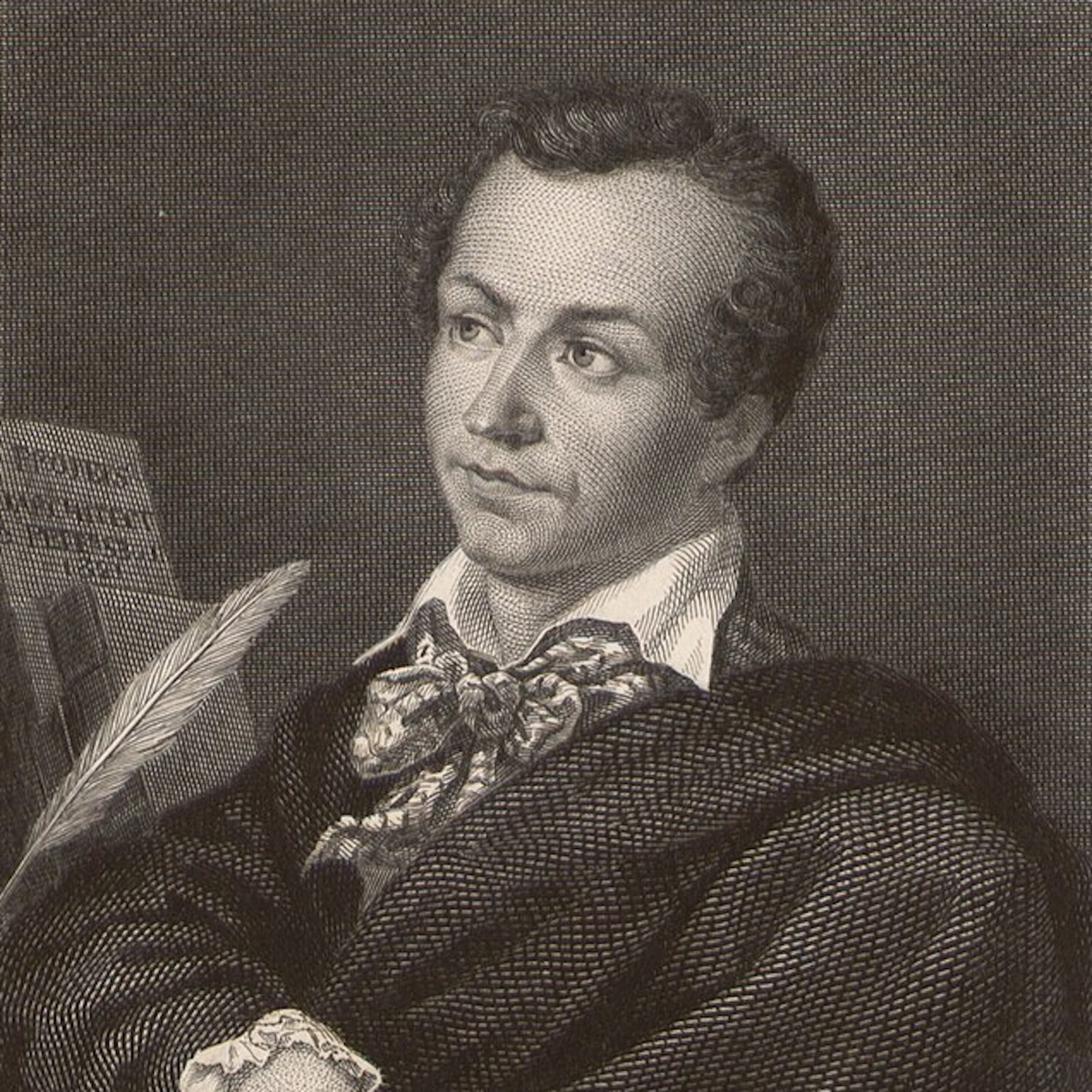
I Catered Napoleon's Wedding: Carême, the First Celebrity Chef
He cooked for the czar of Russia, the Rothschilds, and he even made Napoleon Bonaparte's wedding cake. He invented the chef’s hat and published the first recipes for soufflé and meringue, but you’ve probably never heard his name. This week, it’s the story of the world’s first celebrity chef: Marie-Antoine Carême. Plus, we’re joined by one of today’s best chefs, Enrique Olvera; Kenji López-Alt returns with a brand-new way to fry an egg; we make Indonesian Beef and Sweet Soy Sate; and Chris and Sara take your calls — how to organize handwritten recipes, why we season everything with pepper, and much more.
Questions in this episode:
"Why do cooks on cooking shows use canned tomatoes and then crush them? Why not just use the crushed tomatoes in a can?"
"I want to make Milk Street's rye chocolate chip cookie, but when I went shopping, I could only find dark rye flour. Do I need to adjust the proportions of the recipe?"
"How do I organize all my paper recipes?"
"Every recipes says to use salt and pepper at the beginning. Salt I understand, but why always pepper?"
"What is the best way to a butter stick?"
Christopher Kimball: Hey, this is Milk Street Radio from PRX, and I'm your host, Christopher Kimball.
Today, it's the story of the first celebrity chef, and you've probably never heard his name. We find out who he cooked for. He made Napoleon Bonaparte's wedding cake and of course, we hear about his food, the food is fascinating, and the food is drama. The food is love and lust, obviously, but it's also power and history and nostalgia and regret. The life and food of Marie Antoine Carême that's coming up later on the show, but first we're joined by one of today's celebrity chefs, Enrique Olvera. He's the chef behind one of the most celebrated restaurants in the world. That's Pujal in Mexico City. Since 2011 it's been consistently ranked on the world's 50 best restaurants list, and in 2019 It was named the best restaurant in North America. Now he has a new book called Sunny Days, Taco Nights. Enrique, welcome to Milk Street.
Enrique Olvera: Thank you, Chris, great to be here.
CK: Here's here's a question I want to start with. You know, I was in Mexico City a year ago or so, and it dawned on me, I'm probably the last person in the world who understood this but, you know, a taco is just like a soft tortilla, and you put something on it, like that's about the definition. But you want to give me a little bit of history and sort of start out with what a taco is, if there is any definition at all.
EO: I mean, there are different ideas, and the common history is that the taco was how some miners kept the explosives, and it had the shape of a rolled paper. And people started making tortillas in that shape, and then they started calling them tacos, and that's what most people have said about it, at least the word comes from that era. But really, I think it's a way of eating. If you have tortillas, like you would have bread in the center of the table, you're basically making tacos of whatever you're eating. And then it started to get like, really different expressions depending on the region of Mexico that you were, and also the tortillas change drastically depending on the filing of the taco. So, if, for example, you're making in Michoacan tacos that are wet tacos, like the filling is made of a guisada or a stew, the tortilla will probably be thicker and the corn will probably be ground a little bit coarser whereas, if you go to Oaxaca, where the fillings tend to be dried meats like tasajo or even like chorizo, the tortilla tends to be thinner and the corn is milled to a finer texture. So also, the tortillas are changing forms, and it's something that we learned, like 15 years ago, when we first started externalizing corn at the restaurant, I remember talking to one of the head chefs, and I told them, like, let's make the best tortilla. And then maybe a year later, I realized what I had asked was really stupid, because there are so many different expressions of tortilla that asking for the best one was not the way to go.
CK: If you go to, let's say, the flower market in Mexico City, and there's a little is it called comida economica or what those places were, for 80 pesos, you get three courses, and the food's really good and it's inexpensive, and is there at the same time a long tradition, a sort of white tablecloth, high end tradition of Mexican cooking, or did restaurant cooking sort of come out of street cooking or market cooking, or maybe both? You know, both things exist side by side.
EO: No. So Mexican cooking was basically done, like you said, in in the markets. But I think even within Mexico, there was a push to say that Mexican food didn't belong in in a fine dining setting. And I think this is true for many cultures like Mexico that are older now, for example, in Japan is the same way a lot of like sushi came from the streets, then it was executed to a level of excellence that could be placed into a fine dining setting. But unlike Japan, where there was royalty, there was no cooking for the kings or royalty in Mexico, most of the cooking from Mexico was either moles that were town celebration recipes or everyday cooking.
CK: So, you've opened a lot of restaurants, but Cosme in New York is one I've been to. How do you think about opening that restaurant? Did you have to rethink the dishes for a New York audience? How do you translate what you knew and what you've learned into a New York restaurant?
EO: No, I did think about it a lot when we opened, Pujol was not really successful in the beginning, and one of the reasons was that people didn't crave something that they didn't know, and that is something that we took into consideration when we open Cosme. So, for example, I remember when we opened, we had like, a tostada with smoked salmon. So, I was definitely playing a game where people would feel the flavors were familiar, so you would feel like you've tasted food like this before. No, like, for example, the corn husk meringue. No, it tastes a little bit like cornbread from the US. And then with time, what we switched to was trying to keep the Mexican techniques but utilizing the ingredients from the New York area. No, like we try always to use fish from the Atlantic, which we don't have in Mexico. So, we were celebrating the the ingredients from from the area.
CK: So, in your book, you have all kinds of tacos, Korean tacos, duck tacos, grilled onion tacos, pork belly and red bean tacos. So, if I want to make tacos at home, you know, start me off with what's a simple taco I could try.
EO: I mean, yeah, I think you can make a taco out of anything, even leftovers. I think that's a great way to approach it. If you're starting or whatever you're doing, just put it in a tortilla and add some salsa. I think salsa is the way that you express yourself a little bit. So, there you can be, like, a little bit more playful, but the feelings can be, like, really simple, like, if you made, like, a rice pilaf, then you just add on top of that a little cream and some salsa. That's a great taco. It's one of my favorite ones. Or if you have, like, scrambled eggs in the morning, put it in a tortilla and then add, like, a simple salsa of just like charred tomatoes and and charred onions. So, it's that's the beauty I think about tacos, is that they're just like, there for you all the time. You don't have to really think about it.
CK: Is there something in the entirety of Mexican cuisine that people would be shocked to know is there that they wouldn't think of as being part of the Mexican repertoire? So, some outliers that really are, you know, have deep history to them, but most of us are totally unaware of
EO: I think there's still a few regional cuisines that are yet to be popular. I wouldn't say discover it, because they've always been there. But, for example, most people are not familiar, even in Mexico, with like the cuisine from Tabasco, which is more like a Creole style cooking with a lot of different bananas. It has like more like a sweet and acid component, whereas most of us think of Mexican cooking, just about corn and beans and salsa, no, but there's so many different expressions also, for example, in Yucatan, there was a big influence of the Netherlands, so there's a cheese called queso bola, which comes from that area. So, I think that's also the beauty about Mexico, is that it has a lot of diversity in terms of regions, but it also has a lot of depth, because the country has had so many influences and migrations that you can see it in the cuisine.
CK: So, you're a busy guy looking at your resume, my God, do you love everything you're doing? Do you just want to be a cook, a chef? Do you want to be a restaurateur? Do you want to write books? Do you want to travel? What part of this really appeals to your most? Or is everything equal?
EO: No, I think we humans are a little bit like trees. So, you have seasons, and in some seasons, you might really enjoy being in the kitchen, and sometimes you might really enjoy writing a book. No, so I think it's, it's a privilege to be able to do so many things. And yes, of course, sometimes is, is a little bit too much. But I mean, that's, that's good and happy problem, so we should never complain about that.
CK: Enrique, it's been a real pleasure meeting you and all the best and great success.
EO: Thank you, Chris
CK: That was Chef Enrique Olvera, his new book is Sunny Days Taco Nights. Now I'm joined by my co- host, Sara Moulton to answer a few of your cooking questions. Sara is, of course, the star of Sara's Weeknight Meals on public television. Her latest book is Home Cooking 101.
Sara Moulton: So, Chris, before we get going with the calls, here's a question for you, is there any recipe or technique that you've never done but would like to learn?
CK: No, I've done everything. Actually, I can die now. I've done everything. I would say, if you go back, especially the 19th century, and look at some of those books, like Karam, some of the pastries they did in particular, they make pastries in the shape of porcupines or turtles or palaces. They do all these amazing things. I'm really fascinated by ridiculously architecturally stunning pastries. I mean, they just did amazing things. And so that stuff people just don't do anymore, for obvious reasons, because not too many people have palaces and have 12 pastry chefs at their disposal. But I would love to go back and make some of that stuff just to see if I could do it. Just be fun.
SM: Well, I hope you do.
CK: I hope I do too. The chances of doing that are about zero. But anyway, let's take some calls.
SM: Welcome to Milk Street who's calling?
Caller: This is Michelle Phillips from Falmouth, Massachusetts
SM: Nice. And how can we help you today?
Caller: I watch a lot of cooking shows, including yours of course, I'm wondering why most of the cooks will say to use canned plum tomatoes and then crush them. My question is, why don't you just use the crushed tomatoes in a can, like kitchen ready, or one of those?
CK: Excellent question, by the way
SM: I think really, it's because you have more control over the size of the chunks. You know, crushed tomatoes are pretty uniformly crushed, and here you might get a little more texture and maybe even a little more juice, you know, likewise. I mean, not likewise, because not the same. I never use the diced stuff, because they (have a calcium chloride in it) right and the calcium chloride gives it an off taste and also sort of makes those little cubes very rigid, so they don't melt down in the sauce. So that's why plum tomatoes are a good option, right Chris?
CK: I always buy crushed tomatoes. There's only one thing that might matter. Occasionally in a recipe, they'll say, drain the whole tomatoes, reserve the liquid and only use some of the liquid in the recipe. So (okay) in that case, yes, you'd want to do that. But if you're going to use the whole can of whole tomatoes and then just crush them and add everything in, absolutely You're right. Just use crushed tomatoes. Who cares if one piece is a little larger than another piece? Just doesn't matter at least to me.
Caller: I did hear one thing from a friend who lived in Italy, and she said that the quality of the plum tomatoes, the whole tomatoes, are much better because the tomatoes sometimes are like the leftover pieces from the plum tomatoes. I don't know if that's true or not.
CK: Well, that's, that's actually a fair and interesting point. Whether the quality is better, right? That's a fair point. It could be you'd have to do a taste test, but possibly, yeah, anyway, excellent call.
SM: Thanks, Michelle.
CK: All right. Thanks for calling.
Caller: Bye, bye
SM: Bye.
CK: Welcome to Milk Street. Who's calling?
Caller: This is Bill Tucker.
CK: How can we help you?
Caller: I recently made the Toll house chocolate chip cookies, and I was really disappointed with them. They spread out when I cooked them and they were too sweet. And then I saw an episode of Milk Street about the rye chocolate chip cookies that I thought would yeah, and I thought it would solve a lot of my problems, where I would have something that was crispier and maybe a little more cakey and not so sweet. But when I went shopping for the ingredients, I could only find dark rye flour, and I wasn't really sure if I should proceed with that, if I toasted it, if it would become too much, or if I should adjust the proportions of the recipe, things like that.
CK: It's an excellent question. It's going to absorb more liquid. But what I would do is simply replace some of the rye flour with all-purpose. I changed the proportions, so I might do half as much rye flour as call for in the recipe and replace that with all-purpose, because dark gray flour is going to be much stronger and absorb liquid differently. I mean, if you can't find, I think, you know, Bob's Red Mill has it. Arrowhead Mills has it. But if you can't find it, you could just get it by mail, but I would cut it in half to start with, and then you can always up the quantity the next time you make it. That's a great recipe. They're not really crispy on the outside. They tend to be chewier, but they're not too sweet
Caller: Yeah. They're not too sweet, and they weren't too soft, yeah? Because in the end, I did what you said, (yeah. Oh, you did) yeah. And I debuted them at a co-op board meeting for my building, and they got rave reviews.
CK: The problem with Toll House cookies, they are too sweet and they're too Johnny one note. This has depth of flavor. And I think in a lot of baking around the world, you see a little bit of savoriness with the sweetness, and using rye flour for substituting for part of the other flour is a very common trick used all over the place now. So anyway, there you go, Sara, do you have?
SM: I have nothing to add to that. That sounds like a great solution. And actually, Bill, it sounds like you've already done it.
CK: Yeah, you actually called up. You knew the I took see you're way ahead of me, man, you're just, you're just, you should be on the show. Yeah, I should be the caller.
Caller: And I also want to say I'm a big fan of you, Sara, too, and a long-time watcher of both of you guys on PBS in New York.
SM: Well, thank you.
CK: Thank you.
Caller: Thanks a lot, good talking to you guys. Bye,
SM: Bye.
CK: This is Milk Street Radio. If you need help, give us a ring anytime 855-426-9843, that's 855-426-9843,
or just email us at questions at Milk Street Radio.com
SM: Welcome to Milk Street. Who's calling?
Caller: This is Mary Beth from Kansas.
SM: Hi, Mary Beth, what is your question today?
Caller: I've been cooking for many years, and I like to print my recipes. Also, people have given me recipes that have been handwritten. I now have lots and lots of paper recipes, and I have no idea how to organize them.
SM: Okay, well, I'm very much like you. I like paper, and so I do the same. Here's what I do. I do it in hanging file folders in a file drawer, and I do it by category. I do it by how I would want to find them. So, I have a whole one for chicken, I have a whole one for fish, I have a whole one for shellfish. I have one for appetizers. I have one for drinks. I have one for pork, beef and lamb, and I don't alphabetize them within the folders. It's just by category, and then one for bread, one for eggs, etc. And that works very well for me, also in terms of coming up with ideas, you know, its dinner time, or, you know, I'm planning some menus, and I think, oh, well, I need a chicken, a fish, or this. And so I pull out the whole folder, look through it, and decide what might work. But let's see what Chris does.
CK: For recipes that are not my recipes. I can't believe I'm saying this. I have an old fashioned three ring binder, and I have plastic cover sheets, and I have them copied and put in there and organized that way. Those are the ones that I can't find online.
Caller: I have done that, but they're out of control.
CK: Yeah, they're out of control. Well, in Vermont, I have this big red binder, and I was so proud of myself, and now I have like, 100 other recipes just all stacked all over the place because they didn't fit in the binder, you know. So that didn't work too well. Most of the time I'm cooking out of my own repertoire. Right at Milk Street, I just go online and search, and that's the easiest way, and I do it on my phone as well. For me, that's the best. The problem is the recipes that are not in my own company's repertoire. We have about 3500 recipes, but the other ones are old ones, and I print those out. The other thing I do is I save them on my computer under recipes as a folder. And I just save them in there. The problem is I have all these, you know, squirrely recipes I've kept around from other sources. And what I actually do is I have this huge stack. It's like six inches, seven inches high, of recipes, kind of in folders like plastic sleeves. And I literally will sit down in Vermont and spend 10 minutes searching for that recipe that I can barely find. It's like the junk drawer in the kitchen, right? I love a junk drawer because everything's in the junk drawer, so at least you know where it is. It's in the drawer. So, if you keep all your recipes in a box or in one place or whatever. At least you have a good starting point, but if you have six locations, then you're in deep trouble. I have a suggestion, which is, get all your recipes printed out, put them in a box and get them scanned. Now you have a permanent backup so you can't lose them all scanned, and you can print them all out if you want, do anything you want, but you want to make sure you got the backup digitally, right?
Caller: Yes, because there are recipes I've lost over the years,
CK: Yeah, so you got them all in one folder. They're on your computer. You can print them all out and whatever you want to do, but at least you got them there. They're easily organized online, so you can work off paper, but you want to get back up.
SM: I also think the hanging file thing works because there's lots of room in there.
Caller: I like that idea a lot. I think it was the categories I was having a problem coming up with. Yeah,
SM: Hanging files are great because you make a new file every time you think of new categories. You guys heard of the term the digital age.
Caller: You know what? I will definitely do that, and I really appreciate this segment on your show. It's fantastic to listen to. I've learned so much.
SM: We learned from home cooks too, of course.
CK: Well, we actually learn more than you do.
SM: Never stop learning.
CK: Mary Beth, thank you,
SM: Right. Good luck. We're routing for you.
CK: You're listening to Milk Street Radio coming up the world's first celebrity chef. This is Milk Street Radio. I'm your host, Christopher Kimball, right now I'm joined by Ian Kelly in 2003 he published a book about the world's very first celebrity chef, Marie Antoine Carême. There's a new Apple TV Plus series based on the book called Carême. Ian is the show's co-creator. Ian, welcome to Milk Street.
Ian Kelly: It's a great, great pleasure to be here.
CK: Everyone's heard of Escoffier. I think almost no one's heard of Carême, but he's probably the more interesting character. So, give me the the just the quick sketch of Carême. When did he live, why is he somebody we should know about now?
IK: Yeah, it's interesting that you say that. You know, Escoffier has kind of eclipsed his fame, which I guess is true, but Escoffier is entirely indebted to Carême definitively, the first celebrity chef, the first cook ever to become rich and famous publishing cookbooks, the first person to record most of the classics of French gastronomy, a man who cooked for Napoleon and the Prince Regent and the Tsar of Russia, and the first French Rothschilds, the man who was the first person to publish recipes for souffle and meringue and invented the ___, invented the chef's hat, invented the classic uniform of the French chef, and so on and so forth. So, you know, he's he's singularly one of the most important people in the history of food, and it's an epic and dramatic life and life story, but he does that amazing thing of making food and the wonders of it accessible to all, even though he's, you know, cooking for emperors and kings, and indeed catering for 10,000 troops down the Champs-Élysées. He also coins in his third cookbook the phrase you can try this yourself at home.
CK: So how does someone who may have had 24 siblings, he was the 16th child of Marie Jean. So, tons of brothers and sisters.
IK: Well, allegedly, yes, but carry on
CK: Allegedly, yeah, go on, yeah, yeah. And then sort of around the time of the French Revolution, you know, 1792 he's abandoned. So that's a pretty rough start, right?
IK: It truly is. I mean, one of the reasons he's known as the Napoleon of the kitchen is partly to do with codifying the workings of the kitchen. But actually, like Napoleon, he kind of rises out of the ashes of the revolution. And yes, we know he's a sort of a Parisian orphan or foundling or street child. We don't really know if it's true what he said, which is that he was the 16th child of a family that eventually numbered 24 that he was abandoned at the gates of Paris age nine during the height of the terror his father, leaving him with the line, my son, you have what it takes to succeed. Go forth and do so. It might be true, but I'm very taken with the way Carême manipulated and created his own legend, and oddly, that may be also one of his gifts to gastronomy. Is kind of the rock star chef, the chef who's frankly, as good at self-publicity as he or she is at, you know, cooking. But you know, it's really important of this period to say it's very unusual to be able to tell the story at all of an artisan, of a servant, you know. So, we don't have a literary record. What we have are his recipes.
CK: Something Carême was known for making were pièces montées. Now these were huge decorative centerpieces made out of sugar, etc. Can you talk about that? Because you don't see those anymore.
IK: Yes. Carême’s career is actually built initially on his skill as a kind of a food artist and a man who, if you will, sculpted in sugar, created extraordinary pièces montées as they were known or extraordinaire. These sort of centerpieces, which were sometimes several feet tall, which were semi edible, were made out of spun sugar, very often, and different forms of pastry, ships in sail, turning globes the ruins of Antioch, the Colosseum. And I guess, you know now we expect a restaurant, a restaurant design, to give us that sense, you know, of occasion and uplift and theater. But if you're doing it for a one off, if you're doing it for a great feast, a wedding, a baptism, a military victory, there was an expectation that the food would do that for you as well.
CK: So, let's talk about the people who Carême worked for. Talleyrand, who is Napoleon's chief diplomat. And at one point, I think, Napoleon insisted that Talleyrand entertain at least four times a week, with no less than 36 guests at each dinner. So that kind of entertaining on a mass scale was part of the job, right? (So yeah) did he this actually happened? Did he have to entertain, you know, over 100 people every week?
IK: Well, I suppose you know, one has to think back to an era when the only way to communicate and argue through or diplomatically sought this from that is to sit around a table and bash it out. Now, Tallyrand was passionately interested in this, and also in supporting the idea that one of the transcendental issues of French culture, irrespective of monarchy or a revolution, was food, that this is what the French did best, and he was convinced increasingly, that the person who did it best was Carême. So, Napoleon famously rather disinterested in food. He used to say, if they were eating too long, that power was beginning to corrupt. The one time, parenthetically that Mrs. Thatcher is ever known to have quoted Napoleon Bonaparte was of the same opinion, didn't believe in actually stopping for eating. In particular, Napoleon is also credited with the phrase that no meal should take longer to eat than it takes to make love to a woman.
Mrs. Thatcher never quoted him on that. In any event. You know, I love the way that actually in history sometimes, you know, personality comes into it as much as anything else. But that is why Talleyrand, as foreign minister, ended up doing all this important state dining. And clearly, Carême, his food, his food theater, was incredibly alluring and just in the way that one might get excited in a modern New York context to, you know, get an invitation to the latest restaurant everybody's talking about that kind of thing. Carême absolutely had that allure about him. And I mean, later on in his career, when it was really only the French Rothschilds who could afford his services, they clearly employed him in order to get people to their table, partly for political sort of reasons, but also, they hadn't been accepted by Parisian high society, initially as sort of nouveau riche aravis and Jewish. But then it was Carême that got everybody to their table. So, he becomes, if you see what I mean a kind of a diplomatic or a social allure in and of himself.
CK: So Carême, famously cooked for Napoleon's wedding. You write about the food that was amazing. You said there was beef in aspic veal brains dressed with aspic borders, foie gras, of course, chicken galantines and a whole array of fish. And then there was a lot of decorating going on. The salmon was bordered with a pink butter sauce. The eels with a pale green shallot sauce. I don't know. They had to serve 1000s, probably, and the list just goes on and on and on.
IK: Well, nobody went away hungry. I think we can. We can assure ourselves, but also Carême bothers sometimes to record very specific menus with recipes with very specific occasions. And I love that aspect in the history of food where you actually sometimes get to tell a story via what people ate.
CK: He was making a lot of money. He was making, like, a quarter million pounds a year in today's dollars. What about the politics? You mentioned this in your book, that if he was cooking for someone who was all of a sudden out of favor, or he went to Russia, they thought he was a spy, this was a political job in some sense, right?
IK: Yeah. I mean, it's a tumultuous period, and of course, they didn't know how it was going to pan out. So one has to have a certain amount of sympathy to have seen the world turned upside down in the way it must have felt, to actually, you know, execute your your king and queen, to have Paris, which had been the most civilized, the largest and richest capital in 18th century Europe, torn asunder by a revolution, and then to actually have a series of rising and falling regimes, just in France, let alone what Carême was doing working abroad as well living as an artist of the possible in world that must have felt incredibly dangerous. And I was rather drawn to the strangeness that actually this wonderful food culture should be born of that insecurity and indeed that violence, but maybe, of course, sometimes that is precisely where the human spirit sometimes goes in extremis. But I think it's Madame de Stahl who said that during the terror in Paris, it was only the libraries and the pastry shops that stayed open, and the French clung on to that aspect of their culture for sure, and Carême must have felt pretty insecure most of his life, until towards the end, when actually publishing allowed him a certain financial security. And all the way through, he clearly didn't know which way the wind was blowing. He's right at the center of things. One forgets that after the fall of Napoleon, the Russians take Paris, and the Russian Empire is run from the Elysee Palace, which was known briefly as the Elysee Romanoff, extraordinary sort of concept, given modern politics and Carême is right there cooking for the Tsar, having recently been cooking for the Napoleonic court, knowing that he'll probably end up cooking for a restored Bourbon monarchy. And so, he does. So, it makes him look like he's some sort of political turncoat, but I don't think people had much choice in the matter, other than to observe, keep their heads low and see who came out on top. Impressively, though, it was usually Talleyrand, who is constantly there through the rising and falling regimes of France, with Carême cooking for him, which is where the rumor comes from which we lean into quite a lot in the TV series that Carren was also working for Talleyrand as a sort of a spy. And it's a long held speculation that I couldn't quite nail for the for the book, one way or another, but one of the joys of the world I'm in, which is writing both non- fiction history and then doing dramatic adaptations thereof is that you can, you know, try your best to nail it with whatever evidence you've got, and then, you know, let rip with your imagination. So, yeah, but even so, constantly with the TV, I would say to the execs, you know, you're, you're really fine to lean into the food, the food is fascinating, and the food is drama, and the food is love and lust, obviously, but it's also power and and history and nostalgia and regret. It's the metaphor that keeps on giving.
CK: Ian, this has been absolutely fascinating. I love history, especially food history, and the story of Carême is just absolutely fascinating. Thank you.
IK: Thank you.
CK: That was Ian Kelly. His book is called Carême, the First Celebrity Chef. I'm Christopher Kimball, and this is Milk Street Radio. Now let's head into the kitchen with JM Hirsch to talk about this week's recipe, Indonesian beef and sweet soy sauté. JM, how are you?
J M Hirsch: I'm doing great. You were, of course, traveling the world, and went to Indonesia not too long ago, and you came back. Back with a bunch of recipes, I think one of them you really, really loved, and that's the one we're going to talk about today.
JMH: Yeah, you know, I was in Jakarta, and I went there because, as you know, Indonesia is made up of 1000s of islands, and each of those islands often can have its own cuisine. Well, Jakarta is kind of the melting pot where all of those people and all of those cuisines come together. So, I expected a real smorgasbord of food, and I got it, but I found that there was one dish that seemed to unify Indonesia, and that was this satay. So, it's skewered meats that are cooked in these long grills that look like rain gutters, frankly, and it just fills the streets with this amazing, savory, sweet smoke. I mean, you smell satay long before you see it, and it just pulls you in. So, I ate a fair amount of satay as I worked my way across Jakarta, the best one however, it was fascinating, because the answer to making the best satay ended up being found in soup.
CK: That doesn't make any sense to me whatsoever.
JMH: It doesn't at all, actually. So there is a classic Indonesian soup called Sotho and Sotho is a very thick, meaty soup that is based on a broth of a ton of high potent ingredients, coconut milk, ginger, turmeric, chilies, garlic, pureed cashews, nutmeg, bay leaves, galangal, a ton of lemon grass, and, of course, the Indonesian ketchup, manis, which is a sweet soy sauce. The one shop that I found the best satay at they serve this soup. But then what they do is they take the broth of that soup and they use it to marinate and glaze their satay. And so, you're getting all of this flavor that's being sloshed onto thin strips of beef. And then they very quickly grill them on these long, long trench like grills. And the guys who do the grilling, it's like a choreography. It's really amazing. They will grab just bundles of them at a time, you know, maybe holding 20 or 30 skewers per hand, and they're just keeping them in constant motion over the heat, flipping and turning and flipping and turning while also fanning the flames. The result is you get these wonderfully tender, meaty skewers that have just the right amount of char at the edges, and of course, this wonderful sauce slathered on them.
CK: So, this sounds like a restaurant or a street food, but at home, are you going to go make a soup first and then turn that into, I mean, I'm just a little worried. Is this going to work at home?
JMH: Yeah, it does, actually, because, you know, it just happens that they use their soup as the base. What we did was we simply took their recipe for their soup and turned it into the sauce for the satay. So we combined coconut cream, some cashews, lemongrass, galangal. And if you can't find galangal, which is a relative of ginger, just use extra lemongrass and bay leaves, some lime leaves, garlic, some chili and, of course, ketchup manus. And you just throw all of that in the blender, and you make your sauce. And then you simmer it for just a little bit to cook it down a bit, and then you just slather it onto your meat and throw them on the grill and, man, it's so good, so much flavor is happening in there.
CK: So, this is cook's a few minutes aside, right? These are thin strips.
JMH: Yeah, absolutely, very quick.
CK: JM, thank you. Indonesian beef and sweet soy satay. It sounds like a summer grilling dish, but I think I might be out there next January in the snow. Sounds so good. Thank you.
JMH: Thank you. You can get the recipe for Indonesian beef and sweet soy sauté at Milk Street Radio.com.
CK: You're listening to Milk Street Radio coming up. Kenji Lopez Alt returns with a brand new way to fry an egg. Hi, I'm Christopher Kimball, and you're listening to Milk Street Radio right now. My co-host Sara Moulton and I will be answering a few more of your cooking questions.
SM: Welcome to Milk Street. Who's calling?
Caller: My name is Jane.
SM: Hi, Jane, where are you calling from?
Caller: I'm calling from Eastham, Connecticut.
SM: How can we help you?
Caller: So, every recipe says use salt and pepper at the beginning, salt I understand many functions. But why? Always, always pepper.
SM: Well, I'm going to try to answer briefly before Chris starts, his tirade starts. This tirade starts from Chris. I think that's really a holdover from, you know, the French cooking. Let's blame the French for this one. I don't know why. Maybe going all the way back to when meat was often sort of going off, and you had to disguise its flavor, so add something spicy, but it was sort of, you know, we were taught, and I think people were for centuries, salt and pepper, salt and pepper, salt and pepper in European cooking, in French cooking in particular. And I agree with you it makes no sense. Salt is so important, and pepper is another spice like any other. Now, Chris?
CK: I mean, your question is perfect. Yeah. (No, you're so right). The reason, I believe, I looked into this is that there was a massive pepper trade going into Europe from, I guess, Sumatra or wherever it was. So was a huge part of the economy. Pepper was very expensive at first, and there was a massive amount of it going in. So many of the other spices were not there at the time. Pepper was the dominant spice. That's why, I think, became salt and pepper. But you're absolutely right. Salt is not a spice. Salt does lots of things. It's seasons. It's an all-purpose seasoner, but it's not a spice. There are places in the world where you would see salt, like the Middle East and cumin. It's salt and cumin. It's not salt and pepper, right? So, you're absolutely right. It makes absolutely no sense. I think it was because of the trade, the availability of it, and it just became part of the culture. But in French cooking, they weren't using cumin. They're using pepper because that's what they had. It's like, why the Italians only use olive oil, whereas in Austria, they might use, you know, grapeseed oil or something else. Well, that's because that's what they were growing in their backyard. So, excellent question. Absolutely no reason whatsoever.
Caller: Thank you, because I'm not a huge fan.
CK: Don't feel like you need to use pepper. There's all sorts of different kinds of pepper too. Yeah, yeah. So salt and but not salt and pepper. Yeah. Anyway. Good for you.
Caller: Thank you.
SM: Yes, Jane, thanks. Jane,
Caller: It was nice talking to you.
CK: Take care.
Caller: All right. Bye,
SM: Bye.
CK: This is Milk Street Radio. If you need a bit of inspiration in the kitchen, give us a call anytime. Our number 855-426-9843, that's 855-426-9843, or just email us at questions at Milk Street Radio.com
Welcome to Milk Street. Who's calling
Caller: Hi. This is Paula from Westlake Village, California.
CK: How can we help you?
Caller: I use Kerrygold butter, and I don't eat butter all that much, but maybe three or four times a week I'd like to put it on a bagel or toast or something, and it's always so hard. And so, I was thinking, okay, well, what about keeping it out on my counter in one of those special dishes? And then my friend said, as she did that, and hers got all moldy. And then my daughter said, oh, she bought one of these. Bell, yeah, the things of the water butter bell, yeah, but what a nightmare to have to change the water like every few days. (So no, there's an easy answer) so what do you guys recommend?
CK: I use Kerry gold as well. I only buy salted butter, even in baking, even when it says unsalted, I use salted. Okay, good to know. I put it in a butter dish with a top, you know. Okay, I don't use the water thing. I've tried that, but it's just too much maintenance for me, and we let it sit out. We always have butter sitting out on the counter a stick at a time. We probably go through it in a week. It's fine, (okay). Doesn't get any off notes. It's absolutely fine. Our kitchen is cool, probably in the 60s, and when I grew up, though we used to have one of those sort of silver dome things with a glass inside, I realized I grew up with fermented butter because it was always sitting out like all the time, and when I finally had my own kitchen, I realized butter could taste sweet and wasn't fermented. But I have no problem letting it sit out. I don't think it's dangerous. It's 82% fat. It's pasteurized. I don't know how something got moldy. That must have been the water or something or bacteria from the container, but, you know, a week is fine. You know, sometimes it's two weeks and we haven't had a problem. There's nothing worse than getting a nice bagel or something.
toasted and getting hard butter. I mean, it's just the worst. I'm with you leave on the counter. Sara?
SM: Well, I don't agree. Ah, I don't go through butter real fast anyway. So, I wouldn't leave a whole stick on the counter. And in your case, you might want to leave a half a stick, since I don't think you go through a whole stick either, do you?
Caller: Yeah, yeah, that's a good idea, because the Kerrygold comes in these huge blocks,
SM: Yeah, so just take out as much and leave it, you know, in the covered butter dish on the counter, as you think you'll use. But the reason they add salt to butter is because it can also hide the rancidity much more when butter does go rancid, and I believe it does go rancid, so I wouldn't leave it on the counter, but I think a week will not hurt you. But here's what I do, because I make these really wonderful baby sweet potatoes. They're so tasty. All I want to put on them is a little butter and I have some Creole salt you can mix stuff that I sprinkle on them. But here's what I do when we're just about to sit down for dinner. About 10 minutes beforehand, I take the stick of butter out, and I slice paper thin slices and just leave them on my cutting board. And by the time the potato comes out of the oven, the butter is soft. So, I take just as much as I think we're going to need to put on those potatoes, and it's soft by the time I need it just 10 minutes, (okay)
CK: I have to say, though, I'm very sensitive to an off taste the butter, and I've never had that problem with it on the counter. I mean, look, one thing you could do, by the way, is, you know, every two or three days, shove in the refrigerator overnight if you want, and then pull it out the next morning. You know, to refresh it if you want, just to give it a little more space if it's sitting there for three weeks, you got a problem, (right) Anyway, Paula, it's been a pleasure. Thank you.
SM: Thank you.
Caller: Thank you. Appreciate it. Bye, guys.
CK: This is Milk Street Radio. Now it's time to check in with our friend Kenji Lopez Alt.
Kenji, what's up?
KLA: Not much. Chris, I thought we would talk about frying eggs, a subject we've never covered before.
CK: You know, if you figure out how many hours in our lifetime the two of us together have spent on how to cook eggs, I could have built a new house in that time period probably.
KLA: Well, I know you fried eggs in oil. You fried eggs in butter. Have you ever fried eggs in cream?
CK: You rarely stun me with something I've never heard of, but I've actually never I know scrambled eggs and cream, of course, the French method, but I've never heard of fried eggs. I do scrambled eggs in yogurt, but I've never done interesting, okay, yeah, they do that in Turkey, but I've never done fried eggs and cream.
KLA: Yeah? Well, fried eggs and cream. It's a technique I've seen it in a couple places. Lisa Steele, she has a book called The Fresh Eggs Daily Cookbook. She has it in there. My friends Aki and Alex Talbot, who have a blog called Ideas and Food, they talk about frying eggs and cream. The idea, though, is that you bring some cream to a simmer in a nonstick pan, just a couple tablespoons of cream, and then you break some eggs into it. And what happens is that first it looks like the eggs are just going to poach, you know, as if you're sort of poaching eggs in milk. But eventually, as the cream simmers, all of the water content of that cream will evaporate away. And so, what you end up with in the pan is just the butter fat from the cream is about 38% butter fat. So, you end up with that butter fat, plus all of the sort of concentrated milk sugars and milk solids, the proteins and sugars that then sort of really deeply brown. And so what you end up with is is an egg that's fried and crispy, but it has more browned milk proteins, more of that sort of nutty brown butter flavor than regular butter has.
CK: Yeah, give me the science of this. So, you, you take cream and churn it, (right) You get butter, obviously, (right) and then what's left over, besides water, liquid is the whey, which is essentially proteins and sugars. Is that? Right?
KLA: That's right, yeah. So, so essentially, like, what you would make, say, like, ricotta out of right? Is the, is the, is the whey, so, or old-fashioned buttermilk, I guess. But it's the Yeah, you end up with water, you end up with proteins and sugars. And so, the butter is basically just the milk fat, about 81 to 83% milk fat, a couple percentages of protein that get trapped in there, and then the rest of it is water. So maybe, you know, 12 to 14% water or so. And that's what butter is. Cream is made of the same basic constituents, butter fat, protein and water, but in a different ratio. So, you know, there's 38% fat and cream, it's generally a few percentages of protein. But the thing is that once all of that water has been evaporated, the ratio of proteins to butter fat is what's important here. And so you end up with about double the amount of milk proteins left over in the cream versus butter, and which means that once you start frying the cream once, once, all the water has evaporated away, and you're left with just the butter fat and the protein in the pan, you have about double the amount of protein, which gives you about double the amount of that sort of brown butter flavor, because that brown butter flavor comes from the browning of those milk proteins and sugars
CK: So why don't you cook the heavy cream till it cooks down and loses lots of its liquid just starting the eggs off in the heavy cream that's not been reduced. Does that have a benefit while the water's still in it? Does that help cook the eggs in some way?
KLA: It does help. Yeah, it helps cook the eggs. And what you'll find is that the timing actually really works out very well. So, what happens is that the by the time the cream has broken and the milk solids have started to brown, your eggs are going to be pretty much done. So, if you can, you know, let the cream break first and add the eggs to it, but then you run the risk that you're going to burn those milk proteins before the eggs are done cooking. But yeah, it helps the, you know, the eggs kind of as they're in that simmering cream, they'll do a little bit of steaming, so they start to cook through gently, and then they kind of fry hard at the end. So, you end up with eggs that are cooked all the way, all the way through, runny yolks, but really nice brown, crispy edges.
CK: You remember that sci fi book, The Forever War. I was just thinking your next book ought to be the Forever Egg, because my guess is you can fill four or 500 pages just talking about how to cook an egg more easily. Maybe it's something else, Kenji, another chapter in how to cook an egg. I'll run upstairs in a few minutes and give it a shot. Thank you.
KLA: Thanks for having me again, Chris.
CK: That was Kenji Lopez Alt. He's the author of The Wok: Recipes and Techniques. He also co-hosts the podcast The Recipe with Kenji and Deb. That's it for today. Please don't forget you can find more than 300 episodes of Milk Street Radio at our website, Milkstreetradio.com or wherever you get your podcasts, we have put together a collection of our all-time favorite recipes from Milk Street. You can find that collection at milk street radio.com. You can also find us on Facebook at Christopher Kimball's milk street, on Instagram at 177 milk Street. We'll be back next week with more food stories and kitchen questions and thanks, as always, for listening.
Christopher Kimball's Milk Street Radio is produced by Milk Street in association with GBH co-founder, Melissa Baldino, executive producer Annie Sinsabaugh, Senior Editor, Melissa Allison, Senior Producer, Sarah Clapp, producer, Caroline Davis, Assistant Producer Mari Orozco, additional editing by Sydney Lewis, audio mixing by Jay Allison at Atlantic Public Media in Woods Hole, Massachusetts. Theme music by Toubab Krewe. Additional music by George Brendel, Egloff, Christopher Kimball's Milk Street Radio is distributed by PRX.
In this episode
ADVERTISEMENT
ADVERTISEMENT

Simple, Bold Recipes

Digital Access
12 weeks for$1
- EVERY MILK STREET RECIPE
- STREAMING OF TV AND RADIO SHOWS
- ACCESS TO COMPLETE VIDEO ARCHIVES

Insider Membership
12 weeks for$1
- EVERYTHING INCLUDED IN PRINT & DIGITAL ACCESS, PLUS:
- FREE STANDARD SHIPPING, MILK STREET STORE,
to contiguous US addresses - ADVANCE NOTIFICATION OF SPECIAL STORE SALES
- RECEIVE ACCESS TO ALL LIVE STREAM COOKING CLASSES (EXCLUDING WORKSHOPS & INTENSIVES)
- GET YOUR QUESTIONS ANSWERED BY MILK STREET STAFF
- PLUS, MUCH MORE

Print & Digital Access
12 weeks for$1
- EVERYTHING INCLUDED IN DIGITAL ACCESS, PLUS:
- PRINT MAGAZINE SUBSCRIPTION
- 6 ISSUES PER YEAR

