





Your email address is required to begin the subscription process. We will use it for customer service and other communications from Milk Street. You can unsubscribe from receiving our emails at any time.
Episode 819
September 5, 2024
September 5, 2024
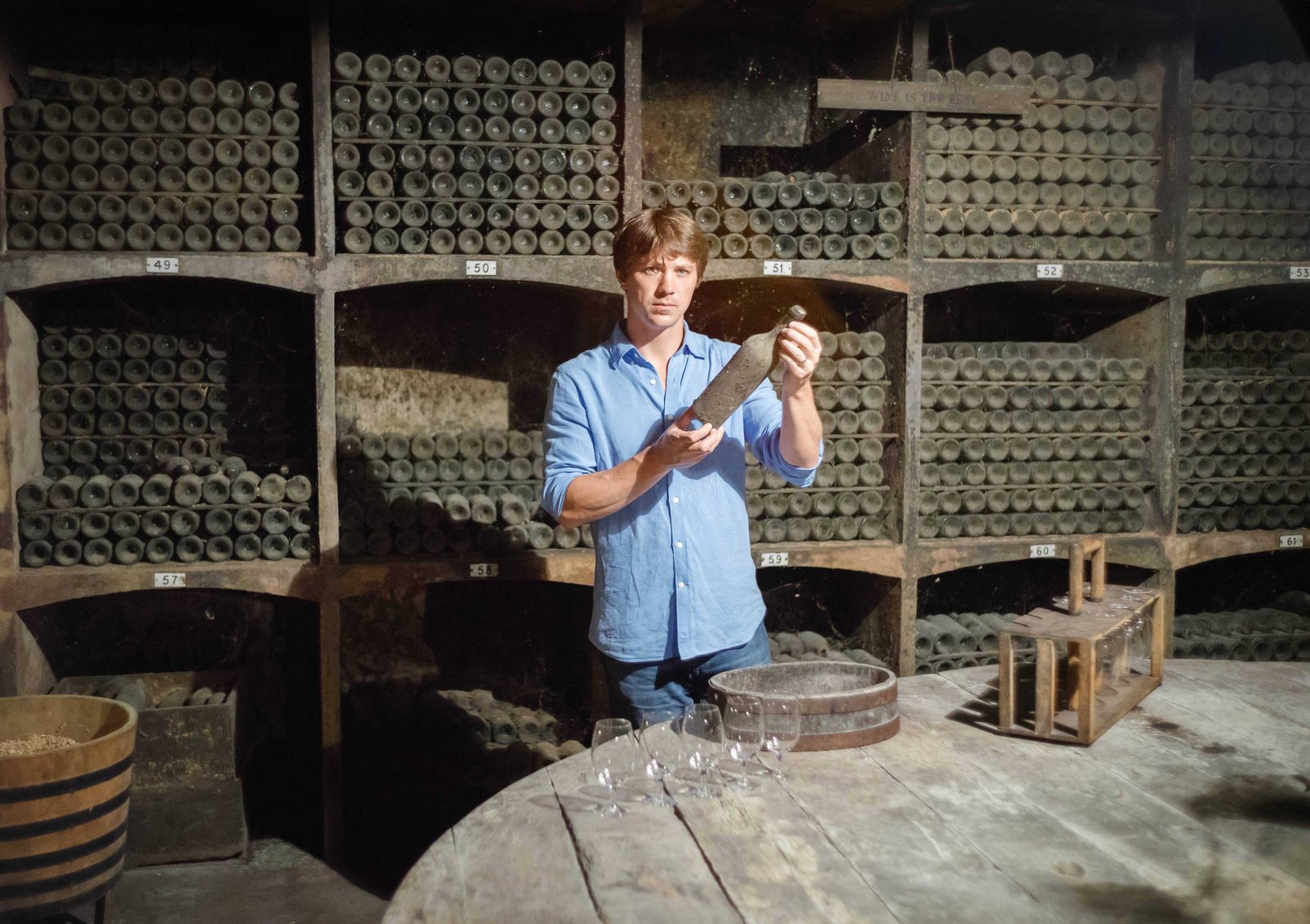
The Most Dangerous Wine: A Smuggler's Story
We interview Jason Wise about his film “Somm: Cup of Salvation,” which tells the story of winemaker Vahe Keushguerian, who smuggled ancient grapes from Iran to make the first Persian wine in over 40 years. Plus, food scientist Anwesha Sarkar explains how she built a 3D-printed human tongue to study food texture; we cook up the original Spaghetti and Meatballs; and Adam Gopnik shares what’s new with wedding food—from the delightful to the downright absurd.
Questions in this Episode:
“What is the effect of adding sugar to spicy dishes?"
"Help me brainstorm a savory hand-pie to enter into the Kentucky State Fair."
Christopher Kimball: This is Milk Street Radio from PRX. I'm your host. Christopher Kimball. Today we share the story of the world's most extraordinary winemaker.
Jason Wise: He is the most insanely passionate, hilariously funny and romantic guy I had ever met
CK: Vahe Keushguerian crosses boundaries in search of the world's oldest grapes.
Vahe Keushguerian: Danger is fine. I don't mind. You know, do I want to go to prison in Iran or elsewhere? Probably not. But anyway, it'll be fine. Yeah.
CK: Finding forbidden vineyards that's coming up later in the hour. But first we're taking a tour of the tongue. Dr Anwesha Sarkar works in a lab that might remind you of Frankenstein. Sarkar and her team have been building a three-dimensional synthetic human tongue. She joins me now. Dr Sarkar, welcome to Milk Street.
Anwesha Sarkar: Thank you. Thank you for having me.
CK: So, let's start by doing some translation here. You are researching how the human palate and tongue reacts to chocolate, and I'll just quote and then maybe you could explain what this means “with a recently fabricated, three-dimensional biomimetic tongue, like surface, which emulates the topography, deformability and wet ability of a real human tongue. We took a multistage approach to decipher the lubrication mechanisms of dark chocolate”. So, my first question is, you created a AI version of a tongue? That is, you recreated the tongue in the lab in some way.
AS: Yes, that's that's very correct. So, one of the things which we understand is that we are very interested about lubrication. And lubrication is a science which is a little bit new in the food area, and lubrication in the mouth is not only linked to the food itself, but also linked to how the food interacts with the tongue, your mouth and so on. So that's the reason why what we did is we developed a kind of artificial or a synthetic tongue, which has the features of a real human tongue. So that's the way we can have a very good objective measurement of what happens in the mouth.
CK: So, I'm sure all of our listeners, as well as myself, are trying to picture this artificial tongue. So, what was it made out of? What does it look does it look like a tongue, does it, I mean, what if I walked into your lab, what would I actually see?
AS: So, you know, people always challenge me and say, it does not look like pinkish red. So, it does not look like a tongue. We can make it red color if people want. But no, it actually looks like a tongue. So, it is a synthetic polymer which is actually 3d printed. And basically, the main thing which we are interested in is the surface of the tongue which is coming in close contact with the food. So, if somebody comes to my lab, they will see really a tongue which looks a little bit more transparent, or polymer colored, like whitish color but if they touch the surface, they will be astonished that, oh, my God, this is a tongue out of a human being's mouth, kind of so that's very, very exciting.
CK: It sounds like a 1950s horror movie. So how do you I mean the papillae, or whatever you call them, those little sensors on the tongue. How many are there? And did you have to have the same number on your model tongue or how many sensors did you put into the tongue itself?
AS: So, this is a very exciting area, right? So, we do have multiple varieties of these features called papillae. So, there are some which are mushroom shaped, which are fungi form papillae, and they contain taste buds. So, this is the most researched area. We know. This is sweet salt, you know, umami and so on. So, these are all done by this fungi form papillae, and they are much less numerous, like in the order of 10s, whereas what we researched, which was very exciting, was a filiform papillae. And the filiform papillae are in in hundreds and 1000s, and the beauty of them is they do not contain any taste bud. They are there. So that was our first question, that why they are there? Because they cannot taste anything, because they don't have any taste connection. Why they are there is more linked to the textural perception to create friction, to hold the food, and, of course, in speech as well.
CK: Okay, so chocolate, let's talk about chocolate, which is so I guess the main thing you're after is, or use that as an example of how we experience it. So, take us through that. So,you have a piece of chocolate, you put it in your mouth, and then, based on your research, what happens?
AS: Yes, so we all know, we all love chocolate. So we went to the supermarket, bought some dark chocolates, low fat, high fat and so on. And we wanted to test the hypothesis that fat contents drives all this perception. So, if you have more fat, you will love it. You will make this chocolate more luxurious. The mouthfeel is enhanced. And what we figured out was that actually chocolate fat content, yes, it matters, but only matters in the early phase of chocolate eating. So actually, it's not the amount of fat, but it is more linked to the surface orientation of the fat. If the fats are located in the surface, the chances of getting those lubricious mouthfeel is higher versus if they are embedded within so it's a very interesting surface interaction going on between your chocolate and the and the tongue surface.
CK: So, one thing you said, the takeaway is that I guess a chocolate manufacturer could produce a low-calorie dark chocolate with good mouthfeel. So, by concentrating the fat on the outside, the total fat would be lower for the whole bar, but you get the same lubricity, I guess, as the term you use at the outset, and the saliva would take over. Is that one of the takeaways here?
AS: Yes, that's correct.
CK: So, let's set aside chocolate for the second isn't texture, at least in my experience, very culturally focused. That is, there are certain textures that people prize in parts of the world that here, let's say in the states we would not like because we weren't used to it as kids. So, to some extent, texture is in the mouth of the beholder, I guess. But you're talking are, do you think there are textural issues that work all the way across the globe?
AS: No, you're absolutely right, that indeed, this is the thing that somebody you know likes a texture which you might not like, or I might like, you might not like, and so on. And that's the kind of area which I'm very intrigued about. And there is a cultural area that we have grew up with from the childhood and so on. That's one angle of looking at it, but the other angle of looking at it is, is there is any difference in mechanical reception. We understand that there are even gender wise differences between the papillae structure. There are age wise differences. Our recent work with University of Edinburgh identified that almost your tongue can be used as a fingerprint. You can identify that person with a reasonable amount of accuracy. So that's pretty fascinating. So, these are the areas definitely of interest, but also the bigger thing is how texture is overall, relevant in perception, in satiety and so on.
CK: So, let's look forward to generation. Can you imagine 25 years from now give me a couple of things that you think might come out of this sort of research or make us rethink food and preparing food, etc.
AS: So, one of the things which I think this can have a huge impact is we are all getting older, and in few years, we will be reliant on many types of texture, modified foods. So, there are a lot of work going on in the world around 3d printed food products which are exactly looking and exactly texturally modified, like, let's say, a meat steak, but they are much more easy to eat without choking and so on. So, this is one of the core area of research which we are seeing the texture has an immediate impact increasing the nutrient delivery so that, you know, people do not suffer from malnutrition. And the second area which we see a lot of interest is about moving towards alternative proteins. So, we believe in another decade or so, we will be in a much more better situation on developing foods that are much more texturally pleasant, much more juicy and nicer, and we can move towards a much more sustainable food system. And as a food scientist, I believe my part will be to make it way more palatable, and the only way to do it is understanding what happens in the mouth.
CK: Fair enough. Anwesha, thank you so much. I've I would love to see the the tongue, though I think, I think that's really an amazing story. Thank you so much. I appreciate it.
AS: Thank you. Thank you very much, Chris.
CK: That was Anwesha Sarkar. She's a professor at the University of Leeds School of food science and nutrition. Now I'm joined by my co-host, Sara Moulton to answer a few of your cooking questions. Sara is, of course, the star of Sara's Weeknight Meals on public television. Her latest book is Home Cooking 101. So, Sara, you probably watched The Bear. I never have, but obviously it's doing very well. And people love it. Do you love it? And from a culinary point of view, is it accurate?
Sara Moulton: Well, I'm going to try to be real brief. I wouldn't watch it for the longest time because it was too real. I knew it from what I heard people say in terms of the tension and the stress and the horrible things, not horrible. It happens stuff that happens in the kitchen. But then finally I gave in, and the husband and I are halfway through, and we're enjoying it, but it is, I can't believe they call it a comedy. It is one of the most stressful series I've ever watched. I think it's very accurate. I really like all the characters. I feel for them. A lot's true about what they talk about in terms of culinary but one thing that really struck out, I'm sure I told you the Julia Child story about how there was somebody that she was looking to hire in Good Morning America to replace me, because I did all her prep. And one of my girlfriends, who was very, very proficient, had gone to La Verne and worked in restaurants came in to try out. I thought she was great. And then I said to Julia afterwards, well, how do you think so? And so did. And Julia said, no, dearie, she's no good. She said she sliced the onion the wrong way. (Oh, Lord) You've got to slice it lengthwise. So, you cut the onion in half, and you follow the ribs. If you slice it into half-moons, you're slicing it wrong. And they did do that on The Bear, and I have to say it was like nails on a blackboard.
CK: Meanwhile, they're getting all sorts of awards. And, you know,
SM: It's a great show. And I love the people on it, and I love that the sous chef is a woman and really strong and really good, and it's wonderful. You know, I'm hoping I can make it all the way through.
CK: So, all right, time take call.
SM: Welcome to Milk Street. Who's calling?
Caller: this is Josh from Chandler, Arizona.
SM: How can we help you today?
Caller: I've been really liking making Mexican pork chile verde over the years, and I've gotten pretty good at making it from scratch. I made it for my family, and it turned out like pretty well as well on the spicy side. So, I know common thing to do is add sugar to, like, cut down the spiciness. So, I added a couple tablespoons of brown sugar to it, and it kind of made it less spicy but I was actually more impressed, like, with how like the sugar, like brown sugar, like made it, like, tastes like a much more, like rich, like, flavor profile. And I've kind of been like, adding that ever since. And I don't normally really see any recipes call for, like, adding sugar to a dish like that. I'm kind of curious, like, what is brown sugar really doing here? Like, what are the adding here? And are there other types of sugar that maybe would be something similar to add to the dish?
SM: Well, let me start by saying, if you liked it better after you added the brown sugar, I think there's nothing wrong with continuing to add it. It's not traditional in, you know, Mexican cuisine. But here's what happens. What kind of chilies were you using?
Caller: Usually I use, like poblano I mean, I use the tomatillos, you know, because of the base, and then maybe one or two jalapenos, and then, you know, maybe four poblanos, right? And if, sometimes, if I don't have any in the grocery store, sometimes I do like Anaheim, but I usually like poblano chilies,
SM: Yeah. And they can range, as can all chilies in their heat. So sometimes they take you by surprise. Well, there's two ways to tamp down that capsicum hit that hot stuff, and one of them is indeed sugar, and the other one is dairy. That's why, oftentimes in spicy cuisines, you'll see they are accompanied with a dab of sour cream or a dab of yogurt. Indian cuisine would be yogurt. Mexican food would be some kind of crema or some sour cream, which helps to put out the heat. The two things do a happy dance. Likewise, if you've made a dish that's savory but has some sugar in it, and you feel like, oh, geez, it's a little too sweet, there's two ways to tamp down the sweet. One is with acid. Of course, salt helps balance sugar too, but the other one is with chilies. And you can add chilies, so you don't even really taste the chilies, but they take down the sugar. So, it's all a balancing act, and it's very personal, and you should do it if it makes you happy. What brown sugar also contributes is it's got some molasses, you know, it's like granulated sugar with some molasses in it, and so it's got that nice sort of deep molasses backdrop, which is probably why you see the depth of flavor. But let's see what Chris has to say.
CK: Well, I think they're two totally separate issues. One is spiciness. One is does sugar do something to the dish that you prefer. So, I would go back to the chilies. Guajilloes are very fruity and have very little heat to them. So, you might do that. Poblanos are very mild. Even if they range, they're always mild. You could just get rid of the jalapenos entirely or cut them down. I would deal with a spiciness thing separately by selecting the chilies you want to use. Also, the tomatillos can be very sour. I don't know if you're getting sort of riper ones or not, but that could also be contributing to the need for sugar, because maybe they're just not ripe and they're particularly sour. Most cultures in the world have sweetness in their main courses, right? They do it all the time. You know, sauces with fish sauce and lime juice and sugar, or soy sauce and sugar, et cetera. So, there's nothing wrong with that. It's not traditional in most Mexican cooking. It is occasionally, but that's fine. But I would deal with the spiciness in and of itself by selecting the right chilies, because in Mexico and lots of other places, Chilies are there not just for heat, but they're there for flavor. So just select high flavored chilies that don't have a lot of heat, and just cut down the jalapenos. And, you know, use something else.
Caller: I know it's not traditional, but if I were to add, like, are there other types of sugars that you can like, back add to the dish
CK: Yeah, palm sugar, coconut sugar, any unrefined, deeply brown sugar, and it is used in Mexican cooking occasionally. So, you could do that, sure, but just get the least refined, darkest sugar you can find. Palm sugar is particularly good I think I have some of that around for savory cooking. I really like that a lot. That would probably be a pretty good choice.
Caller: Okay, cool, thanks. I'll go ahead and do that next time
CK: It sounds like you have a good idea, so try it
SM: Yes. Okay, Joshua, thanks.
CK: Thanks
SM: Thanks for calling.
CK: Take care.
SM: Yes, bye bye
Caller: Take care.
CK: This is Milk Street Radio. Sara and I are here to tackle your toughest culinary challenges. Give us a call anytime. Our number 855-426-9843, that's 855-426-9843, or please email us at [email protected]. Welcome to Milk Street who's calling?
Caller: This is Melanie.
CK: Hi, Melanie, how are you?
Caller: I'm very well. How are you?
CK: Pretty good. How can we help you today?
Caller: So, I have been entering the Kentucky State Fair for the past few years, and one of the categories is a savory hand pie competition. What's tricky about this competition is that the judges taste the hand pies cold. So, you know, I bake them at home and then take them in and they are refrigerated until the judges actually do the taste testing. And so, I'm looking for suggestions about combinations of things that will taste good and hold up in pastry in a cold state.
CK: This is a really easy answer to that. Just grab Mastering the Art of French Cooking, and get a pate de Campania, you know, a country pate or a terrine and they are designed to be eaten probably fairly cold. And many of them actually have a pastry crust, you know, around them, or whatever, but they're specifically designed not to be served warm. I would definitely think of pork, and I would think about lots of spices, and I would just grab a recipe from Julia or someone similar, and they've done all the work for you, and just make it into a hand pie. That's what I would do. You'll get a blue ribbon.
SM: You could put in a few cornichons, yeah, serve it with some cornichons and a little bit of mustard on the side for dipping.
CK: I mean, someone spent hundreds of years figuring out those recipes, and so you're good to go.
SM: I think Chris's suggestion is brilliant, but I think that is the stupidest thing I've ever heard of. It's like having a souffle competition, you know, to make a hot souffle and then put it in the refrigerator and they eat it cold. I mean, you're looking for something that's got tons of flavor, because when things are cold, they don't have as much flavor as they do when they're hot or warm, but also something that doesn't have a ton of just icky fat. Pate it's figured out how to get the fat in there, and there's plenty of it, but it's not congealed fat. You want something that's tender after it's been cooked and cooled. And that's not a lot of say proteins, meats, they aren't, you know, they're going to be tough after they've been cooked and cooled, (right) So, you know, if you don't go this route, I'd go cream cheese is something that, if you could combine cream cheese with something else, maybe bacon and cooked onion.
CK: Well, should she use a terrine? I mean, there's a difference between a coarser sort of terrine texture and a really smooth pate, like a riette or something.
SM: Here's the trouble. The trouble is, they're taking it right out of the fridge. It's just wrong.
CK: Well, are you allowed to have a dipping sauce, or everything has to be included in the pie.
Caller: At least so far, dipping sauces are not allowed.
SM: Well then put cornichon mustard inside the pate hand pie (okay) yeah, we’re rooting for that one. Right, Chris?
CK: Yeah
SM: I think so
Caller: I think so that sounds amazing.
CK: All right,
SM: And the first time you do it, don't bother making your own pate just buy some from the store. See if it's Oh, just to see if it's a good idea.
CK: Well, wait, wait, wait, wait, aren't there rules that you have to make it
SM: I’m just saying to see if she wants to pursue this route
CK: Oh, I thought you talked about cheating
SM: A pilot, no, no, I wouldn't ever cheat. All right,
CK: All right, we’ve got to call back after this is over.
SM: Yeah, we want to know how it goes,
CK: so please let us know
Caller: Oh definitely
SM: We're rooting for you.
CK: Yeah. All right.
Caller: Thank you so much. This is great. Thank you so much.
CK: Bye
Caller: Thank you. Bye, bye.
CK: You're listening to Milk Street Radio after the break, the story of the world's most dangerous wine that's coming right up. Hey, Milk Street listeners, this is Christopher Kimball, and I need your help. We're working on our Thanksgiving show, and we'd love to hear about your biggest Thanksgiving disasters from exploding oven doors. That's a real story actually, to family drama. We want to hear your most hilarious, embarrassing and catastrophic Thanksgiving stories. Please leave us a voicemail the number 617-249-3167, or a voice memo at Radio tips at 177 milkstreet.com. One more time you can call us at 617-249-3167 or email us a voice memo at radio tips at 177 milkstreet.com. Please include your name and where you're calling from, and thanks. I'm this is Milk Street Radio. I'm your host. Christopher Kimball, right now. It's my interview with Jason Wise. He's made many documentaries about wine. His first was Psalm in 2012 his latest is called Cup of Salvation, which won the 2024 James Beard Award for visual media long form. In the film, Jason tells the story of Vahe Keushguerian and his daughter, Amy and their mission to make wine from the oldest grapes on Earth. Jason, welcome to Milk Street.
Jason Wise: Thank you, Chris, a pleasure to be on
CK: So, a documentary about making wine in Armenia. Give me a little history and tell me about why the wine or the grapes in Armenia have a special place in the world.
JW: Yeah, sure, well, since you mentioned history, we have to talk about what you mean by where is Armenia because that's a place more than a country for most of its existence. You know, used to be part of modern-day Iran, Lebanon, Syria. Now it is a country, post-Soviet and it's right in the middle of the crossroads of everything, the Silk Road, a lot of things that are very fascinating, if you're going to try to look at why something happened in the East that influenced the West. Grapes fit really well into that, you know, to your question, because grapes are likely from Armenia, or at least northern Iran, Georgia, Armenia, that surrounding area. And so, for me, I fell in love with this area, with the prospect that maybe all the wine we drink, the grapes are from this spot. So
CK: So, you need a protagonist in every documentary. So, who's your protagonist and what? What's the story arc here?
JW: I mean, what I set out to make this film was like this planet earth of wine. So, like how wine and grapes have been carried by humans through religion and war and all these things, to get to this point, it is today where it's a kind of a commodity. But when I got to Armenia, I was told by a producer of mine, if we have any time, you should interview this guy named Vahe kurskarian.
Vahe Kurskarian: We grew up as Armenians in a host country. Lebanon was a host Syria was a host country. But the beauty of being on your own land, your own soil, your own country is that, in the context of vineyards you can plant and you don't have to worry about it from here, we're not going anywhere. I'm not going anywhere. My family will be here, so the vineyards that we plant will be here for a very long time. Yeah. So.
JW: And I sat down for lunch with this guy, and we had about six or seven bottles of wine, probably, and realized he is the most insanely passionate, hilariously funny and romantic guy I had ever met. I'd never had a character like him. Nobody would risk their literal life to prove the beauty in what they do.
CK: And pretty quickly, after that meeting, you two, started plotting a road trip.
JW: That's right, that's right. I mean, I pre-interviewed him. I didn't even mean for this to go in the film. And he just mentioned to me casually, do you know that you're, you know, a very small amount of kilometers away from the Iranian border. Now, I'm from Cleveland, Ohio, Iran might as well be the center of the moon. And then he tells me, you know, Armenians are allowed to go into Iran as tourists. Like, we don't need a chaperone. We can just go. I can just drive across the border like you do in Canada, and I, like, drop the camera. Like, let's go right now. What are we doing? Why are we even talking about anything else? Let's go see if there's grapes in Iran still.
CK: So, part of the documentary is he goes to Iran to buy grapes and then brings them back to make wine. So, he obviously can't make wine in Iran, so we had to pretend he was buying grapes for some other reason. So why bring in grapes from Iran in the first place?
JW: Alright, well, you know, you have to understand, going back 5000 years, up until the 1960s Iran was probably the belly button for wine in the Middle East. You know, they just had tons. I mean, they had 500 wineries in 1978 the French were putting tons of money in but those wineries went back all the way to Cyrus the Great.
Voice: I think people often when they think Persia, or they think Iran, they think of the regime that's going on with religion, and then they pull away being like, well, they can't drink wine. And it's just like, let's go back to history and see where it all started.
JW: Any time you can find a place that's had grapes and vines for a really, really long time, you're going to find something interesting. But of course, the religious revolution shut everything off in 79 so you have to go to the regions of Kurdistan in the north, or Shiraz, which is in the south and very hot to even look at table grapes, which, or they call them table grapes now, they are wine grapes, but they still have managed to keep some in the ground on the auspice that it is for that. Now, don't get me wrong, anywhere you can make alcohol people will do it. I promise you they make it in prison with fruit cups. So, there's definitely people in Iran making tons of wine in their basements, but nothing on a scale. And the big question is, there's this grape called Rasha in Iran. The people know of it, but no one's done any testing. And it could be, it literally could be the oldest grape in the world, and it's in Iran, and no one can get near it. And so, when Vahe mentioned to me that he really, for a very long time, wondered what happened to all the grapes? And I was like, so do I and so Vahe and I looked at each other, and it was like, okay, if you're willing to put your ass on the line and go in there, let's do it.
Voice: This is going to be the first time anyone is making wine with modern technology from these Iranian grapes. And that is just too hard to pass up. Honestly, it's just too exciting. It's very risky.
Vahe Kurskarian: I don't look at the risk. I look only at the rewards. If we don't take risks in life. What's the point?
JW: Once we've got the footage back I sort of realized, like, oh, what have we done? It's like, what if? What have we actually done? And truthfully, what we did is just truck a bunch of grapes from Iran across Kurdistan, probably not very legally, into Armenia.
Vahe Kurskarian: Professional people that truck between Iran and Armenia. I'm not saying they bribed or they didn't bribe, but I'm saying they figured it out how to bring it.
CK: So, okay, the documentary is filmed, it's edited, it's shown what's happened since you filmed it with Vahe and everybody else.
JW: You know Vahe, we did a premiere of the film in Yerevan, Armenia, which is, you know, borders Iran it went over crazy. Everyone loved it. And I just the cojones on on Vahe is something that is on another level, because for me, I insisted that we blurred everyone's faces. I didn't want anyone to get in trouble. And for Vahe, he's like, yeah, let them come Vahe's theory is interesting. His theory is, if the Persians find out they might have the oldest, best grapes in the world. He believes that instead of them going, we're going to shoot you in the street, they're going to be like, alright, you're going to tell people we do the best, huh? Maybe allow a little bit so it's, I haven't had any strong repercussions in that regard, and I really seriously pray that there will not be any.
CK: So, I do remember this scene when he's telling he's with his daughter about going into Iran, and, you know, not getting arrested, not to come visit you in a jail cell. And, yeah, he just seemed like, well, yeah, I hope not.
Daughter’s Voice: Well, it's not. Please don't. if you have to call me from jail, just don't call. The government has an alcohol ban. It's extremely illegal, and what we're doing is very public.
Vahe Kurskarian: A little danger is fine. I don't mind. You know, do I want to go to prison in Iran or elsewhere? Probably not. But anyway, it'll be fine. Yeah. It’ll be okay, it’ll be okay
CK: it's like life, things will happen, and we'll just take it one day at a time, right?
JW: That's right, that's right. I mean, the only time he's really nervous is when he has to have people taste the wine at the end of the film. These like master sommeliers and such. It's crazy we were. I mean, it's the most hilarious thing in the world, that real danger isn't scary but what people think of all the work you did is.
Vahe Kurskarian: It's the first bottle, actually, without over dramatizing it, it will be first bottle of fine Iranian wine ever made in the last 40, 50 40 some years. And before that, there was no technology to make wines like this. So, this would be the first bottle made a modern style wine in the history of Iran. Let's put it that way. So, for what it's worth, we tasted it, and I am hoping, I'm hoping we are onto something
CK: So, so tell me about the grapes from Iran. So, they come into Armenia, genetically tested. What did you find out about those grapes?
JW: They're still being tested. But essentially, you really need, it's kind of like a 23andme thing you need a lot of testing of other grapes in the area, and other things to truly say here's the path grapes took and where the center was. And so, there's no doubt it's this Georgia, Armenia, northern Iran, kind of circle is where grapes are originally from. So, it's no question that this Rasha grape is one of maybe the three or four oldest grapes in the world. Is it the oldest is the big question. So, the genetic stuff is going to take time. And then, of course, all the all the nerds, have to argue about it for 10 years before anybody agrees on anything. And so, it'll take a while for that. But the wine's fantastic. I mean, especially considering you wouldn't take 20 tons of grapes, put them in a refrigerated truck, and then truck them for days (I noticed that) yeah, I mean, I think that's why he's so nervous when he's having these professionals taste the wines. Because for Vahe, he doesn't want this to just be a gimmick. You know, it's not just a bit I went to Iran and did this crazy stunt. He wants it to be like, this is world class wine, because I owe it to the Persians to have done this, right. But the wine is, I mean, it's lights out. It's really, really stellar.
CK: So, the thinking, though, is wine grapes came from this region of the world, you know, 6000 years ago, whatever. And so, all the wine being produced in other places in the world, let's say France. The thinking is there is some genetic tie to these grapes that we're talking about now.
JW: 100% and I think it would be a massive, massive discovery, because I'll tell you this. Now whether anybody believes in religion or not, there's the idea that the Garden of Eden, it was not an apple, which would have been impossible. That is a late Christian, you know, Bible thing where it would have been an apple that Eve ate. The idea is it's either a banana or a grape. It has to be one of the two of those, considering that part of the world and what actually lived there at the time. And so, you know, genetically, this stuff's fascinating for me, because you can say, if grapes come from this place, and grapes may have been what you know, Eve, according to lore, ate and she gave knowledge to man. Well, then that would put the Garden of Eden in the ___ Valley in Armenia or in northern Iran. And that would be fascinating, wouldn't it? So, like, for me, I'm just, I'm just this stuff all has links. And to me, it's really, it's beyond like this wine is tasty, or the geopolitics, or any of this stuff, it's like the foundation of kind of how we identify ourselves might be linked in this.
CK: Jason, thank you so much. I'm really looking forward to trying that wine.
JW: Well, I really look forward to hearing what you say. Chris, it's special stuff.
Vahe Kurskarian: It is a certain poetic beauty of continuing something that people started 6000 7000 years ago. And if you don't have that kind of poetic beauty in your life, what's the purpose really?
CK: That was Jason wise, the film Cup of Salvation is now available on Apple TV, Prime Video and some TV you're listening to Milk Street Radio coming up we make the original spaghetti and meatballs. That's after the break.
Hi Milk Street radio listeners this year for our Thanksgiving episode, I'm taking calls with Jet Tila from size to turkey, please send us your biggest Thanksgiving cooking questions. Simply email us at [email protected]. One more time, please send your Thanksgiving questions to [email protected] and we'll be in touch. Thanks. I'm Christopher Kimball. This is Milk Street Radio. I'm joined now by JM Hirsch to talk about this week's recipe, spaghetti and meatballs. JM, how are you?
J M Hirsch: I'm doing great.
CK: You know, I've said for this is so embarrassing I've said for over 40 years, real Italians don't make spaghetti and meatballs. It's, you know, an Italian American dish. And you and I have talked about this, but I think both of us have found maybe that's not true.
J M: Yeah, well, true Italians actually, really don't eat spaghetti and meatballs the way we eat spaghetti and meatballs, which doesn't mean that they don't eat spaghetti and meatballs. Does that make sense?
CK: Well, you'll make sense shortly, right?
JM: All right. Well, first you need a bit of a history lesson. So, it's important to understand that a lot of the Italian immigrants to the United States, you know, especially in the 1800s the early 1900s came from Southern Italy. And in southern Italy, they have very clear notions about meatballs and pasta, and they are not combined. You know, pasta is a primo first course, meat is a secundo a second course, and you don't mix them, and their meatballs are quite large, and they're meant as a main course for that reason. And you don't eat them with spaghetti, although you might have eaten spaghetti as the first course. Those immigrants came to the United States. They brought their traditions, and somewhere along the lines in the United States, we said, hey, we like these big meatballs we're going to throw them onto some spaghetti, and we're going to call it spaghetti and meatballs. And meatballs. And evermore, you know, Prince spaghetti day that, however, is not a true Italian tradition. That's an Italian American tradition. And so, you are right that for years, we've always thought of spaghetti and meatballs as an Italian American dish, except when you dig back into the history, you find that there are actually pockets of Italy where spaghetti and meatballs really is consumed, but it doesn't look quite the same as what we're used to.
CK: So, we're talking pallottine here. We're talking about small meatballs, right?
JM: Yes, and now, just to be extra confusing, you should know that in Italian, there are no fewer than 9 million words that mean small meatballs. But the dish I went in search of was pasta a la chitarra con pallottine. Now that basically means pasta made on a chitarra served with tiny meatballs. So chitarra meatballs, really, and this is a classic dish from the Abruzzo region of Italy, which is the East Coast, and they have a very distinct tradition with their pasta. The chitarra is both the tool that's used to make the pasta and it's also the pasta itself. Abruzzo, unlike Southern Italy, had a much richer tradition of meat eating, because there was a lot of shepherds and sheep in the area, and so tradition in Abruzzo was to form these tiny meatballs, which are small enough so that you could get multiple ones on the fork at the same time with your pasta, toss it with a Pomodoro or tomato sauce and chitarra pasta, and make this lovely, what we would call spaghetti and meatballs. So it really is a quite a traditional dish. Just doesn't look quite the same as what we're used to.
CK: So, two questions in Naples, when you were there a few years ago, the large meatballs were like 40% bread, right? (yes) It was a very heavy bread mixture. I assume these meatballs have much less bread in them. And two, are these meatballs fried in oil first and then added to the pasta?
JM: No, they are not. They don't have much bread in them. They're very tiny meatballs, as I said, and they don't fuss with them. You know, unlike in Naples, where I'm not going to say meatballs are fussy, but as you noted, they're large and they're very tender thanks to a really high ratio of bread in Abruzzo, they just get on to business. It's usually beef or a mix of ground meats with a little bit of egg, a few breadcrumbs, a little bit of parmesan, a little bit of nutmeg, which is a classic seasoning for ground meat in the area, and they just pinch off little balls of this meat mixture, and they don't brown them. They don't bake them. They don't fuss with them at all. They throw them right into the sauce, and they cook really quickly. Now that quick cooking is actually key. Not only is it efficient and easy. It also keeps them really tender, because since you're not adding a lot of bread, as they do in Naples, to keep the meatballs tender, you don't want to overcook them and make them tough. They cook really quickly in the sauce, and they're done.
CK: Once again, you've proven that I'm wrong or we're wrong. I guess I could drag you into this as well. So the original spaghetti and meatballs did originate in Italy, in Abruzzo, simple to make, and delicious. Thank you, JM.
JM: Thank you. You can get the recipe for the original spaghetti and [email protected]
CK: This is Milk Street Radio. Now it's time to hear from Adam Gopnik. Adam, how are you?
Adam Gopnik: I am very well. Christopher, how are you?
CK: I'm pretty good.
AG: I am particularly well, I'm pleased to say, and you can offer me Mazel Tov, because my wonderful son, Luke Auden, is getting married to the love of his life, Zoe Sofia, his longtime girlfriend, just got her MD, she's a full-fledged doctor now, and they are celebrating by getting married.
CK: Well, that for many people, that's the perfect thing. Marry a doctor.
AG: He's a musician, so it's a good idea to be married to a doctor. Anyway, I have been thinking a lot, as you can imagine, about wedding feasts. I'm sure you have been to a fair share of wedding feasts. Does anyone stand out particularly for you?
CK: I’d have to say the food itself, at least during the period I was going to weddings, seemed not to be as important as I thought it should have been, in a strange way.
AG: This was true of my own wedding as you know, I am someone who appreciates food. But I got married in 1980 if you can imagine, at that kind of crucial pivot moment from hippie to yuppie, cold salmon with green sauce, that's all I remember from our wedding feast, (perfect.) And you're right. People didn't care as much about food, I think, at that point. But my son's wedding, of course, is going to be held at a wonderful restaurant. There are groomsmen and maids of honor, and we could stop and think a little bit about why things have taken such a retro turn in weddings. They have an insistence on formality in a world that demands little, and perhaps that's the reason. It's the same thing that we have talked about in terms of my kid’s enthusiasm for cocktails, right? They're always kidnapping old rituals for new purposes in order to leap past their parent’s stale Bohemianism. But the food the bride and groom to be have been picking out places to go. My favorite story is when they went to a wonderful, sustainable restaurant and they were given a plate that was placed on a tray with twigs and flowers and pebbles, and they began eating the twigs and flowers very dutifully, until the server came over and said, no, no, that's just the thing we put the food on. But the startling thing for me as RSVPs began to come in, is that we had on the invitation if you have a food allergy or aversion to to put it in. And I expected we would get one or two. You know, I have a deadly allergy to peanuts. But instead, all of these wedding guests were offering their specific preferences, and my favorite was, get this on the RSVP. No Bananas. What? Bananas? We have bananas. False bananas, right? Flammate bananas. So, in a state of some confusion, of course, about the purposes and meanings and manners of wedding food, I went to a great book, and that's Elisabeth Lourd’s great book, Sacred Food. She, as you remember, does a beautiful circumnavigation of the way we use food to mark births and deaths and rites of passion, rites of passage and rites of passion.
CK: I think you got it right the first,
AG: Yes, I think, I think I did. And she looks at weddings around the world, and do you remember, Christopher, what she said was the two terms that form the universal grammar of the wedding feast.
CK: No, I have no idea,
AG: Sweet and round. Wherever you go on the globe, at a wedding, the food that's served is sweet and round. Now, the roundness is obviously symbolic of fertility, and she uses, for example, the crocombe bush that's always served in a French wedding. You know that great pile of cream puffs that are stuck together with caramel and that you then break with a hammer, and then all the little cream puffs roll off, and they are round and they are sweet. And she makes the very sage point that wherever you go in the world, no matter what the normal dinner diet is, sugar, fruit, honey is always added to the wedding feast. And I think it's because sweetness is essentially a way of symbolizing sex without eroticism. It's the way we suggest the purity of pleasure. And the other thing that she points out that you find in every wedding feast is a marriage of opposites. In Chinese wedding feasts, there's always a ying and yang. You marry shrimp and chicken, you marry sweet flavors and sour ones. That the idea that the wedding feast itself should represent union of the coming together of very different kinds in one place. But it struck me, the more I thought about it, that it isn't so much that of our wedding feasts anymore. We live in a pluralistic and divided society. It's not two clans coming together, its individual people coming from all around the world to celebrate this bringing together of two people who have not incidentally, been together, in any case already for a long time, we invent where our ancestors inherited. And the force of our invention, the way we make the wedding feast new, the way we cater the wedding feast to all of those original tastes is, I think, the test of our commitment, sweet and round, I think can be continuities, but I think they'll be expressed at my son's wedding, not only on the things on the table, but through the actions around the table. And that's the toast and the dance. I shall toast my son and his new wife, and my wife will dance with him both moments, I think will be round, and I hope they will be sweet.
CK: You know, that's the one wedding toast I definitely would want to hear. If you give the toast, it's going to be good. I would have one comment though you say the sweet and sex. I would my first thought is that sweet was rare and expensive throughout most of human history, right? So, honey, you know, was not cheap. Sugar was very expensive till the latter part of the 19th century. So, I wonder if sweet at a wedding was an offering to the gods of something quite rare and unique. It was, it was a special event to have something sweet, no?
AG: That Christopher, that is a very sage remark, I think that I'll take it a step further and say that I do know, having been reading about this, that in Chinese weddings, for instance, it's considered very important to have the rarest things. That's why they have Bird's Nest Soup. It really made with a real bird's nest, because the more utre and difficult to obtain the ingredient, the more elevated and special the wedding. I will add talking about sweet that in reading through Elisabeth Lourd’s wonderful study of global wedding feasts, there was an absolutely irresistible recipe she gives from Indonesia for the Kerala wedding coconut curry. And I was so enthused by that I thought, we have to force this onto the menu. But you know why we cannot have it on my son's wedding menu?
CK: This is, this is like one of those vaudeville jokes. No, why?
AG: Because it contains four bananas.
CK: Well, I have one last thing you said was interesting. You said that in the past, we would look to tradition right to shape our view of what our wedding might be, and today, we look towards the future. And I guess the jury is still out about whether looking to tradition is good for culture or whether throwing out tradition and reinventing ourselves is always the best path forward. And I'm not. I end up on both sides of that coin.
AG: You know, you put your finger, if I may say, on something profound, and it's a recurring theme is we've had all of these countless conversations about the meaning of food and the philosophy of eating, you always come back to that same question, right? What are the virtues of tradition against the joy of innovation and invention? Food puts that very basic human question in the spotlight in a way that perhaps no other activity does. And of course, a wedding is a moment when you want both tradition and the new
CK: Adam thank you very much. And I would like a full text of your toast, please.
AG: I would love to give it to you. And may I wish you a sweet and round life
CK: That was Adam Gopnik, staff writer at The New Yorker. His latest book is The Real Work on the Mystery of Mastery. That's it for today. You can find all of our [email protected] or wherever you get your podcasts. You can learn more about Milk Street at 177 Milkstreet.com there, you can become a member and get all of our recipes, plus access to all livestream cooking classes, free, standard shipping from the Milk Street store and much more. You can also find us on Facebook at Christopher Kimball's Milk Street. Instagram is 177 Milk Street. We'll be back next week with more food stories and kitchen questions and thanks, as always, for listening.
Christopher Kimball's Milk Street Radio is produced by Milk Street in association with GBH co-founder Melissa Baldino, executive producer Annie Sensabaugh, senior editor Melissa Allison, producer Sarah Clapp, Assistant Producer Caroline Davis with production help from Debby Paddock. Additional editing by Sidney Lewis, audio mixing by Jay Allison and Atlantic Public Media in Woods Hole Massachusetts. Theme music by Toubab Krewe, additional music by George Brandl Egloff, Christopher Kimball’s Milk Street Radio is distributed by PRX.
In this episode
ADVERTISEMENT
ADVERTISEMENT

Simple, Bold Recipes

Digital Access
12 weeks for$1
- EVERY MILK STREET RECIPE
- STREAMING OF TV AND RADIO SHOWS
- ACCESS TO COMPLETE VIDEO ARCHIVES

Insider Membership
12 weeks for$1
- EVERYTHING INCLUDED IN PRINT & DIGITAL ACCESS, PLUS:
- FREE STANDARD SHIPPING, MILK STREET STORE,
to contiguous US addresses - ADVANCE NOTIFICATION OF SPECIAL STORE SALES
- RECEIVE ACCESS TO ALL LIVE STREAM COOKING CLASSES (EXCLUDING WORKSHOPS & INTENSIVES)
- GET YOUR QUESTIONS ANSWERED BY MILK STREET STAFF
- PLUS, MUCH MORE

Print & Digital Access
12 weeks for$1
- EVERYTHING INCLUDED IN DIGITAL ACCESS, PLUS:
- PRINT MAGAZINE SUBSCRIPTION
- 6 ISSUES PER YEAR

