





Your email address is required to begin the subscription process. We will use it for customer service and other communications from Milk Street. You can unsubscribe from receiving our emails at any time.
Episode 316
August 29, 2024
August 29, 2024
Carla Hall Reclaims Soul Food
Chef Carla Hall is here to change the way we think about soul food. Plus, we explore cooking with cannabis; Adam Gopnik tells us how to cope when our favorite restaurants close; and we serve up Sweet Fresh Corn Pudding.
Questions in this Episode:
“On television I often see the experts break up the egg yolks (whole eggs) after pouring in the wet ingredients or adding wet into dry when baking. Is there a reason behind this? I like to break up the yolks just a bit in a bowl before I add them in. Is there any science behind adding yolks whole to a recipe and beating them into the ingredients?”
“I want a basic recipe for homemade pasta. Every time I make it, I go to the internet and look something up, but 50% of the time, it just doesn’t work.”
“I bought a small container of hing/asafoetida when I was cooking some Indian food. Now I have this bottle of spice that I’m not sure how to use up.”
“When I go to the market, sometimes I see broccoli, broccoli rabe, and then broccolini all together. What’s the difference or should I just try them all?”
“I have a small indoor orange tree. We think it’s a Calamondin tree. What would you recommend I do with them?”
“When a recipe calls for breadcrumbs, I am not sure what to use. Can you give a breadcrumb tutorial? How to make? Dried or fresh? Panko and other interesting varieties?”
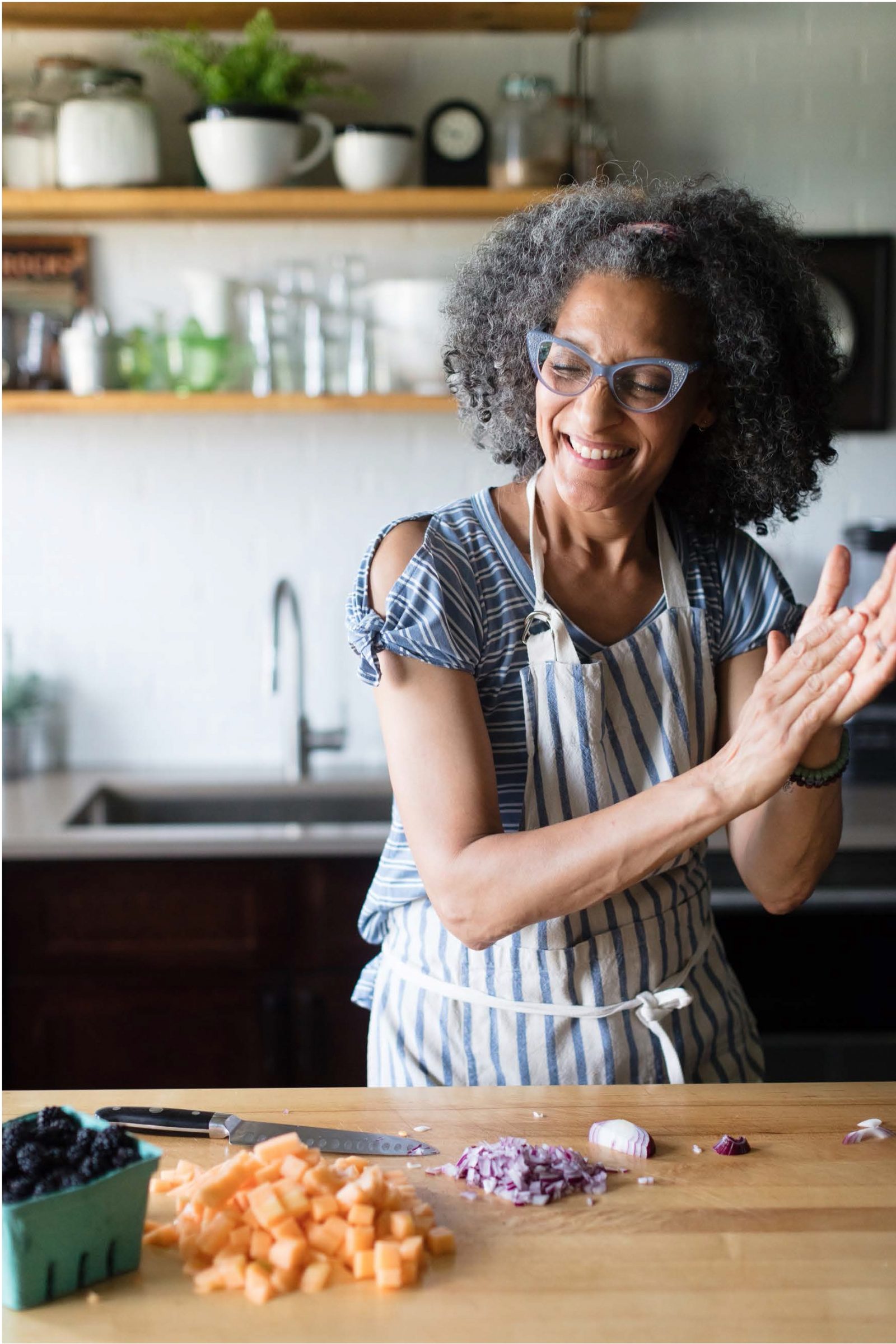
Christopher Kimball: This is Milk Street Radio from PRX I'm your host, Christopher Kimball. Today we’re chatting with chef Carla Hall about the real soul food, how fried foods became more popular with the great migration north, how real soul food is fresher and healthier and why she says “if you’re not in a good mood the only thing you should make is a reservation”
Carla Hall: If you don’t feel like making it and you’re doing a grilled cheese, the bread will be askew, the bread is burned before the cheese melts and so that just says, you don’t care.
CK: Also coming up, my new favorite dessert, Vivian Howard's sweet fresh corn pudding, and Adam Gopnik bemoans New York City’s steady drum beat of restaurant closings, but now it’s my interview with the authors of Bong Appetit that Rupa Bhattacharya and Farideh Sadeghin . Bong Appetit started as a video series by Munchies. Rupa is the editor-in-chief of Munchies and Farideh is the culinary director. Rupa and Farade welcome to Milk Street
Rupa Bhattacharya: Thank you. Thank you so much so happy to be here.
CK: Well especially if you’ve been eating some of the food from your book, you probably are happy right? I mean so, okay here’s my question like I’m a child of the 60’s, I was there, my obvious question is why not just smoke a joint before dinner. What’s the benefit of actually cooking with weed or cannabis other than just doing it for fun.
RB: Well so that actually where this book departs from a lot of the historical cannabis cooking that has existed especially in the 60’s where the goal of cannabis cooking was just to get as much weed as possible into the food so you get as high as possible, as quickly as possible which is miserable, but here and especially with the show, with the book as well the point is much more about flavor and I’ll let Farideh, our culinary director say a little more about that
Farideh Sadeghin: Yes that I think that you know cook everything from this book without weed if you like, this book is more so about cannabis as an ingredient so it’s kind of like nose-to-tail cooking you know you’re using the weeds which are non-psycho active, we’re using the flour, we’re trying to extract every single bit that we can from the plant and use it like you would any other ingredient.
CK: I never thought I’d heard someone refer to cooking with weed as nose-to-tail. I mean I get it but you know you’ve got a plant here. So okay, are there certain foods that really lend themselves to be infused
RB: I think basically you’re looking at your flavor profile is like vegetal and grassy essentially so the places where weed ends up doing the best are the places you would expect those herbs. So, there’s a ribeye in there that I really like, ___cherries is phenomenal and I find that sort of like it has this almost slight viscera vibes where it has that grassiness comes out really nicely and especially the grass-fed ribeye you get that extra layers or gaminess and tenderness, but I would essentially think about places where you would otherwise want vegetal undernotes.
CK: So, you talk a lot about the different parts of the plant. The flower, the trim and the leaves. Could you explain the different parts of the plant and what there used for and how they’re different
FS: Absolutely so basically the thing you’re most used to looking at when, I’m when you chopped up and smoked in the 60’s, that’s flower, that’s the flower of the plant also known as bud and that’s the thing we most commonly call for. Around the base of the plant you’ll see like a, you’ll see both the pot leaves, the classic pot weed leaf you see always in logos etc. That is not psycho active that’s something that we use generally for flavor. (We make a beautiful pesto of that) There’s a beautiful pesto there’s kimchi in there, there’s a focaccia what else do we have?
RB: We do kale chips with the ____
FS: Essentially it tastes like a vegetal chard, a vegetal slightly more fibrous chard and so those leaves have no psycho active properties, they tend to no THC whatever so you can just eat those like salad
CK: So, the leaves are fibrous and don’t get you high (yes)
FS: But neither does kale though so you know
RB: It’s the new kale salad
FS: Exactly. The amount of times we’ve heard that weed is the new kale is was remarkable in the context of writing this book.
CK: So, let’s get back to the fundamental concept. Is there anything about getting slightly high while eating this food it enhances you think that food in some way or the experience or is that just a side effect you’re really going for flavor?
RB: I would say that we’re more going for flavor like I’ve been to a few weed infused dinners where there’s many courses you know 5 to ten courses and everything is infused but usually when you do one of those dinners like you want the whole meal to maybe be dosed at like 10 milligrams and you’re going to feel a lot so that means every course is so low dosed you know like you’re having this canape and that’s like you know 1-2 milligrams or something and then maybe you want to balance out with a little bit with cbd if you’re getting too high, you have your cbd course which will kind of mellow you out a little bit more and counteract that
CK: Well, can I ask that question. Do you think if this had been legal from the beginning of time here in America this would have the kind of popularity it’s about to have or you think it’s just because we’re at this pivotal moment where it’s going from an illegal drug to being legal in some places and therefore there’s sort of an onslaught of interest in it
FS: Absolutely, but also, I think legality makes it so much easier. I think if you don’t live in a legal state, you’re never going to bother wasting your weed to infuse olive oil.
CK: So, let’s talk about weed versus cocktail. (Yes) Cocktail’s for me have so many different flavors, bitters all sorts of different liquors, etc. The process of making the cocktail, all the paraphernalia. Do you compare weed to cocktails in some way or are they totally different types of people or they have nothing in common whatsoever that would be another option
RB: I think they have plenty in common. I think there’s plenty of ritual. It’s actually quite interesting I was thinking about this recently about how the vape pen has removed a lot of the lovely sort of analog pleasures of rolling a joint and in a lot of ways it’s like the same Spotify streaming music versus a record player so there is I completely hear you on the ritual of like making a martini and doing these things and I think there is room for the ritual of consuming weed. The way that it’s done in the public space is curious right because there isn’t really like the way that you come up to a bar at the end of a day and you sit down at the bar, and somebody makes you a drink and hands it to you. That very communal interaction that doesn’t exist right because that its legal it’s not really publicly legal so I think that ritual is slightly absent and I completely see why you saying it’s a significant difference there, but I don’t think there necessarily that different from each other
CK: So, we’re just starting now at the very beginning of this process of weed being legal. Ten years from now, 15 years you think it will sort of go into the cocktail realm and be a more social warmer experience?
FS: I think so
RB: I think it must
FS: I mean you think of also how you see it in Amsterdam right where it’s like that but it’s marginalized right so you’ve got your coffee shops but there these very marginalized, very stoner space where it’s very like overwhelmingly cheesy with bad posters of say ___ there is not a space that I would personally want to go and consume weed that I would like to go and have a cocktail.
RB: Like when you drink, I think people get a little bit more for the most part social able and sometimes that opens people up and I think that weed has an opposite effect on some people so I don’t know maybe weed is more of a not so much of a going to a bar like you would get a cocktail type thing for everyone.
FS: I also think it having been illegal just changes the calculus of how people interact with it in the first place and I really wonder how it evolves over ten, 15, 20 years the legality and whether the culture kind of develops around it
CK: Rupa and Farade thank you so much. Something old is new again in a new way and I, I would bet someone’s going to figure out the weed bar and make it social and colorful and someone’s going to do it
FS: That’s going to be a fun, warm loving environment. People are going to have like really, I can picture it now like really good snacks and big couches and people like sinking into it. You know the tv and good movies and stuff, it’s going to be pretty rad
CK: it won’t be Starbucks it will be Weedbucks
RB: Fantastic. I’ll be for that
CK: Thanks guys
RB/FS: Thank you. Thank you so much.
CK: That was Rupa Bhattacharya and Farideh Sadeghin, authors of Bong Appetit-Mastering the Art of Cooking with Weed. Milk Street Radio is available any time any where’s there’s a podcast. You can subscribe on Apple podcast radio public or wherever you get your podcasts. Right now, my co-host Sara Moulton and I are ready to answer your culinary questions. Sara is of course the star of Sara’s Weeknight Meals on public television, also author of Home Cooking 101. Sara how are you?
Sara Moulton: I’m good Chris but you know before we start taking people’s questions, I have a question for you.
CK: Personal I hope
SM: Well, I don’t know if its personal or not, how do you feel about microwaves? Do you use them?
CK: I remember when they first came out and the book Microwave Gourmet came out, Barbara Kafka
SM: Barbara Kafka. She did deep frying in the microwave
CK: And I gave her a horrible review
SM: Oh (gasp!)
CK: I felt bad about it actually, I had to buy her a very expensive lunch, but her concept was you could actually cook in a microwave. My feeling is, I have one in the basement I reheat rice, I heat up maple syrup and that’s it.
SM: Not a lot.
CK: ‘d never cook in a microwave. I hate microwaves
SM: Okay then, how do you really feel? Got it
CK: Okay time for calls. Welcome to Milk Street whose calling?
Caller: Hi, my name is Sarah Duke
CK: Hi Sarah duke, how are you?
Caller: I’m well thank you how are you?
CK: I’m good where are you calling from?
Caller: Stockton, CA
SM: How can we help you today?
Caller: I have a question about eggs. I have seen on several demonstrations that some of the chefs break up their eggs before they add them to other ingredients and other chefs add them whole and then break them up. is there a reason for this or is it just personal preference?
SM: It depends on the recipe I’d say. What kind of recipe are you thinking of?
Caller: Not a specific recipe, I’ve seen it on lots of shows but in baking I know with egg whites that there’s you know specific science behind how you incorporate egg whites but is there any science in how you incorporate whole eggs?
CK: I don’t think its science, I think it’s, I have a very strong opinion about this as you might imagine
SM: Really?
CK: Yes, I do
SM: You don’t have too many of those
CK: How odd. Yeah, I would always whisk eggs for a few seconds before adding them to any kind of batter and the reason is most batters you don’t want to overbeat. Cake batters or anything else, pancake batters so I would always whisk the eggs just for a few seconds to get them sort of uniform and then pour them in. If the recipe says add four eggs at one time I would whisk them together quickly
SM: Me too
CK: If you’re making a cake for example and often you’re creaming butter you’d add one egg at a time, beat for 10-15 seconds that’s fine, but if you’re adding a bunch of eggs at once I’d whisk them quickly. Right?
SM: I agree with that one
CK: Look at that
SM: Yeah
CK: I think we can go home now
SM: I think so
CK: Sarah now you’ve listened to us, what do you do?
Caller: Well, I like to break up the yolks before I add them just so I’m sure I’ve broken all of them and so that they’re uniform
CK: I mean it probably doesn’t make a huge difference; it’s just I think it gets better if you’re adding multiple eggs at once to quickly whisk
Caller: You just want to avoid the over mixing thing is really where the key comes in
CK: Yes. Many batters you don’t want to over mix
SM: Yeah, because then you’ll develop the gluten, and you’ll end up with a tough product
CK: Soon as flour come into contact with the liquid you start to develop gluten
SM: That’s why they have you add the eggs at the end in a cookie recipe for example its because everything is just hunky dory until you add that liquid and then the dough starts getting tough
CK: Did you just say hunky dory?
SM: I did
CK: Anyway, Sarah thank you very much, probably doesn’t make a big difference but I think a little mixing first is good
SM: Yeah
Caller: Thank you very much. I appreciate it
SM: Thanks for calling
Caller: Thank you. Bye
.
SM: Welcome to Milk Street, who’s calling?
Caller: This is Jeff
SM: Oh, hi Jeff, where are you calling from?
Caller: I’m calling from Tulsa, Oklahoma
SM: Nice. How can we help you today?
Caller: So, my question is, I want a basic recipe for handmade, homemade pasta. I’ve got a couple of rollers for my mixer and every time I make it I kind of go to the internet, look something up and 50% of the time it just doesn’t work
CK: Let me ask a question. Are you rolling it out by hand or do you have a hand crank like atlas machine
Caller: on the KitchenAid I’ve got a roller, a couple of rollers
CK: So, you’re going to adjust the difference between the rollers as you roll
SM: Yes
Caller: Yes sir
CK: Well, my experience is that I like a little olive oil on mine that’s how I do it (okay) but I find that if you have an electric machine or a hand crank machine that if you just keep putting it through the machine enough it will eventually get to the right texture. So, when you start with the widest setting at the beginning, I put it for more than once or twice. I put it through a bunch of times until I get the right texture and then I put it through the thinner widths. I find the actual recipe doesn’t matter as much as putting it through that roller a bunch of times
SM: And I think the basic ratio is one cup of unbleached all-purpose flour to two eggs, now as Chris and I would both say one cup of flour you’re going to measure different then I’m going to measure then Chris is going to measure it
CK: Are you weighing your flour or are you just measuring it by volume?
Caller: I’m measuring it but I can weight it
SM: You could do that. What I wanted to say. I was lucky, last year I was in Italy in Sorrento. We made lemon pasta by hand with this old granny. She puts a mound of flour on the counter and you could start with one cup of flour will yield about ¾’s of a pound of homemade dough which is about enough for 3 people as an entree. So, you start with a cup for every 2 eggs. So you put the flour on the counter and make a huge well and then you put the eggs in there and beat them up until they’re broken up and then you gradually start moving the flour into the egg mixture until you get a paste and then you keep bringing the flour from the sides of the mountain into the molten center of the mountain until you sort of get a texture that’s coming together and then you stir it a bit until it feels not so sticky meaning sometimes you don’t end up adding all the flour so that’s why it’s more about knowing how it should feel then about the actual amounts but a good place to start and then after you get a texture that’s not too sticky then you knead the dough quite a bit and then I 100% agree with Chris, it’s at that point you do what he says and put it through the rollers starting with the largest hole
CK: I think one of the problems, this is like making pie dough, you’re kneading it you know, you end up adding too much flour because it starts to getting sticky. The more you knead it gets a little stickier, so you have to be very careful not to add too much flour
SM: You want to be just able to touch it and it should feel soft but not sticky
CK: Jeff good luck. I hope it works out
Caller: Thanks very much. Take care
SM: Alright Jeff.
Caller: Bye bye
CK: This is Milk Street Radio. If you have a cooking question, give us a call at 855-426-9843. 855-426-9843 or email us at questions at Milkstreetradio.com
SM: Welcome to Milk Street who’s calling?
Caller: My name is Nicole
SM: Hi Nicole, where are you calling from?
Caller: Seattle, Washington
SM: Wonderful. How can we help you today?
Caller: A while ago I bought a jar of ___ or asafetida, it was like only 2 bucks and I was trying to make some Indian food and I’ve had trouble making Indian food more authentic, but you only use a tiny little bit so now I have this jar of really pungent spice that I’m not quite sure how to use up
SM: Did you get the lump version of it or the powder version of it?
Caller: Powder version
SM: That’s part of the problem. Maybe we should just pause for a second and say what it is
Caller: Okay
CK: I just interviewed Nick Sharma who wrote a book called Season which is a fabulous book and he grew up in Bombay and moved to Cincinnati of all places. His grandmother when his grandfather died and she was widowed in that culture she’s not allowed to eat onions and garlic (right) because
SM: for religious reasons
CK: It’s thought that since there heating substances they lead to impure thoughts, so guess what she uses to replace it?
SM: What?
CK: Asafetida
SM: Right
CK: It’s a replacement for garlic or onions in Indian cooking and so if you think of it that way, it’s pretty interesting
SM: You could sort of think of it, it’s weird, it’s got this weird smell although it truly mellows as soon as you cook it and you must cook it in oil, but that James Beard even said it’s sort of like their version of truffles not that it’s a fungi or anything but it’s pungent and so what I would say the trouble is you have the powdered version which is far stronger just because it’s already been ground up, is put it in another jar and another jar and another jar just to keep the aroma down but you won’t have any problem cooking with it because it does mellow when you cook it and I agree with Chris I would use it in dishes where you would have put onions in and garlic
Caller: Okay
SM: And it will mellow just as an onion would. It has some sulfuric compounds in it, but just as onion does but as soon as you start cooking an onion it gets really very sweet
CK: Let’s back up. The reason they use it is, its like umami boost, it amplifies flavor
Caller: Yeah yeah
CK: Don’t use too much of it and make sure it’s cooked in oil
SM: Like a pea shape is what you need for a recipe
Caller: How much of it do you use if you’re replacing onions or garlic, or can you use it as an umami addition to it?
CK: I wouldn’t use it to replace, I’d just use it as an amplifier
SM: It’s in addition. I’d say a pea shape again start with something small
Caller: Yeah, its powerful
SM: But it’s a great ingredient, you know have fun with it
Caller: Alright, alright
CK: Go crazy with it that’s asafetida
Caller: Alright thank you so much
SM: Okay
CK: Thanks for calling.
Caller: Alright goodbye
SM: Bye
CK: You’re listening to Milk Street Radio I’m Christopher Kimball. Up next, we’re talking soul food with chef Carla Hall. That’s coming up right after this break. This is Milk Street Radio I’m your host Christopher Kimball. Carla Hall rose to national fame in 2008 as a contestant on Bravo’s Top Chef. Since then, she has been a co-host on ABC’s The Chew and she’s written three cookbooks. Her latest is called Carla Hall’s Soul Food Everyday and Celebration. Carla welcome to Milk Street.
Carla Hall: Thank you. Thank you for having me
CK: It’s a real pleasure. Before we get into all the good stuff, you grew up in Nashville, you went to Howard University and then you were in accounting and then you became a model and and traveled to Paris, Milan and London. I just thought that was an interesting footnote in your CV tell me about that.
CH: I wanted to be in theatre and I wasn’t accepted into my first and only choice for conservatory which was Boston University so and so I decided to go to Howard University and I liked my accounting teacher in high school so I said if I’m not going to do theatre I will do accounting as one does with the about face and while I was at Howard I did fashion shows, they were a big deal at Howard for the Homecoming event and the Spring fashion show and so when I moved to Tampa, Florida after I got a job with Price, Waterhouse I was approached by someone who said do you model? Well, you know I did a little bit in college, and she asked me if I was interested and because I didn’t know anybody in Tampa, Florida I said yes and that kind of became a thing that I did on the side and it was also the thing that saved me because I hated my job in accounting and I met these girls who were moving to Paris to participate in the _____ fashion season, the ready-to-wear fashion season and I said, you know what I think I’m going to do that too and I had one telephone # and ten words of French in my back pocket, my way way back pocket and I just sort of headed to Paris.
CK: And you found work?
CH: I did eventually I found work, but I also found food.
CK: You said that celebration soul food is not daily soul food. You said which travels well, fried chicken and Mac & cheese but that’s not really how you would define soul food. Sp what is everyday soul food?
CH: I would say it is those dishes that we would have outside of our celebration dishes. It would be the dishes that I grew up eating every day, those vegetable dishes, some grains, sorghum and millet which I was just introduced to a few years ago (um) but I would consider that part of our soul food because it’s part of the African diaspora and then when I think about my grandmother’s garden and you know she was growing her own collards and she was growing her green beans and all of these vegetable’s we didn’t have pork in everything. She didn’t fry every single vegetable so it was a lighter version of what I think people consider soul food and so I consider those everyday dishes just like every other cuisine has their celebration dishes and their everyday dishes
CK: I grew up eating okra and hating it because it was boiled (yes) you grill it, but you sear it, I like what you do with it.
CH: Everything but boiling it because I tell people I don’t like okra and so for a person who cooks I ask myself why I don’t like okra. I didn’t like it because of its texture so I know that as a cook I can change the texture by grilling it or searing it or roasting it and so part of those recipes with me going through this exercise as how can I have this vegetable which I know is part of my heritage and make it shine for myself
CK: You’re quoted famously saying “ if you’re not in a good mood the only thing you should make is a reservation” I know lots of cultures cooking is more than about the food, it’s about your attitude and your point of view and how you feel about it, you obviously agree that’s true right?
CH: Yes, yes. I do and I think that when you aren’t in a good mood and you are tasked with cooking food for people they will not enjoy it and I often times give the example of my grandmother and anyone’s grandmother making you soup and a sandwich, you tomato soup and a grilled cheese and you think wow! It’s so good, but it’s so delicious and that grilled cheese is perfectly toasted and the cheese is melted and the edges of the bread are lined up, that’s the perfect version, but if you don’t feel like making it and you’re doing a grilled cheese the bread will be askew, the bread is burned before the cheese melts, it’s you know and so that just says you don’t care
CK: You are against modern watermelon, and you made a pretty good case. It was bred, all the flavor and sweetness has been bred out so what’s happened, I guess they want smaller seeds so they ended up with less sugar or?
CH: Smaller seeds, and you know for the convenience. I think we can look at a lot of things today and flavor has sort of fallen by the wayside for the convenience of the consumer.
CK: Well convenience is the death of culture if you wanted to get extreme
CH: The other day I was buying a bunch of eggs for a dinner I was making and this young lady who was at the checkout counter at the grocery store, was oohh what are all those eggs for, and I said oh I’m making a banana pudding. She’s like their eggs in banana pudding? I was like their eggs in the custard, and you know and so I’m looking at her, this is why we need to cook more. I’m not saying you need to make everything, but you need to understand where your food comes from
CK: How did mac & cheese become soul food? I never understood that
CH: James Hemmings, we did a story about this when I was on The Chew and I was working with Tonya Hopkins, who was the culinary historian and who worked me on my book. And James Hemmings was Thomas Jefferson’s chef, and Thomas Jefferson was known to be a foodie and Thomas Jefferson took James Hemmings to Paris where James was trained and James Hemmings ended up working, I mean he was a slave working at Monticello and Jefferson loved pasta, so James made this dish he had in France. He made this pasta dish and then he did very simple bechamel and so when you look at the components of mac & cheese French and then Italian, but it was a very simple dish of this humble homemade pasta which was just milk and then you had grated cheese. So, it didn’t have the cheese sauce that we know today but that was the genesis of it and you think about macaroni & cheese. There’s nothing about it screams African diaspora from the dairy to the pasta but because we were cooks, we were cooking for other people their food became our food.
CK: And it’s also true a lot of southern cooks, there was a lot of French influence
CH: There were French classes and people think about, they never think about slaves being trained or soul food coming out of a cuisine of technique when a lot of the skills were from people who were trained, so that’s where the crossover happened
CK: Pickling. I love pickling and you have red onion pickles in this book and I just love the notion of doing that because it’s so quick, Could you just talk about that because that’s a technique that’s so simple but sort of been forgiven by many people
CH: I am a pickle addict. If you look at my frig or right now Chris, you will see condiments and pickle’s and I have at least 5 quart of chow chow so I love
CK: That’s serious
CH: So with the red onions, the pickled red onions the color of the red onions are so beautiful just simply doing a brine of vinegar and water and some aromatic’s and salt and so a little bit of sugar and you just pour it over them and you put it in the refrigerator and then a couple of days later you have these beautiful pickles and the longer they sit the better they get I think. They mellow out and if you can have them spicy or not so I’m a fan/I’m just a big fan of pickles.
CK: So, if you were going to cook a soul food dinner just give us an example of what that would be like
CH: So, are we doing every day or celebrating?
CK: Let’s do every day
CH: Okay. One of the first things I would make which I love, I love beans. I would do the black-eyed peas salad with hot sauce vinaigrette and with that I would serve a piece of fish. If I was celebrating or if it were a Saturday, I would probably fry that fish, catfish with hot sauce and mustard. If it’s a weekday I would probably broil that fish
CK: Do you think frying was popular, more popular at a certain time because it was just an easy quick way of cooking food. Was it about I hate to use the word convenient, is that why frying was used more let’s say a hundred years ago then it is today?
CH: I think frying became a thing that when people were migrant and were moving let’s say for the great migration from the south to the north and people didn’t have gardens, I think frying became a thing. You know when people were living off the land they didn’t need to fry, they’d just go out and grab something out of the garden and come in and make it but when you are transient, and vegetables weren’t as fresh, or you know you just bread them and fry them and keep on getting up
CK: So where do we go from here in terms of soul food. Is this one of those things that 20 years from now we’ll look back and we’ll have changed a lot since today or is there a definition of it that will stick in some way>
CH: What I’m hoping is that the definition for the masses especially African Americans broadens. I’m hoping that people first of all learn that our food is more than the 20% that we focus on. That has become a caricature of itself, and we broaden it. I’m hoping that people realize that eating our food and making our food is a way to preserve our culture. If I look at my family, my nephew and niece without me they would not be making this food and so one of my motivators was them and my mother would be the matriarch but I have called myself the culinary matriarch because without cooking this food they wouldn’t know it.
CK: Carla it’s been an enormous privilege having you here at Milk Street thank you
CH: Thank you so much Chris
CK: That was chef Carla Hall. Her latest book is Carla Hall’s Soul Food Everyday and Celebration. You know soul food is yet another culinary moniker which probably does more harm than good. It deserves t go the way of Indian food, Chinese food, or Mexican food and Italian food. It’s a name that disguises the underlying complexity and diversity of cooking and that means different things to different people in different places. Is American food for example the food of New England or Alabama or New Orleans or is it the food of German, Peruvian or Vietnamese immigrants. Well, it’s kind of hard to say and that’s the point. Soul food isn’t a food of just a place it’s the food of the soul. Right now, I’m heading into the kitchen at Milk Street to talk with Katherine Smart about this week’s recipe, sweet, fresh corn pudding. Katherine, how are you? I'm good. Chris. You know, one of my favorite radio interviews of last year was Vivian Howard, the chef in North Carolina, has TV show cookbooks, of course. And in one of her books, Deep Run roots, she has a recipe that she calls sweet fresh corn pudding, which AKA, it's essentially a corn souffle. It is spectacular. It is now like we've made it like a dozen times here, just because I want to keep eating it. It is so addictive. So how does this work?
I’m going to chat with Catherine Smart about this week’s recipe sweet fresh corn pudding. Catherine how are you?
Catherine Smart: I’m good, Chris.
CK: You know one of my favorite radio interviews in the last year was Vivien Howard, the chef from North Carolina, had a TV show, cookbooks of course and in one of her books Deep Run Roots she has a recipe she calls sweet fresh corn pudding which aka is essentially corn souffle, it is spectacular. It is now we’ve made it kike a dozen times this year because I want to keep eating it. It is so addictive so how does this work?
CS: Well Chris, it's not that different from a typical souffle. You have your egg whites that are folded into, basically a bechamel at the end. And we have some vanilla flavor in there. There's some richness from the egg yolks. But what makes this a little bit different is the corn that you talked about. Because what's interesting, Chris, is we puree the corn into the batter, and when the starch is released, that really gives it some structure.
CK: So, we start with, is it frozen kernels? Fresh kernels? I mean, how do you use the corn?
CS: Yeah, so that depends, Chris, if it's summer and there's great corn available, take the time to shuck it and use that. But frozen corn works really well too. And you're going to cook it no matter what. So, we just simmer it with a little bit of sugar and salt, and then some heavy cream that's been steeped with vanilla bean is added in. It's really simple, but, as you mentioned, really delicious
CK: And then you add that into the flour and butter, bechamel, and then fold in the egg whites, right?
CS: Exactly. This is a great recipe to impress your guests, because it's no stress, and everyone gets their own little individual dessert.
CK: You know, Catherine. You're not as old as I am, but when you get to be my age, you just don't care about impressing your guests. What you care about is cooking something you can get seconds for. So, I always make a double batch. So, Vivian Howard, sweet fresh corn pudding. Thank you very much.
CS: Thanks, Chris. You can get this recipe for sweet fresh corn pudding at 177 milkstreet.com
CK: This is Milk Street Radio, I’m Christopher Kimball. Right now it’s time for Sara and I to answer your cooking questions
SM: Welcome to Milk Street who’s on the line?
Caller: Hi this is Donna
SM: Hi Donna, what can we help you with today?
Caller: Well, when I go to the market sometimes you’ll see broccoli rabe and then broccolini all together so I thought which one’s which, which one’s the difference or should I just try them all
SM: Well, I would say of those three, okay broccoli we all know what broccoli is, you know eat your broccoli everybody does that so that’s pretty well known. Broccoli rabe is you know an Italian vegetable, it’s very popular in Italy and somewhat bitter compared to regular broccoli. I tend to blanch it before I sauté it. Some people really like that straight out bitter stuff but not me so much, so I do blanch it before I sauté it. I cut it into one inch lengths, half inch lengths and then broccolini is you know not very bitter, it’s these long thin stocks and then little tiny florets at the top and I’d say it’s closer to broccoli then broccoli rabe in terms of flavor. Chris what would you say?
CK: Yeah, and I would stir-fry is an excellent choice for broccoli rabe or like Italians cook it for an hour over some pork, braise it forever and serve it with beans or something
Caller: It looks so much prettier on the plate too
CK: It does. But I’ve been doing a lot of steaming lately. I do use a wok a lot and I got one of these $8.00 steamer baskets, and you just throw it on top, a little water in the wok. It comes up to boil about a minute and a half, it’s very quick because the wok heats up so quickly and it’s a big, big surface, it’s like 12 inches so you can put a whole head of broccoli on there (nice). You know it steams in just a few minutes so I do a lot of steaming that way, so you don’t have to pull out a special steamy kit or something
Caller: Steaming probably stays greener and more healthy too
SM: Yes, loses less vitamins
CK: And for kids I just dress it with olive oil and salt. It’s simple but quite good but stir- frying would be my also go to choice.
SM: I like the blanching and then sauteing it in olive oil with hot pepper flakes and the garlic
CK: That also
Caller: That sounds good blanching
CK: Okay those are a whole bunch of choices Susan
Caller: Thank you that was very helpful
SM: Okay well thanks Donna. Take care, bye
Caller: Bye
CK: Welcome to Milk Street whose calling?
Caller: This is Chris from Vermont
CK: Where in Vermont?
Caller: Huntington
SM: What can we do for you today?
Caller: Well, I have a little orange tree in a pot, it might be a calamondin. It has fruits year round, they are super sour so you can’t eat them plain but they have so much flavor I’m wondering what I might be able to do with them?
CK: Well, if you look at a lot of cultures use sour orange it’s a common thing for example in a marinade when you’re doing a pig roast, I used to do every year that’s what you use. So, you look up any culture that has sour oranges as an ingredient I think you could probably substitute them out
Caller: Okay
SM: I think anywhere you’d use lemon or lime you could use this orange. You could even make say like lemonade but make it with the juice from this orange and that would be delicious
Caller: Oh that sounds wonderful
SM: Since you know we’re heading into summer and then of course preserves and marmalades. You can do it straight up in a tart, you’d have to candy them first and then you know where you often pear fruit with meat, fatty meats like duck or pork that would probably be a good combination too
Caller: That’s a lot of ideas thank you
CK: So how big is this tree and where, where did this tree come from?
Caller: I got it off the side of the road in suburban Boston and it’s a little bush maybe 3’ across about 3’ high. It’s in a big pot
CK: And does it look like cumquats, or something Is it like the size of cumquats, llike golf balls
Caller: Yes, exactly a little bit smaller then golf balls, about the size of walnuts but round and they have a soft, real sweet skin
CK: Well, you could sugar and preserve the skin like lemon peel that would also be good too
SM: I was also thinking they’d probably be nice as the acid in a vinaigrette you know little shallots, a little mustard and salt and some of that
Caller: Of course, and I make homemade vinaigrette all the time
SM: Yeah, once you use the juice of this orange instead of (That’s a good idea) whatever else you’re using just to mix it up
Caller: Sure
SM: That would be wonderful like on scallops you know with shellfish
Caller: Sure, or on the greens that are going to be ready here in another month or so
SM: That will be delicious
CK: It depends on how far north you are in Vermont. It could be another two months
Caller: Maybe not a month
CK: Well, the rule is tomato plants do not go out until June 1st
Caller: No at least
CK: At least. I’ve gotten caught a few times
SM: At any rate you’re going to have a lot of fun with this, yeah
Caller: I think I am too
SM: Well thanks for calling Chris
CK: Thanks for calling
Caller: It was exciting to talk to you, I appreciate it
SM: Bye bye
Caller: Bye bye.
CK: You’re listening to Milk Street Radio whether you’re a beginner cook, or a pro chef Sara and I are ready to answer your questions. Please call us at 855-426- 9843. 855-426-9843 or emails at questions at milkstreetradio.com. Welcome to Milk Street who’s calling?
Caller: My name is Janet England and I’m from Brighton, MA
CK: And nearby, how can we help you?
Caller: Well, I have a question about breadcrumbs which has stumped me for a long time. You know how there are so many recipes like you know when you’re cooking meatballs or meatloaf or so many things will say half a cup of breadcrumbs and I always feel like okay do I get the canned stuff, do I make them myself, do you have any recommendations in terms of like depending on what the food your cooking if it’s chicken or if its breaded fish, meatloaf, meatballs like what the best choices are for that kind of thing
CK: It depends on how you’re going to use them. If you’re going to use them as an ingredient in a recipe with other things mixed in (yeah) Panko would be my go-to because they’re not seasoned, bread is cooked electrically actually. If you’ve ever seen a video on how they do it in Japan, it’s pretty interesting
SM: Tell us
CK: They have these giant ovens, and they actually cook the bread with electricity, it’s not heat. You get this very distinctive texture and also there not seasoned which is great
SM: But Chris wait a second, if you’re going to add it in a panade like in meatloaf or meatballs where you want to soften it with milk and have it give texture
CK: I wouldn’t use it for panade
SM: That’s what I mean you’d use fresh breadcrumbs
CK: I wouldn’t use breadcrumbs, I’d just use two slices of bread, a tablespoon or two of milk, tear up the breadcrumbs get rid of the crust and then mash it with a fork and that would be a panade for meatballs or
SM: Got it, you don’t need crumbs because it will just absorb the liquid yeah
CK: I think my favorite way though if you’re going to top something like it’s kind of a Caesar’s salad situation where you want a lot of crunch I did take slices of bread like a baguette, cut them into pieces, put them in a skillet with a couple tablespoons of oil and some salt, sauté it for 6 or 7 minutes and you get these phenomenal crispy large pieces of crispy breadcrumbs and that’s for a situation mostly for a salad or something you are tossing pieces of bread but otherwise I’d use Panko or Sara said fresh slices of bread for panade, that’s a very specific use
Caller: Like breaded chicken, like frying fish or something like a Panko is that what you said
CK: Yeah, because I don’t think you really need to go to the trouble to make your own because once you break it down in a food processer you’re going to have to toast it in the oven
SM: Yeah, it’s a whole process to make the toast fresh ones are easy and I’m trying to think when you would use fresh one’s. I have a recipe well actually it’s my friends Jeanie Anderson’s recipe for oven fried chicken which it isn’t fried at all. Cut up chicken with the bone and the skin and you dip it in garlic, melted garlic butter and then you dip it in a mixture of three parts fresh breadcrumbs to one part grated Parmesan cheese. You coat it completely and then you just bake it and you pour a little of the extra garlic butter over it melted it’s a killer frankly. I agree with Chris that Panko are pretty fantastic although a lot of times Panko benefits if you want some toastiness let’s say you’re going to add it to pasta you want to sauté it until its golden in a little bit of olive oil or maybe throw in a little garlic and that’s a yummy addition to pasta but I did want to say one thing. I don’t think people know that if you have breadcrumbs any kind that you bought from the supermarket they can become stale so
Caller: That’s good to know
SM: So don’t keep them for too long and try and use them up (yeah) Janet thanks for calling and that was a very good question
Caller: Yeah, that is really helpful. Thank you very much
CK: Take care Janet
Caller: It was nice to talk to you both, Thank you bye bye
SM: Bye
CK: This is Milk Street Radio, I’m Christopher Kimball. Next up let’s find out what Adam Gopnik is thinking about today. Adam how are you?
Adam Gopnik: I am well Christopher how are you today?
CK: I’m good but I’m always in a participatory state when we chat
AG: Well, here’s what I’ve been thinking about. The logic and ritual of closing of restaurants in New York City. As you probably know one of the things that is most painful striking and permanent feature of New York City life is that the restaurants we love most are the one’s that close first and I began to brood on our response to the loss and the closing of restaurants because it seems to me significantly different from the classic stages of grief as they’ve been so often described were said to begin with the stages of grief about the loss of a person with denial including sometimes denial of our own potential loss and it seemed to me that what happens most often when we hear that a restaurant we love is closing or has closed or is going to close shortly, we initially our first response is dismissal. We try and sort it out by saying to ourselves oh well you know it was time. We list its flaws we think about its faults. We say oh well it was no longer cool or the kind of cooking they were doing no longer suited the time. We try to immunize ourselves against our own feeling of loss by that act of dismissal and then the second thing that seems to happen is to me not bargaining as is often said when we talk about the stages of larger griefs it is recreation. I don’t know if you have ever done that Christopher, but I always find that when a place I love has just closed or is about to close I’m inexplicitly or perhaps all too explicably drawn to reproduce my favorite dishes from that place. Of course that act always fails. We can never adequately approach an actual recreation of the food we’ve enjoyed in the place because of course as you know what we’d enjoyed was not alone the food it was the place itself so after denial of a kind, after dismissal and then after the act of recreation do you know what I think the third stage in our dealing with the closing of a favorite restaurant is?
CK: It would have been my first stage I would transpose that love to a new restaurant
AG: Ah, that’s the last stage
CK: That would have been my first
AG: That’s the difference I think a New Englander and a New Yorker. The next stage for me is indignation because that’s when you get angry at the injustices and the absurdities of New York cities real estate particularly about of the way that just insidiously and permanently everything we love is being uprooted and destroyed and being replaced by a bank building or another drug store and that sense of indignation fires us up and we try t think is there something to be done. I mean that quite seriously. One of the movements as you may know that’s been underway in New York on the whole ___ and unsuccessfully for the past decade or two is commercial rent control exactly to try and keep in place all but the small beloved businesses of New York which restaurants are the most visible and in some respects because of the social role they play the most significant. Finally in a New Yorker’s sequence comes replacement. (right) Comes replacement. You go out to seek a place that can give you some of the pleasure that the previous place had but the truth is that that’s never wholly successful partly because what you loved about the old place, the place that’s gone was not just specific to a place, it was usually specific to a time and restaurants I think more than other social institutions I can think of carry the thumbprint if you like, the DNA of the time that they were born right through their entire lives. So we can never go home again and we can never go back to that restaurant and if we’re forward facing people we try to replace it with a new vision, a new place and therefore a new time because part of the pathos of the restaurant as a social institution is exactly that every restaurant is always a pop up, they’re always wonderful social chapels, places where people come together therefore pleasure and community but it’s built into the nature of a restaurant that it must pass and it’s passing I suppose is part of its pleasure.
CK: Sometimes a memory lives on in your memory better then it does in person so maybe restaurants have a life cycle that should end at some point
AG: That could be and it’s certainly true. I share your sense of very often when we go back to the temples of cuisine that first sparked or kindled our love of dining out, we’re kind of startled by how simple or outdated the cooking might seem and I think that happens to all of us. None the less the problem in New York at least and this may not be as true elsewhere is that the restaurant itself, the idea of dinner, the notion of a semi-private public place that seems to be vanishing. What seems to be replacing all of those restaurants are not new restaurants to reflect a new time, no what sems to be replacing them are quick hit places, you know fast casual places. Places where you go and there isn’t even often a table there’s simply a counter or a place to grab food and run. I don’t mind the replacement of one generation of restaurants by the next. I do mind the replacement of the restaurant as an institution with a place designed only for the narrow purposes of nosebag feeding.
CK: Adam Gopnik once again in a short phrase you have gotten to the pith of the argument. Thank you.
AG: Delighted to try Christopher
CK: That was Adam Gopnik, staff writer for the New Yorker. You know Adam talks about the closing of his favorite restaurants which made me think about what makes a restaurant special. Restaurants are about the life of the people who work within its walls, we drop in from time to time to continue the conversation, but the real beauty of these relationships is that we have the option of not returning. This makes every visit a conscious reaffirmation of our commitment and when that relationship ends as it always does it’s without notice and free of blame. Perhaps restaurants are indeed poetry a handful of words that nurture something unexpected and short lived. That’s it for today if you turned in later or want to listen again you can download or subscribe to Milk Street Radio on your favorite podcast app. To learn more about Milk Street please go to 177 Milk Street.com there you can download this week’s recipe and take an online cooking class and order our latest cookbook Milk Street Tuesday Nights. We’ll be back next week, thanks as always for listening.
Christopher Kimball's Milk Street Radio is produced by Milk Street in association with GBH co-founder Melissa Baldino, executive producer Annie Sensabaugh, senior editor Melissa Allison, producer Sarah Clapp, Assistant Producer Caroline Davis with production help from Debby Paddock. Additional editing by Sidney Lewis, audio mixing by Jay Allison and Atlantic Public Media in Woods Hole Massachusetts. Theme music by Toubab Krewe, additional music by George Brandl Egloff, Christopher Kimball’s Milk Street Radio is distributed by PRX.
In this episode
ADVERTISEMENT
ADVERTISEMENT

Simple, Bold Recipes

Digital Access
12 weeks for$1
- EVERY MILK STREET RECIPE
- STREAMING OF TV AND RADIO SHOWS
- ACCESS TO COMPLETE VIDEO ARCHIVES

Insider Membership
12 weeks for$1
- EVERYTHING INCLUDED IN PRINT & DIGITAL ACCESS, PLUS:
- FREE STANDARD SHIPPING, MILK STREET STORE,
to contiguous US addresses - ADVANCE NOTIFICATION OF SPECIAL STORE SALES
- RECEIVE ACCESS TO ALL LIVE STREAM COOKING CLASSES (EXCLUDING WORKSHOPS & INTENSIVES)
- GET YOUR QUESTIONS ANSWERED BY MILK STREET STAFF
- PLUS, MUCH MORE

Print & Digital Access
12 weeks for$1
- EVERYTHING INCLUDED IN DIGITAL ACCESS, PLUS:
- PRINT MAGAZINE SUBSCRIPTION
- 6 ISSUES PER YEAR

