





Your email address is required to begin the subscription process. We will use it for customer service and other communications from Milk Street. You can unsubscribe from receiving our emails at any time.
Episode 820
September 12, 2024
September 12, 2024
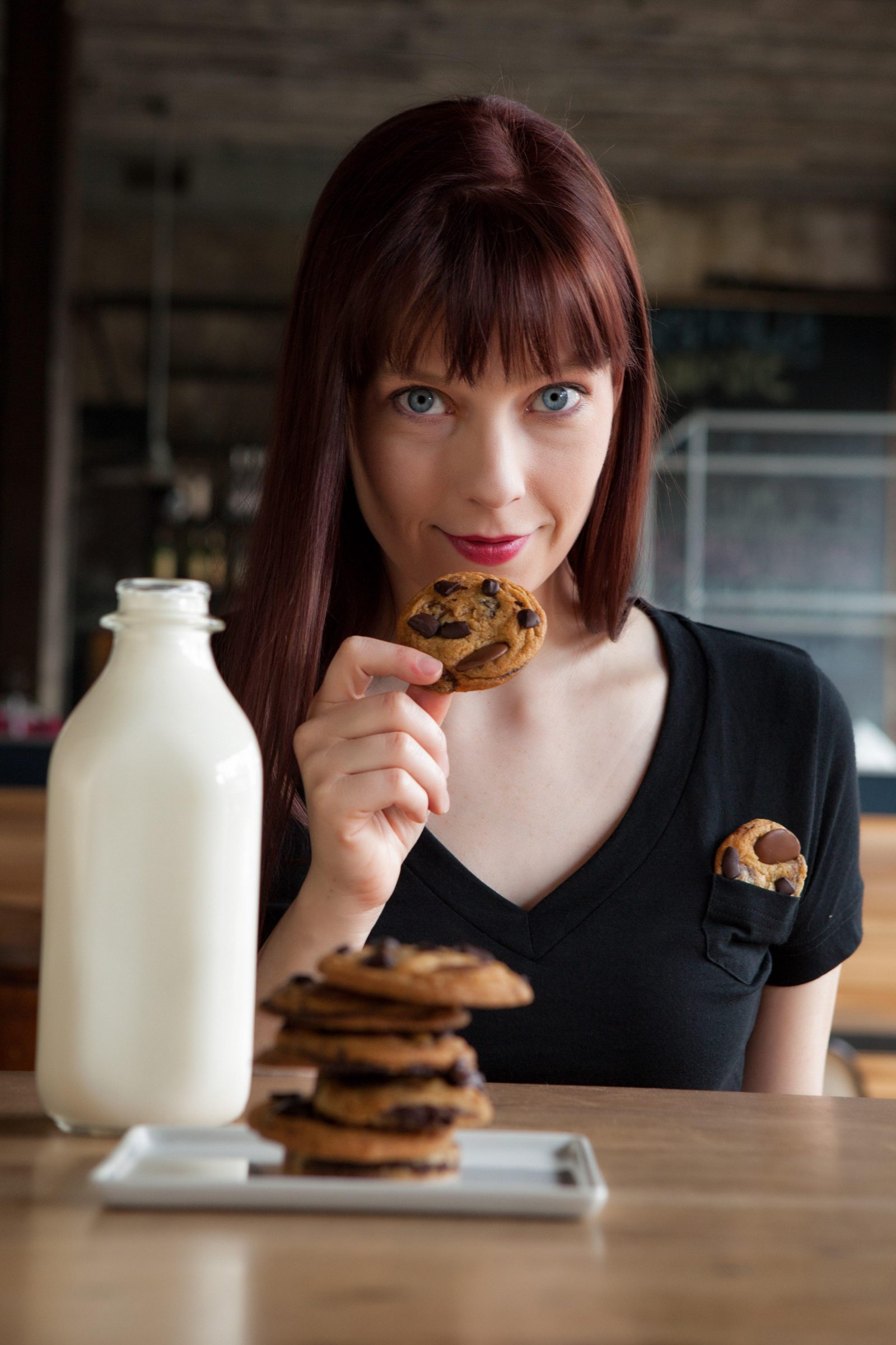
Baking Myth-Busters with Stella Parks
BraveTart is back! Stella Parks is here to set the record straight on baking. From buttermilk to pie dough, Parks reveals what can go so wrong and how to get it right. And we’re not done with the sweets yet: We also get a taste for real Vermont maple syrup with veteran sugarer Peter Gregg, we take the anxiety out of baking with blender cakes, “A Way With Words” explores the sticky history of honey, and Cheryl Day returns to answer your baking questions.
Read more on Stella's interview here.
Questions in this Episode:
“I’m looking for some help replicating a Swedish pastry I ate on a trip last year."
"I accidentally rolled out my laminated pastry dough too large. What would be the best way to fix that?"
Christopher Kimball: This is Milk Street Radio from PRX. I'm your host. Christopher Kimball. Stella Parks says baking is just like building a house, except instead of bricks, it's butter. Instead of burst pipes, it's leaking pie crusts.
Stella Parks: Their pie is leaking butter all over the sheet pan, and their frosting is dripping off the cake. And no one thinks like, oh, I need to manipulate the temperatures involved in my kitchen and my ingredients to produce a better outcome. They think this recipe doesn't work, and I failed.
CK: If you want to be a better baker, you just have to know why things work.
SP: It's wintertime. For some reason my pie dough is always cracking. It's because it's too cold.
CK: Today, Stella Parks tells hard truths about baking, but first we're talking maple syrup with Vermont sugar maker Peter Gregg. A few winters ago, Peter had a mission. He wanted to step up his amateur sugaring operation and hit the five-pounder goal producing at least five pounds of syrup from each of his maple trees. He chronicled his efforts in his book, The Sugar Rush, and he joins us now. Peter, welcome to Milk Street.
Peter Gregg: Oh, great to be here with you. Chris, thank you.
CK: This is like one of those old TV shows where someone's long lost brother shows up unexpectedly because we're both from the same town, at least, I'm sometimes from the same town, and we've never met, at least as far as I know.
PG: Yeah, I'm sure we've passed each other, maybe in the post office there in Rupert or at Sherman’s store, but yeah, we've never met, which is surprising.
CK: So, let's, let's start at the beginning. I you know, I used to have about 4500 taps, and never found a way to actually make money doing this. So how many taps? This is the typical question you ask anybody in the business. How many taps you got? How much land is this? And you've been doing this, I gather, more than just a few years.
PG: Yeah. I mean, that's the nice thing about maple is we always have a great conversation starters, and that's the first thing you always ask another sugar maker, how many taps? And I don't have as many as you did. I have about 1200 so I started making syrup about 23, four years ago, something like that on a hobby scale. A friend introduced me to sugaring one afternoon. We had this boring office job, but he would come into the office with these mason jars full of maple syrup and kind of pass them around and just delight everybody with it. And it's like, oh, my maple syrup is so wonderful. And I just kind of like, boy, what's this all about? And he invited me to come boil with him on one Saturday March afternoon, you know, he he had an evaporator set up in an old chicken coop, and he had buckets hanging on these trees, kind of all around. He had about a 30-acre little hobby farm, and we collected sap out of those buckets on an old orchard tractor, and then brought it back to the chicken coop and started boiling. And then it kind of the day, kind of turned into a party. Got some beers and guitars, and we were sitting on crates and boiling sap, and it was one of the best days of my life. And when you make syrup once, you're going to want to make it the rest of your life, we call it the bug.
CK: So, the reason you boil, you should explain how this works is the sap is from one and a half to two and a half percent sugar, depending on the season, and you need to boil it down to what 26 or 7% sugar, something like that. So, the point is to get rid of excess water and concentrate.
PG: Exactly, I mean, we're doing the exact same thing the indigenous peoples did, you know, two or 300 years ago, removing the water to concentrate it down to get that to about 66.9% sugar and 30 some odd percent water. So that's maple syrup. That's the legal definition of maple syrup in Vermont, but it's that's all we're doing. It's 100% pure everywhere you go. I mean, we're not adding anything to it. We're just removing the water that's it.
CK: So why maple? What happens if you tap birch, or you tap elm or you tap oak? Why is maple the thing you tap?
PG: Yeah, I mean, there's sugar in birch too actually, not as much sugar, and it's definitely got a different flavor characteristic. There's, you know, there's sugar in all kinds of different tree species, but sugar maples and red maples, those are the two kind of primary ones that we're tapping. The sugar's different it’s special. It has a great flavor, and there's more of it in the sap, percentage wise, than there is in some of the other trees that have sugar in them too. And that's what there's the most of in New England and then throughout the Upper Midwest, you know, kind of the maple belt, as we call it. There's some, also some maple trees out on the far west coast in like Washington and Oregon, and they're just kind of discovering that they can tap those trees out there too, very, very, you know, new industry for them out there.
CK: So, explain tapping. What is a tap? I know it's changed a lot in the last 20 years. What does it look like? How does all that work?
PG: Yeah, it's a lot different than it was back in the 40s. And the 50s. We have just experienced a technological revolution, just like every other industry, practically and especially over the past like 10 or 15 years. So instead of hanging buckets off of all those trees, we run a pipeline from tree to tree to tree to tree and all the way down the hill and back at our sugar houses, and we hook a pump up to it, and we suck the sap down the hill. And that's kind of how we get to the point where we're at now, where we're producing far more sap and syrup per tree on average than ever in history, by a lot, by a huge margin, actually.
CK: Well, you talk about five pounds goal. I'm embarrassed to say, but I'll say it with 4500 taps. I think we were doing 1500 gallons of syrup or something. I mean, (that’s really good, nice) Well, that was in their best year. But I think what people don't understand, and what I did not understand, is that every morning you need to go out and check your lines for pressure. And I guess some operations actually have sort of automatic pressure gages that can can tell you ahead of time if there's a problem, but, but that's a lot of the work. It's not like you set it up and you just collect the sap and boil it. You're out in the woods almost every day fixing leaks, right?
PG: Every day. Yeah, that's the biggest part of it. And so that's that's the key to get to this kind of benchmark of production that all the big Vermonters hit year after year, and that's five pounds of syrup per tap on average during the course of a season. And in my book, I chronicled the 2022 maple season, my maple season. And I'm trying to hit this benchmark. I've never hit it before, just like you, Chris, I was just never successful in achieving that really high benchmark. And, you know, try to measure up with the big guys in Vermont. It's a fish out of water story, and I'm the fish.
CK: So, you know, in the old days, everyone wants, you know, extra fancy a syrup, which was the light stuff, which came off early in the run, and then as the run goes on, it gets darker. What exactly happens to turn the syrup from being very clear and not that tasty, to being darker and full of flavor. What's going on with the sap?
PG: Nobody knows for sure. And in some days or some seasons, you'll make a lot more lighter grade syrup than others. And that's kind of just the mystery of maple, and it's so strange, too, Chris. I mean, there's, you know, you must know this, but the University of Vermont and Cornell University, Yale University, Michigan State, they all have maple research programs, and they're studying the heck out of all these trees, trying to figure them out. I mean, we have our theories, but nobody really knows. And that's kind of part of the appeal about maple, too actually, to me, you know, I play the guitar too, actually, and I'm going to go off base a little bigger, but I play the guitar. And my favorite guitar player is Keith Richards of the Rolling Stones. And I just saw him interviewed, not to, I think, on Fallon, and he brought his guitar with him on the show, and he's playing, and he's like, why are you still playing? You're 81 years old, and he's the way, he said, he said, he said the guitar is an infinite universe, and it's like, oh, that's beautiful. And that's exactly how I feel about maple. We'll never figure it out. And that's part of the appeal. I think that's part of the appeal for everyone. We're always trying to get better. We're always trying to make more and be more efficient, or make improvements, you know, but we'll never figure it out. The trees are just unknowable, and that's part of what's cool.
CK: Well, for me, in the early days, it was about NASCAR on the radio. It was about the beer. It's about grilling on a little, tiny gas grill, portable gas grill, steak tips made from venison, right, with some onions and peppers and every four minutes shoving wood into the arch, right? You know, end of February is pretty grim, right, I mean, so I think the function of sugaring is a it gives you purpose, right? You have to work your butt off. It brings everybody together, because you see the smoke coming up from the sap house, and you stop by for a while. It's social. It's sort of the beginning of coming out of this weird three months when people are sort of holed up. I mean, that's my that's my theory about why people like to sugar anyway.
PG: That's right. 100% agree with you, Chris. My great joy with sugaring is for that very reason, actually, to shake off the winter blast, get your body moving again. It gives you an excuse to get out and just, you know, be among the elements. And one of the cool things about maple is it's probably the most accessible forms of agriculture that there is, in my view, and anyone really could do it, as long as you got some maple trees around.
CK: Peter, it's been a pleasure live in the same part of Vermont we never met. We'll have to do this at your sugar house next March.
PG: Oh, it's been so much fun to be here with you. Chris. Come on over during maple season, and we'll boil some sap together and have a few beers. And it'll be a great time.
CK: I'll bring a six pack.
PG Sounds good.
CK: That was Peter Gregg, founder of the Maple News, also author of The Sugar Rush. Now it's time to answer your baking questions with special guest host Cheryl Day. Cheryl is the author of Cheryl Day's Treasury of Southern Baking. Cheryl so you've retired now, I wouldn't say your retirement or your post bakery. How about that, right?
Cheryl Day: There you go, Renaissance.
CK: And you once told me you wanted to garden, but I don't think given given your hours in the bakery for 20 years, that was an option. (22) so, are you now getting your hands dirty and planting seeds, etc.
CD: We are, and it has been so much fun. Griff and I both it's something that we've enjoyed, although it has been super-hot, but we have, you know, started with lots of herbs and fun flowers, edible flowers. We did do tomatoes. We got some cherry tomatoes this year. We planted watermelon. Got nothing there. Lots of, you know, Basil did really well, of course, but so yeah, we're excited about the fall garden and getting that, all you know, set up. So, I know you've been growing things in your yard too.
CK: Well now for years and years, I ever since I was a kid, we always had big gardens. But then I now the gardening I do is to plant like, two acres of stuff and different food plots for deer. (Oh, wow) I'm feeding my deer in Vermont. So, I, I plant for the fall, turnips, and I plant beets, which are good for the fall, and then I chicory, you know, in the spring, and etc. So, yeah, it's, it's more for the deer. But it's funny because you get a tractor and cedar, and you feel like you're farming. Of course, you're not. You're just fooling around. But it makes me feel good. (It does feel good). It's really rewarding to see it come up.
CD: It really is. And I don't know what it is, but those tomatoes just taste better.
CK: Well, you know, I grew tomatoes for years and years and years, the cherry tomatoes, the sun golds, that kind of things. Those were great, (yeah) but I never had luck with a full size tomato. I grew heirlooms, I grew the black ones. I did the zebras. They were okay, but they were never great. So, I don't know maybe my soil was wrong, or maybe it wasn't hot enough from Vermont, you know, to get, get great tomatoes, but that, that would be my goal. You know, the world's great tasting tomatoes would be definitely worth, worth doing. So, all right, let's take a call.
CD: Welcome to milk Street who's calling?
Caller: Hi this is Laura from Portland, Oregon.
CD: Hi, Laura. How can we help you?
Caller: I am looking for help replicating a pastry that I had on a trip to Sweden last summer. It's a little pastry that I pronounce mumma, but I think in Sweden they would say something like mumma. I don't know. I don't speak Swedish. It's a small cake, almond and cardamom flavored. It's about the size of a cupcake, and all sides are coated with sugar and cardamom, and that's kind of where the issue comes for me. I found a recipe for it online from someone who'd been to the same bakery that I went to in Stockholm, and what I can't get right is getting the outside covered in that mixture, because I can't get them out of the muffin tins I'm using. So, I don't know if the problem is I'm not greasing the muffin tins well enough. I don't know if it's my old uncoated aluminum muffin tins. I don't know if there's something else, I'm doing. I don't know if I'm not being patient enough and letting them rest. But anyway, what I end up with is a pile of crumbs that tastes really good, and I'm still eating them, but I would like to have them in more cake shape, so I wonder if you have any ideas for me.
CD: Lots of ideas. Well, first of all, you had me at sugar and cardamom. Two of my favorite things. (you don’t want to mix that out yeah) No, you don't. What kind of pan are you using? I heard old,
Caller: Yeah, like aluminum probably inherited from a great aunt when she died.
CD: Chris is going to love this question. I hear you over there, Chris,
CK: Yeah, I ‘ve got an idea, but keep going.
Caller: Okay,
CD: and then you're coding them how?
Caller: I've tried it with just butter, and that didn't work well enough. So, I've tried it again with butter and flour, and that was better, but not good enough.
CD: Okay, Chris, do you want to answer?
CK: These are not nonstick pans, right? I assume.
Caller: Oh no, no.
CK: The nonstick pans are not nonstick but they're better than not nonstick pans. So, so my rule, and I think Cheryl's rules, you always use a nonstick muffin pan and spray it. I just spray it because I'm lazy. It's easier than, you know, coating it with butter. That'll get the muffins out of the pan, right? Cheryl,
CD: I'm going to disagree.
CK: Ought oh here we go.
CD: It probably will get the muffins out of the pan. But here's the problem, believe it or not, with those nonstick pans. Now, granted, you know, I use pans more than the average person, after a while, that spray is going to ruin your nonstick pans over time. So I do melted butter, or to soften butter, I would do a little flour, exactly what you did with the pans that I think now should be hanging on a wall somewhere, because it sounds like they're more of a keepsake than something we want to bake with at this point, I would do that, and then they should come right out, kind of like Chris, I'm thinking like, you know, with a bundt pan, an old fashioned bundt pan. And, you know, maybe it's a little tedious to do each one, but it's also a labor of love to make these cakes. And then once you get them out of the pan, my solution to that, I do something called a donut muffin. And what we do is we have a bowl of melted butter, and you dunk each little cake in the butter, and then you roll it into your cardamom sugar mixture, and then you'll have that coating on the outside. So that's what I would do.
Caller: Okay, how warm are your donut muffins when you do that, you let them cool completely. And is it
CD: No, that's a good question. I don't actually kind of like with my bundt cakes, I let them cool to the touch, so maybe seven minutes or so, where it's cool enough where you could take them out without breaking them (Okay) and they should come right out. I think it's going to make a big difference. Get yourself some brand-new pans. And plus, since they're little cakes, they have some now that are shaped where they'll look like individual cakes. You know, you have basically like a little assembly line. You'll dunk in butter, and then you'll dunk in the cardamom sugar mixture. And we need these little cakes, don't you think, yeah, we want to taste them.
CK: Well, they also make the Swedes love cardamom, and they make these cardamom buns. I don't know if you had them when you were there.
Caller: Oh yes, yeah.
CK: Those are, we did them at Milk Street a couple years ago. And those are
Caller: Yeah, I know I've made them.
CD: Yeah. That's a great recipe.
CK: The top five to die for recipes. Those were really good
CD: Well, I hope that helps.
Caller: I think that's going to help a lot. I really appreciate all of those tips. So thank you.
CD: Well, thanks for calling.
CK: Yeah, our pleasure. Thanks. This is Milk Street Radio. If you have a baking problem, give us a call. 855-426-9843, that's 855-426-9843, or you can email us at questions at Milkstreetradio.com Welcome to Milk Street. Who's calling?
Caller: Hello. This is Taylor Billings from New Orleans, Louisiana.
CD: Hi, Taylor. How are you?
Caller: Hi, how are y'all?
CD: We're excited for your question.
Caller: Okay, great. I was rolling out homemade laminated dough for strawberry and cream cheese Danishes. And the recipe called for an 18 by 12 “rectangle and then cutting it into 24 squares. But I had accidentally rolled it out into an 18 by 24 “rectangle, so twice the length. And so normally, with normal dough, I would just fold it back up and reroll it. But given that it was laminated, I was wondering, what impact if any, would those much thinner layers of dough have on the finished product? Would there be, like, less rise more likely to lose the lamination? Should I have like, refolded it and chilled it and rerolled it to the right size? Any general guidance or thoughts there?
CD: Well, I'm curious, how did it come out?
Caller: It was actually okay, they were teeny, but they rose All right. And I was kind of surprised by that, given the heat in New Orleans and all that, I was together a bit more. Yeah, you know, it's like, I don't know how to fix this, even if I wanted to.
CK: I would chill it for 15 or 20 minutes and then fold it over to 18 by 12 and gently roll it a little bit
CD: Same.
CK: But I would definitely chill at first just to make sure you're not going to move the butter around, or it's going to leak out. And then firm it up and then fold it and gently roll it together, just to make sure it's pressed down. You know, I've made puff pastry by hand and that sort of thing. It's tricky. So, the chilling is really important.
CD: You know, and there's so many variables, really. I mean, at that point, do you feel like you were in good shape with the lamination? Everything was encased properly and all of that?
Caller: Yeah, I had cried my tears. I had sweated a ton, you know know,
CD: Yeah, yeah, oh, I know
Caller: I did work out well, yeah,
CK: I have to admit, I buy the really high-quality frozen puff pastry. There are very few times I would actually make my own laminated dough at this point.
CD: I mean, I say bravo for you know, the effort for sure. I mean, if you want to try it again, or, you know, go with Chris's method in the frozen food section. I think what I would have done in that case, especially because I'm in Savannah, equally as hot, I would have chilled it and then, you know, hopefully, if everything else was encased properly you could have gotten another layer. I'm curious how thin it was, pretty thin too, right at that point?
Caller: It very thin, yeah. So, yeah, but it rose, so, you know, I think it was, but I was shocked to be honest,
CD: It was making the effort for you, for sure,
CK: I need to ask a psychological question here. So very few people make laminated dough. I mean, that's one of the hardest things to do. So, is this something you've done all your adult life, or you just decided during covid or something that this was going to be a challenge you were going to take on. I just want to know. I'm interested in people who do crazy things like make laminated dough. It's hard. It's really ____
Caller: Where mental fortitude comes from yes? So, I love a challenge, first and foremost. But I got Clare Saffitz’s cookbook, Dessert Person, yeah, and her instructions were so good, oh my god, yeah. And I learned, truly, from like couch to laminated pastry dough. Was the cookbook for me.
CK: But my question is, was it just getting her cookbook that motivated you, or there was something else in your life where you the light went on and you just said, today’s the day (CD: you’re really going in for this psychological) in cooking, you can learn a lot about people. So was this something you just always had wanted to do?
Caller: What a great question. So, I was a chemistry minor in college. So, I love science, and I love baking for the science connection. I also watch Great British Bake Off with my friends every week. And during that time, I was baking something every week, kind of going through the cookbook and so I always kept trying to outdo the one recipe I had done before (I see) you know, and I also think I'm just going to push back a little bit. It's hard, it's not that hard, and I think everyone should try it at least once.
CD: Well, you're not just a dessert person. You're my kind of person.
Caller: Chris is like, no,
CK: I would hang it up. It's like running a marathon. You have to do it once, and that's it. You did it.
CD: I think you need to do it again,
Caller: One more time, all right,
CK: And then send us a photo.
Caller: I will. I will send your photo one
CD: One more time
CK: One more time, only one more time.
CD: You got it.
Caller: All right. Thank you all so much. Take care.
CK: You're listening to Milk Street Radio. After the break, we investigate the secrets of great baking that's up in just a moment. Hi Milk Street radio listeners this year for our Thanksgiving episode, I'm taking calls with Jet Tila from size to turkey, please send us your biggest Thanksgiving cooking questions. Simply email us at [email protected] One more time, please send your Thanksgiving questions to [email protected] and we'll Be in touch. Thanks. This is Milk Street Radio. I'm your host. Christopher Kimball, right now, pastry chef Stella Parks, and also author of Bravetart, makes her return to Milk Street. Stella Parks, welcome back to Milk Street.
Stella Parks: Hi. Thank you so much for having me.
CK: It's a joy and pleasure to have you back. Let's start with one of your recipes, the White Mountain cake with marshmallow buttercream. That is now the go to birthday cake unfortunately, in my household, because the frosting, the marshmallow buttercream, is a pain, but man (it's a huge pain in the butt). It's a huge pain. I mean, it's just ridiculous, but it is the problem is, once you make that it's a it's great. So, which brings me to the point of today, which is baking, myths and problems people have with baking. You know, people always say, I'm a cook, but I'm not a baker, implying that baking is, you know 18 degrees harder than just cooking, why do you think people are so afraid of or in fear of getting in the kitchen and baking?
SP: I think for me, the more I ponder it, the more it comes down to baking is a little bit architectural, and cooking is a little bit more like, in some ways, it's cooking is the art where, you know, you can, just like, lead with your heart and season. And sure, there's, like, technical details for properly browning something and properly caramelizing, and, you know, there's, there's a lot of technical bones to it. But baking is building a house made out of butter. And that's not like the most conducive brick for a stable structure. So, I think that aspect can kind of surprise people when they weren't expecting it, because they don't think of it that way. They think, I'm just making a cake or I'm making a frosting, and then their pie is leaking butter all over the sheet pan and their frosting is dripping off the cake. And no one thinks like, oh, I need to manipulate the temperatures involved in my kitchen and my ingredients to produce a better outcome. They think this recipe doesn't work, and I failed.
CK: Yeah, I think that's so true that people don't like following recipes. They feel the good cooks improvise. And my favorite example is Jimi Hendrix. The two things that were said about him, besides being brilliant, is sometimes he'd walk down the street practicing scales, and the other is he would fall asleep at two in the morning with his guitar on his stomach because he was practicing scales. So, Jimi Hendrix and all great musicians practice scales a lot, and people don't want to do that. They want to go like, well, it's not creative unless I wing it. And you go like, well, actually, you know, you really should follow the recipe. And then, you know, and then, over time, you can play with it. But mastery is, is step one, right?
CP: Yeah, it's the rules are made to be broken, so you have to kind of master them and work your way around them before you realize that, oh, you know what? It's okay if I don't have room temperature butter, I can do it this way, but if you don't even realize that that's a variable that you need to be working with, that can be so problematic.
CK: So, you've mentioned butter a couple times, so let's start with that. So, for years I used, like, Land O Lakes or whatever, which is 80, 81% butterfat, I guess, or something. And then, you know, I I started using, you know, Danish butter, for example, or Plugra, which is probably 83 or 4% butterfat. And there's a big difference at room temperature, you can see, feel, it is just a very different product. But your your take on it's a little different. Mine always was, oh yeah, you got to use the higher butter fat, but you don't really agree with that, right.
CP: At least not for American baked goods. If I was going to make, you know, croissants, I would definitely not be like, reaching for Land O Lakes for that, because that's not how that recipe was developed. It relies on having a butter that has a really nice plasticity. And like you were saying, you can just like, grab almost from the fridge, not even room temperature, grab one of these European butters, and if you squeeze them, you're going to have a little bit of a give, whereas an American style butter will be, like, rock hard. And you know, for croissants, it's going to make all the difference, and it's going to be a real problem. But you know, conversely, if you're using that higher fat butter in an American pie dough, you're going to have butter leaking out of your crust.
CK: So, buttermilk. I love buttermilk. I just, actually just made a cornbread Sunday morning with lots of buttermilk, so people often don't have it on hand. You can get the powdered stuff right. So, if the recipe calls for a cup of buttermilk, you can use a cup of water plus a quarter cup of the powder, or you can try to acidulate like adding lemon juice to a cup of milk. Do you have any substitutes for buttermilk, or do you think if you ain't got buttermilk, you shouldn't make that recipe?
CP: Yeah, so buttermilk is really unique. And this is the thing that substitutes never take into account, is that buttermilk is really thick, so when you're pouring that buttermilk into the biscuits, it's almost like a loose sour cream, like a yogurt texture, and that makes a big difference. And so, I've seen a lot of people say, Oh, you can do plain yogurt instead of buttermilk, but then you're getting a really different like pH and like dairy solids kind of composition that's happening. And so, I found that when I was making baked goods with yogurt instead of buttermilk, I was often getting a much tighter crumb, which in some recipes, is not wanted. And sometimes it's nice, sometimes you're like, oh, I made a buttermilk pound cake and it has a really nice, even crumb. Like, okay, that works great. But then you try and make biscuits and it's a tighter dough, and that's you can make biscuits with yogurt, but I think you kind of need to start taking into account, like, the viscosity of the fluid that you're using. But buttermilk. I mean, I grew up in Kentucky, so buttermilk is pretty near and dear to my heart. I mean, I live in Kentucky now, it sounds like I'm I grew up here, and I've left. I have never left. I'm here, and so, yeah, buttermilk is just kind of a way of life, and you just keep buttermilk on hand. The expiration date is like, you know, some type of, like, government required suggestion that we all know you don't have to pay attention to and just live your life and use your buttermilk.
CK: So, you sound very accommodating, you know, but you're a baker, so I, I suspect there are things you're not going to go like, we'll do whatever we want. (Yeah). What are some of the things you go, like, and, no, no, just don't do it. Just stop doing that.
CP: Oh, my, my hard nose. Yeah, that is a really good question. So yeah, part of my like, accommodation has definitely come with age, because I think that, you know, like, when I was a fresh culinary school graduate, I mean, I would be ready to get in a knife fight with somebody over bread flour versus all-purpose flour or something. And you know what? That the fact that that came up as an example in my heart, I think, tells you that that's still an unhealed wound for me, and all-purpose flour is perhaps the area that I would still get in a fight with someone over because not all all-purpose flour is the same, and some all-purpose flour is really bad. T
CK: There you go. See, I knew I could get you. (I don't want to slander anyone but), because it's bad because the gluten content is, you know, like 10% or something,
CP: Sure. Yeah, there are some all-purpose flours that are a little higher in protein, and to me, they behave a little bit more like a bread flour. And so, when I think about what flour is I want to stock in my kitchen, I want to have a really strong, high protein bread flour. I want to have good rise, good crumb development in my bread and I want to have a really soft, really weak cake flour for my cake flour purposes. And I want to have a nice middle of the road all-purpose flour.
CK: So, I'm not a huge buttercream fan, but a Swiss meringue, or Italian meringue with a sugar syrup is, you know, takes more work. Where do you come out on sort of an all-purpose, relatively easy cake frosting,
CP: So historically, I would say Swiss buttercream. I think it's comparatively fast, especially compared to, like an Italian where you have to separately make a syrup and pour it in. Its fewer dishes involved. You have your KitchenAid bowl, some egg whites and sugar, pop it over a water bath, get it hot, whip it, throw in the butter, one bowl, and you're done. So, for me, that was very convenient. So historically, Swiss buttercream would have been my answer for you. And then recently, I think I've kind of started coming around on the American buttercream front, because sometimes you don't have that many eggs lying around, sometimes you don't want to deal with a thermometer. Sometimes it really can be as easy as putting powdered sugar and butter in a bowl and, you know, whipping it to death. And of course, there are variables to consider that's going to determine how good that outcome is, how long it's beaten, how much liquid is being added to it to help the powdered sugar dissolve, how well it's flavored. But sometimes you need a buttercream, and American buttercream is really easy, and if you do it right, it can be good.
CK: Let's talk about savory and sweet, right? I mean, the last 15 years or so, I've seen a lot of bakeries, you know, they'll put Juniper in a chocolate cake, for example, or rosemary. Is that something that that makes sense to you or that's just on a case-by-case basis?
CP: Yeah, I think it's on a case-by-case basis. There's a lot of places where a savory ingredient can really bring a lot to the party. I think about, you know, a few years ago, I feel like miso paste was turning up and everything, and it goes on all kinds of caramels and ganache’s, and it does have, like, yeah, yeah. It does have, like, this uniquely savory, rich, just salty, like, quality that really can add a lot of complexity and deliciousness to things, but then you kind of reach a point where you're like, if I see one more recipe calling for miso paste, like what's happening? (or Tahiti) , that's the other one. Yeah, yeah. So, there's definitely places where, like, an ingredient might reach the trend status, but the same time, I think everything had to hit that point. You know, my God, these kids are putting peanut butter and everything these days. They must have said at one point, and, you know, at the end of the day, it's emerged as, like, a pretty classic flavor profile of its own. So, there may be some kind of new classics, kind of duking it out to emerge in the end
CK: Social media, there's a lot of baking going on in social media. There's a lot of baking. There's some things you think are just silly that nobody can really make at home, or they have hacks or shortcuts that are just nonsensical. Or there's actually some really good cooking baking going on there.
CP: It's it's a real mix. On the one hand, I feel like I am every day, just in complete awe of the desserts I'm seeing people make and the level of craftsmanship going to things like croissants that I'm seeing people make on Instagram, or I've seen a lot of that in cake decorating also. So this level of creativity is happening, and we're seeing techniques that I haven't seen before, and I've been paying attention to baking for a while, but then on the flip side of it, and admittedly, I'm, I'm part of the problem, and you are too, is that, you know, as as recipe developers, we're always coming up with, like, a new way to do something, and like, this type of mentality does really well on social. And so, then you see all of these claims, saying this is the only way to do it, like you have to use frozen grated butter for your biscuits. And it's like there is no universe in which I am grating frozen butter ever. Like it's not happening.
CK: So, you go over to a friend's house, they're not an intrepid baker, but they want to bake. You're sort of their, you know, psychoanalyst, right for baking. You're trying to help them get over the concerns about baking. What are some of the things you might tell them?
CP: I think, first and foremost, I would say, to pay attention to the temperature of your kitchen. I think that's like, one of the funnier things that I see happen is, like, you know, someone's like, getting ready for a dinner party. They got all the burners going. They they got something they've been roasting all day, and their kitchen is sweltering. And that's not a problem. Like, obviously, I come from a restaurant background. We are well used to working in an unbelievably hot, humid environment, but you have to take steps to correct it. So, if you just finish running the dishwasher, and your only flat work surface is above the dishwasher, and you're going to roll a pie dough out. I don't think people even think about it. They're just like, I'm just going to roll this dough out. They don't think, like, maybe this surface is too warm. All your ingredients are like, going to be 80 degrees, because it's 80 degrees in your kitchen. So, all your flour, all your mixing bowls, everything you're working with, it's going to be so warm and like, conversely, if it's Christmas in Vermont and you're wanting to make something, you know, all your pantry ingredients are going to be quite chilled. And so, like, this is kind of like the baseline awareness that I think you do build through culinary school, through working in restaurants, through just like your own experience in baking, is that, hey, it does make a difference. You know, when it's wintertime, for some reason, my pie dough is always cracking. It's because it's too cold then. So, then people think, well, it's cracking. I need to add more water to it. Well, now you're changing the hydration of the dough, and that facilitates gluten development, and that's going to make it softer. And that's, you know, there's, it's kind of like a snowball effect of outcomes you weren't anticipating. So, I think it's better to change your environment, to change your equipment, to change your ingredients, rather than you to try and like mod the recipe on the fly. If you don't have that depth of knowledge to pull from
CK: Stella, it's been, it's been a pleasure having you back, and I hope (it’s been wonderful) come back again soon. Thank you.
SP: Thank you for having me.
CK: That was Stella Parks. She's a pastry chef, food writer, also author of Bravetart. Stella parks says that baking Rules are made to be broken. The problem is that in baking, you need to know which rules you can break. Many years ago, a listener wrote me to say that her pound cake did not turn out, among other things, she substituted cake flour with almond coconut and barley flours. She also substituted stevia and coconut sugar for sugar, almond milk for milk, butter substitute for butter, and randomly threw in some baking powder and baking soda. The recipe was unsuccessful. To break rules in the kitchen, you first need to know what the rules are. Ad libbing is always a recipe for disaster. I'm Christopher Kimball, and this is Milk Street Radio right now. I'm joined by milk street recipe developer, Rose Hattabaugh to learn about this week's recipe Blender cakes. Rose, how are you?
Rose Hattabaugh: Good Chris, how are you?
CK: Good. You know, as you know, I've been to Mexico City a couple times in the last few years, and I was at one of the oldest markets just before it opened. Early in the morning, we're going to interview Adriana Luna, who's the chef at La Cocina de me Mama. And she brought us a cup of coffee, and this cake, it was a one-layer cake a slice. And at first, I thought it was cornbread, but it was corn cake, slightly sweet. Had a wonderful velvety texture, almost like a red velvet cake. It was phenomenal. So, I asked her how she made it, and she said, well, actually, a lot of it's done in a blender. So of course, in Mexico, blunders and pressure cooker are two appliances that are often used. So that got me thinking, like a blender cake. That's kind of interesting. So, you figured out how to make a yellow blender cake.
RH: Yes, well, that was such a great piece of equipment to use for a cake because it's easy to pull out. You don't have to have a big mixer. And this cake that we developed is really like a quintessential birthday cake, your typical yellow cake that you would use for almost anything.
CK: So what interests me is the fact the blender works. I mean, the dry ingredients are in a separate bowl, but the eggs and everything else, buttermilk, whatever in the blender, you don't have to do all that creaming. One of the hardest things in a cake recipe is creaming butter and sugar, adding eggs one at a time, beat between each addition. You got rid of all that stuff, and yet the texture was kind of like a box cake. But I mean, I mean that in a good way, right? It had that really light tender crumb,
RH: Right, I mean, that's kind of what we were going for. Is that texture when you melt the butter and you add a little bit of oil, you can put it all in the blender, and you don't have to worry about it. And I think the texture of this is exactly like a box cake, but you're using really fresh, delicious ingredients.
CK: Yeah, I always think box cake tastes to me like wet cardboard. It has a really weird aftertaste that is really unpleasant, but I do like the texture, it is delicious. So, and we had other flavors, right? We did some variations.
RH: Yes, we worked on a delicious Clementine cake. We also have a chocolate cake that actually blends almonds right into the flour. So, you have, like, a chocolate almond cake that's delicious. And you can also make the ganache in the blender, which is really nice. That
CK: That sounds good. So, a blender cake, it's super easy to throw together, and you can make it for almost any occasion. A multi-layer cake, one layer cake, it's great. Thank you.
RH: Thank you. You can get the recipe for our yellow blender [email protected]
CK: You’re listening to Milk Street Radio coming up how the honeymoon got its name. Hey, Milk Street listeners, this is Christopher Kimball, and I need your help. We're working on our Thanksgiving show, and we'd love to hear about your biggest Thanksgiving disasters, from exploding oven doors. That's a real story, actually, to family drama. We want to hear your most hilarious, embarrassing and catastrophic Thanksgiving stories. Please leave us a voicemail. The number 617-249-3167 one more time, 617-249-3167, or a voice memo at Radio tips at 177 milkstreet.com. One more time, you can call us at 617-249-3167, or email us a voice memo at [email protected]. Please include your name and where You're calling from, And thanks. Hi, I'm Christopher Kimball, and this is Milk Street Radio. Now it's time for some culinary wisdom from one of our listeners.
Caller: Hi, this is Nadia in Cleveland, Ohio. I can't claim that this is a tip born out of baking prowess, but I discovered that after over baking, slash burning off the chip cookies to the point that they were like biscotti, perfect for dunking in milk, but otherwise, probably not what you were looking for. The next day, they had rested like good steak and were soft and chewy, and actually the char did add a little, maybe over brown butter element to it. That was surprisingly nice so i. Try burning your cookies and then just leave them out and see what happens.24 hours. Let me know if it works again.
CK: By the way, if you'd like to share your own cooking tip right here on Milk Street Radio, please go to 177 Milk Street.com/radio tips. This is Milk Street Radio, now it's time to check in with our friends, Grant Barrett and Martha Barnette of A Way With Words. Grant, Martha. What's up?
Grant Barrett: Hi Chris.
Martha Barnette: Hey, Chris.
GB: Chris, today we're thinking about, well, let me ask you, what do you call the important people in your life, the ones that you adore the most?
CK: You know, what my kids a few months ago said to me, you know, it's really weird, like you often call us sweetie. And I'm not the kind of person who is likely to call anyone sweetie, no, and I didn't even know I did it. So subconsciously, I must be a nice person somewhere I guess
GB: I bet they love it though, being called sweetie is a really special thing between kids
CK: Well, no, they're Kimball's, so they complain, but they love it. Yeah,
GB: My parents called each other honey. So, on their anniversary, they would each receive a card from the other signed honey, which I think is funny.
MB: That’s adorable
GB: Yeah, Martha and I are thinking about honey in other ways, of course, related to food, but definitely related to language.
MB: Yeah. I mean, if we think about the word honey itself, the origin of that word is kind of murky. It likely goes back to a Germanic root that refers to the golden-brown color of honey. And that's about all we know about that. But where it really gets interesting is when you get to the Greek and Latin roots for honey, because these Greek and Latin roots, Meli and Mel, are reflected in some familiar English words that involve sweetness, like, for example, the word mellifluous. You know you describe a voice as being mellifluous. Yes, and literally, Chris, it means flowing with honey. Isn't that gorgeous?
CK: So, this is like the French term yell for honey, right?
GB: Same root, that's right, yeah. And the Spanish word is very similar,
MB: Right and then there's marmalade, you know, that's another honeyed word, because it comes ultimately from a Greek word that's a combination of the Greek words for honey and apple. Melimelon. Isn't that beautiful,
GB: and it's also part of molasses coming from a Latin word, melichm, right?
MB: Right and if you're in Scotland, you're going to call somebody hinny. And hinny and Joe means honey and joy.
GB: Yeah? It's kind of a synonym to sweetness and light.
CK: wait, wait hinny is Scottish for honey, right?
GB: That's right, h-i-n-n-y. So, you can say that your daughters are your Hinny and Joy, they're the honey and joy of your life.
CK: I'll try that, and then they'll like Dad's going around the bend now, but it will give it a shot.
GB: I know a lot of people are thinking right now, Chris, as you probably are, well, what about honeymoon? This is a question that we get a fair amount on our radio show, and it probably has something to do with the sweetness of that first month of the marriage. It's kind of a transitory period, but also where, just like the moon, it goes from full brightness to darkness. The love wanes as the month goes on,
CK: Hopefully not in 30 days,
GB: Right, and you mentioned the French say Miel, but Spanish and French also both still use the word honeymoon, just like English speakers do.
MB: And I like the German word for honeymoon. It's flitter volken, which some people have translated as
Tinsel week
GB: tinsel, like T, I N, S, E, L?
MB: Yes. You know, all glittery, sort of like a honeymoon, although some people think it comes from a German word that means to laugh or giggle.
GB: Oh, that's lovely, like the laughing month,
CK: well, Volken. And I think are weeks right, volka? Yes, weeks so well, at least they give you more than a week
GB: One month. But there's opposites too, Martha, aren't there where honey doesn't refer to something sweet.
MB: That's right. Just last night, I had two honey cats come up on my patio, and they weren't felines.
GB: Honey cats?
MB: Yeah, that's a dialectal term for skunk.
CK: Oh
GB: Oh, and have you ever heard of a trash barge being called a honey barge?
CK: Yes, actually, in Vermont, there's a cornfield behind my house, and trucks going by that are full of liquid manure, because they spray the fields now with liquid manure. They're referred to as honey trucks.
GB: Oh, yeah.
CK: So, honey truck.
GB: So, throughout the trash hauling business and related to sewage and where waste goes. The word honey is often used as a little ironic word.
MB: And, you know, Grant, we should talk about the sayings that honey has inspired. You know, like honey catches more flies than vinegar.
GB: Oh yeah, catches more flies than sprayed manure. Yes, nothing.
CK: Yes, nothing catches more flies than spring manure.
MB: Well, that's a good point.
CK: Yeah.
GB: So, honey catches more flies than vinegar, is what we say when somebody is kind of gently reminded you will get better results being polite than you will by being hostile or demanding.
CK: So is there one last great example of honey being used in an unusual way in language.
GB: Well, I hesitate to get Martha started on bees, but there's one term for a bee's special little pouch that I like.
MB: Yes, yes. I like to say that I sound like a four-year-old talking about dinosaurs when I get talking about bees, because I'm obsessed with them. And the term that Grant is talking about is the term honey stomach, which is a little pouch that the bee has in her body. And you know how bees tend to look like they're just sort of moseying around, not a care in the world, in your garden, just going from flower to flower, taking their time. Well, when they fill up their little honey stomachs with nectar then they rise into the air and they circle until they're oriented, and then they fly directly to the hive in what's called a beeline, and that's where we get the word Beeline. It's because their honey stomachs are full of honey.
GB: Well, I am making a beeline for the kitchen to fill my honey stomach.
CK: Grant, Martha. Thank you, sweeties, it's been a real pleasure.
GB: You're welcome honey
MB: Honey
CK: That was Grant Barret and Martha Barnette hosts of A Way with Words, that's it for this week's show. Please don't forget you can find more than 250 episodes of Milk Street radio at our website, Milkstreetradio.com or wherever you get your podcasts, you can find out more about us at 177 Milkstreet.com there you can become a member and get 1000s of recipes. Access our online cooking classes. Get free shipping on all orders from the Milk Street store. You can also learn about our latest book, Milk Street 365 the All-Purpose Cookbook for Every Day of the Year. Please check us out on Facebook at Christopher Kimball's Milk Street on Instagram at 177 Milk Street. We'll be back next week, and thanks, as always for listening
Christopher Kimball's Milk Street Radio is produced by Milk Street in association with GBH co-founder Melissa Baldino, executive producer Annie Sensabaugh, senior editor Melissa Allison, producer Sarah Clapp, Assistant Producer Caroline Davis with production help from Debby Paddock. Additional editing by Sidney Lewis, audio mixing by Jay Allison and Atlantic Public Media in Woods Hole Massachusetts. Theme music by Toubab Krewe, additional music by George Brandl Egloff, Christopher Kimball’s Milk Street Radio is distributed by PRX.
In this episode
ADVERTISEMENT
ADVERTISEMENT

Simple, Bold Recipes

Digital Access
12 weeks for$1
- EVERY MILK STREET RECIPE
- STREAMING OF TV AND RADIO SHOWS
- ACCESS TO COMPLETE VIDEO ARCHIVES

Insider Membership
12 weeks for$1
- EVERYTHING INCLUDED IN PRINT & DIGITAL ACCESS, PLUS:
- FREE STANDARD SHIPPING, MILK STREET STORE,
to contiguous US addresses - ADVANCE NOTIFICATION OF SPECIAL STORE SALES
- RECEIVE ACCESS TO ALL LIVE STREAM COOKING CLASSES (EXCLUDING WORKSHOPS & INTENSIVES)
- GET YOUR QUESTIONS ANSWERED BY MILK STREET STAFF
- PLUS, MUCH MORE

Print & Digital Access
12 weeks for$1
- EVERYTHING INCLUDED IN DIGITAL ACCESS, PLUS:
- PRINT MAGAZINE SUBSCRIPTION
- 6 ISSUES PER YEAR

