





Your email address is required to begin the subscription process. We will use it for customer service and other communications from Milk Street. You can unsubscribe from receiving our emails at any time.
Episode 921
September 12, 2025
September 12, 2025
Samin Nosrat Returns: New Book, New Recipes, New Life
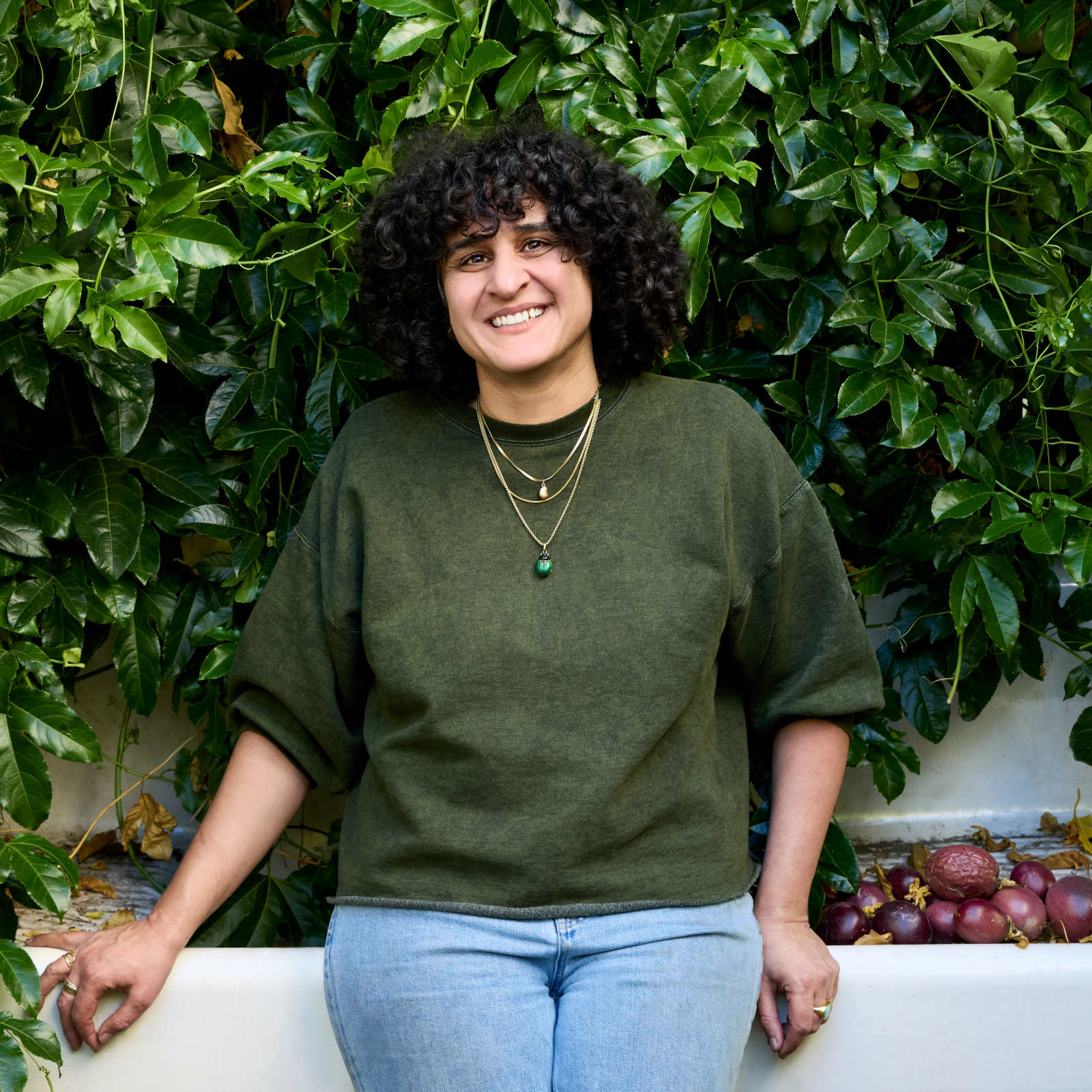
Following her 2017 hit—“Salt Fat Acid Heat”—Samin Nosrat is back with her second book, “Good Things”. We talk about fame, family and what she’s cooking; her favorite new flavors and techniques (whipped tahini! burnt honey!); and how she found the sublime in food processor pesto. Plus, James Ooi shares secrets from the Chinese supermarket and Chris and Sara Moulton are back and ready to take on more of your cooking questions.
Questions In This Episode:
"How do I prevent my clams from turning out chewy?"
"I'd like to enter a chocolate cake for our county fair, but it's very hot out right now. Whatever chocolate cake I enter needs to be able to handle high heat for at least 5 hours. Any ideas on what I can make?"
"We have a pear tree that we harvested early this year. The resulting fruit was sweet and delicious but also very crunchy and grainy. Any ideas of what I could do with that fruit?"
"How can you maintain the softness of a scone while getting a dough that you can shape and put on a baking sheet?"
Christopher Kimball: This is Milk Street Radio from PRX, and I'm your host. Christopher Kimball, Samin Nosrat is back today. We talk about life death and how cooking helps her touch infinity upon occasion.
Samin Nosrat: Last week, I made basil pesto, and there was just something about the way that it came together that day. I actually broke a lot of my own rules. I was so hungry that I, like, toasted the pine nuts and then I didn't wait for them to cool before I put them in. Sort of turned into, like a nut butter a little bit. But I actually think that was part of what made the pesto so good. And we kept eating. We're like, whoa. This is so good. There was just something about that moment that felt so sublime
CK: Cooking the sublime with Samin Nosrat that's coming up later in the show, but first, I'm joined by my co-host, Sara Moulton to answer your cooking questions. Sara is, of course, the star of Sara's Weeknight Meals on public television, and also, author of Home Cooking 101.
Sara Moulton: Okay, Chris, before we take any questions, I have one for you. Have you made anything in recent history that really was fascinating to you?
CK: Cantaloupe, cream pie. Now, I found this in Baking in the American South, by Anne Burns. She's a real pro, and it's a fabulous book. It fascinated me. I thought this is so interesting. And the story was that cooks, chefs in the South would get cantaloupes, and a lot of them would go bad because they ripen very quickly in the heat. So, one chef said, well, we got to do something about this. So, he made a cantaloupe juice, and he used two cups of that juice with a basic corn starch base and turned it into a custard pie. The only thing is, cantaloupe doesn't have a strong enough flavor to sort of stand up to meringue and other things like, you know, key lime pie would. So, it could have used a little more punch, but it's pretty good, and I just loved it. Because here's a way some of the going, like I'm throwing all his cantaloupe’s out, I’ve got to do something with him. And that's, that's the best kind of recipe. That's fun, but we all liked it. It was, it was good. Yeah, so anyway, sounds like it. Let's take call.
SM: Welcome to Milk Street. Who's calling?
Caller: I'm Audrey Edgar from Princeton, New Jersey, and I'm a summer resident in Martha's Vineyard.
SM: What a nice life you have. Let's just comment on that
Caller: It’s a wonderful bubble
CK: You're trying to make us feel bad or what come on.
SM: Audrey, how can we help you today?
Caller: Well, we have a family tradition of getting clams from our pond, and my son has this wonderful clam rake at the end of his lake. He has very large feet, and he finds a clam. One of his daughters digs it, another daughter, in the kayak, and takes it. I bring them home, and I steam them and save the broth and make a chowder. And I don't leave my clams steamed too long. I take them out as soon as they're open, and I chop them and add them to the soup, as the soup is already but they're always chewy
SM: How large are these clams?
Caller: They range mostly Quahog.
SM: So, they're like, three inches, pretty large.
Caller: Two and a half
SM: Those tend to be chewier. You know, the smaller the clam, the more tender it is. So that's part of the problem, right there. You said you do cut them up, though, after you've steamed them,
Caller: I chopped them
SM: Right, here's another question. So, when you steam them, you said they range in size somewhat, right? (yeah) Do you remove them as they open?
Caller: I remove them as they open individually. Yes.
SM: Individually, okay, let me just make one last suggestion, which is, instead of even adding them to the soup at the end, put them in the bowl and then put the hot soup on top of them.
Caller: Oh, that's good, yeah.
SM: But I think it may be partially just the nature of the beast that they're the larger size clams, which tend to be chewier.
Caller: Well, what do restaurants use when they sell chowder or those canned?
SM: That is a good question. I don't know, Chris, what do you think?
CK: It depends on the restaurant. (Yeah) how much you paying for that ball of clam chowder, right? I love doing spaghetti with clams and doing that all on a skillet and everything. The smaller the clam, the better shot you have a tenderness, right? All clams are a little they have a little bit of choice to them, but the smaller clams, like little necks, that would be what I would go for, maybe cherry stones. But the big ones, in my experience, they're always going to be chewy, right? (Yeah) as soon as the shell opens, I assume that's the time you take them out.
SM: That's what she said, yeah.
CK: And so, you're not doing anything wrong.
Caller: Is there anything that you have to remove from the clams, itself?
SM: These aren't long neck clams, right?
Caller: No, no, no, there's nothing.
SM: I'd say, try chopping put the hot soup on top. And I have one other suggestion, embrace the chew.
CK: I was going to say, just extend your cocktail hour. Have an extra gin and tonic and then go ahead and have the clams. You won't care. It's not a big deal. They're chewy. I think embrace the shows pretty good.
SM: Yes, that's what I think.
Caller: Thank you so much
CK: All right, thanks. Audrey, welcome to Milk Street. Who's calling?
Caller: This is Beth from Fredericksburg, Texas.
CK: How are you?
Caller: Pretty good. Pretty good.
CK: How can we help you?
Caller: Okay, I've got a tough question. So, our county fair is coming up, and I would like to enter a chocolate cake, but it is very hot right now, and the hall is not air conditioned. Whatever chocolate cake that I enter needs to be able to handle high heat, like above 95 degrees Fahrenheit.
CK: Well, yeah, there are two. Cream cheese frosting will hold, but that may not make a lot of sense on a chocolate cake. I would do like an Italian butter cream, which means you make a hot sugar syrup, you beat the egg whites, you add the butter into it, and then you drizzle in the hot syrup. But I would also replace some of the butter with vegetable shortening, because that'll hold really well in all butter. Butter Cream is going to be tough even with a hot sugar syrup. So, I would replace some of it, as I said, with vegetable shortening, and then use a butter cream that has a hot syrup, sugar syrup poured into it, and that'll help stabilize it as well. Sara?
SM: I was just going to throw out one other thing, although I like Chris's two ideas. And I think maybe cream cheese frosting actually would be good, a nice, tangy counterpart to whatever chocolate cake is. (Yeah) I would be a straight glaze with confectioner's sugar and the liquid of your choice. You know, a lot of times it's just straight water, but you could add something you think would go nicely with the chocolate, a little bit of flavoring, I don't know, little orange juice or something. Make a glaze.
CK: I don't think a glaze is going to win a blue ribbon though
SM: No, I don't, but it will hold up. That's the only reason I suggested it. But she's going
CK: But she's going full of blue ribbon, right? (Oh, right) Let me ask you a question. It sounds like you've entered in other competitions in prior years. Yes,
Caller: Yes.
CK: And so, what did you enter before?
SM: And did you win?
Caller: Yeast breads. And I did pretty well. But there is something I forgot to mention. This had to be at 95 degrees Fahrenheit for about five hours. Yeah, because I help with another division with the fair. So that's pretty what the people who win usually do is they'll enter it or in right before the deadline. So, it doesn't really matter about the heat too much, but mine has to go the long haul.
CK: Why do you have to go the long haul? Why don't you enter it right before?
SM: Because she has something else she's got to do.
CK: Well, can't she have someone else enter it?
SM: Oh, now he's talking.
Caller: Well, yeah, yeah, I could, I could
SM: You need an accomplice.
CK: Yeah, we're thinking about this all wrong. Yeah, I think you need to get this under the wire, like five minutes before the deadline, and go for it
SM: And make whatever frosting you want.
CK: Yeah, and also, I would assume, because I go to a lot of fairs in August, in Vermont and September, these are fairly fierce competition sometimes, right? I mean, people take this seriously. (Oh yes) have other people come up with other frosting ideas for this competition in the past.
Caller: The lady who won it last year, she did a buttercream, or at least it looked like a buttercream, but it kind of melted
CK: Buttercream usually does stand up, okay, but I think the vegetable shortening, substitute for some of the butter would really help.
SM: And also, starting with the Italian meringue, right? We'll make it more stable.
CK: I think getting someone there 10 minutes before deadline (is the best way to go) and pay someone five bucks and have them run in. Yeah, all right, good for you. All the best with the competition.
SM: Yeah and let us know how it goes. We're rooting for you.
Caller: Well, thank you.
CK: Take care.
SM: Yes,
Caller: Thanks.
SM: Bye, bye,
Caller: Bye.
CK: This is Milk Street Radio. If you're struggling with a recipe or a technique, give us a ring. 855-426-9843, that's 855-426-9843, or just email us at questions at Milk Street radio.com
SM: Welcome to Milk Street. Who's calling?
Caller: Hi, my name is Bill. I am calling from Great Barrington, Massachusetts, Western Mass.
SM: Oh, I love that part of Massachusetts. Yeah. How can we help you today?
Caller: We have a pear tree, Bartlett pear tree, and we harvested it early this year because we were there and so that the deer wouldn't get at them. And the resulting fruit was really sweet and delicious, but very crunchy and grainy, almost like Asian pears. And I tried various things to try and get it to soften up so that I could put it into cakes and pies and things and couldn't find a good way of doing it. I tried covering it in water and simmering it, and that just sort of bleached out all the flavor and another thing I tried was slicing it up and putting it in the oven and roasting it, and that just resulted in leather, pear leather. So, I'm just wondering if you have any ideas as to what we could do with that fruit, or do you think it's better just to leave it on the tree and hope that the deer don't get at it?
SM: Pears do not ripen on the tree. Did you let it ripen?
Caller: You mean, off the tree?
SM: Yeah
Caller: We had a lot of pears, like 100 of them at least, and I just sort of kept trying things to use them in over a period of weeks, and towards the end, they were getting riper, yeah, but they were still pretty hard.
SM: Okay, maybe they really needed to ripen. I know they needed to ripen.
Caller: How do you suggest that I ripen them then? Is there a way to do that specifically, other than just leaving them in a bag?
SM: Well, no, a bag is fine, as long as it's in a, say, a room temperature place. If you don't want them to ripen right away, you put them in a cold place, not the refrigerator, but like a cold basement or something, and then bring them up and put them at room temperature in a bag. You could add a banana or an apple. You know, ethylene gas helps them to ripen.
Caller: So, do you think it's worth separating them into a few different bags and maybe putting a banana in one and not in the other, so that they ripen at different speeds, so that I don't have to use them all at once?
SM: Yes, to the best of your ability, I think that's great. It's like with avocados. You know, sometimes I'm in that position, but let's see if Chris has any ideas?
CK: Well, yes, I actually have a pear tree in my backyard (where?) in Vermont (oh in Vermont) and I'm with you. I get these. They're small pears. They're not big, and they can be right, but they're hard. So, I think those things never get right, like a pear in the supermarket will. And what I would do is can them. I cook up a syrup, like two parts water, one part sugar, maybe some herbs, cinnamon, whatever. You know, I'd have the canning jars, obviously boiled, put the pears in, sliced pears in put in the syrup in water bath, can them. And I think that might
Caller: Wow. That sounds awesome.
CK: Well, first of all, you've got a lot of pears that would take care of that problem. And my guess is, with a hot syrup and sitting in the jars for a long time that might solve the problem, but I'm with you. I've had the same question, because I've never had a tender pear off that tree, although they are tasty. So, I would give that a shot, and also it stores them for you, so you know, six months later, you still have them sitting around anyway, that's what I would do
Caller: Thank you very much. Thank you.
SM: Thanks Bill.
Caller: Thank you. Love your show
CK: Thanks.
SM: Bye, bye.
CK: Welcome to Milk Street. Who's calling?
Caller: Hi. This is Sam in Houston, Texas. Thanks for taking my call. (Sure) I like to make scones, and I like to try out lots of different recipes. And my question is, how can you maintain the softness, you know, not the gluten buildup of the scone, which you get by over mixing. But how do you do that and still get the dough that you can shape and put on a baking sheet? I usually end up dumping the whole mixing bowl onto the baking sheet with parchment paper and just sort of using a scraper to just cut them into really messy blobs. Is there any better way to do this?
CK: We can help this is the scone emergency room. First of all, let's start with your recipe. Two cups of flour, seven tablespoons of fat or something in that neighborhood,
Caller: I usually use Milk Street recipes because they turn out really well, except for the shaping. But that’s what I use,
CK: Well, I don't know which recipe it was, but generally speaking, two cups of flour, two teaspoons of baking powder, half a teaspoon of baking soda, half a teaspoon of salt and seven tablespoons of fat, put the dry ingredients in a food processor, pulse for a couple seconds, add the butter very cold, or you can use butter and vegetable shortening mix, pulse that in, and you want that pretty finely mixed in. You want the flour to take on a slightly yellowish hue. You don't have any bits of butter sitting around. You've really coated the flour with the butter. Put that into a bowl, add your usually I use buttermilk to the dry ingredients, not all at once, but then stir it with a big spatula. You could use your hands too, and then add just enough liquid, enough buttermilk or whatever, until it just holds together nicely. I find a lot of recipes caution you about too much liquid. Make sure you have enough in there so the no dry bits at the bottom of the bowl. Take it out, put it on a board or counter, flour it a little bit, and then shape it gently, and then cut it into however you're going to do it, either rounds or into triangles, and put that on your baking sheet.
Caller: If the mixture is dry, after I've cut in all the fat, (add more liquid). Okay, maybe that will be helpful then, because I find I just have such a dry, lumpy mess.
CK: Well, it may be that in Houston, your ingredients like your flour is very dry. It could be. I mean, the problem with these recipes is you can't just say for recipe like that. You might say 7/8th cup of buttermilk, but you might need a cup, you know, or a cup and a tablespoon. So just do it until it really holds together nicely with no floury bits left over. And that should be fine. And make sure you also don't when you shape the dough into a round or whatever you're going to do, be careful not to over press it. You know, you want to be gentle with it, because then it'll rise nicely.
Caller: Okay You shouldn't use a rolling pin then, or anything like that.
CK: If you wanted you could use a rolling pin, but very gently,
SM: And don't roll over the edges, because you'll glue the sides together. I basically agree with what Chris said. I make a cream biscuit. It's all (I love) cream. There's no butter. Cream does both the butters job and the liquids job. And in that recipe, there's a range of cream for that very reason Chris just described. So, you start with a lesser amount and then you add more. Yeah, you want it to just come away from the bottom of the bowl and then put it on the cutting board and just sort of pat it. And I do roll it, but I just don't roll over the edges and then cut it with a sharp knife, or make sure you have a bench scraper. But I think your problem is the liquid
CK: By the way. How are you cutting the fat into the flour? You doing this by hand? Are you doing in a food processor?
Caller: Yeah, I use a pan pie crust blender.
CK: I have one of those with the times.
Caller: I'm very good at cutting in. I've been baking pies since I was seven, so I'm proficient at that. I don't think that has any bearing. I think it's the liquid.
CK: I would just make sure with a biscuit, I would cut the fat in more than with a pie crust,
Caller: Right, right. (Just make sure that you) it’s kind of grainy when I'm done.
CK: That's perfect, yeah, that's absolutely perfect. Yeah, okay, well,
SM: It's the liquid. Just add some more liquid.
Caller Okay, thanks so much. I really appreciate your help. Okay, okay, bye, bye,
SM: bye.
CK: You're listening to Milk Street Radio up next Samin Nosrat on roast chicken whipped tahini and cooking the sublime. Hey, Milk Street radio listeners for this year's Thanksgiving episode, Dominique Ansel is joining me to solve your biggest Thanksgiving baking questions. If you need new recipes, new inspiration, or maybe a pie making tutorial email us at questions at Milk Street Radio.com Again, please send your Thanksgiving baking questions to questions at Milk Street Radio.com and we'll be in touch. Thank you.
This is Milk Street Radio. I'm your host Christopher Kimball, you know, the worst moment in any authors career has to be sitting down to write their second book, the one after the first monumental hit. But my next guest, Samin Nosrat, has done it again, following 2017 Salt, Fat, Acid, Heat in her new book, Good Things. We find knowledge, experience and one of today's most powerful culinary voices. Samin, welcome back to Milk Street.
Samin Nosrat: Hi, Chris, thanks so much for having me.
CK: You know, first of all, let me say, everybody in the food world wants to be you write this amazing book and sells jillions of copies, you know, win awards Netflix special, and then I start reading your new book, and there's this sense on the street. Finally, clinical depression, potent and ravenous, swallowed me whole, and I just stopped. I went like, wow. You know, here's this person who enormous success, smart, great writer, interesting career. But, you know, I guess there's, there's always a dark side. (So yeah) success did not generate happiness, or there were just other things involved.
SR: I mean, of course, there were plenty of highs, and I feel still very lucky for if nothing else, the financial stability that that I really never had before, but also just, you know, like, one of the best parts of it for sure, is people come up to me and say that it like changed their life. It taught them how to cook. And there's a certain type of interaction that is so moving to me when say, like a young, Middle Eastern woman is just like, wow, I never thought I'd see someone who looks like me doing what you do, because I didn't ever see anyone who looks like me doing what I do. And so those are kind of some of the most wonderful parts of the let's say achievements and success and praise. But no, it didn't make me happy. And I what's crazy is, like, I'm highly therapized, so I knew I was very achievement driven. And I knew on some level that achievements would not, like make me happy, but I think on some level, I still believed if I just managed to do these things that I've been trying to do for so long, then these other things underneath that have caused me so much pain in my life and sadness will no longer make me feel bad. I thought maybe if I achieved everything, I would finally get the kind of love and feedback from my parents that I've probably been seeking my whole life, and it didn't work that way. And and then there was a series of, you know, life things that happened inside of that I I, for the very first time, very belatedly, faced the loss of my sister,
CK: and she was, like, three years old at the time, right?
SR: Yeah, she was three when she died, and I was one and a half. And so, it was just this kind of like part of my story that I intellectually understood. But I don't think I'd ever felt my way through of not only what it meant for me to lose my sister, but what it meant for my family to lose a child, and then how that sort of changed what was expected of me and what I meant inside of the family, and then
CK: How did it change?
SR: I mean, my understanding of it is that because my family comes from Iran and our culture, and certainly, my family is very guarded about what they share, not only to the outside world, but even with me. So, there's a lot that I don't know. And so, I did my best to like journalist my way into an understanding of the loss and the grief. So, I started trying to talk to like my aunts and uncles, and I got whatever little bits of information that I could. And then, in the absence of actual family knowledge, I started reading studies and just doing sort of scientific research about what happens to a family system when a child dies, what happens to a younger sibling when an older sibling dies? And I started piecing that together with my own experience, my own memory. And I think the tidiest way to put it is, I think I sort of absorbed a message that was probably not even explicit in any way, but that I, like, had to be two kids worth of everything for my parents who had lost a kid. So, I sort of took on this role of, like, I'm going to be really, really good. I'm going to achieve everything because I just need to make you happy. But that's an impossible task. So that's one part of it. And then just when I was sort of climbing out of that, my father, who was a really complicated and I would say, emotionally violent person, who I was estranged from my whole adult life, he had a traumatic brain injury and ended up on a ventilator in a hospital, but he never wanted to be on a ventilator, which was very clear to me and my brothers, because we had spent the early part of my life in the hospital with my sister and both of my parents have been very clear our whole lives, like, do not artificially extend our lives. So, when they called and said, oh, your dads in the hospital and he's never going to wake up again. He's on this ventilator, I was like, well, if you can't wake up, he can't hurt me, so the least I can do is go say goodbye and advocate to get him off. And so, when we went to the hospital to get him off the ventilator, we sort of unwittingly took the first steps into a six month long like medical drama and family drama. My dad had a secret wife in Jerusalem, who he'd never told us about, who, like, showed up yelling, you know, on the phone at the hospital, saying that his children just wanted to murder him for their inheritance, which, like my dad, to be clear, had never really given us anything so there was no inheritance to speak of that we understood, but we had to hire lawyers, and we were just caught in this like crazy medical and legal drama. My life came to a halt, until eventually the hospital took control and did take him off the ventilator, and he did die. And even if that person was harmful, it's still your only parent. And so. I think in some ways, the grief is very complicated, because you're grieving the thing you didn't get, (yeah) and watching him die was really there was every feeling. You know, I spent the first few days he was off the ventilator, was the first time he could have solid food. And my dad loved ice cream and sugar and junk food, so I would like sneak him ice cream and and I, like, drove all over Southern California finding soft foods with the flavors of his childhood to feed him, and just trying to give him whatever last sort of sensory experience of being a human while watching him die in this way that was so sad. He was such a chaos agent, and caused so many people so much pain, and so he died in a really pathetic and lonely way, and watching that unfold over so many months, I was just spent a lot of time reflecting on what I want for myself at the end of my life, and it's to be able to look back and say, wow, like my life was filled with so much beauty and joy and friendship and deliciousness and nature and my puppy dog. And in a way, it like, kind of really redirected my own attention and energy after he died, because I had a very clear sense that time is all you get is the time you get that's it. And so, I have to try to be happy now. I have to try to have a good life now. And so, I'm just trying to still hold on to that, even though now it's been a few years.
CK: So how do you balance? And I have some experience with this, but how do you balance a parent who, on one hand, was not a good parent. On the other hand, they're your parent. So, do you ever reconcile those two things in some way, or those two things are just held simultaneously in your brain until your last day on earth?
SN: Yeah. I mean, I think it's probably number two, I don't know, in a weird way, him being in such a vulnerable state allowed me to develop a little more compassion for him, and I know that he suffered a lot of his own pain as a kid. So, I do have some compassion. And also, of course, like I want to believe that I deserved more
CK: Yeah, I guess growing up, we all look back at our family when we were younger, we had a view of how that family worked, and what its values were, and our place in the family, right? And then the price of growing up is you then have to completely translate that into what it really was,
SN: Yeah, and it's true as a kid, all you know is your reality. You have no way of measuring it against anything else.
CK: Well, you remember, I, at least in my case, I'll remember things from the past, and then I go, oh, that's what happened, you know, (totally) you all of a sudden realize, Oh, I get it. They had a couple of cocktails and this was going on, and that was going on, okay, as an adult, I now understand what was going on.
SN: Totally. I mean, I had a crazy during the pandemic. I was watching this show that Mindy Kaling produced called, Never Have I Ever it's a show about like an Indian American teenage girl whose dad, whose beloved dad, suddenly died, and so she has this kind of physical reaction to the grief and can't walk. And then probably a couple weeks after I watched it, I woke up one night in the middle of the night, and I was like, oh my god, like that happened to me, and I totally had forgotten, but it all came back, and I was like, oh yeah. When I was, like, eight years old, I woke up one day and I couldn't walk. And I like, from the time of my birth, I had a lot of muscle and bone issues, so I think when one day I couldn't walk, we all assumed the worst. You know, there was panic, and my mom took me to the doctor. And so it was just like this thing, I would go over my best friend live next door. I totally remember somehow, we would get me over there, and then she would drag me around on a blanket. We thought it was really funny, like she would just pull me around the house on a blanket.
CK: Sorry, I'm just thinking about this image.
SN: Yeah. I mean, in my mind, it was not actually like a terrifying memory. It was kind of a silly memory, you know. And then I remembered how, like, my dad, who was, I think, just like, furious at how much all of this was going to cost, all this medical attention. He took us on the freeway, and he was like, I know you're faking it, and he kicked me out of the car on the side of the road. And because, I guess I don't fully remember this, but, but I think because I think because I didn't, like, crumble to the ground, and I, like, stumbled a little. He's like, see, I knew, I knew you're faking it. You have to walk home. And so, it's stuff like that where I'm like, oh, weird. Like, at the time, I was just like, well, this is totally my dad being my dad, you know, like, but now I think about, like, the friends I have and their kids who are eight years old, and one day I was driving on the freeway, I was like, holy crap. Like, this is a five Lane freeway. Like, I can't believe that happened to me. So yeah, you kind of like, it's your only reality. So, you just sort of deal with it and move on. And then later you're like, that doesn't seem very
CK: You go, like, that was crazy. (It was totally yeah) crazy. I was nuts, yeah, that I've had a few experiences like that
SN: That was the that was the sort of state I was in as I was trying to write this book.
CK: So, you and I've been at this a while, and Salt, Fat, Acid, Heat quote, “a veritable manifesto designed to free cooks from relying on recipes”. I have mixed feelings about this whole thing. About everybody who cooks, the holy grail is to be able to just go in the kitchen and cook, right? No recipes. And I sort of feel like, you know, fine, use a recipe. I mean, I don't know why that is. I mean, I understand philosophically why it's appealing, but I wonder what you think, in other words, is cooking from a recipe less creative and less fulfilling than not and should all cooks aspire to free themselves from recipes? Are they? It's in a ball and chain on your creative juices?
SN: Oh no, I don't my problem with recipes isn't for other people. It's for me. I mean, recipes are the first thing I look up when I'm curious about a new food from another culture that I've never encountered before, because I want to understand the basics of how the thing works. But I think if you don't have the scaffolding of how to cook, of what's important in cooking, then you are forced to rely entirely on what's written on a piece of paper by somebody far away from you, possibly far away from you in time possibly
CK: You could say that about, you know, Beethoven's 5th too.
SN: It's true. I actually like quote Yo Yo Ma in the introduction too, because he's been playing those same Bach Cello concertos for 60 years. And he's like, it's never the same twice. You know, it's it's always a product of the time and the place.
CK: Well, I love that quote. I have it right here. He says, “how wonderful it is that you could have the poetry of music, or poetry or music that actually makes you think you're touching infinity”. So, I'll ask you, do you think the cooking can help you touch infinity upon occasion?
SN: I totally do. I mean, last week I made basil pesto, and there was just something about the way that it came together that day. I actually broke a lot of my own rules. I was in such a hurry I was so hungry that I like, toasted those pine nuts and then I didn't wait for them to cool before I put them in the food processor. So, I know they sort of turned into, like a nut butter a little bit, but I actually think that was part of what made the pesto so good. And we kept eating, and we're like, whoa this is so good. There was just something about that moment that felt so sort of sublime. So, I totally felt like I touched infinity that day. And I do think that's the thing I hope to encourage people, is not, don't follow a recipe. It's like, be as present as you can in the moment, so that you're also aware that you're experiencing something right now. You mean you don't have to adhere to the thing so closely that this thing said, because it's not going to be that anyway,
CK: You talk this is interesting. In your new book, you talk about cut asparagus on a sharp bias to mimic the shape of the whole spear instead of slicing a halved avocado for salad, scoop out asymmetrical spoonful’s. Do you want to just talk about that?
SN: Yeah. I mean, it's funny. One of the things that I felt like just kept coming up over and over again for me was how you make something like how it looks to the eyes is just another way to pay attention and make a decision about how you're going to enjoy this thing. And it really does make a difference in how our mouth enjoys a torn crouton versus a perfectly diced one. Like, I'm always just thinking about what's going to happen in the bowl? What's going to happen on the plate? Like, what's my perfect forkful? And I feel like that's not something I have seen. Really talked about to, like, the average home cook before in the way that I had not seen, you know, salt, fat, acid, heat really laid out. So, I was like, oh, let me think about the ways that I'm constantly just, like, cutting stuff up. Versus when I go to my friends’ houses who are not professional cooks, and they just, they don't think about it, they're just like, Yeah, I'll just cut these green beans into one inch pieces. Versus, like, what I was trained to do at a restaurant was to cut it on a diagonal. And the reason is, like it looks a little bit more like a green bean. That way, it just looks it like mimics its natural form.
CK: Now the topic of whipping. You talk about whipping tahini?
SN: Oh, yes, there were so many whipped things in this book. You really picked up on that. I actually got rid of a few of them.
CK: Well, you know that the whipping came to me when we were working on a recipe for rice pudding from Paris, and one of the three components was a caramel cream refrigerated for a few hours, and just whip it, just get it like a hand mixer, and in about a minute, you get this incredible whipped caramel cream. And I'm just going, like, there's something to whipping here that I'm missing because I just, I never had played around with it and I read anything about tahini. I'm going, like, wait a minute, this, this is a thing now,
SN: Yeah, it really was, I mean, that one, it was a mistake that I sort of stumbled into. And I was like, what I didn't understand that tahini had this incredible capacity to hold air and turn into something this different texture. And so, then I was like, what else can I put it in? So, I, like, started making baba ghanoush that way. Started doing with hummus too. And I would put, like, whipped aquafaba in it to whip the hummus and make it, like, a lot airier. So, I just, I really went into a whipped, honestly, like, for a while, I was, like, is the subtitle this book, whipped things. I think I'm always just interested in, how do we take the things that are very simple, and is there some like, tiny, little technical shift that could make it just surprising and delightful and different?
CK: Russian honey, icebox cake. (Oh yes) and it has burnt honey. Could you want to talk about that, because that those two words together just send shivers of pleasure.
SN: Oh yes, I also love that you chose this because this is what came to mind when you talked about your caramel whipped cream. This recipe is based on the sort of legendary Russian honey cake from the now sadly defunct 20th century Cafe Michelle Pauline's pastry shop in Los Angeles, she's a brilliant pastry chef, and she still makes from time to time, this incredible 20 layer cake, 10 layers of this very like, sort of finicky cake to bake, you have to individually bake these very thin layers of this honey cake and let them sort of dry out. And then she layers them with this dulce de leche, like burnt honey frosting. And then you let the cake sit and sort of come together overnight and then serve it the next day. But it's so much work, but I love that taste. There's something about burning the honey. It's different than just straight caramelized sugar, because you have all of the sort of aromatic qualities of the honey in there, and it's a little bit more like acidic and bitter in a really interesting way. Also, the other thing that always happens is, whenever I burn honey, bees come into the kitchen. They know what you're doing. It's like, they're coming to get you. I also went through a burnt honey phase, where I kept, I was just putting that in everything. I was like, maybe I can make a burnt honey dressing. Maybe I can make a burnt honey chicken marinade. But in the end, really the best use of it was for this cake. I just realized I was like I'm never going to make that if I have to bake all these layers. So, I begged Michelle to let me make an icebox version of the cake with just store-bought graham crackers. And I tweaked her filling a little bit, because the graham crackers are a little sweeter than her cake, so I added a little more sour cream into the filling, and it's so so good. Somehow, it's not a too sweet dessert. It's kind of a like a miracle of balance.
CK: So, everyone does roast chicken, but yours looked particularly good. (Oh, thank you). You want to talk about it?
SN: Yeah. I mean, again, like, people ask me, oh, who are you? Or whatever? I'm like, Oh, I'm just the lady with the chicken recipe. So for sure, the buttermilk chicken recipe from Salt, Fat, Acid, Heat is probably one of the things I'm the best known for, but a big part of this book, like I said, I was sort of on this, like journalism journey and thinking a lot about my heritage, and I was trying to connect to the tastes of my childhood. And I grew up eating a lot of Persian food, and the sort of large culinary field trip that my family would regularly take as we would drive from San Diego to Orange County, there are a bunch of cello kabobs the like, Persian kebab restaurants there. And I really had a very long phase of preferring the chicken kabob, the juji kabob, it's called. And so traditionally, that's like, there are a lot of different ways that people make it, but usually it's like, marinated in yogurt and lemon juice and saffron. And there's very specifically the taste of like, grated onion. So, I just took my buttermilk chicken marinade, and I'm Juji kabobbed it, and every time I eat it, I'm like, wow, this totally tastes like my childhood. But what's interesting is I tried grating the onion, I tried slicing the onion, and in the end, I was like, well, it's really the onion juice. There's something about the onion juice that's really important. Important in the flavor. And every time I take a Persian sort of classic dish and semenify it, I get a lot of flack from Iranians who are like, this is not how you do it, which I think is like, pretty much like, every immigrant population feels that way about their traditional foods. So, I'm anticipating the backlash, but I will say, if you do make it that way, you will get that taste.
CK: Well, maybe the food world's getting over the fact that, you know, recipes change,
SN: Yeah, and as much as, like, authentic cooking from a tradition or a place can mean something in that place and in that time, like I was saying, you know, a recipe is very much a reflection of a moment, and I happen to have been born in San Diego and grew up here, and so my cooking is a reflection of my life experience. And I don't walk around claiming in any way that I'm I'm like a traditional Persian cook. I just am sort of trying to translate the flavors of my heritage and of my childhood for people cooking today.
CK: You're the roast chicken lady,
SN: I'm the roast chicken lady, Yeah.
CK: Samin, it's been a pleasure. I love your new book, and I look forward to making I don't know half of the recipes. Thank you so much.
SN: Thank you so much. So nice to chat with you.
CK: That was Samin Nosrat. Her book is Good Things, Recipes and Rituals to Share with People You Love. She's also co-host of the podcast Home Cooking. On Monday, September 15, we're posting an extended cut of our interview with Samin. You can find it here on Milk Street radio.com, or wherever you listen to podcasts. You're listening to Milk Street Radio coming up James Ooi shares secrets from a Chinese supermarket. Hey, this is Milk Street Radio right now. I'm joined by James Ooi. He's the chef, owner of little Bao boy, a Bao bun, and Asian street food vendor across several cities in the UK. In 2024 he launched a special series on Instagram called Secrets of a Chinese Supermarket. James, welcome to Milk Street
James Ooi: Thank you very much for having me very excited.
CK: Well, let me give you some background. I've many times gone to a super 88 or some other Chinese supermarket in the Boston area, and I'm totally confused, like chili garlic sauce. They're like 20 different brands on the shelf. When the shelf goes on for like 40 yards. You know, I do use a lot of these ingredients, but I get this is like a Doctor Who episode or something, right? I mean, it's like, it's like this amazing supermarket that's actually a telephone booth or something. So maybe we should take a few ingredients, and you could try to explain them to us and how to buy them. Maybe let's do it like chili garlic sauce. Let's start with that
JO: So, my dad taught me a general rule when it came to heat. He always taught me that if it's Thai, you'll burn high, which means any Thai brands are very good at making things very spicy, except for Flying Goose chili. My personal favorite brand is called YEO, y-e-o, and its chili and garlic sauce. And a lot of the dim sum parlors here serve it with their dumplings. And it is super, super on the garlic side. And that's how I like it. I want to be able to sort of feel the heat, but the heat comes from the garlic, not from the chili. I don't know. I don't know if you like that, Chris, but that is my vibe, heavily.
CK: If you knew anything about me, you know, I don't like that. Oh, really. Well, I love garlic, but I don't like garlic breath, and should be in balance, yeah. So, for your Instagram series called Chinese Supermarket, you film at a supermarket called ____, and I guess it's the same story you've been going to since you. A kid, which is, you know, pretty interesting.
JO: I grew up in a really, really small town in the northeast of England where there wasn't any Chinese supermarkets, so we had to drive an hour and a half to the nearest city. And then my dad worked in international recruitment for universities, and he decided to pack all that in and he opened a Noodle Bar in my little town. But he then had to drive to the closest city, which was Leeds, where I live now, to buy all our stock. So, he dragged us all down with us. So, me, my mom, my sister, and sort of the bribe was we'd go for Dim Sum first, and then we'd gone buy all our stock. So, I've been going to the same I'm 36 tomorrow, and I've been going to that Chinese supermarket since I was 11. So, yeah, I've been going for a really long time.
CK: So you put your 10,000 hours in, you're now an expert. So, hoisin sauce. I mean, there's some really awful hoisin sauces out there, right? Super sweet, trickly. And so, how do you buy hoisin sauce?
JO: I buy my hoisin sauce in tins. I don't buy them in Squeezy bottles, because I find the squeezy bottle ones very runny and quite watery. However, my dad has a little trick, this little go to sort of family secret. He gets hoisin sauce, and he puts it in a pan, and he puts a little bit of light soy sauce in there, and then he puts a little bit of Jack Daniels in there as well, and he makes this little hoisin Jack Daniels liquor. And it's fantastic on ribs as a finishing sauce. It's fantastic on duck pancakes. It's it is one of the most delicious sauces I have ever had in my entire life. And I make it all the time, and I need to give him full credit for that.
CK: So, fish sauce is bad. Fish sauce is bad. Good fish sauce is good. So, yeah, why are some of them just horrendous? Because it's not actually anchovies and salt or whatever they make it out of
JO: Well, that's you just otherwise out my mouth, fish sauce is essentially concentrated anchovies really. Even good fish sauce doesn't smell the best, you know, it adds a lot of flavor, but it doesn't smell the best. So, I would always follow your nose if it smells really, really vinegary. I would leave it alone personally, because they're trying to overcompensate for the lack of actual anchovy in fish and squid or what have you that's in it, and they're just trying to put loads and loads and loads of vinegar in and it'll just turn your dish super sour. That's it. Fish is straight in the bin.
CK: So, if I walked into a super 88 which is with chain here, what is it that's going to really surprise me? Besides all the different variety of products, is it going to be the live fish? Is it going to be the fact they sell cookware? Is it the $15 Chinese cleaver they selling in the back, that's actually a pretty good knife?
JO: Do you know what the knife thing that you've said blows my mind. Like, obviously, I buy knives for my commercial kitchens, and then I just bought one and they were seven pounds. So, like, what, $8 and it is so deadly sharp I cannot get my head over it. So yes, I say you've nailed it with that. And I would also say the freezer section of a Chinese supermarket. I mean, the ones, the ones where I am, there's a whole bag of frozen pig snouts. We've got VAT packed mini squids and a perfect block. I don't how are they getting that block blows my mind.
CK: A few ingredients I noticed in your videos, Chinese chicken powder. Is that like a chicken bouillon cube in powder form? Is that what that is?
JO: That's exactly, yeah, obviously a chicken bouillon you have to put it into a stock, let it melt. And this, on the other with the chicken powder, you can add it into dry stuff as well. So, it's fantastic. If you're making a fried rice. You want to do chicken fried rice? I make a really nice ginger and spring onion oil, which is just deep-fried ginger, garlic and spring onion stooped in vegetable oil, but obviously deep fried in it. And then right at the end, I'll put some chicken powder in there. And it is basically chicken bouillon and msg in granulated form. I use a lot, actually, quite a lot.
CK: Yeah, I think in your video, you said something like, it's going to take the dish from a three to a bloody 33
JO: Yeah, that's the one. Three to a bloody 33 that's the one yeah
CK: Are there two or three dishes or ingredients people could start with to sort of get a foot in the door?
JO: Yeah, absolutely. I would say a really good starting point is chicken and sweet corn soup, highly tasty and easy to execute dish. (So just talk us through that dish) Am I making it properly, or am I making it sort of like time against my side?
CK: It's Tuesday night. It's 5:30
JO: Okay. Cool. Tuesday night, it's 5:30 my kids bedtime is 6:30 I do not have time on my side, so I would get two chicken breasts, skin off, and I pop them in some water, and I would poach them. I would then get some sweet corn, cream corn, if you have it, I'll shred up my chicken with two forks and make it nice and stringy. And then I'm going to put the chicken, and I'm going to put the cream corn into the water, which I've poached the chicken in, and then I'm going to make a corn flour slurry, and then I'm going to add that until I get the texture of chicken and sweet corn soup. And then once I've got that texture, I'm going to add my chicken powder, I'd say a teaspoon at a time, until I have enough of that savory taste. And then that's it. To finish it, I'd add a few spring onions, a dash of white pepper, a little bit of light soy sauce and sesame oil, and then give it a mix, and then eat it. And it literally, that whole thing takes 40 minutes, tops.
CK: I love that. (Yeah) James, it's been a pleasure.
JO: Well, thanks for having me. Yeah. I mean, this is my first ever podcast, so it's been very exciting,
CK: Always, the first time for everything, exactly.
JO: Thank you very much for having me.
CK: Cheers. That was James Ooi, founder of Little Bao Boy. You can find his series secrets of a Chinese supermarket on his Instagram. Little Bao Boy and we just developed a recipe inspired by James in our interview, chili crisp, chicken and corn soup. Get the recipe at Milkstreet radio.com That's it for this week's show, to hear all of our episodes, go to Milk Street Radio.com or wherever you get your podcasts. By the way, we put together a collection of our all-time favorite recipes from Milk Street. You can find that collection at Milk Street Radio.com can also find us on Facebook, at Christopher Kimball's Milk Street. On Instagram at 177 Milk Street. We'll be back next week, and thanks, as always, for listening.
Christopher Kimball's Milk Street Radio is produced by Milk Street in association with GBH co-founder, Melissa Baldino, executive producer Annie Sinsabaugh, Senior Editor, Melissa Allison, Senior Producer, Sarah Clapp, producer, Caroline Davis, Assistant Producer Mari Orozco, additional editing by Sydney Lewis, audio mixing by Jay Allison at Atlantic Public Media in Woods Hole, Massachusetts. Theme music by Toubab Krewe. Additional music by George Brendel, Egloff, Christopher Kimball's Milk Street Radio is distributed by PRX
In this episode
ADVERTISEMENT
ADVERTISEMENT

Simple, Bold Recipes

Digital Access
12 weeks for$1
- EVERY MILK STREET RECIPE
- STREAMING OF TV AND RADIO SHOWS
- ACCESS TO COMPLETE VIDEO ARCHIVES

Insider Membership
12 weeks for$1
- EVERYTHING INCLUDED IN PRINT & DIGITAL ACCESS, PLUS:
- FREE STANDARD SHIPPING, MILK STREET STORE,
to contiguous US addresses - ADVANCE NOTIFICATION OF SPECIAL STORE SALES
- RECEIVE ACCESS TO ALL LIVE STREAM COOKING CLASSES (EXCLUDING WORKSHOPS & INTENSIVES)
- GET YOUR QUESTIONS ANSWERED BY MILK STREET STAFF
- PLUS, MUCH MORE

Print & Digital Access
12 weeks for$1
- EVERYTHING INCLUDED IN DIGITAL ACCESS, PLUS:
- PRINT MAGAZINE SUBSCRIPTION
- 6 ISSUES PER YEAR

