





Your email address is required to begin the subscription process. We will use it for customer service and other communications from Milk Street. You can unsubscribe from receiving our emails at any time.
Episode E302
September 15, 2025
Originally aired on September 12, 2025
September 15, 2025
Originally aired on September 12, 2025
Samin Nosrat Interview: The Extended Cut
In this special episode, we’re sharing an extended cut of our interview with Samin Nosrat. We discuss everything from fame and family to her current culinary obsessions. She shares her favorite salad dressings, go-to snacks and treasured old recipes, alongside exciting new flavors and techniques (whipped tahini! burnt honey!). Plus, hear how she found the sublime in food processor pesto.
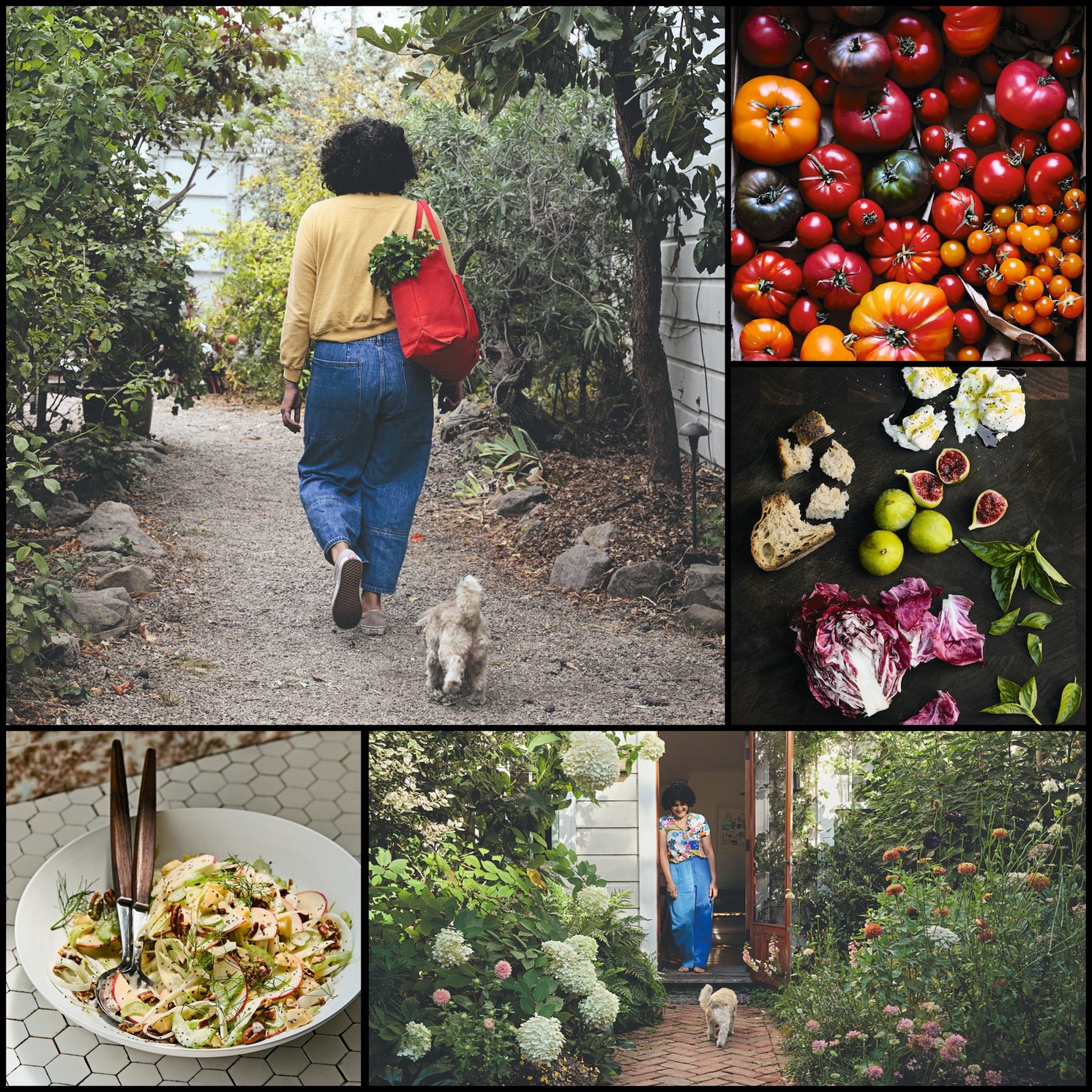
Christopher Kimball: I'm Christopher Kimball, and this is a special episode of milk Street Radio today. It's an extended cut of my latest interview with Sameen Nosrat, her first book from 2017 salt, fat, acid, heat was a major blockbuster in her new book, good things she well, she does it again. Sameen, welcome back to milk Street.
Samin Nosrat: Hi, Chris. Thanks so much for having me.
CPK: You know, first of all, let me say, everybody in the food world wants to be you write this amazing book and sells jillions of copies, you know, win awards Netflix special, and then I start reading your new book, and there's this sense on the street. Finally, clinical depression, potent and Raven has swallowed me whole, and I just stopped. I went like, wow. You know, here's this person who enormous success, smart, great writer, interesting career. But, you know, I guess there's, there's always a dark side. So yeah, success did not generate happiness, or there were just other things involved.
Samin: I mean, of course, there were plenty of highs, and I feel still very lucky for, if nothing else, the financial stability that I really never had before. But also just, you know, like, one of the best parts of it for sure, is people come up to me and say that it like changed their life. It taught them how to cook. And there's a certain type of interaction that is so moving to me when say, like, a young, Middle Eastern woman is just like, wow. I never thought I'd see someone who looks like looks like me doing what you do, because I didn't ever see anyone who looks like me doing what I do. And so those are kind of some of the most wonderful parts of the let's say achievements and success and praise. But no, it didn't make me happy, and I What's crazy is, like, I'm highly therapies, so I knew I was very achievement driven. And I knew on some level that achievements would not, like, make me happy. But I think on some level, I still believed if I just managed to do these things that I've been trying to do for so long, then these other things underneath that have caused me so much pain in my life and sadness will no longer make me feel bad. I thought maybe if I achieved everything, I would finally get the kind of love and feedback from my parents that I've probably been seeking my whole life, and it didn't work that way. And I think what was shocking was that it wasn't conscious, right? I wasn't consciously seeking that. I was subconsciously seeking that. And so when it didn't come, it was kind of shocking. And not only did it not come, but then I was truly I just felt so alone because I really got uprooted. In the years when the book came out and we were making the show and the show came out, I really became uprooted from the life that I thought I was pretty grounded in, and I just sort of was on this, I don't even know, roller coaster or, like white water rafting, current of just wherever it was taking me. And so when I came back, and there was quiet at home, I had the sense of, like, what was all this for, you know, and I felt so alone and sad, just so deeply sad. And then there was a series of, you know, life things that happened inside of that I, for the very first time, very belatedly, faced the loss of my sister
CPK: and she was like, three years old at the time, right?
Samin: Yeah, she was three when she died, and I was one and a half. And so it was just this kind of like part of my story that I intellectually understood. But I don't think I'd ever felt my way through of not only what it meant for me to lose my sister, but what it meant for my family to lose a child, and then how that sort of changed, what was expected of me and what I meant inside of the family,
CPK: and then how did it change?
Samin: I mean, my understanding of it is that because my family comes from Iran and our culture, and certainly my family is very guarded about what they share, not only to the outside world, but even with me. So there's a lot that I don't know. And so I did my best to like journalist my way into an understanding of the loss and the grief. So I started trying to talk to like my aunts and uncles, and I got whatever little bits of information that I could. And then, in the absence of actual family knowledge, I started reading studies and just doing sort of scientific research about what happens to a family system when a child dies, what happens to a younger sibling when an older sibling dies? And I started piecing that together with my own. I experience my own memory. And I think the tidiest way to put it is, I think I sort of absorbed a message that was probably not even explicit in any way, but that I like had to be two kids worth of everything for my parents, who had lost a kid. So I sort of took on this role of, like, I'm going to be really, really good. I'm going to achieve everything, because I just need to make you happy. But that's an impossible task, so that's one part of it. And then just when I was sort of climbing out of that, my father, who was a really complicated and I would say emotionally violent person who I was estranged from my whole adult life. He had a traumatic brain injury and ended up on a ventilator in a hospital, but he never wanted to be on a ventilator, which was very clear to me and my brothers, because we had spent the early part of my life in the hospital with my sister and both of my parents have been very clear our whole lives, like, do not artificially extend our lives. So when they called and said, Oh, your dad's in the hospital and he's never gonna wake up again. He's on this ventilator, I was like, Well, if he can't wake up, he can't hurt me, so the least I can do is go say goodbye and advocate to get him off and so when we went to the hospital to get him off the ventilator, we unwittingly took the first steps into a six month long like medical drama and family drama. My dad had a secret wife in Jerusalem, who he'd never told us about, who, like, showed up yelling, you know, on the phone at the hospital, saying that his children just wanted to murder him for their inheritance, which, like my dad to be clear, had never really given us anything. So there was no inheritance to speak of that we understood. But we had to hire lawyers, and we were just caught in this like crazy medical and legal drama. My life came to a halt, until eventually the hospital took control and did take him off the ventilator, and he did die. And even if that person was harmful, it's still your only parent. And so I think in some ways, the grief is very complicated, because you're grieving the thing you didn't get, yeah, and watching him die was really there was every feeling. You know, I spent the first few days he was off the ventilator. Was the first time he could have solid food. And my dad loved ice cream and sugar and junk food, so I would like sneak him ice cream and and I, like, drove all over Southern California finding soft foods with the flavors of his childhood to feed him, and just trying to give him whatever last sort of sensory experience of being a human, while watching him die in this way that was so sad, he was such a chaos agent and caused so many people so much pain, and so he died in a really pathetic and lonely way. And watching that unfold over so many months, I was just spent a lot of time reflecting on what I want for myself at the end of my life, and it's to be able to look back and say, wow, like my life was filled with so much beauty and joy and friendship and deliciousness and nature and my puppy dog. And in a way, it like, kind of really redirected my own attention and energy after he died, because I had a very clear sense that time is all you get, is the time you get. That's it. There's no refilling it. You know, there's no more. And so this sense that's like, motivated me in my whole life of, if I'm good enough, I'm investing in some bank account of goodness that I will then one day be able to make a withdrawal from and be happy. I was like, oh, that's totally wrong. No, that doesn't work that way. All I have is now, and so I have to try to be happy now. I have to try to have a good life now. And so I'm just trying to still hold on to that, even though now it's been a few years.
CPK: So how do you balance, and I have some experience with this, but how do you balance a parent who, on one hand, was not a good parent, on the other hand, they're your parent. So do you ever reconcile those two things in some way, or those two things are just held simultaneously in your brain until your last day on earth.
Samin: Yeah, I mean, I think it's probably number two. I don't know, in a weird way, him being in such a vulnerable state allowed me to develop a little more compassion for him, and I know that he suffered a lot of his own pain as a kid, so I do have some compassion. And also, of course, like I want to believe that I deserved more.
CPK: Yeah, I guess growing up, we all look back at our family. When we were younger, we had a view of how that family worked, and what its values were, and our place in the family, right? And then the price of growing up is you then have to completely translate that into what it really was,
Samin: Yeah, and it's true as a kid, all you know is your reality. You have no way of measuring it against anything else.
CPK: Well, you remember, I, at least in my case, I'll remember things from the past, and then I go, Oh, that's what happened, you know, totally, you all of a sudden realize, Oh, I get it. They had a couple of cocktails, and this was going on, and that was going on, okay, as an adult, I now understand what was going on.
Samin: Totally. I mean, I had a crazy during the pandemic. I was watching this show that Mindy Kaling produced called, never have I ever it's a show about like an Indian American teenage girl whose dad, whose beloved dad, suddenly died, and so she has this kind of physical reaction to the grief and can't walk. And then probably a couple weeks after I watched it, I woke up one night in the middle of the night, and I was like, Oh my God. Like that happened to me. And I totally had forgotten, but it all came back. And I was like, oh yeah. When I was, like, eight years old, I woke up one day and I couldn't walk, and I like, from the time of my birth, I had a lot of muscle and bone issues, so I think when one day I couldn't walk, we all assumed the worst. You know, there was panic, and my mom took me to the doctor, and so it was just like this thing, I would go over my best friend lived next door. I totally remember somehow we would get me over there, and then she would drag me around on a blanket. We thought it was really funny, like she would just pull me around the house on a blanket, and
CPK: Sorry, I'm just thinking about this image.
Samin: Yeah. I mean, in my mind, it was not actually, like a terrifying memory. It was kind of a silly memory, you know. And then I remembered how, like my dad, who was, I think, just like furious at how much all of this was going to cost all this medical attention. He took us on the freeway, and he was like, I know you're faking it. And he kicked me out of the car on the side of the road. And because, I guess I don't fully remember this, but, but I think because I didn't, like, crumble to the ground, and I, like, stumbled a little, he's like, See, I knew it. I knew you were faking it. You have to walk home. And so it's stuff like that where I'm like, Oh, weird. Like, at the time, I was just like, well, this is totally my dad being my dad, you know, like, but now I think about, like, the friends I have and their kids who are eight years old, and one day I was driving on the freeway, I was like, Holy crap. Like, this is a five Lane freeway. Like, I can't believe that happened to me. So, yeah, you kind of like, it's your only reality, so you just sort of deal with it and move on, and then later you're like, that doesn't seem very —
CPK: Later you go like, that was crazy. It was totally crazy. I was nuts. Yeah, that I've had a few experiences like that.
Samin: That was the, that was the sort of state I was in as I was trying to write this book.
CPK: So you and I have been at this a while, and sulfate, acid heat quote, a veritable manifesto designed to free cooks from relying on recipes. I have mixed feelings about this whole thing. About everybody who cooks, the holy grail is to be able to just go in the kitchen and cook, right? No recipes. And I sort of feel like, you know, fine, use a recipe. I mean, I don't know why that is. I mean, I understand philosophically why it's appealing, but I wonder what you think, in other words, is cooking from a recipe less creative and less fulfilling than not. And should all cooks aspire to free themselves from recipes? Are they? It's in a ball and chain on your creative juices.
Samin: Oh no, I don't my problem with recipes isn't for other people. It's for me. I mean, recipes are the first thing I look up when I'm curious about a new food from another culture that I've never encountered before, because I want to understand the basics of how the thing works. But I think if you don't have the scaffolding of how to cook, of what's important in cooking, then you are forced to rely entirely on what's written on a piece of paper by somebody far away from you, possibly far away from you in time.
CPK: Possibly, you could say that about, you know, Beethoven's Fifth too.
Samin: It's true. I actually like quote Yo Yo Ma in that introduction too, because he's been playing those same Bach Cello concertos for 60 years, and he's like, it's never the same twice. You know, it's it's always a product of the time and the place.
CPK: Well, I love that quote. I have it right here. He says, how wonderful it is that you could have the poetry of music or poetry or music that actually makes you think you're touching infinity. So I'll ask you, do you think that cook? Eating can help you touch infinity. Upon occasion,
Samin: I totally do. I mean, last week I made basil pesto, and there was just something about the way that it came together that day, I actually broke a lot of my own rules. I was in such a hurry, I was so hungry that I like toasted the pine nuts and then I didn't wait for them to cool before I put them in the food processor. So they sort of, Oh, I know they sort of turned into, like a nut butter a little bit, but I actually think that was part of what made the pesto so good. And we kept eating, and we're like, Whoa, this is so good. There was just something about that moment that felt so sort of sublime. So I totally felt like I touched infinity that day. And I do think that's the thing I hope to encourage people, is not, don't follow a recipe. It's like, be as present as you can in the moment, so that you're also aware that you're experiencing something right now. You mean you don't have to adhere to the thing so closely that this thing said, because it's not going to be that anyway.
CPK: You know, one thing that strikes me is, you travel a lot. I've traveled a lot. I don't find many places in the world where people actually sit down and talk about the philosophy of food, or they don't really talk about their food. But in America, we we talk about everything, right? There's no subject that we can't come up with an opinion on. I mean, you're in the business of talking about food. I'm in the business of talking about food, yeah, but sometimes I wonder why we have to talk about food that much. You know what I mean? Yeah.
Samin: I mean, I think I agree with you. I think in Italy, like the thing has been passed down from, you know, family to family, generation to generation, for 3000 years in Iran too, like in China too. And so there doesn't have to be as much discussion about it, whereas, because we're not connected to some sense of what we come from, there are people like me and you who just sit around like surmising, and I do think it's an important role. I think that being connected, it's just one way, in a very large sort of sense of culture, to be connected to something.
CPK: Well, it's sort of like I sort of feel like I am and you are, sort of announcers at a baseball game. We're kind of explaining what's going on in the field. We're just trying to make people feel better. I guess you talk this is interesting. In your new book, you talk about cut asparagus on a sharp bias to mimic the shape of the whole spear, instead of slicing a halved avocado for salad. Scoop out asymmetrical spoonfuls. You want to just talk about that? Yeah.
Samin: I mean, it's funny. One of the things that I felt like just kept coming up over and over again for me was how you make something like how it looks to the eyes is just another way to sort of pay attention and make a decision about how you're going to enjoy this thing, and it really does make a difference in how our mouth enjoys a torn crouton versus a perfectly diced one. Like, I'm always just thinking about what's going to happen in the bowl, what's going to happen on the plate, like, what's my perfect forkful? And I feel like that's not something I have seen. Really talked about to, like, the average home cook before in the way that I had not seen, you know, salt, fat, acid, heat really laid out. So I was like, Oh, let me think about the ways that I'm constantly just, like, cutting stuff up, versus when I go to my friends houses who are not professional cooks, and they just, they don't think about it. They're just like, Yeah, I'll just like, Yeah, I'll just cut these green beans into one inch pieces, versus, like, what I was trained to do at a restaurant was to cut it on a diagonal. And the reason is, like, it looks a little bit more like a green bean. That way, it just looks it like mimics its natural form.
CPK: I'm Christopher Kimball. You're listening to an extended cut of my interview with Sameen Nosrat after the break, Sameen on Russian honey icebox cake. This is most Street Radio. Now let's get back to my interview with Sameen Nosrat. And now the topic of whipping. You talk about whipping tahini?
Samin: Oh, yes, there were so many whipped things in this book. You really picked up on that. I actually few
CPK: of them. Well, you know, the the whipping came to me. We were working on recipe for rice pudding from Paris, and one of the three components was a caramel cream refrigerated for a few hours and just whip it, just get it like a hand mixer, and in about a minute, you get this incredible whipped caramel cream. And I'm just going, like, there's something to whipping here that I'm missing because I just I never had played around with it and I read anything about Dean. I'm going, like, wait. Minute this, this is a thing. Now, yeah,
Samin: It really was. I mean, that one, it was a mistake that I sort of stumbled into. And I was like, what I didn't understand that tahini had this incredible capacity to hold air and turn into something this different texture. And so then I was like, what else can I put it in? So I, had, I, like, started making baba ghanoush that way. I'd squeeze all the water out of the eggplant and whip it together with the tahini, and it has this other, like, airy texture that I couldn't believe. You know, I started doing with hummus too, and I would put, like, whipped aquafaba in it to whip the hummus and make it, like, a lot airier. So I just, I really went into a whipped, honestly, like, for a while I was like, Is the subtitle of this book whipped things? I think I'm always just interested in, how do we take the things that are very simple, and is there some like, tiny, little technical shift that could make it just surprising and delightful and different?
CPK: One of the things you have in this book I really love, are all your dressings for salads?
Samin: Oh, yes, I'm glad I landed with you.
CPK: Well, that well, you know what? Because this is the thing I think Julia and Jacques destroyed the American approach to salad dressing, because it's always got mustard in and shallots. It's like, you don't have to put mustard and all your salad dressings, please. And there's 1000 different ways, because all cultures have dressings that are radically different. And also you don't need this three to one, you know, ratio of oil to vinegar, etc. So help us reinvent dressing? Yeah.
Samin: I mean, I love that. You picked up on that also, because the dressing, in some ways, is like my most treasured chapter and the most used one. For me, there's a pretty simple vinaigrette that I learned to make from Rita SoDI and Jody Williams of via Carota in New York. I mean that one actually does have shallot and mustard, but it was much softer than any dressing I came up with in my sort of French, Italian, Californian training here, I used to eat this salad at via Crota, and that was how I went to them. And I was like, Please give me this dressing recipe. Because all my friends, we were confounded. I would eat there with, you know, my like, long time co Chez Panisse people who would be like, Why is this dressing so good? And ultimately, the answer was that it's actually so understated. You know, they even put a little water in there to soften the acid. And so there's something just like, incredibly delicate and all purpose about that dressing. And I also think it's because it has a little bit of
CPK: Honey lemon miso dressing. Before we move on, you got to talk about that.
Samin: Oh, my God, it's my favorite one. Yeah, it's got Aqua faba in it,
CPK: Which, you know, I know you can substitute it for whipped egg whites, but I've not seen it in a dressing, no.
Samin: So there's a Restaurant Group in LA called kismet, and they have a rotisserie that is, honestly, in some ways, like my dream restaurant. It's like, you can get a rotisserie chicken and Pita and delicious hummus and sauces and salads, and they have this miso poppy seed dressing that I just like wanted to drink, and I begged them for the recipe, and they're like, oh, we can't give it to you because we're writing our own cookbook. And I was like, Okay. And so I went on a journey trying to reverse engineer it from taste. What I loved about it was that their dressing was both like a homemade version of the yummiest just crowd pleaser store bought dressing I could imagine, and that was what I was trying to do. How did you figure out the aquafaba? Yeah, initially I didn't make it with aquafaba, and it was pretty creamy, actually. But then I entered my aquafaba phase, where I started just putting it in everything, because once I realized I could make an aqua faba mayonnaise that was just so thick and creamy, I was like, well, this seems like it'll be a good base for a dressing and I think part of it for me, I'm not vegan. I had a short lived attempt, but I just love dairy too much. But I have noticed there's just something about like, a creamy, either dairy based dressing or egg based, like mayonnaise dressing that, like, I just won't make that for myself at home. It feels too heavy to have around. And then I'm like, You crack an egg yolk, you have to make at least a cup of dressing. And that's so much dressing I live by myself. So there was a way where, with aquafaba, it felt like less of a commitment, and also felt like it would last longer in the fridge. And I think both of those things are true, and as like an added bonus, it somehow manages to be creamy without being like heavy. This sort of relates to your other question about whipping. I was just like whipping and aquafaba ing everything I possibly could and just sort of
CPK: whipped, ricotta whipped. Yeah, exactly. There she goes again.
Samin: Honestly, I my friend who tested the recipes and really held my hand for the last four years working on this book. She was like, every copy should come with an immersion blender, because I just am like, immersion blend, this immersion blender.
CPK: Not Russian honey, icebox cake. Oh, and it has burnt honey. Could you want to talk about that? Because that those two words together just send shivers of pleasure.
Samin: Oh, I also love that you chose this, because this is what came to mind when you talked about your caramel whipped cream. This recipe is based on the sort of legendary Russian honey cake from the now sadly defunct 20th century Cafe Michelle Pauline's pastry shop in Los Angeles. She's a brilliant pastry chef, and she still makes from time to time, this incredible 20 layer cake, 10 layers of this very like sort of finicky cake to bake, you have to individually bake these very thin layers of this honey cake and let them sort of dry out, and then she layers them with this dulce de leche, like burnt honey frosting. And then you let the cake sit and sort of come together overnight and then serve it the next day. But it's so much work. But I love that taste. There's something about burning the honey, it's different than just straight caramelized sugar, because you have all of the sort of aromatic qualities of the honey in there, and it's a little bit more like acidic and bitter in a really interesting way. Also, the other thing that always happens is, whenever I burn honey, bees come into the kitchen. They know what you're doing. It's like they're coming to get you. I also went through a burnt honey phase, where I kept I was just putting that in everything. I was like, maybe I can make a burnt honey dressing. Maybe I can make a burnt honey chicken marinade. But in the end, really the best use of it was for this cake. I just realized. I was like, I'm never gonna make that if I have to bake all these layers. So I begged Michelle to let me make an icebox version of the cake with just store bought graham crackers, and I tweaked her filling a little bit because the graham crackers are a little sweeter than her cake. So I added a little more sour cream into the filling, and it's so so good. Somehow it's not a too sweet dessert. It's kind of a, like a miracle of balance.
CPK: Um, forever, popcorn, nutritional yeast and popcorn.
Samin: Oh, yeah. I mean, so many of the things in my book are, like, not new under the sun. You know, we also have, like Marion Cunningham's waffles, which I just could not improve upon. So I put her waffle recipe in there.
CPK: They also make those little pancakes she makes. Oh, I don't know. I think they had ricotta in them or, Oh, cottage cheese. Zeppelins Weren't they called Zeppelin?
Samin: Oh, maybe, oh, yes, that's what they were. I'm gonna go look that up later. I have here, I have Fannie performer right here.
CPK: I'm looking at it right now. No, I think it was, No, it was Marion Cunningham's breakfast book. Oh, she did a breakfast book.
Samin: You know, the breakfast book is just the breakfast chapters of Fannie farmer. Oh, really, yeah, I just, I discovered that at some point, I was like, come on. Oh, yeah. Really, it's all the same recipes. Yeah, it's kind of incredible. Yeah, hold on. I sit under Marion Cunningham at my desk, so let me look for it.
CPK: Zeppelin pancakes. Remember, we are, yeah, one page, 115 you got to make those.
Samin: I will. Let's see. Don chapele is Zeppelin pancakes. Don chapelay, owner of Pritchard Hill Vineyards, perfected this recipe while raising six children for whom he regularly made pancakes on Sunday mornings. I call them Zeppelin pancakes, because they are very light. Yeah, same.
CPK: So everyone does roast chicken, but yours looked particularly good. Oh, thank you. So you want it, you want to talk about it, yeah?
Samin: I mean, again, like, people ask me, oh, who are you? Or whatever? I'm like, Oh, I'm just the lady with the chicken recipe. So for sure, the buttermilk chicken recipe from salt, fat, acid, heat is probably one of the things I'm the best known for, but a big part of this book, like I said, I was sort of on this, like journalism journey and thinking a lot about my heritage, and I was trying to connect to the tastes of my childhood. And I grew up eating a lot of Persian food. And the sort of large culinary field trip that my family would regularly take as we would drive from San Diego to Orange County, there are a bunch of cello kabobs, the like Persian kebab restaurants there. And I really had a very long phase of preferring the Chicken Kebab, the juju kabob it's called, and so traditionally, that's like, there are a lot of different ways that people make it, but usually it's, like, marinated in yogurt and lemon juice and saffron. And there's very specifically the taste of, like, grated onion. So I just took my buttermilk chicken marinade, and I'm Juju kabob it. And every time I eat it, I'm like, Wow, this totally tastes like my childhood. But what's interesting is, I tried grating the onion, I tried slicing the onion, and in the end, I was like, well, it's really the onion juice. There's something about the onion juice that's really important in the flavor. And every time I take a Persian sort of classic dish and some minify it, I get a lot of flack from Iranians who are like, this is an. How you do it, which I think is like, pretty much like, every immigrant population feels that way about their traditional foods, so I'm anticipating the backlash, but I will say, if you do make it that way, you will get that taste.
CPK: Well, maybe the food world's getting over the fact that, you know, recipes change, yeah.
Samin: And as much as, like, authentic cooking from a tradition or a place can mean something in that place and in that time, like I was saying, you know, a recipe is very much a reflection of a moment. And exactly, I happen to have been born in San Diego and grew up here, and so my cooking is a reflection of my life experience, and I don't walk around claiming in any way that I'm I'm like a traditional Persian cook. I just am sort of trying to translate the flavors of my heritage and of my childhood for people cooking today.
CPK: You're the roast chicken lady,
Samin: I'm the roast chicken lady, Yeah, same.
CPK: It's been a pleasure. I love your new book, and I look forward to making I don't know half of the recipes. Thank you so much.
Samin: Thank you so much. So nice to chat with you.
CPK: That was Samin Nosrat, her book is good things, recipes and rituals to share with people you love. She's also co host of the podcast home cooking. Thanks for listening to this special, extended interview. To hear all of our episodes, please head to milk street radio.com, or wherever you get your podcasts. Can also find us on Facebook at Christopher Kimball's milk street, on Instagram at 177 milk Street. We'll be back later this week with more food stories and thanks, as always, for listening.
Speaker 1
Christopher Kimball's milk Street Radio is produced by milk Street in association with GBH co founder, Melissa Baldino, executive producer Annie sinzibal, Senior Editor, Melissa Allison, Senior Producer, Sarah Clapp producer, Caroline Davis, Assistant Producer Mari Orozco. Additional editing by Sydney Lewis, audio mixing by Jay Allison at Atlantic public media in woods, Hole, Massachusetts. Theme Music by tubap crew. Additional music by George Brendel, egglath, Christopher Kimball's milk Street Radio is distributed by Pr X you.
ADVERTISEMENT

Simple, Bold Recipes

Digital Access
12 weeks for$1
- EVERY MILK STREET RECIPE
- STREAMING OF TV AND RADIO SHOWS
- ACCESS TO COMPLETE VIDEO ARCHIVES

Insider Membership
12 weeks for$1
- EVERYTHING INCLUDED IN PRINT & DIGITAL ACCESS, PLUS:
- FREE STANDARD SHIPPING, MILK STREET STORE,
to contiguous US addresses - ADVANCE NOTIFICATION OF SPECIAL STORE SALES
- RECEIVE ACCESS TO ALL LIVE STREAM COOKING CLASSES (EXCLUDING WORKSHOPS & INTENSIVES)
- GET YOUR QUESTIONS ANSWERED BY MILK STREET STAFF
- PLUS, MUCH MORE

Print & Digital Access
12 weeks for$1
- EVERYTHING INCLUDED IN DIGITAL ACCESS, PLUS:
- PRINT MAGAZINE SUBSCRIPTION
- 6 ISSUES PER YEAR

