





Your email address is required to begin the subscription process. We will use it for customer service and other communications from Milk Street. You can unsubscribe from receiving our emails at any time.
Episode 913
June 5, 2025
June 5, 2025
Betrayal, Revenge and Family Secrets: A Frozen Food "Succession"
This week, we share a story of revenge, betrayal and secrets … at a frozen vegetable empire. John Seabrook investigates why running “the biggest vegetable factory on Earth” led to generations of drama in his family, like a real-life version of the TV show “Succession.” Plus, Brendan Liew gives us a tour of Japan’s incredible convenience stores; Kenji López-Alt finds the best way to crack an egg; and we learn how to make Sri Lankan Spinach and Coconut Dal with Tomato Tarka.
Questions in this episode
"Is there a stock that has every animal in it?"
"Why do recipes call for melted butter in cakes?"
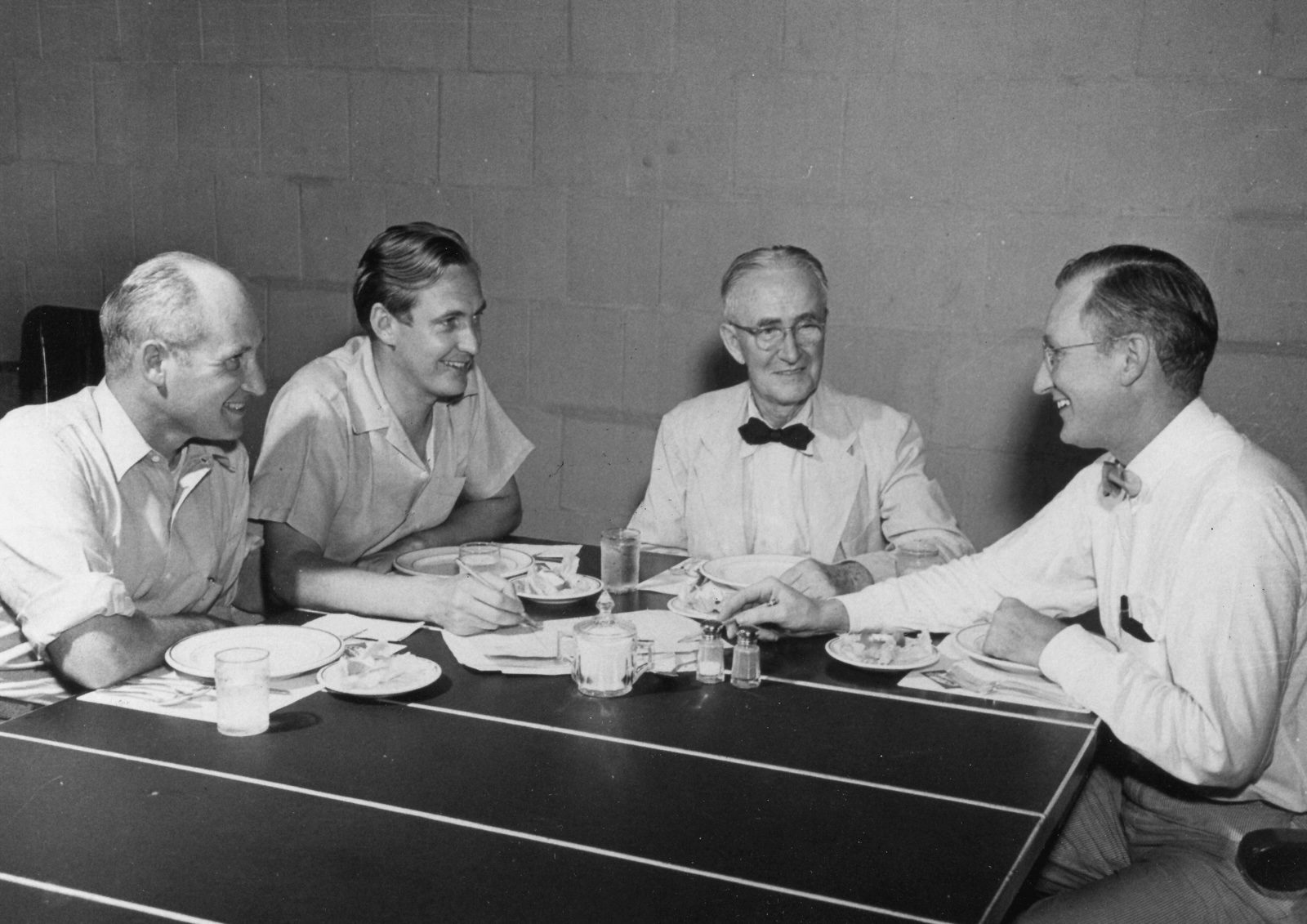
Christopher Kimball: This is Milk Street Radio from PRX, and I'm your host. Christopher Kimball, Seabrook Farms was once called the biggest vegetable factory on earth. John Seabrook’s family owned it, and when they did, they were on top of the world.
John Seabrook: It's amazing how far vegetables took my family literally from the dirt to the corporate boardroom and to Grace Kelly's wedding.
CK: But behind the scenes, there was turmoil, like when the patriarch tried to let the company go bankrupt out of spite,
JS: And then the banker said to my father and his brothers, you know, to save the business, you may have to commit your father.
CK: Family feuds over a frozen vegetable empire that's coming up later on the show. But first, we're taking a tour of convenies, Japan's iconic convenience stores. I'm joined now by chef and author Brendan Liew. We spoke before my recent trip to Tokyo, where he was my local guide around the city. Brendan, welcome to Milk Street.
Brendan Liew: Oh, thank you for having me.
CK: A pleasure. You know we're talking about convenience stores in Japan, 711 Family Mart and Lawson. I remember, four years ago, I was in Tokyo, and there was a 711 on the corner near my hotel, and early in the morning I went in. I think I spent over an hour there. It just blew my mind. So maybe you could just start by giving us a tour of one of these places. What's in there? What does it look like? What does it smell like? It's so different than a convenience store here in the States.
BL: I think the first thing you'll notice as you approach the store is how clean it is, like there's no rubbish around. And then as you enter the store, there's so much it's almost overwhelming. There's obviously the food element. There are all kind of knickknacks, T shirts, socks, cleaning products, fax machines, magazines and ticket counter as well. If you want to purchase concert tickets, there's almost nothing you can't do at a convenie.
CK: And there are a lot of them, I guess, over 50,000 convenience stores in Japan. How do they fit into the Japanese consumers idea of what a store should be. In other words, is the 711 in Tokyo, particularly a Japanese concept, or is it sort of an international concept that also works in Japan?
BL: When it started, it started as a very American concept, so like corn dogs and then, like a mini supermarket, and it didn't really work until they started introducing more Japanese products, like the onigiri. And it really works in Japan, because Japanese don't have big houses, so they don't have big kitchens, they don't have cars, and because of that, they like to do like little shops. So the convenie works well for them to have a place to go, maybe once a day, once every two days, just to pick up everything they need, and you have a really delicious dinner.
CK: So okay, so you and I meet up in Tokyo at some point, and you want to take me on a tour of these convenience stores. Could you just pick out three or four or five singular experiences or foods that would be something I would never see outside of Japan.
BL: I think we would have to first try the onigiri, the staple of the convenience store. As soon as you pick it up, you'll see that it's like a perfect shape, and then the rice itself will still be the perfect texture they get their rice from a small regions of Japan. And you'll taste the rice first, and then you'll taste the lovely care that's put into the filling, whether that be special Japanese plums from Wakayama or tuna and mayonnaise, the softness against the more firmness of the rice after that, I think that you have to try the fried chicken. You have to do a fried chicken tasting between the three major brands to find your favorite. So, one will be more crispy than others. One will have a different spice blend to the others, and then definitely the desserts. So,the pastry is a huge part of it, like sakura anpan, which is a little bread that's filled with red bean paste, or anko that's usually flavored with Sakura or cherry blossoms. (Oh, that sounds good) and then you'll find that with a bit of mochi inside, yeah,
CK: I was, I don't know, a few years ago I was talking to someone and realized that curry had a very long history in Japan, and Friday nights there are often curry nights. So, could you just talk about curry?
BL: So, curry in Japan, it became popular by the SNB Company when they developed their curry roux, which is like the blocks of curry that have been solidified that you just add to a pot of vegetables and meat. So, most of the convenience stores will have a wall of curries. In retort packs anything from a prawn curry to more spicy vindaloo curry. But yeah, the curry over there has taken lots of different forms, the most popular of which is a curry pan, which is basically a donut filled with curry. And this is one of the best things about Japan, if you've tried one. So, the donut itself is usually coated in panko crumbs to make them extra crunchy, and then inside you'll find meat and vegetable, and a lot of times you'll find a whole soft-boiled egg as well inside.
CK: Well, I think I'm going to meet you in Tokyo, and that's the first thing I want off the plane. Is a curry donut. (Um) what's the if you go into a convene, what? What's the fun part? I mean, I think going, when I was there, it was almost a form of entertainment, walking around, I just was just fun. Is that? Do they understand those stores are there? As I hate the term experiential, but it's an experience going in. It's not just a place to buy something,
BL: Yeah, it's an experience, not only for foreigners visiting Japan, but also for locals. So, if you go to a convenience store, say, in a coastal area, they might sell like fishing rods and bait, because they expect a lot of people to need that there. So, every convenience store is an adventure basically, you can't walk into a convenience store and not find something very region specific, like sweet potatoes. If you're in Kawagawa area, which is a little bit north of Tokyo, there's very famous for sweet potatoes, you'll find, yes, so always a local touch in the community store.
CK: Well, it sounds like these are much more decentralized in some way. There's more power locally to buy local products, for example, fishing rods and bait. Lawson's ethos, you say, quote, “creating happiness and harmony in our communities”. I can just imagine a Store 24, 711, here in this country saying, you know, we're really trying to create happiness and harmony in our communities. I don't think so, but I take it That's for real. I mean, they're not just saying that. It's it feels to me like there is at least some truth to that slogan.
BL Yeah, so Lawson, after the 311 tsunami, they were, I think the first ones into that zone with trucks that could provide food and any of the essentials for people in the disaster zone. And also, they send out small trucks to very regional areas, like once a week to provide the elderly local population who don't have access to a brick-and-mortar convenience store. They are a service to the society in that way, we didn't go into this thinking, oh, convenience stores, we're going to think about, you know, their social importance. But it really struck me that convenesare kind of this microcosm of, like Japanese society in that it's always looking for the best ways to service Japan as a community, rather than, like just looking for profit.
CK: I would love to have one of these in my neighborhood. Brendan, thank you. A fabulous tour of convenience stores in Japan combining Thank you.
BL: It was wonderful to share convenient with you. Thank you so much.
CK: That was Brendan Lieu, along with co-author Caryn Ng he wrote the cookbook: Konbini, Cult Recipes Stories and Adventures from Japan's iconic Convenience stores. After my latest trip to Japan, I can report that my all-time favorite items at a convene are the egg salad sandwiches and the Japanese style gummies you now I'm joined by my co-host, Sara Moulton to answer a few of your cooking questions. Sara is, of course, the star of Sara's WeeknightMeals on public television. Her latest book is Home Cooking 101,
Sara Moulton: Okay, Chris, before we get going with the calls, I have a very important question. I know how you feel about salt and pepper. You know why pepper? Who cares about pepper? Are there any other ingredients you just don't get it. Why do people add them to recipes? Why bother?
CK: How much time do we have? We have half an hour. (Well, let's start with one) Well, okay, bay leaves, dried bay leaves. I'm sorry I would do a blind test with anybody three bay leaves in a stew with five pounds of meat like you're never, ever in a million years, going to taste that. So, I love the smell of bay but I don't think that most dried bay leaves are doing very much for you. The other thing is, this used to drive me crazy a sprig of thyme. So that is such nonsense, like a sprig of thyme for the supermarket is going to do zero zip for whatever you're cooking if it's more than a cup, because the tyyme we get the supermarket doesn't have a lot of flavor to start with. I think in the heyday, maybe a French cooking in the 19th century, you pluck the thyme from your kitchen garden, it actually was highly aromatic and perfumed. So, a little bit of herb, I think at this point, is pointless. And then you look around the world and other cultures don't think like that. They start with fish sauce, they start with lemongrass, they start with chilies. They're putting big flavors in. And I think that's a style of cooking that makes more sense today than the French method, which was very high-quality ingredients and over a period of time developed flavor. But it doesn't work when you're dealing with supermarket produce that isn't the same. So, you have to change the rules of the game.
SM: I agree with you. A sprig of thyme just thrown in, loose like that. You know what I do? I take more than one (I take the whole package). Well, here's the thing I also do. I take a very heavy rolling pin. 9Yeah, that's good). I have a marble rolling pin that I never really use for anything else, and I'll roll I'll do the same with rosemary. Change the rules the game, but don't lose the herb. Don't throw out the baby with the bath water. Yeah, the thyme doesn't taste the way it did, but coax some flavor out of it, because thyme has flavor. I just add more
CK: If you think for yourself and taste and go, like, wait a minute, this isn't working, then you got to do it differently.
SM: And then you get out your marble rolling pin.
CK: My point only is you got to think for yourself sometimes.
SM Yes, yes
CK: I think we can agree on that.
SM: Oh, we absolutely agree on that. Okay, yeah, let's take a call. Welcome to Milk Street. Who's calling?
Caller: Hey. This is Matt from Brooklyn
SM: Hi, Matt from Brooklyn, how can we help you?
Caller: So, about three or four months ago, I was making some gumbo with some leftover stock that I had made from turkey, and I realized I didn't have enough, so I checked the freezer, and I was looking around, and I noticed some duck stock, so I threw that in with the turkey stock. But as I was rifling around the freezer, I noticed I also had like, smoked pork trotters and chicken wings and like beef snacks, so I threw all that in there with the stock and just let it simmer and finished the gumbo. It came out so good. It was so good. And I was trying to figure out, like, what this stock was. So I, like, googled it, and I didn't really know what to google, so I wanted to know if you guys had any info on, like, a stock that has every animal in it.
SM: Well, first of all, let's just pause and reflect on what you had in your freezer. That's pretty darn astonishing, right? Chris?
CK: I thought he was going to pull out a frozen pizza and put it in the stock. That's what most people have on their freezer.
SM: I know, really, but you must be a very good cook. But let's go back to your gumbo. What was in your gumbo?
Caller: Sausage and turkey. I didn't put any shrimp,
SM: Alright, so it was mostly a meat lane. I think gumbo is the kind of dish that it's really, you know, there's many occasions when it would be okay to use your every animal known to man broth, if you've got something more delicate, you know, like scallops and you want to make some sort of sauce. I don't know if that would be the right broth to start with. If it's a single ingredient you want to shine that you're going to use this liquid for, maybe you want to stick with just a chicken or just a duck or just a beef, I don't know. Chris, what do you think?
CK: Well, let's go to the beginning. Stocks were just anything you had left over. It was on the back burner of your coal stove, right? And you just put, you know, the water used to boilcabbage would go in all your vegetable trimmings. It was just a way of using up everything in the kitchen. No meat went into it, probably just bones and trimmings. But in the last few years, based on, you know, traveling with Milk Street, I find that very few cultures use stock. You know, stock is a very French thing, or European thing, and most people use water, yep, like a leek potato soup. You know, the water is good. Actually, maybe a little chicken stock, because I want to taste the other ingredients. So, I totally agree with Sara that what you made is perfect for the dish you made. But I would say, in a lot of recipes, sometimes you want a little bit of flavor, but not too much. But I think for your purposes, it was absolutely the right thing to do. And God bless your freezer, by the way,
SM: Yeah, no, I'm jealous. I want your freezer. I want to know all the other meals that preceded this one.
CK: And ham hocks and those kinds of things, by the way, are just phenomenal. (They're wonderful) the gelatin, the flavor, et cetera. So no, I think you're spot on. But sometimes water actually is better.
SM: You know, Chris on that note, years ago, when I worked at, you know, la tube leaf, Jacques Pepin was a visiting chef. In two years, he came maybe four times, and I'd. Follow him around like a little puppy dog and just try to learn as much as I could. And one day, I was cooking family meal, which is what you cook for the staff before service starts. And we broke down our own racks of lamb, and I was taking scraps from that process and making a stew. And I went to reach for, I think even veal stock or something, which we had in house. And he came over and he said, what are you doing? I mean, he said it in a nice way. He's a sweetie pie. And I said, well, I'm, you know, I'm using a stock. I want to be flavorful sauce. He said, lamb is so strong in flavor. Use water. I was like, boy yo yo yo yoing. It hadn't occurred to me. It really hadn't. So, I think Chris's point is very well taken there. Yeah,
CK: Yeah, anyway, sounds like it was a great meal. You didn't invite us, no, really, but it sounded, sounded delicious.
Caller: Yeah, there's some leftovers in the freezer.
CK: See There you go.
SM: Now you’re going to do something else with those leftovers. I got an idea.
CK: Put them on the frozen pizza.
SM: Just put rice in it, right? So put it in a nonstick pan, or a pan that you used a lot so it doesn't stick, put in some oil and crisp it up. Make a very thin pancake with it and get a crisp on both sides.
Caller: We're going to have to do that. Thank you so much.
CK: Thanks for calling
Caller: Bye. Bye.
CK: This is Milk Street Radio. If you need some inspiration the kitchen, give us a ring. 855-426-9843 one more time. 855-426-9843, or just email us questions at milkstreetradio.com
SM: Welcome to Milk Street. Who's calling?
Caller: Hi. This is Elizabeth.
SM: Hi, Elizabeth, how can we help you?
Caller: I love to bake different kinds of cakes. One of the cakes that I am pretty famous for is chocolate cakes. But I have two different recipes, and honestly, they're just about the same ingredient for ingredient, but one of them has buttermilk, vegetable oil and melted butter. And my question is, does the melted butter make the cake denser, moister. What is the function of the melted butter? Because honestly, that's the only difference I see between the two.
SM: Have you made both cakes?
Caller: I have made them both, so they're both nice and moist. Honestly, I can't really tell the difference, but I'm just trying to come down to one cake that is going to be my go-to chocolate cake. One of them is called the best chocolate cake recipe, and that's the one with the butter. And the other one is Ina Garten’s chocolate cake, which is fantastic.
SM: Butter has water in it. You know, when you melt it, it separates into three layers, so that water means there's that much less fat than is if you just use total oil. So, you're not going to get quite as you know, moist or tender a cake with melted butter as you would if you used all oil.
Caller: Why would we add melted butter to a recipe? What's the advantage of it?
SM: Yeah, maybe for flavor purposes, I don't know, Chris, what is your thought on this?
CK: Let's start with a question, how much oil is in each recipe and how much butter is added to the first recipe?
Caller: Both of them have a half a cup of oil and a cup of buttermilk. And then the best chocolate cake recipe has a half a cup of unsalted melted butter
CK: I assume the second one also changes the amount of flour in the recipe from the other one.
Caller: Believe it or not, no, they're both one- and three-quarter cups. (sugar?) The only other the sugar, one of them's two cups of sugar, and the other one's a cup of brown sugar and a cup of white sugar.
CK: In general, I think cakes made with oil are better because oil is a liquid at room temperature, they'll stay fresher longer, and they'll stay moister longer. Butter is not a liquid at room temperature, and it will tend to stale more quickly, and it will not have that soft, moist texture the way oil was so in general, like chiffon cake or something that uses oil. I'm all for oil. I'm a little surprised though that you have all this additional melted butter and nothing else in the recipe changes.
Caller: I will say, I'm sorry. The only other difference in ingredients is Ina Garten’s has a cup of hot coffee versus the one with the butter has a half a cup of coffee
CK: Oh okay, okay, well, at least Okay, that's the difference. Is that the same amount of liquid, yeah, that's why I we couldn't figure this out.
SM: Coffee is an interesting point too, because coffee points up chocolate.
CK: Coffee is great with chocolate cakes. I would go with the non-butter version, Ina Garten version, with the coffee. I agree. The fat, you know, 83% fat versus 100% is probably not going to make a huge difference given the total amount of oil in the recipe. Yeah, that's what I would do. It's a good question, because oil and water are very, very different in baking.
Caller: I agree. And my only other question is, you know, how a lot of baking recipes say two cups of flour or whatever. I try and find recipes that do everything by grams. You're right. So, I just, I've converted one cup to equal 125 grams of what flour. Does that sound about right? I think it’s supposed to be 120
CK: If you look at King Arthur, I think they say (120) 120. But we did it a couple years ago. We came up with over 130 I weigh my flour too. But the recipe you're using, you'll see their grams being very different than what you do. So, if you see three cups of flour in a recipe instead of 360 grams, it might be 390 grams. So, you can follow that recipe if they have the grams. And that's the best way to do it
Caller: That’s kind of my guideline,
SM: or you know, try to use baking books that have everything in grams, because they measured it in grams. So, it's going to work the way they want it too.
CK: And by the way, as you know, cake flour and bread flour are different weights for a cup, so right switch it around
Caller: Right, I do know that.
CK: But no, I think you're doing the right thing. But vegetable oils are definitely my preference for cakes.
SM: Yeah.
Caller: Well, thanks so much you really did help me out.
SM Okay, Elizabeth, take care. Bye
Caller: Have a good one bye.
CK: You're listening to Milk Street Radio coming up the rise and fall of a vegetable dynasty. Hey, listeners, I'm going to be taking calls with special guest host Jett Tila soon, and we need your questions. We want to hear your biggest cooking problems, toughest culinary mysteries and whatever you're curious about. So please send an email to [email protected] and we'll be in touch again. That's [email protected] Thank you. This is Milk Street Radio I'm your host Christopher Kimball, at its height, Seabrook Farms produced 1/3 of the frozen vegetables in America.
Farm ad: Once you had a garden where wondrous vegetables grew, could anything ever again taste so delicious. Well, at Seabrook Farms, we too grow vegetables right outside the door, cook and freeze them on the spot. You just boil them, bag and all, and enjoy that home grown taste again. Behind
CK: Behind this wholesome image, there was a dark side. The farm brought fame and fortune to the Seabrooks of New Jersey, but it also led to generations of family drama, just like a real-life version of the TV show Succession. Joining me now is writer John Seabrook. He shares this story of his family in the book The Spinach King, The Rise and Fall of an American Dynasty. John, welcome to Milk Street.
John Seabrook: Hey, Chris, good to be here.
CK: So, your family has a long history in truck farming. You comment that truck farming is not named because there were trucks involved. So, what is a truck farm? Let's start with that
JS: You know, the expression I don't have any truck with that truck also meant goods like in a barter economy, so sometimes produce was just basically used as currency. This is, you know, back in the 19th century and truck farms were also called market gardens, which is why New Jersey was called the Garden State. They were promoting their state as an ideal place for market gardening or truck farming.
CK: If you want to build a dynasty, doing it off truck farming, it's got to be like the craziest idea in the world, because it's climate dependent. There’re strikes. Finding people to work on the farm is hard. So having researched all this and you have your own family stories, was there some reason you think your family was able to be so successful, and what has to be one of the toughest business models in the whole world?
JS: Chris, well, yeah, it's true. It's amazing how far vegetables took my family, really literally, from the dirt to. The corporate boardroom and to Grace Kelly's wedding. The most important reason for their success was that they were not just farmers, they were engineers. So, my grandfather was born in 1881 and he's really the one that created the industrial farm. So, for him, there was the internal combustion engine, there was electricity and there was telephony. All three technologies were really not used on most farms at that point, and he was an early adopter of those technologies, and was able to get a step on his competitors. And then as his competitors caught up, he moved on to the technology of frozen food, which was really where my family made its real mark. Seabrook Farms is known to most, if it's known to anyone now as a frozen vegetable frozen food company, and that was in the 30s. You know Clarence Birdseye and he knew each other, and Clarence Birdseye was freezing fish and working with other kinds of food, but he had no success with vegetables, and so my grandfather worked with Clarence Birdseye to develop a quick-freezing process that worked for vegetables. And then he also cultivated lima beans on a huge scale. A lot of children probably owe their horrible lima bean experiences to my grandfather and so, yeah, he developed a completely vertically integrated Henry Fordist, like vegetable factory in South Jersey, and eventually had 50,000 acres under its control and had 8000 people who worked for it.
CK: Yeah, I read the Life magazine article from 1955 and they, I'll quote from it said that it's packaged output of lima beans would have stretched 2250 miles, (right) And I love this. Thanks to careful scheduling, the truck will dump its load with no dead waiting time, right? Often less than an hour elapses from the time of bean is picked until it has been washed, sorted, hand checked, packaged and quick frozen. So, as you point out, it was the factory model, factory farming, I guess, is the way to put it right.
JS: It is. But I mean, the, I think the interesting wrinkle, and the kind of, in some ways, the achilles heel in the whole model, was labor. And as much labor as they could find, they always needed more. And not only did my grandfather create the farm, he created the housing. He created a town called Seabrook, which is there, you can look it up on the map and owned the housing. The whole world he created was this kind of capitalist, feudal, weirdly, sort of medieval, but also modern world that really had no parallel.
CK: So, there was also a banking story here. And so that started in 1911 Arthur agreed to sell his land and half of Seabrook and son to his son, Charles. You said that that was the original sin and the Seabrooks story. Could you explain that?
JS: Yes, so my great grandfather was the one who had the 50-acre farm, and, you know, he was a very good truck farmer and didn't really want for a huge amount in the world. But Charlie, his son, who was extraordinarily ambitious without his father knowing about it, made contact with a Wall Street investment firm and didn't tell his father that he had all this backing, and bought his half of the business for what I think was then 24,000 maybe, I don't know what that is today, but it wasn't anywhere near what it was worth.
CK: So, the great grandfather, Arthur, gets bought out by your grandfather his son, (right) for 24,000 which is less than a million today, which was ridiculous. And then your grandfather got into trouble with his son Jack Seabrook, right, (right) So here you have great wealth. You have a dynasty in vegetables, frozen vegetables. But then you say, by war's end, this is interesting, the company was packing 65% of the nation's frozen lima beans, 35% of its frozen broccoli and 40% of its frozen spinach. And then in the 50s, mylar is invented by DuPont, and then you get into boil in the bag frozen products.
JS: Yeah. So the Seabrook farms brand was created after World War Two. Before that, their business was packing for Birds Eye. But after World War Two, they created their own brand, and then the sons my father and his brother, Courtney, expanded the business to California, to places where the labor was cheaper, the cost of production was cheaper, but it lacked the kind of Fordist, centralized control that my grandfather not only had built, but seemed to need. And my grandfather then later in his life seemed to be haunted with guilt and the paranoia that his sons would do to him what he had done to his father. There's a Greek tragic element to it, almost
CK: So Jack Seabrook has a penchant for horse drawn coaching, and then he also was quite friendly with Eva Gabor, (yep) So he was living the high life, right?
JS: He, well, this is yes. He, you know, he was a good-looking guy. He graduated from Princeton in 39 you know, when, when frozen food was originally introduced. It was marketed as, kind of like a high-class thing. You know, there were the images of these women dressed in evening clothes, who, you know, they didn't have to get their hands dirty at all. They were off to the opera or whatever, and and he himself my father was the brand ambassador, and everybody knew who he was. And Seabrooks also knew the Kelly family, because the Kellys had originally built the brick power plant that powered the vegetable factory. Grace Kelly was somewhat younger than my father, but because the families knew each other, my father was invited to the wedding in 1956 which he also saw as a fabulous marketing opportunity for the brand. But wait,
CK: But wait, but there's a story you tell about raising money for him to go to that wedding, Ithink
JS: Yeah, so he got the invitation. His father did not whether that caused tension, I sort of speculate, but yeah, then his father didn't really want to pay for him to go, so they had a money raising campaign with the advertisers, you know, and even consumers, chip in another five cents and pay for Jack Seabrook to go to the Kelly wedding, can you imagine doing that today? I don't know if that would work.
CK: You're getting self-funded to go to Grace Kelly's wedding on Kickstarter. (Exactly) Andyou do have to tell the Eva Gabor swimming pool story,
JS: Yeah, yeah. Well, Ava Gabor would come down to South Jersey, and people had not seen Ava Gabor, or anyone like Ava Gabor down there. And she actually didn't just come down. She took part in the company Christmas Pageant. You know, she, she acted a part. She wore this kind of lederhosen like outfit for a promotional photograph, but the thing that really enshrined her in legend was that she would swim naked in my grandfather's pool, except with a shower cap to protect her platinum blonde hair from turning blue and and I don't know how many people actually saw that, But if you go down there, you still hear people talking about Ava Gabor swimming in the in the swimming pool.
CK: So, what happens after Grace's wedding in Monaco and all Ava Gabor? Was there a denouement? Was there another phase of his life after that that was quite different?
JS: Well, yeah, so my father meets my mother, who's a journalist covering Grace Kelly's wedding on the ship that the Kelly family took the wedding party from New York to Monte Carlo in the SS Constitution. And so, for my father, that was, you know, a new life. And he had two children. I was the first one born, and then my brother, but his relationship with his father continued to deteriorate. I think his father also was suffering from some form of dementia, probably, and so when my grandfather started slipping the banks all got together and they said, okay, we're going to have a deal here where there's going to be a representative of the banks, there's going to be Jack and there's going to be Jack's father, Charlie CF everybody called him, and that will be like a three person voting trust that can decide key matters on company policy. And so, the banker and my father always voted together, so they got their way, but that arrangement was only scheduled to last five years, and then it had to be renewed. And it came due in 1959, and my grandfather said he wasn't going to renew it. The bankers said that's insane. We'll pull the plug on you, and you'll lose the business. And then the banker said to my father and his brothers, you know, to save the business, you may have to commit your father. And so, they decided to try to do that. But before there was a hearing on his competency, he sold the business as sort of spite as much as anything.
CK: You know, family histories are, well, they can be grim, but they're pretty interesting because people do things, especially when there's money involved, that seem out of character for them you know. In my family, I remember my grandmother died, lived in Washington with her. Husband, and when my mother, who was managing the estate, came down to the house, she noticed that her sister-in-law, her brother's wife, had put stickers under all the furniture, saying it was for her. And it was just like, totally out of character. And all of a sudden you see this person running around, putting stickers on antiques and paintings and everything else. So,I guess my question is, you know, I have a bunch of kids, the notion of disowning one of your kids, I can't get my head around that, and I guess you've been trying to get your head around that too. Is that, do you understand how that could happen given your family history, or do you still find that to be sort of hard to put in perspective.
JS: It is in all three of his sons. The only one that he didn't disown was he had a daughter, and she wanted to work in the business too, but he thought women shouldn't work in business and never allowed her to. But she always stuck with him, and he's when he was ill, she looked after him, and then when the lawsuit came and the challenge to his authority, she sided with him against my father and his brothers. And so he ended up leaving a lot of money to her, and they never spoke to her again. So, you know, they felt that she had never done anything for the business, and they had built up the business, and then he ended up leaving all this money from the business to her. It's all, I mean, there's often these conflicts between love and money. You know, is your value because you're the executive vice president, you know, and that's why your father respects you, or is it because you're his son and he loves you, you know, as his son. And then when the brand got developed, and there was a sort of idea of the Seabrooks as being the kind of ideal personification of the brand, any Seabrook that didn't behave within the limits of that, you know, sort of brand and the behavior that you were supposed to uphold was severely criticized by my grandfather. So, you know, I think this is a family business story in some ways that's quite typical, this love or money or love and money, confusion is just almost inescapable.
CK: John, it's been, really been a pleasure. Thank you for spending time with me.
JS: This was so much fun. Chris, thanks so much.
CK: That was John Seabrook, his book is The Spinach King, The Rise and Fall of an American Dynasty. American family dynasties rise and of course, then most of them fall. For example, the Vanderbilts fortune came from a railroad monopoly that was the New York Central which had control of all rail service in and out of New York. At one time, the Vanderbilts had more cash than the US Treasury. But as the railroad business declined and their lifestyle spending increased, most of their wealth eventually went with it, including the breakers mansion in Newport, Rhode Island, and 10 other mansions on Fifth Avenue. CNN Anderson Cooper, who is a Vanderbilt descendant, was told by his mother there is no trust fund. To paraphrase that old saying, fortunes don't last but cooking do. You're listening to Milk Street Radio coming up. Kenji Lopez Alt breaks some eggs. Hey, listeners, I'm going to be taking calls with special guest host Jet Tila soon, and we need your questions. We want to hear your biggest cooking problems, toughest culinary mysteries and whatever you're curious about. So please send an email to [email protected] and we'll be in touch again. That's [email protected] thank you. You I'm Christopher Kimball, and you're listening to Milk Street Radio. Now let's head into the kitchen with JM Hirsch to talk about this week's recipe, Sri Lankan spinach and coconut dal with tomato tarka. JM, how are you?
JM Hirsch: I'm doing great.
CK: As you know, dal is one of my favorite foods, and the saying is, almost anywhere in India, there's always a pot of dal on the back burner. It's just a staple. And I've had it with lots of ingredients. I've had it with few ingredients, but you were in Sri Lanka, and they do it actually quite differently than any dal recipe I've seen in India. So, tell me the story of how you tasted dal in Sri Lanka.
JMH: Well, the story actually begins about 90 minutes north of Mumbai at a temple on the side of a highway. At this temple was where I first had dal in India, and it was a very, well monastic affair, very simple. It was red lentils cooked in water until they were almost porridge like and then topped with a very simple tarka. And a tarka is just spices that have been bloomed in hot oil, and then you drizzle it over a dish. And in this case, it was drizzled over the dal, lovely, wonderful, simple, well spiced comfort food. Fantastic. Absolutely loved it. Okay. Now fast forward a few years, and I find myself in Sri Lanka. And I was in Colombo, the capital. I was with a home cook, Mohara Dole, and she offered to teach me her version of dal and when she started making it, there was no water involved. She cooked her lentils in coconut milk, which makes a lot of sense, because so much of Sri Lankan cooking is based in coconut milk. So, she cooks the same red lentils, but in coconut milk, so that they become not just porridge like but creamy and rich and just so well rounded. And then, of course, she also made her tarka. And her tarka is yellow and brown mustard seeds, garlic, turmeric, ginger, chilies. But there's also tomato, fresh tomato, which gives it a nice, gentle, sweet acidity to the tarka. But the signature ingredient here is just a ton of fresh spinach, so almost at a one-to-one ratio with lentils is chopped fresh spinach, and as that spinach cooks down in the lentils, the stems retain their texture, but the leaves get incredibly tender, and the result is just so much more robust and flavorful. Absolute comfort food, really wonderful. Tons and tons of flavor and just so much more robust. It was really a fascinating difference.
CK: You know, what's interesting to me, from a cooking point of view, is taking something that's fairly, dare I say, bland, like red lentils, and all the flavor, or at least a lot of the flavor, is in the topping. I guess it's kind of like how I make oatmeal in the morning. The Oatmeal is bland, but the stuff on top is great. I just love that idea of sort of a structure underneath that's textural, really, and you put all the really big flavors on top. And that's true both in India and Sri Lanka. I think it's a great method.
JMH: Yeah, it really is. That's the essence of this dish. It's just cooked lentils, and then it just takes on whatever you do to it. And the difference is, in Sri Lanka, they add a ton of spinach, they add that coconut milk and then a just much more robust tarca on top. The combination is really just wonderful
CK: JM, thank you Sri Lankan spinach and coconut dal with tomato tarka, it just may be my new comfort food. Thank you, JM.
JMH: Thank you. You can get the recipe for Sri Lankan spinach and coconut dal with tomato tarka at milkstreetradio.com,
CK: This is Milk Street Radio. Now it's time to see what Kenji Lopez Alt has been working on. Kenji, what's going on?
Kenji Lopez Alt: How's it going Chris, I thought today we could talk about breaking eggs.
CK: Ooh, I this is a subject on which I actually have an opinion.
KLA: You must have an opinion on breaking eggs. Well, how do you break your eggs?
CK: Well, I was in Romania a year ago, and I was cooking with this great guy, and what he did was he had a dozen eggs, and he took one in each hand, and he smashed them together gently so the one that had a weaker shell, you know, would start to get broken, and then he would open that egg, and then he would pick up another egg and do the same thing. Yeah, I found that technique was brilliant, like a game of conkers, right? Yeah, exactly. You didn't end up with little shards of egg, and it was gentle, but effective. So that's what I do now.
KLA: But well, then what do you do with your final egg?
CK: Sherlock, that's the final egg, final problem.
KLA: So I did a bunch of testing of this a couple of weeks ago. I tested both the method that you just mentioned, crack. The eggs against each other. I tested flat on a flat surface, and then I tested also against the edge of the bowl. And I actually found, surprisingly for me, that the edge of the bowl was actually the cleanest and made it the easiest to do. What I found was that when you do it on a flat surface, you're forced to kind of push your thumbs in a little bit more to get the eggs separated, and so you end up, at least for me, I found that I ended up breaking more yolks and also getting more shell into it, although I would say that when you're cracking it on the edge of a bowl, you have to be a little bit more careful with the the amount of pressure that you use. Are you familiar with this, this recent trend? I think it was a TikTok thing, where you just drop the egg from a specific height. Have you tried it?
CK: What you get a ladder. You get to the top of the ladder you drop it down. This is like five inches or something.
KLA: It's like eight inches or so. You hold it above your bowl or and you just drop the egg straight in. And it breaks it kind of perfectly every time. And it actually makes it surprisingly easy to shell the eggs. But you know the method that you use where you crack the eggs against each other. (I love that). I like that one too. What I do, though, actually, is if you hold the eggs in a specific orientation, so you take the point of one egg and you point it at the flatter side of the other egg. Okay, that's interesting. Yeah, the point will always be stronger than the side of the egg. So, you can selectively make sure that the one in, you know whichever hand you want the egg to break in. You just point the the point of the other egg at that part of the shell.
CK: Yeah, but you miss, look, you've missed the Las Vegas aspect of this. (Well, that is trueyeah) because every time, you never know which one's going to go, and you could certainly bet on it, if you like. But it adds a little, I know, je ne se quoi to the prep in my kitchen
KLA: It makes, makes making an omelet both effective and fun
CK: This reminds me of many me years ago, I was watching Julia tape in her house in Cambridge, and afterwards, I was talking to her, and I come up with some really idiotic thing about the best way to zest a lemon or something, (okay) And she just looked at me like I was totally out of my mind, as if she could care less. And sometimes, like these TikTok things, I have that sort of Julia response, which is, why don't we just cook?
KLA: Yeah? Well, like, who gives a
CK: Right, exactly. So, okay, so you're saying the egg to egg is your favorite method, or you still prefer, the egg to bow;
KLA: I would say, yeah, egg to egg or egg to bowl. You know, I used to think flat, but then I actually went and broke a dozen eggs using every method, and I found that, yeah, the flat surface was actually the least effective, also the messiest, the one that got egg all over my cutting board.
CK: Now I do have a question for you, which is, what about cold versus room temperature? Many baking recipes say room temperature eggs, but I always break them when they're cold, because I find the white the eggs hold together better when they're warm. It's a little trickier. Is that true?
JKA: Yeah, I agree. So, you know, honestly, I think that question is most of the time, it's a moot question, because I'm not going to bother letting my eggs sit out at room temperature if I'm making an omelet or I'm cracking them. And if you're in the US, your eggs are likely in the fridge, whereas anywhere else in the world, the eggs are going to be stored at room temperature. But I know I agree with you that I find cold eggs to be much easier, especially if I'm poaching or if I'm frying them, and I don't want that inner membrane of the egg white to break. Yeah, for sure, cold eggs hold their shape a lot better and are easier to crack.
CK: And let’s finish up with one of the age-old food fights about how to scramble eggs. So,what's your current best method for scrambling?
JKA: Oh, geez, I don't know what best means in this context, but what I typically do is I will break my eggs into a bowl, I will salt them, and if I have the forethought, I'll do that before I go and wake my kids up so that they're sitting salted in the bowl for about 15 minutes before I start actually cooking them. And then if I want, like, a hard scramble, you know, like a sort of fluffy scramble, which is how my kids like them, what I do is I put a little bit of water in a nonstick pan, and I heat that up over medium high heat. And then what happens is, as the water comes to a simmer, it sort of regulates the temperature of the pan, you know. And so,you can swirl the pan around. And then as soon as that water is at a simmer, you know that the temperature of the pan is just above the boiling point of water, which is the exact right temperature to add butter and get the butter to foam without browning too quickly. So, I always put a little bit of water in the pan. First, I let it come up to a simmer, I swirl it around, then I dump out that water and put my butter straight in. And that's sort of the ideal pan temperature for both the hard scramble and also for making, like a, you know, like a French omelet, where you want the butter to foam, but you don't want the pan so hot that it's going to brown, or that the eggs are going to brown.
CK: And the salt and the egg sitting for 15 minutes does something to the proteins.
JKA: It, yeah, it breaks down the proteins a little bit so that as the eggs cook, they remain a little bit more tender, and they retain moisture a little bit better. So, if you, if you do it side, you know it's one of those things where, unless you're doing it side by side, you're not really going to notice a difference. But if you do side by side, eggs that have been salted for about 15 minutes versus eggs that you're salting just before cooking or after cooking, what you find is that the eggs that you salt just before cooking will weep out more moisture than eggs that have been salted and allowed to rest for a little bit of time.
CK: It's funny how we agree on eggs, but not on scrambled eggs, because I I put olive oil in it heat it up.
JKA: Okay, okay, yeah, yes,
CK: it gets hotter than butter will (exactly) the water in the egg steams. You get much fluffier eggs, and I turn the heat off as soon as I put the eggs in I turn the heat off. And then, you know, use a fork and scramble well
JKA: Well that you know that that's similar to a method I use for making there's these Cantonese scrambled eggs, where, essentially you get a wok really hot, you add oil and swirl it around, and then you turn the heat way down to low, and you pour your scrambled eggs, and you kind of swirl them all the way around the pan, so you get a real thin omelet. But then the way you cook them is that you just let them cook on that first side, and then you kind of bunch them up the way you would kind of push, you know, like a blanket, you know. And so the tops of the eggs are still sort of unset by the time that you take them out of the wok, and it becomes a sort of like Golden Wave of eggs where the top is a little bit unset, but then as it's moving to the plate and as it rests a little bit, they just barely set. So, you get these kind of really soft curds at the top, but then that kind of fluffier texture underneath
CK: Kenji's golden wave of eggs. They’re catchy. Yeah, it's Kenji. Now, I got to try that. That sounds like going Kenji as usual, a font of information, and sometimes we agree. Thank you.
JKA: Thank you for having me on.
CK: There was Kenji Lopez Alt. He's a food columnist from the New York Times, also author of The Wok: Recipes and Techniques. He also co-hosts the podcast The Recipe with Kenji and Deb. That's it for today. To hear all of our episodes, just go to milkstreetradio.com, or wherever you get podcasts. We've put together a collection of our all-time favorite editors’ recipes. You can find that collection at milk street radio.com can also find us on Facebook at Christopher Kimball's Milk Street. On Instagram at 177 Milk Street. We'll be back next week with more food stories and kitchen questions and thanks, as always, for listening.
Christopher Kimball's Milk Street Radio is produced by Milk Street in association with GBH co-founder, Melissa Baldino, executive producer Annie Sinsabaugh, Senior Editor, Melissa Allison, Senior Producer, Sarah Clapp, producer, Caroline Davis, Assistant Producer Mari Orozco, additional editing by Sydney Lewis, audio mixing by Jay Allison at Atlantic Public Media in Woods Hole, Massachusetts. Theme music by Toubab Krewe. Additional music by George Brendel, Egloff, Christopher Kimball's Milk Street Radio is distributed by PRX
In this episode
ADVERTISEMENT
ADVERTISEMENT

Simple, Bold Recipes

Digital Access
12 weeks for$1
- EVERY MILK STREET RECIPE
- STREAMING OF TV AND RADIO SHOWS
- ACCESS TO COMPLETE VIDEO ARCHIVES

Insider Membership
12 weeks for$1
- EVERYTHING INCLUDED IN PRINT & DIGITAL ACCESS, PLUS:
- FREE STANDARD SHIPPING, MILK STREET STORE,
to contiguous US addresses - ADVANCE NOTIFICATION OF SPECIAL STORE SALES
- RECEIVE ACCESS TO ALL LIVE STREAM COOKING CLASSES (EXCLUDING WORKSHOPS & INTENSIVES)
- GET YOUR QUESTIONS ANSWERED BY MILK STREET STAFF
- PLUS, MUCH MORE

Print & Digital Access
12 weeks for$1
- EVERYTHING INCLUDED IN DIGITAL ACCESS, PLUS:
- PRINT MAGAZINE SUBSCRIPTION
- 6 ISSUES PER YEAR

