






Your email address is required to begin the subscription process. We will use it for customer service and other communications from Milk Street. You can unsubscribe from receiving our emails at any time.
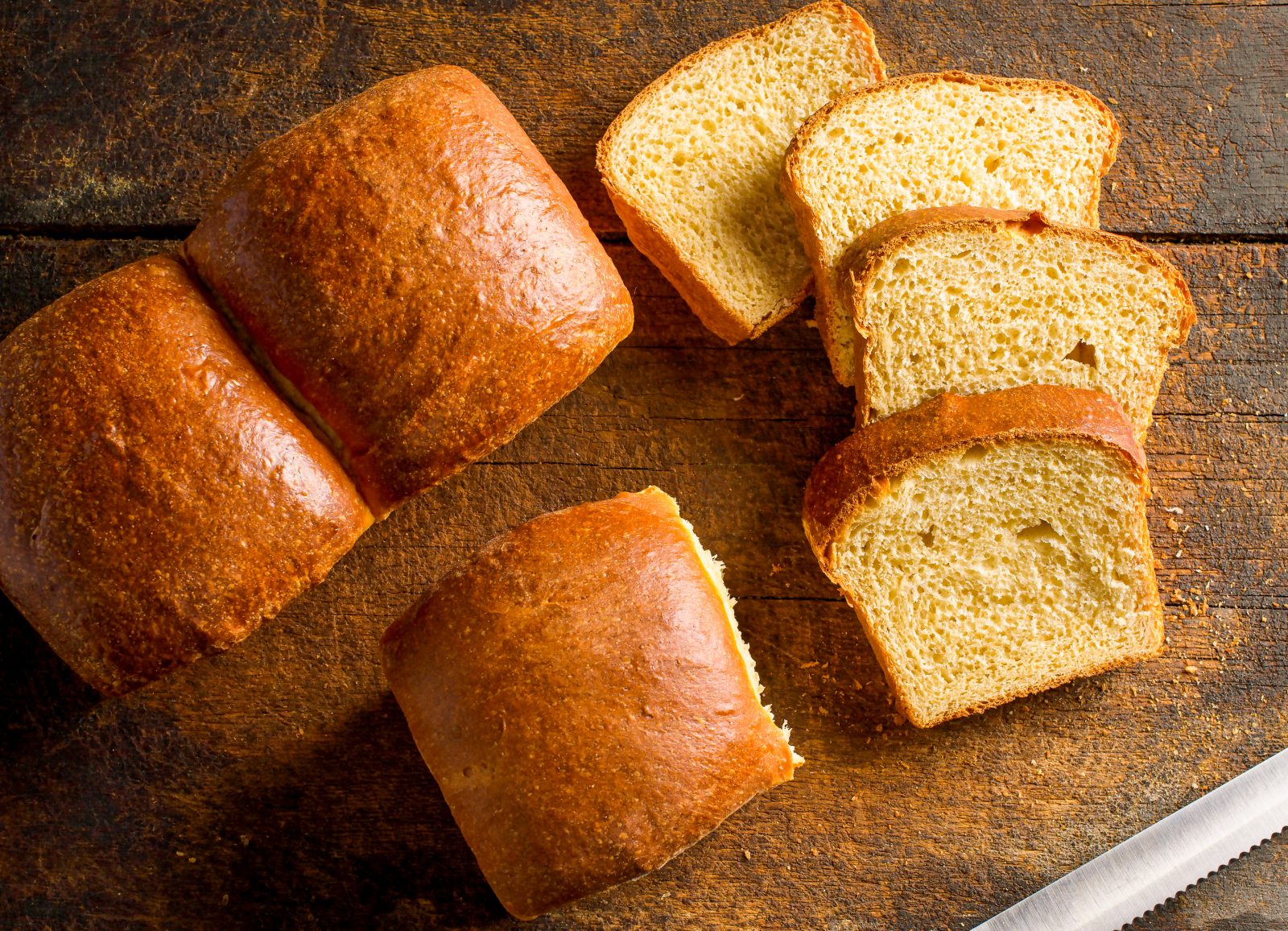
Japanese Milk Bread
Japanese milk bread is a fluffy, slightly sweet, fine-textured loaf. It stays moister and softer longer than standard sandwich bread thanks to the Asian technique of mixing tangzhong into the dough. Tangzhong is a mixture of flour and liquid cooked to a gel; it’s often referred to as a roux, though it does not contain any butter or oil and serves a different purpose than a classic roux. The gelatinized starch in tangzhong can hold onto more water than uncooked flour, thereby offering several benefits. The dough is easy to handle despite the high hydration level; the loaf attains a high rise and a light, airy crumb; and the baked bread keeps well. Sonoko Sakai, author of “Japanese Home Cooking,” makes her milk bread with a small amount of non-wheat flour combined with bread flour. When adapting her formula, we opted to use rye flour for its nutty flavor. This recipe makes two loaves, so you will need two 8½-by-4½-inch loaf pans; metal works better than glass for heat conduction and browning. The baked and cooled bread keeps well at room temperature in an airtight container or plastic bag for several days (it can be stored in the refrigerator for slightly longer but would then be best rewarmed or toasted). Or the bread can be frozen, unsliced and wrapped in plastic then foil, for up to one month.
2
1½-pound loaves
Tip
Don’t be tempted to add more flour to the dough as it is kneaded. The dough will be sticky and gluey, but after rising, it will be workable. When shaping the dough, use minimal flour so the dough remains as moist as possible. Lastly, when inverting the loaves out of the pan and turning them upright to cool, handle them gently as they are delicate and easily separate at the seam.
4 hours
50 minutes active, plus cooling
For the roux:
-
½
cup water
Directions
-
01To make the water roux, in a medium saucepan, combine the water, milk and flour, then whisk until lump-free. Set over medium and cook, whisking constantly, until the mixture thickens (a silicone spatula drawn through the mixture leaves a trail) and bubbles slowly, 2 to 4 minutes. Scrape into a medium bowl, press a sheet of plastic wrap directly against the surface and cool to room temperature.
Reviews
March 19, 2026
Luscious!
This is one of "THOSE breads"! Wow! Great instructions too. It's a little bit more labor intensive than other breads I make but the result is so good that it's worth it. Anyway, it's all about getting a system through frequency. Oh, and I didn't have rye. I swapped it out with spelt with no problem so I suspect I could have simply used more bread flour.
I had a question as to why it's necessary to portion out the dough in order to create "mini-loaves" in the pan (I used glass pans and it was fine) - apparently, "to ensure an even rise, create a uniform, fine crumb structure, and produce the signature light, fluffy texture. Dividing, rolling, and arranging the dough in sections creates internal tension, which allows the bread to rise higher and maintain a soft, elastic, pillowy texture. " Hmmm, I wonder what it would look like with just one regular sized loaf?
Thanks Milk Street!
September 27, 2025
Tremendous recipe with so many options
This recipe is perfect to prepare as is. Makes outstanding sandwich bread and French toast. I also roll the dough into 24 dough balls after first rise for wonderful dinner rolls. Most recently, I replaced the liquid with pineapple juice for Hawaiian style rolls to serve with teriyaki pork. Sometimes I swirl cinammon and sugar in the dough for a breakfast bread. However you make it, your friends and family will love it.
August 28, 2025
Delicious! But. . is the weight off?
Love this adaptation of milk bread! Made it a few months ago and the whole family enjoyed it. Maybe I’m looking a little more carefully this time (or having a senior moment), but the volume of flour does not match how much it would weigh in grams. I checked both King Arthur bread flour and sunrise bread flour. At 120g per cup, should be 560g?
February 28, 2024
Good Recipe!
Durum flour (I used Central Milling Extra Fancy Durum Flour) in place of ordinary bread flour works quite well in this recipe. The loaves come out looking like yellow cake, but the taste is nearly the same as using bread flour, perhaps a little sweeter.
February 13, 2024
Without dry milk powder
I made this bread the other day and realized after it had been raising for awhile that I forgot to add the milk powder. It didn't seem to matter. Loaves turned out beautifully well; light, airy, and moist. I went ahead and made the recipe the next day and added the milk powder, the flavor was mildly better. So, if you want to make this bread and don't have the milk powder, you can still get the wonderful results this recipe provides.
Hi Jason -
Neither is a great option, unfortunately. Removing it entirely will throw off the dry to wet ratio of the ingredients. Adding 27 grams more flour which, unlike milk powder, develops gluten could alter the texture of the bread. If we had to choose we would probably add more flour, but we can't say for sure how that might impact the final texture since we haven't tested it.
Best,
The Milk Street Team
I've been making Shokupan (Japanese Milk Bread) for years, since I had it in Tokyo.... remarkable bread. This recipe seems pretty close to what I've used and other than mixing in the eggs to the tangzhong, seems very traditional. The article mentions the lack of butter in the original recipe, but yours has it included (as does mine). Is that really the only change?
Is the rye flour for flavor only or would substituting bread flour for rye effect more than just the taste?
Thanks,Scott
Hi Scott -
We are primarily using the rye flour for flavor but it can also affect the texture. Rye flour has less gluten than white flour and will often produce a bread with a slightly denser crumb. Since there isn't a lot of rye flour in this recipe you may not notice the difference. Rye flour usually absorbs a bit more liquid than white flour so you may find that the dough is wetter than it should be if you use all white flour.
Best,
The Milk Street Team
Hi John -
We haven't tested the recipe with dark rye flour so we can't say for sure what the results will be. That being said, a darker rye flour will yield a milk bread with a more prominent rye flavor and, potentially, a denser texture. Also, be sure to substitute by weight rather than by volume to account for the difference in weight per cup. Good luck!
Best,
The Milk Street Team
I have made this recipe many times and I consistently have a tough time with it over-rising during baking. Texture is good, taste is great, shape is super funky (think side-by-side mushrooms on steroids). Am I just proofing too long? Determined to get this right as my son describes the flavor as croissant-like and I don't have to laminate!
Hi Ken -
Our guess is that it's over proofing on the second rise. It should rise about an inch over the rim of the pan. Another test is to poke it with a finger. If the dough springs back right away, it needs more proofing. But if it springs back slowly and leaves a small indent, it's ready to bake.
Best,
The Milk Street Team
Mika of http://www.the350degreeoven.com/2011/09/japanese-hawaiian/japanese-milk-bread-tangzhong-or-water-roux-method/ shows how to use a bread machine for milk bread. I use her recipe for cinnamon rolls, but I’m going to try this without the rye and maybe a little more sugar. I was searching for a way to get the soft, pillowy texture of bakery shop cinnamon rolls (mine were always not soft enough) and the roux technique is magic.
I weighed my dry ingredients and measured accurately my wet ingredients. My dough was not sticky when I mixed in my kitchen aid mixer. It was a soft cohesive dough after mixing just a few minutes. I live in Arizona. Could that be why it wasn’t a sticky dough?
Hi Mary -
Your dry climate is likely the reason. Bread baking is quite fickle and different climates and even daily weather conditions can affect how much moisture is in the air and, therefore, how much water your flour can and does hold. In a drier climate, the flour is also drier and therefore will need more water/liquid to achieve a loose, sticky dough. This article from King Arthur explains a little bit about this (although in the reverse) - https://www.kingarthurbaking.com/blog/2018/06/22/winter-to-summer-yeast-baking. Based on their testing, it seems like adding about 10% more water may be helpful to achieving the proper result. We would recommend watching our TV episode on this bread to see what texture the dough should be so you can gauge how to adjust yours in your climate.
Best,
The Milk Street Team
This bread has become a staple in our house since trying this recipe. We freeze one loaf and it is just as delicious as freshly baked. It also keeps on the counter for days. Amazing toasted! I even tried turning it into dinner rolls for Christmas. I rolled the dough into small balls and baked in a pie plate. It worked great! Highly recommend trying this, you will never want to make any other kind of bread. Thank you milk street!
Become A Subscriber To Rate and Review All Our Recipes.
Please Log in or join today for $1.

If I don’t have milk powder, is it better to substitute 27g of something else (more flour, for example), or just leave it out entirely?