






Your email address is required to begin the subscription process. We will use it for customer service and other communications from Milk Street. You can unsubscribe from receiving our emails at any time.
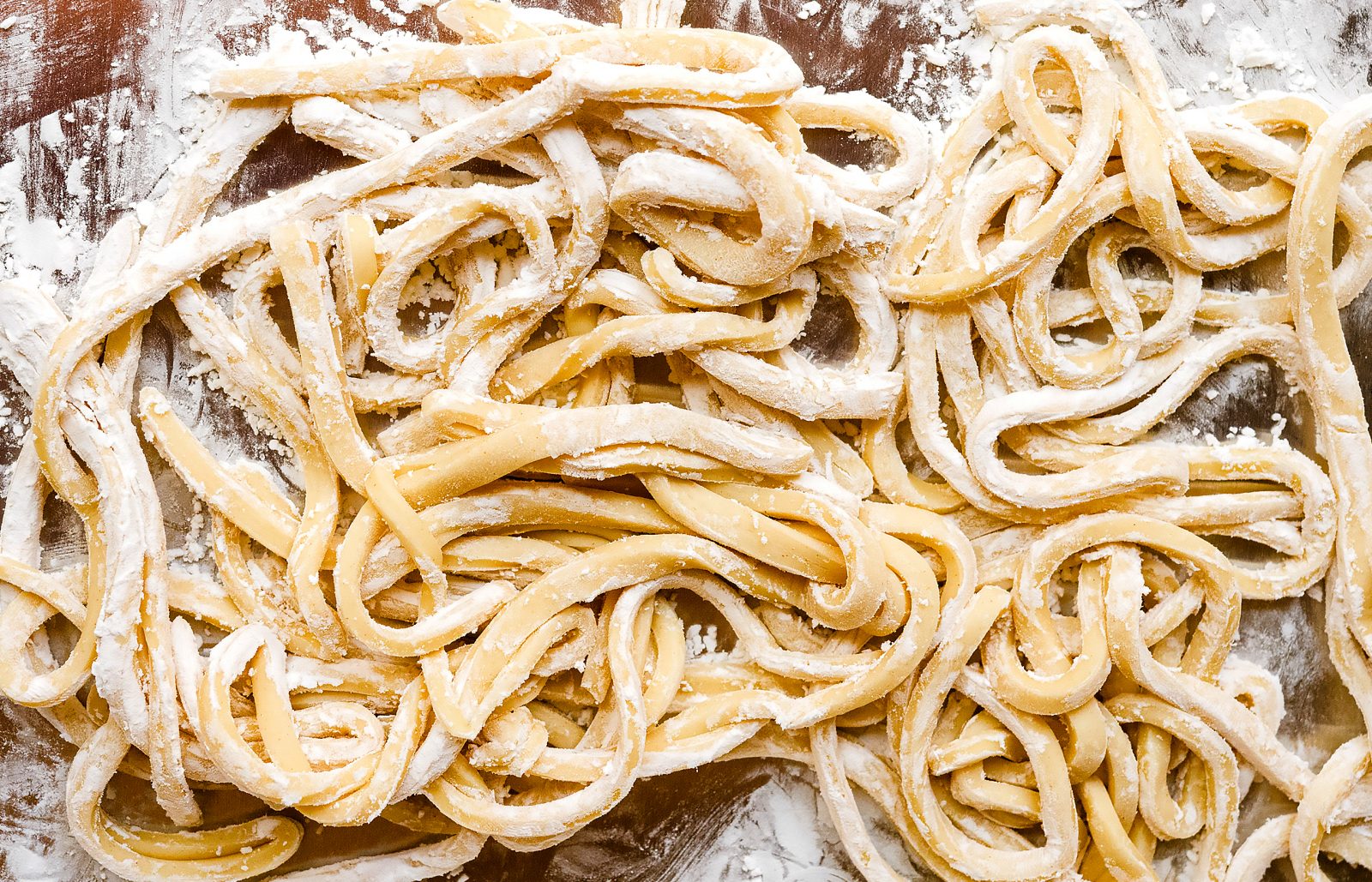
Homemade Udon Noodles
Udon is a type of Japanese wheat noodle. The thick, chewy strands can be served in hot soup, eaten cold with dipping sauce, stir-fried or simply sauced. When adapting Sonoko Sakai’s udon formula from her book, “Japanese Home Cooking,” we found that the brand of flour used and relative humidity can impact how much water is needed to make the noodle dough. For best results, the dough should be on the dry side and should contain just enough moisture so it holds together shaggily; if needed, work in more water 1 tablespoon at a time, but err on the side of dry rather than wet. With resting and kneading, the dough will hydrate and become smooth, silky and elastic. The classic way to knead dough for udon is to stomp on it by foot, a good—and fun!—way to develop strong gluten structure; we put the dough in a doubled heavy-duty plastic bag before stepping on it (without shoes, of course) to ensure everything stays clean. If you find the dough is difficult to roll because of its elasticity, allow it intermittent rests. You can alternate between the two pieces, rolling one while the other relaxes. Do aim for a ⅛-inch thickness so the noodles aren’t too thick; they expand when boiled. Unlike most fresh noodles, this udon requires lengthy cooking—about 15 minutes of boiling—to attain the correct texture.
Makes about 1¾ pounds uncooked (about 3 pounds cooked)
Noodles
Tip
Don’t salt the cooking water for the udon. The noodles themselves contain a good amount of sodium (it helps develop structure and chewiness), so if the water is also salted, the noodles may end up overseasoned. After draining the noodles, it’s important to rinse them under running cold water to wash off excess starch and stop the cooking.
4 hours
1½ hours active
Ingredients
-
25
grams (1½ tablespoons) table salt
-
1
cup warm water (about 100°F)
Directions
-
01In a small bowl or a measuring cup, mix together the salt and warm water until the salt dissolves. Put the flour in a large bowl, add half of the saltwater and mix with a wooden spoon until the water is absorbed. Add the remaining saltwater and mix, using your hands once the water has been absorbed, until a very shaggy dough forms. If the mixture is very dry and won’t come together, mix in additional water 1 tablespoon at a time, but it’s best to err on the side of too little water than too much. Transfer to a 1-gallon heavy-duty zip-close bag, press out the air and partially seal the bag; let rest for 30 minutes.
Reviews
August 30, 2025
Never buying dried udon again, this is too easy
This is really as simple as it sounds. Dried udon never gets as thick or as springy as fresh udon, and this couldn’t have been simpler. I made a lemongrass ginger broth with some shrimp and greens for a great light soup with plenty to freeze for later use. My wife is going to be so happy to know she can have fresh udon whenever she wants.
February 10, 2024
Shockingly easy and delicious
Followed the directions exactly up until the final roll out. I cheated and used the pasta roller. It’s the lunar new year, so longevity noodles were in order. Will definitely make again!
December 13, 2023
Ms. Sakai does it again, perfection!!!
Best homemade udon noodles recipe hands down as only Mr. Kimball and staff could bring to the mainstream from this fabulous chef!!! Please keep inviting her to participate in the series!!
November 3, 2023
Udon noodles
Arent udon noodles made with buckwheat flour? On the TV show, Ms. Sinoko used all-purpose wheat flour.
July 4, 2022
Delicious!
Just made these noodles and they turned out so good. Easy to make!
Become A Subscriber To Rate and Review All Our Recipes.
Please Log in or join today for $1.

Hi, can you store excess uncooked noodles after cutting them? If so, how (freeze or fridge, or dried)?