





Your email address is required to begin the subscription process. We will use it for customer service and other communications from Milk Street. You can unsubscribe from receiving our emails at any time.
Episode 822
October 10, 2024
October 10, 2024
Restaurant Confidential: Tom Colicchio Tells All
Before there was “Top Chef,” Tom Colicchio worked for and launched some of the greatest restaurants in New York. This week, he shares his best stories and takes us inside the kitchens of some of the hottest restaurants of the last 30 years. Plus, Emily Monaco reveals the best places to eat in Paris right now, Tamar Haspel decodes supermarket labels, and we solve the mysteries of Cacio e Pepe.
Questions in this episode:
"I have a potato mystery. The potatoes in my Sri Lankan curry aren’t cooking as well as they used to - what’s going on?"
"I’m trying to invent a new dessert: peach pie with bourbon. How should I go about making it?"
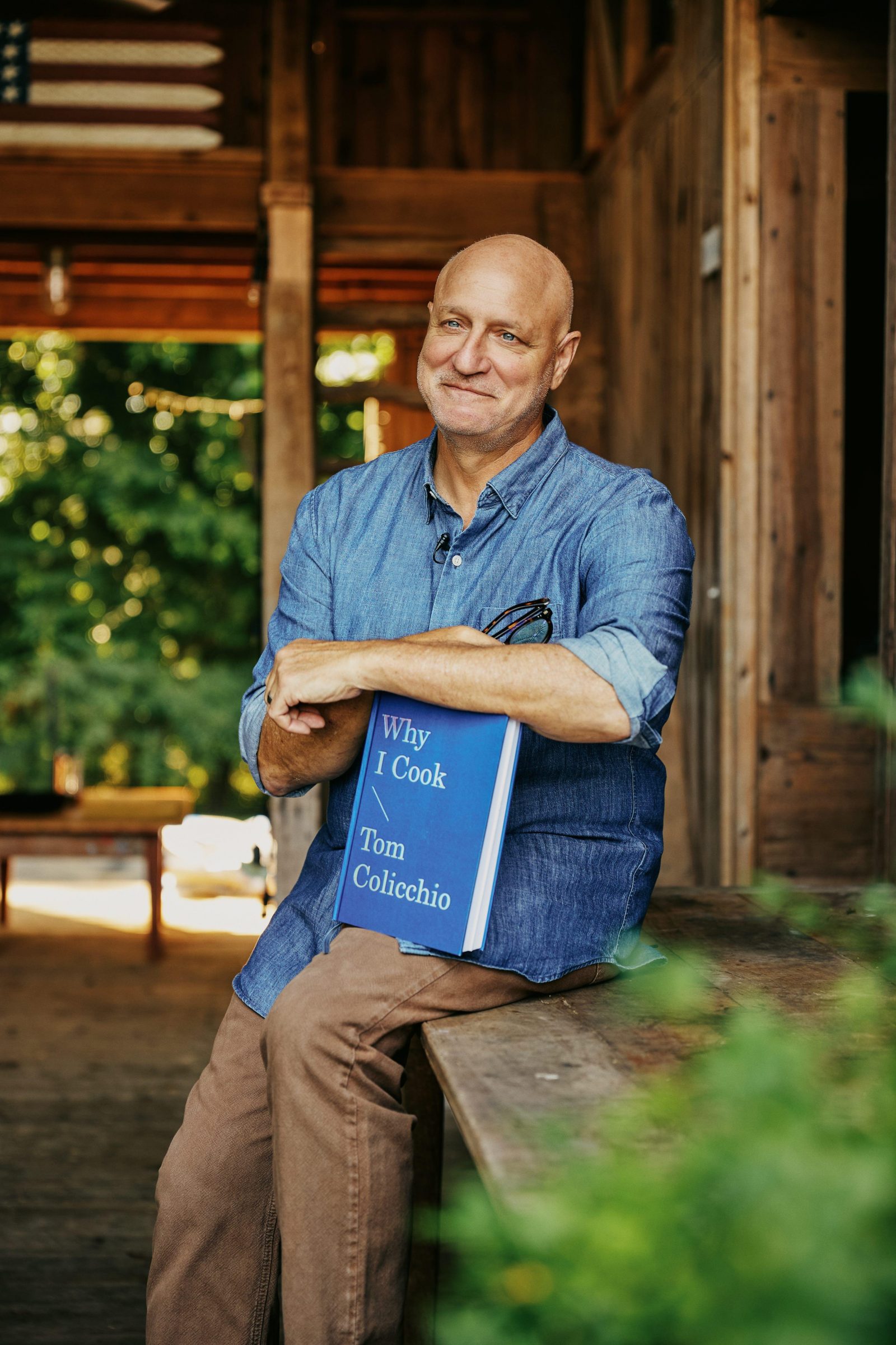
Christopher Kimball: This is Milk Street Radio from PRX and I'm your host, Christopher Kimball. Before there was Top Chef, Tom Colicchio worked for and also launched some of the greatest restaurants in New York. Today, he'll share his best stories.
Tom Colicchio: I don't think that's the impression that most people have of Thomas Keller
CK: and it'll take us inside the kitchens of some of the hottest restaurants of the last 30 years.
TC: If you were you know 30 seconds late, you heard it, you knew it.
CK: Up close and personal with Tom Colicchio, that's coming up later in the show, but now we're heading to Paris. Our first guest, Emily Monaco is a journalist, also a tour guide. I've worked with Emily over many years. When Milk Street television goes to Paris, here's Emily with the best places to eat in Paris right now. Emily, welcome to Milk Street.
Emily Monaco: Thank you so much for having me. I'm really excited to be here.
CK: You've given me some great tours of Paris and there’s one thing I taken away from our tours is that there's the two worlds of Paris, right, the little bistros where, you know, we're doing leeks vinaigrette and all the classics. And then, as we're about to talk about, there's a real fresh wind blowing in Paris where a lot of people don't want the classics. So, is this standard operating procedure anywhere in the world, or is there something uniquely French going on here?
EM: You know, I think anywhere that has this really rich history and these really deep rooted traditions in food is always going to come up against this almost museum-ification of its food, where you have people who come to that place wanting to have everything that they've read about and everything they've seen on TV and dreamed about, and then you have the people who actually live there, who live in the city of, let's say, Paris, and they get excited about novelty. And so I think maybe the only other city that I can think of that has to walk this walk in the same way that Paris does is Rome, where you have these long standing traditions, you know in Paris exactly what you said, these bistro dishes that everybody has been dreaming of coming to eat in Paris, and then you have that novelty that the locals are craving. And the reality of what's exciting about a place like Paris is that you can have both if you know where to look,
CK: Yeah, good luck getting Thai takeout in Rome. I mean, (that's true) Rome you just really they stick to their guns. I was just there last summer. So, before we get to some of your favorite places to eat in Paris, what are a few of the places most people have heard of you should probably not go to.
EM: Oh, wow,
CK: This is going to get you into massive trouble. So, (I know) nothing like putting you on the spot
EM: Great, awesome. Anything where the view is the draw, Should I name drop? I'll name drop places. Yeah, there's Monsieur blue giraffe. You know, they're all about the view of the Eiffel Tower. I think if you can see the Eiffel Tower from where you're eating, chances are the food's not going to be that great. I'm not a huge fan of this chain of kind of Neo brasseries that's popped up everywhere. They're very, very brightly colored. I think they're well-meaning in their name dropping of regional producers of different ingredients. But at the end of the day, I don't think the attention to detail in the kitchen is actually there. I think it kind of becomes like a Disney Bistro. Don't go to Lemmy Louie. One of my favorite pieces of food writing ever was aa Gill's takedown of L’Ami Louis.
.
CK: What about some of the big cafes there, are those very touristy? Are they still worth going?
EM: So, I really like Cafe de Flor, but I like going upstairs. It's a beautiful open space and there's no one there. You're going to pay way more than you need to for a cup of coffee, but you can sit there all day, and no one will bother you. So, I like to go there to write. A lot of people will probably name the restaurant on the Eiffel Tower. There's Le Jules Verne, which is actually truly exquisite. (Really?) yes, it is. It's really, really good. Yeah, absolutely, it's excellent. And it doesn't have to be. It really could get away with being totally mediocre. And it's really, really good.
CK: I just have this horrible feeling that, based on your advice, I'll actually make a reservation there, and then midway through dinner, you'll text me and say, just joking,
EM: No, no, you should go. And you should go at lunch. Lunch is the best time to go because you can get a relatively inexpensive, you know, for Le Jules Verne, and it's extraordinary. I really love eating there. Yeah, absolutely.
CK: So now your favorite place to eat in Paris, roll the drums. Where should we eat?
EM: Okay, if you want that true blue, classic bistro experience, where it might be 1948 go to Chez Georges. Go to the one on the second arrondissement. That's m a i l Street, because a lot of people have gotten very smart about the name Chez Georges and there are a lot of Chez Georges in Paris, but there is only one true Chez Georges. And so that's my absolute favorite place to go for really classic, you know, steak frite’s. But also, if you're into innards of any kind, liver, veal, sweet breads, anything like that, you're going to want to go there. Next, I would say, if you want sort of that modern bistro feel that, that idea that you're still in France, you're still eating French food, but it feels new and it feels exciting. Go to Le San Sebastian, the St Sebastian in the 11th arrondissement. So, it's right in the heart of where all of these movers and shakers are. The staff comes from all over the world, and you really do feel that on the menu. So, they source everything super locally, but they're doing things like a steak tartare, but seasoned with chili de arbol. Or they're sort of taking the classic cheese course and turning it a little bit on its head, pairing just one really exceptional cheese with like a house made jam or marmalade. They always have vegetarian options, and they have a massive wine list, so I really like that place a lot.
CK: I'm still trying to get over this Le Jules Verne thing. I don't know I just I trust you implicitly, but it's excellent. I never in a million years would have thought you would recommend that, because I always assumed it was just a pure touristy place
EM: Well, you know that I mean it because I went in wanting to hate it. I was like, this shouldn't this has no right to be good, and it's so good.
CK: Finally, if you're a tourist in Paris or you're walking around, you've mentioned brasserie, right? You've mentioned bistro and cafe, maybe you could define the difference between those three, and give us an indication of, you know, you just want to get something quickly. What kind of place should you step into?
EM: Yeah, I mean, these days, the difference, unfortunately, has kind of been ironed out. But originally, a cafe was a place that served all day and might not have a full kitchen, and they would have the shortest menu, then you'd have a bistro, which is where you could eat sort of copious comfort food dishes quickly. And a lot of those bistros were opened by people from Auvergne. So, a lot of the dishes would be Auvergne, so from central France. And then brasseries originally would have been opened by Alsatians, so people from Alsace, and they the word Brasserie in French, means brewery. So, they would be places where you'd get beer and food to go with beer. These days, that distinction doesn't really fly. You know, some brasseries are open all day long. Some cafes are actually restaurants. But I would say, go for a place that has a short menu. Go to a place that has a menu that's on a chalkboard with very few items, and if some of them are crossed off, that's a good sign, because it means they've run out of fresh ingredients, and they're not thawing things out of the deep freeze. If the menu is in English, be careful. That's a yellow light, not a red light, but definitely, you know, be cautious. I would say, if you are able to find a restaurant still serving after 2:30 in the afternoon, beware, because French people don't eat after 2:30 in the afternoon, so they're probably catering to tourists, and they might not be that good. And when in doubt, you are often very well served by a bakery sandwich. A Boulangerie will make, you know, fresh sandwiches every morning I find if I want something quick and easy, I will order just a really good ham and butter sandwich. It's a classic for a reason. And if the ingredients are good, and they should be, you're going to eat really well for under five euro.
CK: How about Tour d'Argent? The most famous of all is that pure touristy.
EM: No, I think it's an experience. I went I had the duck. You're supposed to get the duck. I found the experience more memorable than the meal. I will say one thing that Tour d'Argent , or still did, when I was there, and I really hope they still do, is the cheese cart. So, few restaurants actually do a cheese cart anymore, and it makes my heart break.
CK: So, you're kind of old fashioned. I like that.
EM: Look, I live in pursuit of delicious, but I also would like a bit of theater. I like crepe Suzette, you know, done in front of me. I like when they. Filet the soul tableside. You know, there is a certain sort of theatrical approach to classic French dining and French service that I think, when done well, is part of the pleasure of eating out, because I know how to cook. So, if I go out, I want to be able to eat something and have an experience that is better than what I can do at home, and the gilded cheese cart is part of that,
CK: Emily, thank you, and we're going to have to go one of those fancy restaurants with a cheese cart. Just make your day. Take care.
EM: I would love that. Thank you so much.
CK: That was Emily Monaco. She gives both cheese and history focused food tours of Paris. Her weekly newsletter Emily in France is where she posts her latest culinary discoveries. Now it's time to answer your cooking questions with my co-host, Sara Moulton. Sara is, of course, the star of Sara's Weeknight Meals on public television. Her latest book is Home Cooking. 101, Sara are you ready?
Sara Moulton: I am so ready Chris. Welcome to Milk Street who's calling?
Caller: This is Teresa Stone from Loveland, Ohio.
SM: Hi, Teresa. What is your question today?
Caller: I have a mystery about potatoes that I'm hoping you can help solve. For years, I have made a Sri Lankan curry. It has jackfruit, chickpeas, a homemade roasted curry powder, coconut milk and some fresh tomato and white potatoes. And I've never had a problem with the potatoes cooking until now. And to give you a little background, I own a small vegan cooking instruction business, and I have a client who requested to learn how to make this curry oil free and with a reduced amount of coconut milk. So, I just did a trial run of this rendition of the dish, and the potatoes ended up with this strange texture. They were more firm than I would have preferred with these pockets of crunchiness, and I think there might be three potential culprits. So, to compensate for the lack of oil and to add some body to the sauce, I bumped up the amount of tomato from one medium tomato to two. I was also wondering perhaps that the potatoes might be old. And then finally, I accidentally placed the potatoes in the refrigerator, and I didn't know if the cold temperatures could have led to any textural changes, so I was hoping you could maybe give me some thoughts.
SM: Well, I picked door one and door three acid, (okay) can affect the cooking of starch. I mean, it can happen with rice too, that it just takes much longer to get tender. (Okay) Also, potatoes do not like to be in the fridge, so it might have affected them too, the chill. But another question I have is, why did this I digress slightly. Why did this student of yours want to lose most of the fat and also some of the coconut milk?
Caller: The reason is it was kind of a very healthy whole foods, plant-based group of the no oil philosophy.
SM: The one thing that's unfortunate about that is fat is a conductor of flavor. If you remove the fat, it's not going to taste as good period.
Caller: I agree. I totally agree.
SM: But any rate, I digress. Let's see what Chris thinks made these potatoes have a strange texture.
CK: I think Sara's right. It's the acidity. Like if you do baked beans, for example, and you have a lot of tomatoes in it, it's going to cook all day, and the beans will never get soft. And the same thing with potatoes. If it's too acidic, you can end up having to cook them for a long time. That's the reason. But reducing the coconut milk and taking the oil out, it just sounds like they sort of got what they asked for, which, which is something that's not as good as the original. I wonder if, like, someone who was born in Sri Lanka is a cook, probably just fall over in a faint
Caller: Yeah, probably so. so then, if it is the tomato, then I'm thinking, perhaps, then the way to go would be to parboil the potatoes, beforehand.
CK: Sure, it’s like grilling potatoes, you know, par cook them a little bit before you put them on the grill. You could do that separately, start them in cold water, and by the way, acid, like lemon juice, in the water, white vinegar, will also keep them firm. But yeah, that's fine. Just par cook them and then finish them in the sauce, yeah? But anyway, it sounds like a wonderful recipe,
SM: Yeah,
Caller: Yeah, it is. I've been making it for 20 years. Definitely is a family favorite, the oil free version, not a family favorite
SM: Yeah, no, it doesn't taste as good period.
CK: Shocking
Caller: It doesn't taste as good.
SM: Yeah,
CK: Theresa thank you,
SM: Yes, thank you.
Caller: I appreciate your help. Thank you.
CK: Take care.
Caller: Bye
SM: Bye.
CK: This is Milk Street Radio. If you have a question, any question, give us a ring. The number is 855-426-9843 one more time. 855-426-9843, or you can email us at questions at Milk Street radio.com
SM: Welcome to Milk Street who's calling?
Caller: Hi. This is Kay Larson from Madison, Wisconsin.
SM: Hi, Kay, what is your question today?
Caller: Okay, my question is, I'm trying to invent a new dessert, peach pie with a little bourbon in it. I can't get it to the very good stage, and I'm not sure whether I'm boiling off the alcohol just by baking it.
SM: Well, tell me how much alcohol are you adding, and do you just add it straight raw to the pie?
Caller: I've been experimenting in the last week, and the best was two or three slices of nice, ripe peach and then soak in a little bit of bourbon for if I varied it in 20 minutes to, like two hours, the shorter time seemed better. And adding some tapioca as a filler and then butter to seal in the flavor in the peaches so wouldn't burn out, the alcohol wouldn't burn out. And that seemed to work pretty well. So basically, I don't burn off the alcohol. My theory is by sealing the alcohol into the peach with the butter, huh?
SM: All right, that's an interesting theory. What I was going to suggest, if you're looking for the bourbon flavor, is, instead of putting it into the pie, put it into a topping, like add some bourbon to whipped cream, or add some bourbon to a custard sauce, you know, creme anglaise, or to a hard sauce.
Caller: Okay, so that's very interesting, because I try to have just my little bourbon on Sunday as a treat, and I've been adding a little bourbon to my coffee and milk. So, the cream toppings sounds good to me.
CK: Well, I liked it. I'm very happy we're now putting bourbon in our coffee in the morning. I mean, that sounds like a great idea. Here's what I would do. First of all, there's something called azeotropic relationship, which means the alcohol and water bond, so as you heat them, (okay) the alcohol will start to burn off more quickly, because it burns off at a lower like 175 degrees. But over time, the water starts to burn off. But you never get rid of all the alcohol. You can't. You always will have some alcohol. (This is true) just like with wine, like when I cook with wine in this too, I reduce, let's say, a couple cups of wine by at least half, maybe more, and add that to the end of cooking. So, what you want to do is concentrate the flavor of the bourbon. You don't really want the alcohol. You want the flavor. And bourbon has a lot of flavor.Take the fruit, sugar, butter, etc. cook it in a skillet with bourbon, slowly let some of that alcohol burn off, concentrate the flavors of the bourbon and then use that as your filling in the pie. Normally, I don't like cooking fruit before making a pie. I like the fresh taste of the fruit, but in this case, you'll get rid of a lot of the alcohol. It'll concentrate the flavor of the bourbon and use that as the filling for the pie. That's what I would do.
SM: I think that's a brilliant idea.
CK: Well, thank you, Watson.
SM: Except I'd be very careful with the bourbon to make sure it doesn't catch, because it can catch easily
CK: And use a very high sided skillet when you do it, (yeah) Or you could do it in the Dutch oven. That's even better, right?
SM: I think that's a superb idea. Yeah.
Caller: Okay, it's interesting. You said about the bonding because I got interested in the bourbon because I have three different sources that has health benefits, and I thought it might be linked to the charcoal task. And I've just learned recently that charcoal has more bonding than other. I don't know whether you want to call it technically a mineral or not
CK: I maintain it's a health drink,
Caller: Yeah, well, that's exactly why I started
CK: Me too, absolutely.
Caller: Well, thank you so much.
CK: Great call. Thank you. You're listening to Milk Street Radio after the break, up close and personal with Tom Colicchio. Hey, this is Christopher Kimball, and I need your help. We're working on our Thanksgiving episode, and this time, we'd love to hear about your weird Thanksgiving traditions. Do you dress your turkey up in a bow tie? Maybe you plan extravagant theme meals every year, or maybe you just play pranks on your guests, please share with us the unusual things you do on Thanksgiving, your best jokes, your most hilarious antics, your fun and unexpected foods. Please leave us a voicemail that number 617-249-3167….617-249-3167, or simply email us at one. Radio tips@ 77milkstreet.com please say your name and where you're calling from, and thanks. This is Milk Street Radio. I'm your host. Christopher Kimball, before Tom Colicchio became head judge on Bravo's reality TV show, Top Chef, he launched some of the most important restaurants in New York, including Gramercy Tavern and Craft. His new book is a memoir called Why I Cook. Tom welcome to Milk Street.
Tom Colicchio: Thanks for having me
CK: So. I loved this book, Why I Cook, and I wanted to start with your father. There was a moment when he decided to sell glow necklaces. Yes, you want to explain that, because I think it's a good place to start, because it says something. One thing about your father and your relationship, it's pretty interesting.
TC: Yeah, so this is one of those stories that went down in our family history. My brothers and I all joke about it every now and then. So, my father, he was an entrepreneur. He owned a barber shop when we were very young. And he was also a gambler, and I believe in the back of the barbershop there were some phones, and they would take bets. So, he was essentially a bookie as well. And one day he came home and said that he sold a barber shop. I found out later he actually lost it. So, he became a corrections officer in a county jail. And so, he would always do these, you know, he would have another second job every now and then, usually to pay off gambling debts, and then, every now and then, he'd come up with some scheme. And this was one of those schemes he was, I'm not sure exactly where he was, but he saw these glow necklaces, these green, fluorescent necklaces, and he saw them somewhere, and had this great idea that he was going to buy them and sell them on the boardwalk during the Miss America pageant in Atlantic City. And so, he bought the glow necklaces. They arrived in a large box. There were about 1000 of them. They would not fit in our freezer. And they had to be kept froze. So that was the that was, that was the first problem. So, then he had to constantly buy dry ice to keep them on dry ice. And this was probably a week leading up to the pageant, (right) And so the day the pageant comes, and it was my mother, my two brothers, and my aunt, so my father's sister Teresa, decided to we're going to Atlantic City. So, we get in the car, it poured the entire day, and they still decide they're going to go out to the boardwalk and try to sell these things. I think he traded one. I don't think he sold one. I think he traded one for something else. It was a complete bust. And so, we ended up turning around and going back home, where these globe necklaces lived in the freezer for about two or three years. Every now and then we would take them out just to mess around with them. But, yeah, it was one of those pretty embarrassing stories when we were kids. But, you know, looking back on it, it was just another, you know, my dad just trying to do what he could do to I guess scratch that itch he had to be an entrepreneur, really. And then he had a job that I don't think he had a lot of joy in, you know, being a correction officer. But somehow, he managed to impart to me and my and my brothers to sort of follow and do things that we love. You know, at the age of 15, he suggested I become a chef.
CK: So, we all, you know, see our dads one way when we're young, and differently when we're older, and they're older. So how did you see him as a figure when you were, let's say 10 or 12 versus today?
TC: Well, he died a while ago. He was young when he died, he was 52 years old. He died of lung cancer. So, but when we were, you know, when I was 12 13, he was Dad, you know, he he wasn't that engaged at home, but he was, he was when we played sports, he was always involved. So, he would go to all my basketball games, my brother's games, when I was swimming. He would wake up at five o'clock in the morning and drive me, you know, as a half an hour drive to get to Westfield. New Jersey, where I swam for the Y team there, and so, so he was, he was always supportive in his way, but we never really sat down and had any heart to hearts. And you know, in fact, I was 26 when he died, and we my brothers and I finally started having adult conversations with my father right before he died.
CK: So, one of the things that's really interesting about your career is you spend some time at the Grand Centurion Swim Club. (Yes) one of the best names ever working at the snack shack there. So, you work at a couple places in New Jersey, and then you end up at Gotham Bar and Grill. (That was about a week a week) later, I know I was getting to that, and a week later, you know, Quilted Giraffe. Barry calls you for the Quilted Giraffe. So how do you step up from Evelyn's and the Chestnut Tavern and 40 Main Street? Was that a lot of time and a lot of work, and you really honed your craft and then jumped into Manhattan, or was that a fairly short apprenticeship?
TC: No, no, no. It was. It was lengthy because I was afraid to go to New York. You know, growing up at Elizabeth, you see New York, you see the skyline. And I, you know, go to New York for concerts and things like that. But I was under the impression that you had one shot in New York, and if you blew it, that's it. You're done. So, I waited, you know, I knew I had cooking chops. I knew I was very fast with a knife. You know, I could butcher meat. I was a, what I thought was a damn good line cook. I was fast, so I was, I was pretty confident, but I was still, you know, New York's New York, but Quilted Giraffe. I remember reading and cuisine magazine about some of the better restaurants in New York and LA and and there was something about the, you know, they were talking about Quilted Giraffe. There was something about what Barry was doing there that I was really attracted to. And I absolutely loved working there, and not so much for the food. The food was very good. It was also highly creative. But I learned how to run a restaurant from Barry and Susan. They they really had it down. You know, we were only open five days a week, Monday through Friday. We had Saturday and Sunday off. You know, back then the wait staff, they took care of the dining room. So, it wasn't like porters who were out there vacuuming the rugs and, you know, polishing everything. It was. It was the wait staff. They really ran that dining room, but they ran a really tight ship. It was also one of those places where we did 120 covers every night. If we did 118 it felt slow. If we did 122 it felt like it was over the top, It was that dialed in
CK: Well, yeah, in your book, you say, on the sauté station, every entree was prepared in precisely 10 minutes.
TC: Oh, you had had that food up. Everything was run off a digital clock. And if you were, you know, 30 seconds late, you heard it, you knew it. And yeah, it was, it was run really, really well. And, you know, back then, I think he had $150 check average back in the in the early 80s. But it was, it was, it was a great experience.
CK: So then you work, of course, for Thomas Keller, is that? Was that, was that a very different kitchen than what Barry Wines kitchen was like,
TC: very different working at Raquel, you know, back then, Thomas Keller wasn't the legend he is now, but he was as driven as I've ever seen anybody. You know, if he wanted to make chocolates for the restaurant, he would come in in the morning, you know, six o'clock in the morning by himself making chocolates. I would remember him watching him come in early in the morning. I'd get there, you know, 10 11, o'clock, and he'd already been there a couple hours making puff pastry because he just wanted to perfect his craft. He was that kind. He was really driven. But it was wildly creative. It was what came in today. There's a bunch of chanterelles, there's some sea beans, whatever fish and like, what do you want to do? And so we just spitball it and end up with a dish. I even remember, you know, we did this lobster dish with beet sauce, and one day he decided to plate it, and instead of saucing it very close to plate with a spoon, he actually dropped the beet sauce from, you know, a height, so it splattered. It was just that kind of kitchen you were allowed to just create and have fun. And it was really loose. And I don't think that's the impression that most people have of Thomas Keller
CK: No, I was just going to say that's the exact opposite of what you think that he was a control freak? Yeah,
TC: Yeah, no, there was a lot of control. But in that control, a certain amount of chaos was allowed because there was controlled and you felt safe doing it, because there were guardrails everywhere. But once everything was prepped and ready to go in a way, nothing can go wrong.
CK: So, you've seen a pretty wide range from a snack bar at a pool club in New Jersey, working with Thomas Keller, you know, Barry Wine, Quilted Giraffe. What makes a restaurant work? Forget about financially successful, but what makes it work and what makes it fail?
TC: You know, I think you know part of it is really you. Making sure that people felt cared for when they come into the restaurant. I mean, there was a story that I always tell at Gramercy, it was afternoon, three o'clock, and that the tavern was open all day, and one of the servers came over to me, and she was kind of laughing. I was in the side station getting a cup of coffee or something, and she's like, so what's so funny? She said, the guy wants to Snapple iced tea. All right, huh? Okay. I said, are you busy? She said, no, I have something one table. I sit here. I took some money in my pocket. I said, go to the store and get him a snap of ice tape. She looked at me. I said, pour it in the glass. Give it to him. Don't make a fuss. And he knew exactly what he had as soon as he tasted it. This guy came back every Thursday at 2:30 he came in for lunch for as long as I was there, and never asked for Snapple again.
CK: I was actually at Gramercy two months ago. I hadn’t been there in years, and I had one of the best meals I had in a long time, which, which is incredibly heartening when a place has been around a long time and it delivers. (Yeah) so let's assume you you could open any restaurant you want, and maybe you can. Is there a restaurant that doesn't exist in the States right now, or is there a type of eating establishment you think we need here?
TC: Good question. But for me, I would love to find a way to do something where, and I've done this at home with other friends of mine that are chefs, where you just, you know, there's a pile of food on the table, and you start cooking. There's no plan at all. So, it's total improv. It's not unlike musicians that would get on stage and just improv. So, it's an open restaurant. You have four chefs in there. You have no idea what you're going to cook. There is no menu, and you just start cooking. That could be fun.
CK: Have you ever done that?
TC: I do at home when I cook all the time. I have no idea what I'm cooking for dinner tonight, but I know I have a couple of, you know, sea bass downstairs, and there's stuff in the garden, but I don't know what I'm cooking yet. I have no idea I drive my wife crazy. But
CK: So, what are you going to do with the sea bass?
TC: You know, if the weather holds out, right now, it looks pretty good. I may just throw them whole, like, you know, marinate them with a bunch of ginger and stuff like that, scallion and some soy and, you know, get them on the grill. For some reason, I woke up this morning on one whole grilled fish.
CK: Do you have a secret for grilling whole fish, so it doesn't stick to the grill and falls apart and it's a complete disaster.
TC: It has to be really, really, really dry, really, really dry. The fish needs to overnight, I’m taking it out right now, it's still in the cooler but what I typically do, if I'm doing whole fish, I'll take the fish out and leave it uncovered in the refrigerator, so the skin actually dries and that won't stick. You don't need to oil it. Make sure the grill is clean. Make sure it's hot enough, but it's not too hot. Don't like putting oil on it, because oil will flare up and cause the skin to burn. Just put it on and leave it alone. Once it goes on the grill, leave it alone. Don't try to move it right away. Let it sit, and eventually it will release itself. But it needs to be really dry that, or you get one of those fish baskets, they’re great.
CK: Somebody should write a cookbook called leave it alone.
TC: Leave it alone. (I think that's my next one). Yeah, it drives me crazy when you see these. I mean, I had this battle with my young cooks in the kitchen. They have every sauté pan on their station screaming, just white hot. I'm like, what are you doing? The pan needs to be hot chef, no, they don't. They're too hot. The second you put oil in that pan, it burns. It doesn't need to be that hot. You put the fish in, you leave it alone. Don't shake the pan back and forth. You know, flames aren't shooting out of it. Just leave it alone. When it's ready to release itself, it will and slow down. You don't need to cook that quickly. You know, take your time.
CK: Tom, it's been, I can't believe it's been 40 years, but we finally got around talking. It's been a real pleasure. Thank you.
TC: Likewise, I appreciate everything you do. Thank you.
CK: That was Tom Colicchio. His memoir is Why I Cook. So why is it that everyone wants to be a chef? You know, Jacque Pepin once told me that when he cooked for Charles de Gaulle in the 1950s the position was considered blue collar, not five star. That's why he did not accept the position of White House Chef under Kennedy, it was just another job. Julia Child never liked the title of her show the French Chef, because she thought of herself more as a cook and not a chef. And I never wanted to be a chef, although I am often mistaken for one. The reason, well, in the world of food, there is nothing more pure, more noble than cooking for friends and family. To paraphrase John Lennon, all you need is cooking. It's in effect, love on a plate. You're listening to Milk Street Radio. Coming up we solve the problem of cacio e pepe. I'm Christopher Kimball, and this is Milk Street Radio. You know, the biggest culinary mystery I've ever encountered in my entire career is, oddly enough, cacio e pepe. For 40 years, every recipe I've tried has resulted in gluey sauces or bumpy nibs of unmelted cheese. So the last time I went to Rome, I set out to uncover the secrets to a great cacio e pepe. First, I asked my guide, Arianna Pasquini, to lay out a few parameters.
Ariana Pasquini: Anyone that sits on techniques. Some are secret, but the only thing we all agree about is that the ingredients are pecorino cheese that comes from Pecora and black pepper. That's it. I mean, the water from the boiling pasta, but basically, that's it.
CK: No, I went to one restaurant, and they told me I almost fell off my chair, and they actually ad butter
AP: and no, no, guys, no, no, no, no, no, no.
CK: Over the next few days, Ariana took me around to at least half a dozen restaurants. Each one offered a very different take on the recipe, from the blend of cheeses to the kind of spaghetti to the cooking method. Back at Milk Street, we had a lot of work ahead of us to figure out the perfect recipe. So, let's head into the kitchen with recipe developer, Rose Hattabaugh To find out how we did it. Rose, how are you good? How
Rose Hattabaugh: Good. How are you Chris
CK: So, I came back with six recipes from six different places to figure out how to solve the problem, and you got going in the kitchen. So, what are some of the things that did not work?
RH: Well, I did cook through all six of those, and one of the things that didn't work was adding some kind of fat. And I think when you're cooking pasta, you always think, Oh, you need to add olive oil or butter or something like that. That did not work here. It kind of took away from the cheese and the pepper and made it kind of greasy. So, we decided to scratch that. There's also a method you see all the time. I'm sure you've seen it too, where you mix the pepper and the cheese into a paste, and they just toss it with the spaghetti. And that really didn't work for us. It would clump up. Some of it would melt, some of it wouldn't. So got rid of that. Tried adding garlic. Didn't really belong in this so we decided to scratch that, different kinds of pepper and cheese, and ultimately, it's what should be in here, is what we ended up with.
CK: So, I hinted, you know, that there were a lot of problems here, and there were three ingredients, but there's actually a fourth one, which is common in many pasta recipes from Italy, which is the cooking water itself, because that's sort of the binder. So, you know, normally we cook, many people cook a pound of pasta in four quarts of water. You came up with a radically different approach.
RH: Well, this was actually based on something you brought back, but to use a really low water ratio to the pasta is what really worked the best, because then we were able to get some of the starch from that pasta water to use then in the cheese sauce. So, 12 ounces of pasta to just about five cups of water, which seems very low when you think about cooking pasta in a giant pot, but that's really what worked the best.
CK: And then you were the one who came up with this, which was the brand of pasta matters a lot. That's not something I had actually considered.
RH: I didn't really think it would make that much of a difference, either. But after testing six different brands, we had three that were bronze cut and three that were not. And the bronze cut was so different it would absorb most of the water. If I would drain it after it was al dente into a measuring cup, we'd get very little water from the bronze cut, whereas the non-bronze cut still had a lot of water left, but the water that was left from the bronze cut was this really kind of silky, viscous liquid that made a beautiful sauce.
CK: So, we should just explain that bronze cut means bronze dye. The pasta does extruded through the holes in the dye like to make spaghetti, and you end up with a coarser surface, which allows more starch to leach out into the water, and also more water to be absorbed by the pasta. And those are the more expensive pastas. The least expensive ones are Teflon coated, where the dough goes through, and then you get this really smooth. I mean, I think everyone's noticed an inexpensive Pasta. It's almost a plasticky, heeled, hard, smooth surface, and nothing's getting in or out, you know, compared to the other ones. So those just didn't work very well, right,
RH: Right. I think the one thing we found from this recipe is that really was, the key is what kind of pasta that you use.
CK: In terms of the cheese people don't go in Rome and order pecorino. They have like, 12 different kinds, right? (right) You know, month age, six years aged, this from this place, from that place, etc. I thought that the secret of the recipe was going to be all in the cheese, but I was wrong.
RH: Right, well, the other thing we found out with this low water cooking method, it really didn't matter the quality of the cheese you want, of course, to use the best quality you can find. But if you went to a supermarket and had some cheese that was already ground by them, that worked great. And really, what we found out was it has to be finely grated.
CK: And then, you know, we got almost to the end, and it was working pretty well, but you came up almost by accident, with one of the most interesting things, right?
RH: Right. Well, one of the things I was thinking is, could we flavor the pasta with a little bit of cheese and pepper when we added the water? And what ended up happening was the cheese that you added at the beginning started to help emulsify the sauce really early on, and it actually keeps the sauce from kind of coagulating right when it's finished, so you can let it sit 10 or 15 minutes after it's cooked, and you're still going to get a really nice, silky coating on the spaghetti. And that was something that I hadn't anticipated, but it worked great.
CK: So, our takeaways were, don't use a lot of cooking water. Use a bronze dye cut pasta, which is a slightly more expensive pasta, put some of the cheese in the water at the beginning, and then you actually have a cachio e pepe that remains creamy. It's not congealed or set up, right? Which is a first for me, with cachio e pepe. Rose thank you very much. We took my greatest culinary mystery, and you solved it. And by the way, on my headstone in Vermont, I will have this recipe carved for the ages. Thank you, Rose.
RH: You're welcome. You can get the recipe for cachio e pepe @milkstreetradio.com
CK: This is Milk Street Radio. I'm joined now by our newest contributor, Tamara Haspel. She's a columnist at the Washington Post, where she writes on the intersection of food and science. Tamara, what's up this week?
Tamara Haspel: Chris, I want to talk about labels. Now I know that when you go to the grocery store, you spend almost all of your time on the perimeter, and that's where the fresh foods are, and those things generally don't even have labels on them. But every now and then, you must venture into the aisles, and when you do, are you a label reader?
CK: Well, that's interesting. You should ask, because I just went into my little country store in Vermont, and I was looking for some sparkly water, which they didn't have, so that there was a case with these cans, I won't mention the brand, and it looked, you know, no no corn syrup, no preservatives. It seemed very healthy. And I drank a can, and all of a sudden, I had a lot of energy, and so I looked it up online, and this particular drink has two and a half times the caffeine content of Red Bull, (holy moly) yeah. And the whole and it said, and we'll look back at the list, and there was caffeine listed as, like the fifth or sixth ingredient, like in two-point type, right? But it was sold as being healthy and natural and everything else, and it took me four hours to fall asleep that night, which is highly unusual. So, I'm with you, man, I tell you, I'm going to start reading those ingredients more.
TH: This is a perfect example, because what goes on the front of the package, it's there for one reason, and that is to make you buy this product, and some of those words have meanings that are regulated, and some of them have meanings that aren't regulated. And when you go in the grocery store, I think you sometimes need a label translator, and that is what I am here for. So, let's go first to the bread aisle and talk about multigrain. Now, when you see multigrain on a label, what are you expecting that bread to be?
CK: Yeah, I mean, I think of, you know, whole wheat style bread with sprouted wheat and something healthy, right?
TH: That's what I would expect, too. But multigrain just means its most pedestrian, meaning that there's more than one grain in it. There's no requirement that they have to be whole grains. There's no reason these breads are any more healthful than ordinary bread. In fact, you know, my favorite label game is to go to the bread aisle, pick out all the multi grains, turn them over and look at the first ingredient and it is almost always ordinary wheat flour. There is an exception to this. If it says whole wheat or 100% whole wheat, then it actually does have to be 100% whole wheat. But multi grain can mean almost anything on the health spectrum.
CK: Yeah. The problem is, though, most commercial breads, you know, they have a lot of sugar in them. And I pretty much don't buy that kind of bread anyway, because you're not getting great stuff.
TH: It's true, but I sometimes do buy it, because if you look hard, you can find some that have minimal amounts of sugar. And I really, I hate food waste, and there's only two people in my household. But let's mosey on over to the bacon section and look at a label that says uncured.
CK: Yeah. What does that mean? I've always wondered.
TH: Okay, well, I guess you would assume that it's uncured, but what it actually means is cured. (Of course) yeah, your label translator comes in handy here, and we have to blame the USDA for this, because ordinary bacon is cured with sodium nitrate. That's what gives it its pink color. It's actually a food safety issue. It preserves it well. It contributes to flavor, but uncured bacon uses the same process. It just uses the nitrates in celery. So, if you look at your uncured bacon, one of the last ingredients is going to be celery powder, and that's where the nitrates come from. And so, your uncured bacon is just as cured as the cured bacon. But we can't blame this on the people who manufacture the product, as we can in almost every other instance on my list here, because it's actually the USDA that requires you to call it uncured if it is cured with celery powder.
CK: The word uncured is huge. Yes, did they market that more than the fact it's bacon, because they make you think it's more natural.
TH: Right, and people are concerned about nitrates, and, you know, we can have another segment on that. But people who believe that the uncured bacon is doesn't have those are they've just been had.
CK: So we've done multigrain bread, bacon. What's next?
TH: Let's go over to the, well, I guess it's the snack aisle and look for made with real fruit.
CK: Now that that one, yeah, that you can't fool me with that one. How much real fruit?
TH: Exactly, how much real fruit. And if you see something that's made with real fruit, especially if it's being marketed to children, the label translation is basically this is candy.
CK: So what about eggs? That's the one that really gets me, because I mean, cage free has been around, and free range has been around, which I think basically means there's a door in a barn that nobody goes out of. But now there's pasture raised, and I'm a sucker for that one, because that sounds like maybe they're actually not in a barn. They're actually out in a field. Is that right? Is that what it means?
TH: Well, we can't really tell, because the USDA does not have a definition for pasture raised. Now It does have a definition for free range. It means that the chickens have to have access to the outdoors, which, as you pointed out, there could be one door in the barn, and chickens could use it or not use it. Now cage free, which you also mentioned, does mean that the chickens are not kept in these small cages that it became almost universal in the egg industry that chickens were kept in these cages where they really couldn't even extend their wings, and those chickens now are kept they're still kept indoors, but they're not kept in those tiny cages. And you know, the best-case scenario is an enriched environment that isn't overcrowded, but there's no way that the labels give you the granularity to know those things.
CK: So, what's next? Which one is next?
TH: So, we've covered some of the major ones in the supermarket, but there are a few others that I thought we could do a little lightning round, whether there's an official definition or whether this can basically mean anything. (Okay) so let's start with healthy
CK: Doesn't mean anything
TH: The FDA actually does have a definition of healthy.
CK: What is it?
TH: It's a low bar. (Yeah) there's certain limits on things like fat and cholesterol and sodium. But like I said, it's a low bar. It doesn't mean nothing, but it doesn't mean good for you.
CK: Doesn't mean something either.
TH: How about lightly salted?
CK: No, I don't think so.
TH: It actually does. It has half the ordinary amount of sodium for that product. Okay, natural.
CK: I'm so suspicious and cynical because even if there's an FDA rule about it's probably meaningless. I don't know what to tell me.
TH: This one's tricky, because you just mentioned the FDA and the USDA. The USDA regulates meat and the FDA basically regulates everything else. And the USDA actually does have a definition. It can't have artificial color or flavor or anything synthetic, but the FDA regulates all that other stuff, and which is like everything in the middle of the grocery store, and that's where you see that label all the time, and that's where you are correct. It does not mean anything. So that's our lightning round. And I think what we can take away from that is that it's not easy to know what labels actually mean. It's not easy to know which ones are regulated and which ones aren't, and if they are you don't know what the definitions are unless you go on the FDA website. So, the moral of this story is, turn over the package, read the nutrition information, read the ingredients. Those will tell you what you need to know about the food, and you won't need your label translator.
CK: And put it back on the shelf and walk to the perimeter of the store where you can buy something that's not processed. Tamar, this has been, I'm a complete failure at your quiz, because I'm so cynical, but that was really interesting. Thank you.
TH: Thank you for having me.
CK: That was Tamar Haspel, a columnist at the Washington Post and author of To Boldly Grow Finding Joy, Adventure and Dinner in your Own Backyard. That's it for this week's show. Please don't forget, you can get more than 250 episodes of Milk Street Radio at our website, milkstreetradio.com or wherever you get your podcasts. You can find out more about Milk Street at 177 Milkstreet.com you can become a member, get 1000s of recipes, access our online cooking classes and get free shipping on all orders from the Milk Street store. You can also learn about our latest book, Milk Street Bakes. Please check us out on Facebook at Christopher Kimball's Milk Street, Instagram at 177 Milk Street. We'll be back next week, and thanks, as always, for listening.
Christopher Kimball's Milk Street Radio is produced by Milk Street in association with GBH co-founder Melissa Baldino, executive producer Annie Sensabaugh, senior editor Melissa Allison, producer Sarah Clapp, Assistant Producer Caroline Davis with production help from Debby Paddock. Additional editing by Sidney Lewis, audio mixing by Jay Allison and Atlantic Public Media in Woods Hole Massachusetts. Theme music by Toubab Krewe, additional music by George Brandl Egloff, Christopher Kimball’s Milk Street Radio is distributed by PRX.
In this episode
ADVERTISEMENT
ADVERTISEMENT

Simple, Bold Recipes

Digital Access
12 weeks for$1
- EVERY MILK STREET RECIPE
- STREAMING OF TV AND RADIO SHOWS
- ACCESS TO COMPLETE VIDEO ARCHIVES

Insider Membership
12 weeks for$1
- EVERYTHING INCLUDED IN PRINT & DIGITAL ACCESS, PLUS:
- FREE STANDARD SHIPPING, MILK STREET STORE,
to contiguous US addresses - ADVANCE NOTIFICATION OF SPECIAL STORE SALES
- RECEIVE ACCESS TO ALL LIVE STREAM COOKING CLASSES (EXCLUDING WORKSHOPS & INTENSIVES)
- GET YOUR QUESTIONS ANSWERED BY MILK STREET STAFF
- PLUS, MUCH MORE

Print & Digital Access
12 weeks for$1
- EVERYTHING INCLUDED IN DIGITAL ACCESS, PLUS:
- PRINT MAGAZINE SUBSCRIPTION
- 6 ISSUES PER YEAR

