






Your email address is required to begin the subscription process. We will use it for customer service and other communications from Milk Street. You can unsubscribe from receiving our emails at any time.
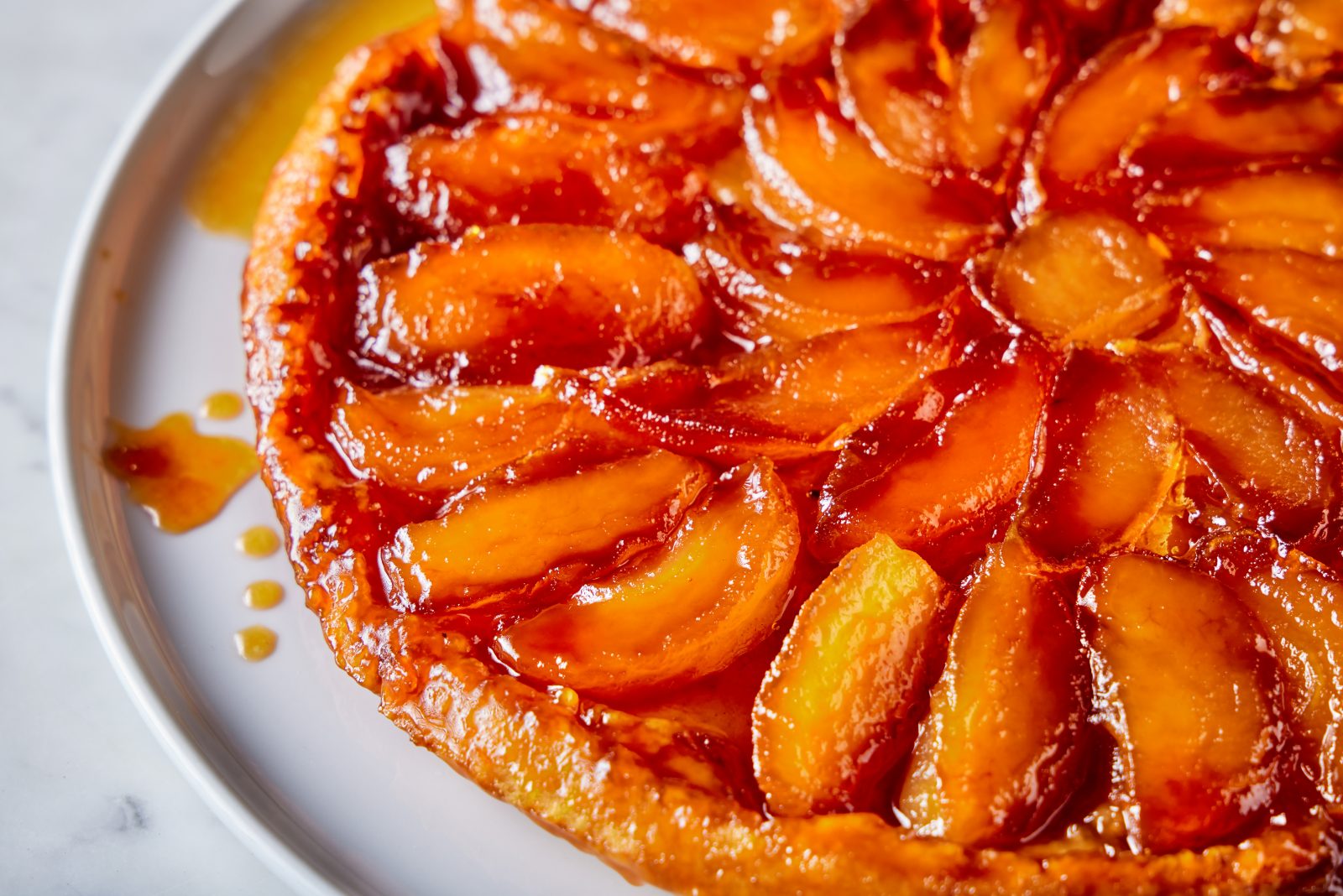
Tarte Tatin
Tarte tatin is made by baking apples in sugar under a blanket of pastry, then inverting the tart out of the pan for serving to reveal a stunner of a dessert: velvety, caramel-soaked fruits atop a tender, buttery crust. Said to have been invented by accident by the Tatin sisters in the late 19th century, the rustic tart is a now a culinary classic. For our version, we add a little maple syrup to the sugar mixture; it helps the granules dissolve while also adding subtle woodsy notes that pair perfectly with the apples. Honeycrisp is the apple variety of choice, as the fruits strike a perfect balance of sweet and tangy. And though they soften with cooking, their texture does not turn mealy or mushy. Galas are the runner-up. (See below for variations with pears or peaches.) Many tarte tatin recipes use puff pastry as the crust, but we prefer our homemade pie pastry. It’s crisp, flaky and rich in butter, with a sturdiness that can handle the generous caramel and fruit. You will need an oven-safe 10-inch skillet. We caution against cast-iron, as its dark color cooks and bakes differently than a standard skillet and its heft makes it tricky to unmold the tart. Serve warm or at room temperature with vanilla ice cream or gelato or with lightly sweetened whipped cream.
Makes one
9-inch tart
Tip
Don’t allow the tart to cool for longer than 10 to 15 minutes after removing it from the oven. If the caramel begins to set, it will prevent the tart from unmolding neatly from the pan. If this happens, however, set the skillet over low heat for 30 to 60 seconds to rewarm and loosen the caramel, then try unmolding again.
1½ hours
35 minutes active
Ingredients
-
All-purpose flour, for dusting
-
Flaky Pie Pastry, in a 4½-inch disk and refrigerated (not rolled and fit into a pie plate)
Directions
-
01Dust a sheet of kitchen parchment with flour, set the pie dough on top and dust it with flour. If the dough is too firm to roll, let stand at room temperature for 5 to 10 minutes. Roll the dough into a 10-inch circle about ¼ inch thick. Cut four 1-inch slits in the center that will allow steam to vent (the slits will not be visible in the finished tart), then lay a sheet of plastic wrap against the dough. Slide the parchment with dough onto a baking sheet and refrigerate until ready.
Reviews
November 18, 2025
tasty but salty
You can't go wrong with butter, sugar and apples. Generally, this was really good. Next time, I will probably use unsalted butter and/or leave out the salt that's sprinkled on the apples. I probably wasn't using the correct type of 10 inch skillet but it was kind of a mess when it came out of the pan. The crust broke and about 1/2 of the apples stayed in the skillet. The crust was really flakey - very good recipe!
Become A Subscriber To Rate and Review All Our Recipes.
Please Log in or join today for $1.
