






Your email address is required to begin the subscription process. We will use it for customer service and other communications from Milk Street. You can unsubscribe from receiving our emails at any time.
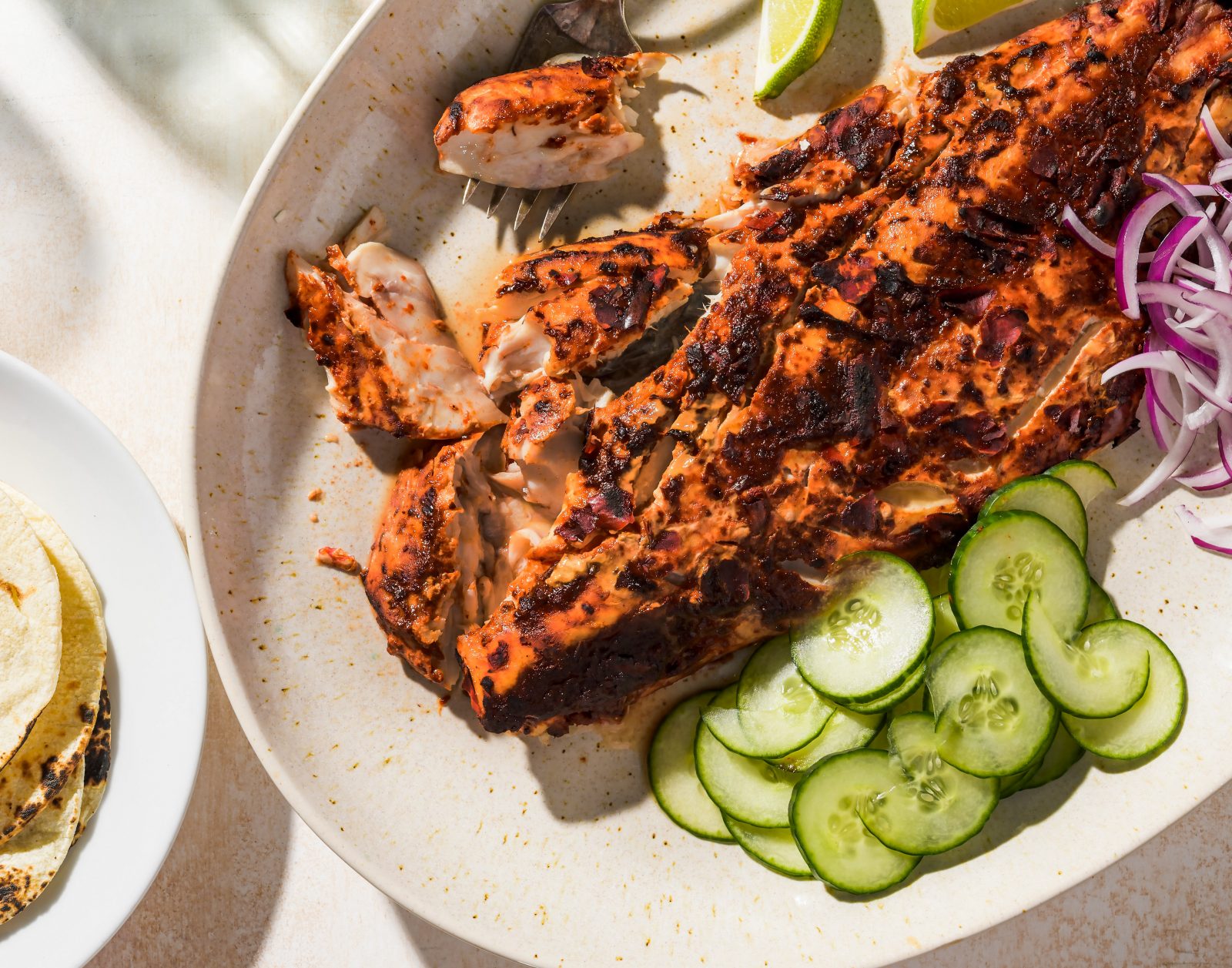
Slow-Cooked Snapper with Chili and Lime
Pescado zarandeado is a grilled fish dish popular on Mexico's Pacific coast, particularly in the states of Sinaloa and Nayarit. We first sampled it in the town of San Vicente at Restaurante Bar Fernando, a casual eatery known for its outstanding rendition of the regional specialty. Traditionally, a fragrant, deep-red paste of dried chilies, tomato and achiote coats the flesh of a butterflied snapper or snook. Held in place by a grill basket, the fish is cooked slowly over coals until only lightly charred so its finished texture is tender yet meaty. To adapt pescado zarandeado for year-round cooking and simplify it for an oven method, we opted for skin-on fillets rather than a butterflied whole fish. (We stuck with snapper, though we also loved the texture of fluke and haddock.) To replicate the flavor of the seasoning paste, often made with hard-to-find cola de rata chilies, we rely on a combination of mild, fruity guajillo and smoky, raisin-y ancho, as well as soy sauce—an ingredient commonly used in the region’s cuisine. As for the achiote, we like paste form, made of achiote (also called annatto) seeds, spices and seasonings, condensed into a small brick. Look for it in the international aisle of well-stocked supermarkets, in Latin American grocery stores or online. If achiote paste is not available, sweet paprika lends a similar red hue but with different flavor nuances. The recipe yields twice as much chili paste as needed, so refrigerate the extra in an airtight container for up to a week. We like to slather it on ears of corn as they cook and use it to baste chops on the grill. If feeding a crowd, simply double the fish quantity and utilize all the paste. We like to serve the fish with lime wedges, warm corn tortillas and thinly sliced cucumber and red onion to add color, crunch and freshness.
4 to 6
Servings
1 hour
25 minutes active
Ingredients
-
1
medium ancho chili, stemmed and seeded
-
1
medium guajillo chili, stemmed and seeded
Directions
-
01Place the chilies in a small heatproof bowl and add enough boiling water to cover. Cover and let stand until soft and pliable, about 20 minutes. Meanwhile, heat the oven to 275°F with a rack in the upper-middle position. Set a wire rack in a broiler-safe rimmed baking sheet.
Reviews
October 6, 2024
Easy and super tasty!
This recipe was surprisingly easy and came out great! I only had the guajillo chili so I used that without the ancho chili and the subbed the paprika for the achiote (plus all the other ingredients) and the sauce came out great! I forgot to add salt before serving and because there is so little salt in the chili paste, it was noticeable; so don't forget that part! Will definitely make it again!
September 29, 2024
Perfectly cooked fish with amazing flavor
I had 2 red snapper fillets with no skin. They were each about 3/4 of an inch thick in the center. I cooked for 20 minutes and then turned the broiler on without taking the fish out yet. Cooked that way for roughly 1 minute and then broiled for roughly 3. Fish was flaky and perfectly done. Not over or under done at all but I don't think it got to 125 degrees. This was quite a winner of a recipe.
March 5, 2025
Easy, fish turns out moist, but not my flavor profile
This was easy, but the taste was unusual for me. I don't know if it was the soy sauce or the combo of soy and tomato paste. I may try this w/o the soy sauce. My husband enjoyed it. On the plus side for me is that the sauce made the red snapper taste better than just plain pan-sauteed snapper.
June 16, 2025
Slow cooked Snapper
The paste overpowers the delicate snapper. Cooking method works, but the paste was too much. Maybe use with a more oily fish like mackerel.
Become A Subscriber To Rate and Review All Our Recipes.
Please Log in or join today for $1.
