






Your email address is required to begin the subscription process. We will use it for customer service and other communications from Milk Street. You can unsubscribe from receiving our emails at any time.
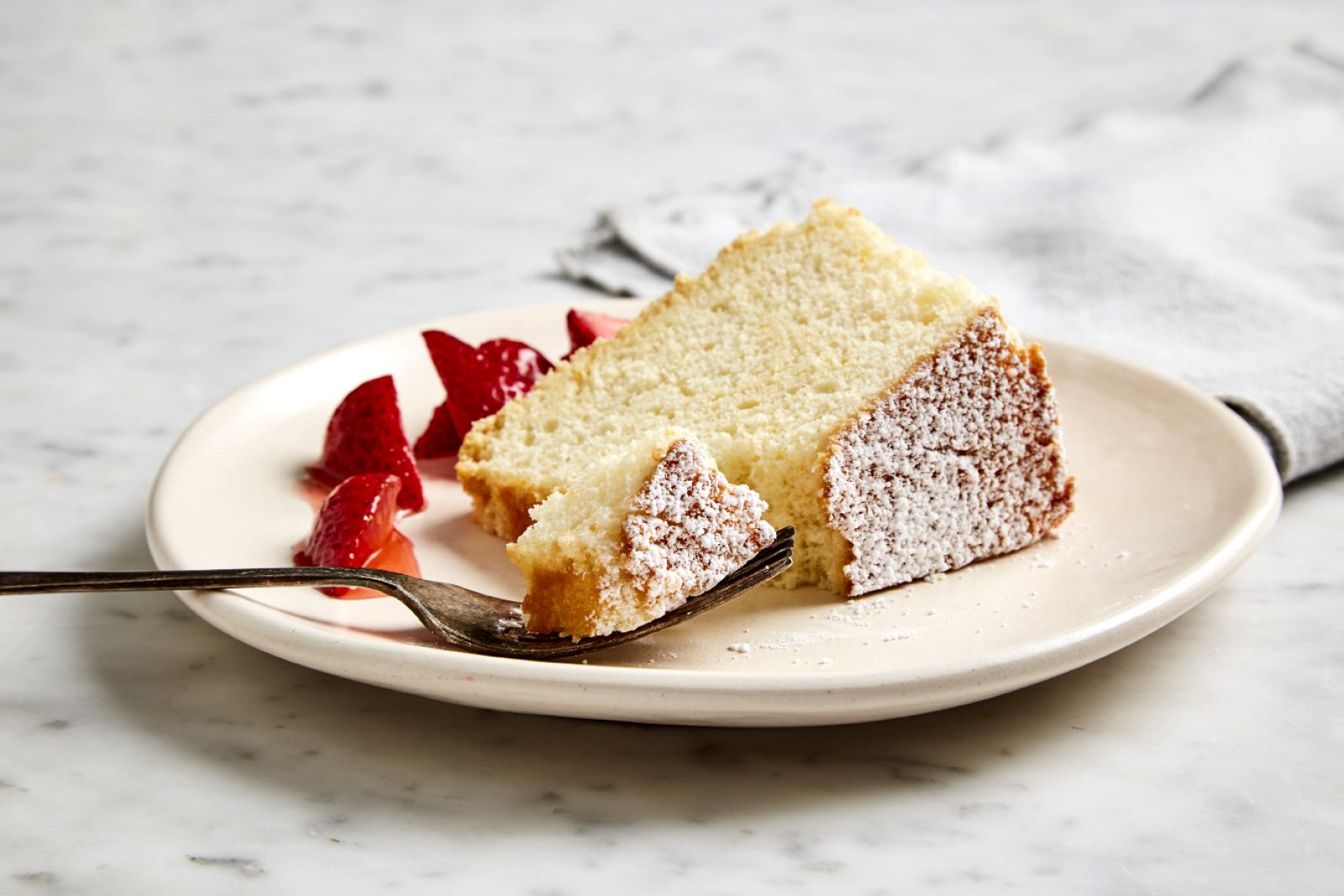
Hot Milk Sponge Cake
When Linda White’s grandmother was a young woman, she started a book of recipes that she had clipped from the newspaper or had gotten from friends and family. Now Linda, who lives in Fort Washington, Pennsylvania, has inherited that book. “Most of the recipes have titles attributed to someone significant in her life,” she says, and the cake named Adena’s Hot Milk Sponge was comfort food for the family. “She made it for happy occasions, but I associate it more with times when I was under the weather or was just feeling down.” Both Linda and her mother tried to replicate the sponge cake, but her grandmother’s handwritten recipe was sketchy and vague. They had no luck. “The flour is listed as the last ingredient, after the baking instructions,” Linda said. “The ingredients include egg yolks, but later on it says to fold in the whites. I think this might be a case of making sure no one can duplicate it!” Linda contacted Milk Street to help her re-create this old-fashioned cake, which she described as light and tender and flavored with a little orange zest; it was always baked in a tube pan and never iced. Sponge cakes like this one incorporate beaten egg whites, which, along with baking powder for added leavening, produce a light, fluffy crumb. For best results, keep these tips in mind: Use an ungreased pan—this allows the batter to cling to the pan sides and the tube as it rises. Scald the milk before use to denature proteins and help tenderize the crumb. Beat the egg whites just until very droopy peaks form; if they are stiff, the cake won’t rise as high. And to prevent the baked cake from falling, invert it and let cool completely in the pan.
10 to 12
Servings
1½ hours
30 minutes active, plus cooling
Ingredients
-
260
grams (2 cups) all-purpose flour
-
1
teaspoon baking powder
Directions
-
01Heat the oven to 325°F with a rack in the middle position. Have ready an ungreased 9-inch or 10-inch tube pan with a removable bottom or, if using a 1-piece pan, line it with kitchen parchment cut to fit into the bottom, with a center hole to accommodate the tube. In a medium bowl, whisk together the flour, baking powder and salt; set aside.
Reviews
May 26, 2026
Definitely a Five Star Recipe
Made the Hot Milk Sponge Cake over the weekend to have with seasonal strawberries and freshly whipped cream. It is a winner! My sister, who doesn’t like desserts (weird, I know)) loved this cake. I am not a baker. In fact, I had not baked any cake for more than five years. I recently decided, however, that I needed to use whatever cooking and baking skills I had developed over the years or loose them. So, following the recipe carefully, it was a total success; and the taste is lovely with or without additions like fresh fruit, etc.
March 29, 2026
Why Hot Milk? Here’s My Opinion.
I love this cake but I think you’re mistaken about why using hot milk produces a moister, more tender cake. Flour consists of two hydrophilic components, starch and protein (gliadin and glutenin which, when mixed together with a liquid, make gluten). When a liquid is mixed into flour, both of these components compete for the available water. Starches absorb water which later, in the presence of heat (in the oven), convert the starch to a gelatin, permanently binding the water, making a moister cake. The proteins gliadin and glutenin, bind to the water more quickly and aggressively, which activates them so that they will stick to each other to create gluten bonds (autolyse). At room temperature, starch absorbs water much more slowly than do the proteins, which happily make as much gluten as the batter is mixed, trapping more water, out-competing the starch. To achieve the goal of a moist, tender cake, you need to minimize the amount gluten produced while maximizing the amount of moisture available to and absorbed by the starch. What I think has been overlooked is that the absorptive ability of starch increases dramatically with the temperature of the liquid. This is where the hot milk comes in. If you add hot milk to the batter, alternating with additions of flour (not to tge eggs), the starch can absorb more water, faster, thereby limiting the amount of water available for gluten production. The starch can now out-compete the proteins for the water, resulting in a moist, tender cake.
Another way to think of it is that it’s a proto-“Tangzhong”, which is now widely used in bread-making.
I’ve also used this technique in making your Coconut Cashew (Sanwin Makin) Cake. Instead of producing a thin, watery batter, barely capable of supporting floating cashew pieces before baking, by adding steaming coconut milk to the dry ingredients and mixing with a whisk attachment on my stand mixer, I end up with a thick batter and a much moister cake.
Anyway, for what it’s worth, that’’s my opinion. Thanks for letting me share it.
June 18, 2025
Delish!
The recipe was perfect. Thank you.
December 7, 2024
Like an elevated angel food cake!
I actually am one of those people who loves angel food cake so this was like finding an elevated version of that. I think it's better, actually, so this will now replace my usual recipe for angel food cake. THANK YOU!
December 5, 2024
Excellent alternative to an angel food cake
Everyone loved the fluffy texture and wonderful citrus flavour. Not overly sweet either.
Become A Subscriber To Rate and Review All Our Recipes.
Please Log in or join today for $1.
