






Your email address is required to begin the subscription process. We will use it for customer service and other communications from Milk Street. You can unsubscribe from receiving our emails at any time.
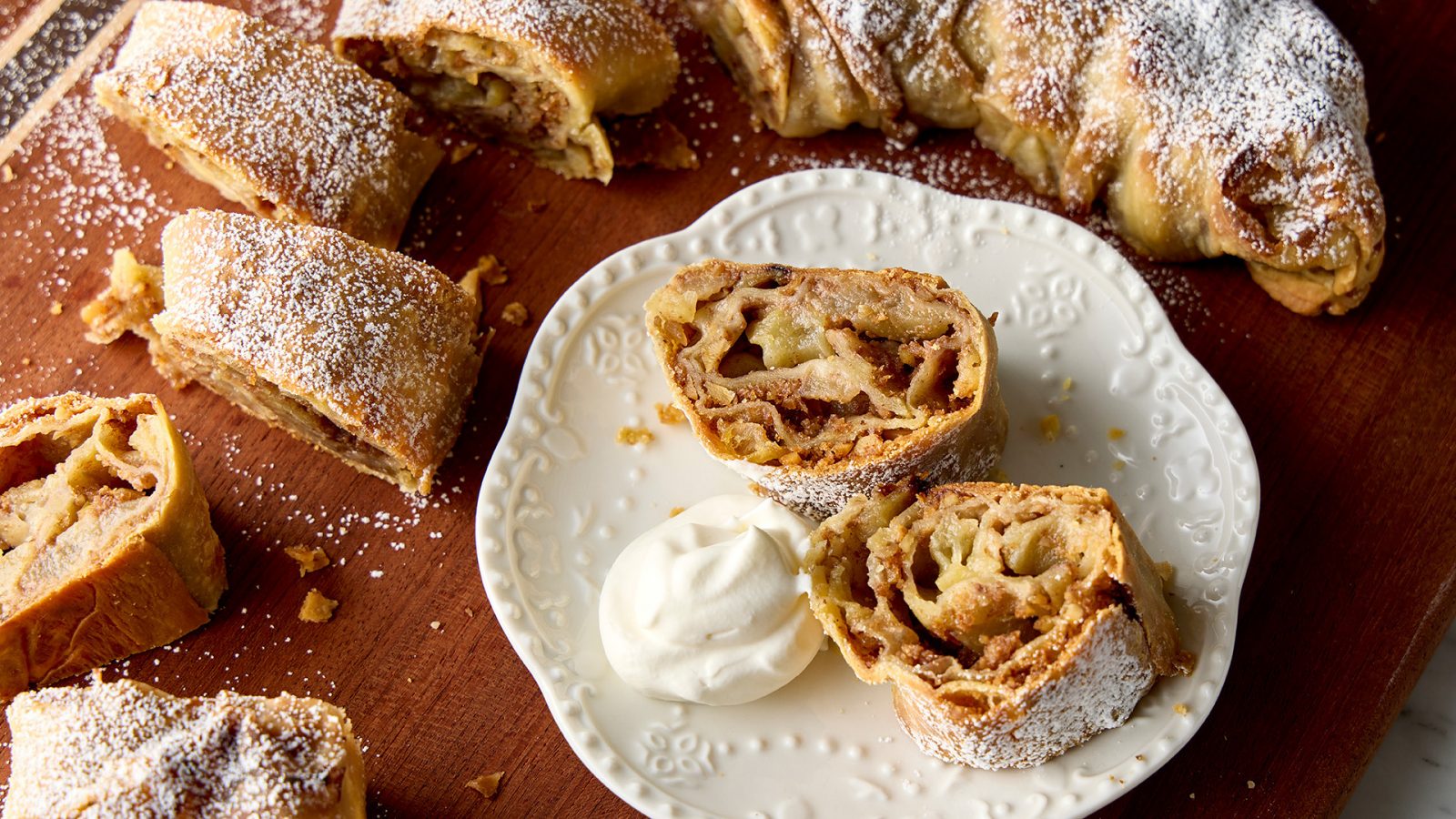
Austrian Apple Strudel
In Austria, Eva-Maria Steinbichler and her daughter, Petra Steinbichler, showed us how to prepare a proper apple strudel. The result was a light, barely there pastry surrounding a buttery, sweet-tart filling. To build impressive gluten strength in the dough, Steinbichler kneaded it by hand and employed a method called crashing, which involves repeatedly throwing the dough against the work surface. After a brief rest to let the proteins relax, she stretched the dough to near-transparency. She then taught us the art of the tablecloth roll, a classic Strudel-making step. Having stretched the dough directly on a clean tablecloth, Steinbichler scattered on the filling, then gently lifted the cloth to coax the dough into a log, as if making a jellyroll cake. We also employ this easy, effective technique, so you will need a clean tablecloth or other lint-free fabric folded into a 3- to 4-foot square. Serve with a dusting of powdered sugar and lightly sweetened whipped cream. The Strudel tastes best freshly baked, but leftovers can be stored in a sealed container at room temperature; before serving, reheat in a 400°F oven for five to 10 minutes.
6-8
Servings
Tip
Don’t skip the step of letting the dough rest. Kneading and crashing develop a strong gluten network, allowing the dough to be stretched without falling apart. Resting ensures you can stretch the dough without it snapping back. Also, don’t worry if you wind up with a few small tears. Rolling the strudel brings everything together.
2 hours
1½ hours active, plus cooling
For the dough:
-
217
grams (1⅔ cups) all-purpose flour, plus more for dusting
Directions
-
01To make the dough, in a medium bowl, stir together the flour and salt. Make a well in the center and add the oil, egg yolk and water. Using a fork, stir in a circular motion, gradually moving outward to incorporate flour, until a shaggy dough forms. Using your hands, bring the dough together and knead, swiping along the edges of the bowl to incorporate dry bits, until the dough forms a cohesive ball. Lightly flour the counter and turn the dough out onto it.
Reviews
January 23, 2026
Austrian Apple Strudel
Since my original review in October I've made this recipe several times and it has become one of my favorite desserts. It is not nearly as sweet and cloying as American style pastries. My husband, who grew up on grocery store desserts , tends to pile on the powdered sugar to meet his tastes. LOL. I've learned that the outcome of this recipe is very dependent on the type and quality of the apples used. Granny Smiths are often favored for pies and tarts because their taste and texture hold up in baking. But not always. Some grocery store apples may be long in the tooth by the time you buy them. In the end I've had the best results with farmers market apples.
October 4, 2025
Austrian Apple Strudel
Initially I was intimidated by the thought of making that super thin pastry. But it was easy enough, just took some patience. And the rolling process was actually quite fun. Overall a delicious recipe.
Become A Subscriber To Rate and Review All Our Recipes.
Please Log in or join today for $1.
