





Your email address is required to begin the subscription process. We will use it for customer service and other communications from Milk Street. You can unsubscribe from receiving our emails at any time.
Episode 915
June 27, 2025
June 27, 2025
Who's Your Salsa Daddy? Tacos, Salsas and Avocados!
This week, we travel to Mexico. Rick Martínez shares the salsa that changed his life; Aarón Sánchez answers your Mexican cooking questions; we uncover the secret history of avocados; and Paco de Santiago takes us on a food tour of Mexico City.
Questions in this episode
"I can't seem to get my handmade masa tortillas to puff. What am I doing wrong?"
"I'm looking for a basic, reliable recipe for mole. Thoughts?"
"Why do some recipes remove pepper skins? What's your recommended way to remove the skins at home?"
"What recommendations do you have for a nice light masa dumpling?"
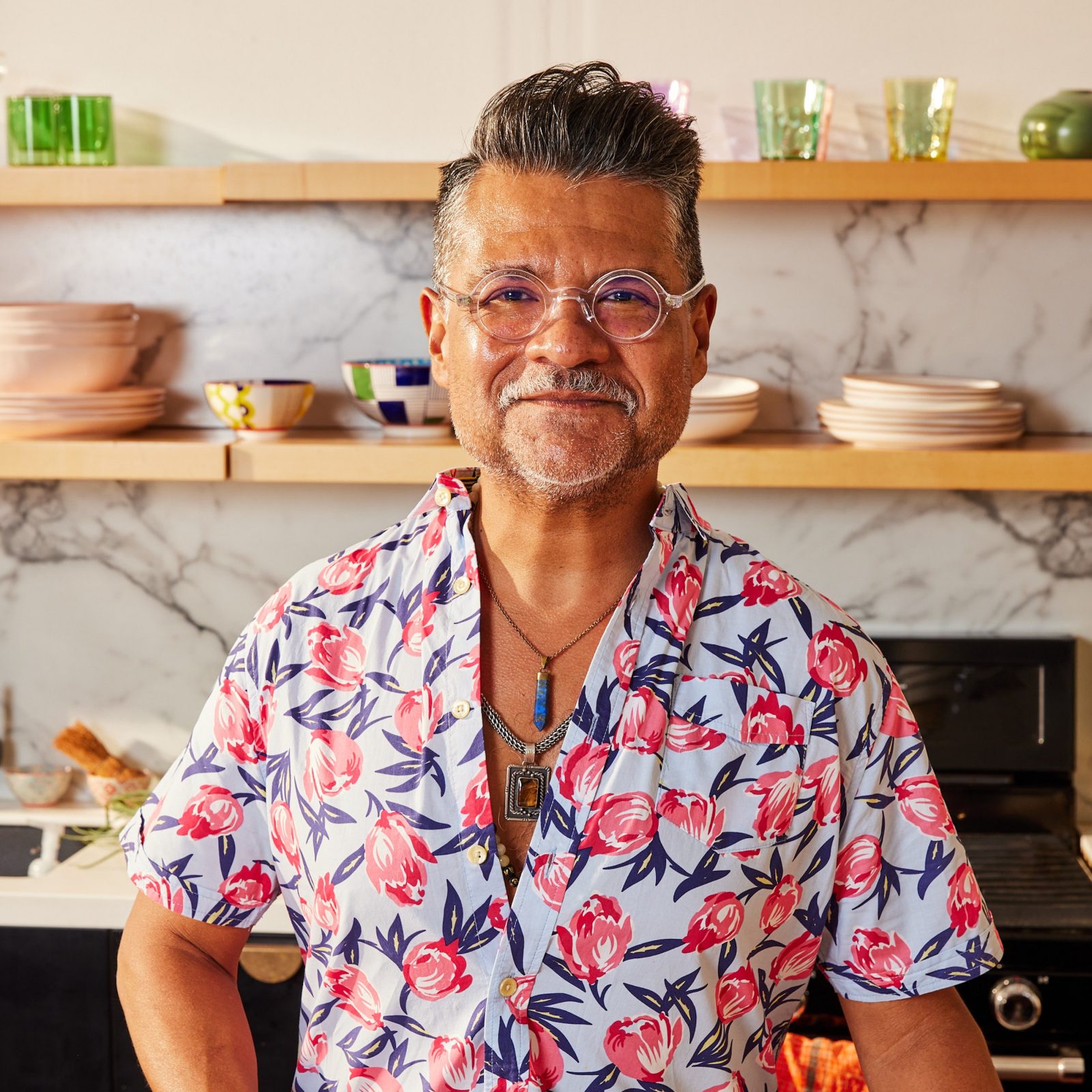
Chris Kimball: This is Milk Street Radio from PRX, and I'm your host. Christopher Kimball. Today we travel to Mexico. Rick Martinez shares the salsa that changed his life.
Rick Martinez: It just kind of blew my mind. I'd never seen anything like that, you know. And I visited probably over 500 cities and small towns in Mexico, and it just changed the way I thought about salsas
CK: We also uncover the surprising history of avocados.
You know, before corn, people were cultivating avocados,
CK: and Aaron Sanchez is here to answer your questions about Mexican cooking,
Aaron Sanchez: All that beautiful pepper juice dripped to the bottom of that little bag, and that's money. It's like pepper au jus.
CK: But first, let's take a trip to one of my favorite places, Mexico City. When I last traveled there for Milk Street, I was led by local guide Paco de Santiago. Paco, welcome to Milk Street.
Paco de Santiago: Hey, Chris como estas
CK: Not as good as if I was there with you. Last time I saw you, you had a friend come over to your apartment and mix a series of drinks, and then you got me to wear a cowboy hat and sit on a bowl and take a picture. So, I'm just, I'm just waiting for that picture to show up somewhere
PS: Yeah, it's going to appear somewhere in some moment
CK: When I least expect it. Anyway, the drinks were good, and we had a great time. So, let's start with tacos. How should people think about tacos when they go to Mexico City?
PS: Well, I think that when we talk about taco in Mexico City, we locals picture in our mind any kind of food, no, like we taco everything, right? You know, we have tacos that are enjoyable in the morning, and there are specific tacos that you only think about it, and you feel like, really, really, I really want a night taco? No, that belongs to the night and, and those are the most popular, or the most wanted to call it that way. No.
CK: So, give me an example of a breakfast taco.
PS: Well, for instance, for breakfast taco, it can be something like, very simple, like, there are these ladies cooking this comida, and they prepare differentizados, these stews. And you can go for scramble eggs with poblano slices, and then you just want a taco of that. You don't want the whole plate. You want a taco of that, huevos estrellados con con rajas, and that will be a perfect morning taco. No.
CK: So, could you name a couple of taquerias? Yes, there's so many of them. Could you give us a couple ideas of places to recommend?
PS: Yes, I like the places that they have become experts on creating a special kind of taco. I'm not really happy when I see these places that they offer. Oh, here you will find carnitas, but you don't want carnitas, we have posole. But if you don't want posole, we have quesadillas. We have something for you. I don't like those kind of places. I like to go to the places where they have been making the same taco like La Penca’s, one of my favorites this place, like ___, is located on a very busy street that is pretty Hispanic, by the way, and this is a taqueria that is also very old. They only make two kind of tacos, Pastor taco and Suadero taco. That's it with only one single kind of salsa.
CK: And what is suadero? Is that brisket or?
PS: Suadero is brisket. Yeah, is a brisket taco
CK: Okay, so what are some of the food etiquette rules here, like when you pay and how do you pay for a meal for example
PS: This is a very interesting question, because when taking my friends and clients to the taquerias, and I place the order, and my friends, they are already taking out the wallet to pay for the order. But the Mexico style is they give you credit. You get credit for your tacos. No, they give you credit. You don't have to pay immediately. For instance, when I'm going to the pastor, Chris, I never order three or four or six tacos at once. I like to enjoy one by one, because I don't want the taco to get cold, so I order my taco one after the other, and then at the end the taquero, he knows perfectly. I don't know how they do this, but they he knows perfectly. You know, no matter there are 20 or 50 people eating tacos at the same time, then they know how many you ate, but they still ask you cuantos tacos the commission, how many tacos did you eat? And I say, I ate 10 tacos. And he knows, but you know, he's very cautious. He won't say, no, no, you ate 12. They know exactly how many. So, you pay for for what you have eaten. And., I think that's that's a lovely feeling, that you are in a nice place, know that you are comfortable.
CK: Last thing. So, what are some of the mistakes people make if, let's say they come from the United States, they go to Mexico City on vacation, they go to some places they probably shouldn't go because it's not authentic food, or it's not good food, or is there some things to stay away from?
PS: Well, I would have to say to follow during instinct. I would avoid chains, because most of that food, it's it's okay, but it is kind of vaccinated to make the food not that spicy, because you don't like spicy. So, things that are artificial, right?
CK: You talk about gringo tacos. So, are those fried tortillas that that makes a gringo taco? Or what's a gringo taco?
PS: Yeah, many American visitors, they come to try this north of Mexico taco style in Mexico City. That, to me, like, why would you come to Mexico City when we have this huge variety of tacos Mexico style to look for a taco that is, they are great, but they are. They were born in Monterey, in Tamaulipas, in the Texas border, no, and now we have this invasion of chains of taquerias. They, they all look like the same, and that, it makes no sense, Chris, it's like, it's like seeing, I know, go to France and see this beautiful Kentucky Fried Chicken. So, it makes no sense to me to see American taco chains in Mexico City when we have so many real tacos, no
CK: Paco. It's been a pleasure as always except we can't drink together. Oh boy, we'll have to make up for that. Yes. Thanks so much.
PS: Pleasure is mine, Chris, and hope to see you soon in my beloved country.
CK: That was Paco de Santiago. He's the team leader for Culinary Back Streets in Mexico City. Now it's time to answer your questions about Mexican cooking with special guest host, Chef Aaron Sanchez. Aaron is an award-winning chef, TV personality, author and founder of the Aaron Sanchez Impact Fund. Aaron, thanks so much for doing this. This is great.
Aaron Sanchez: You have no idea. Signor, Chris, how excited I am to be here, man. I'm looking forward to talking Mexican all things.
CK: Well, it's going to be easy, because I can just defer to you now and you can answer most of the questions.
AS: No. I mean, I think food is meant to be shared, right? So are ideas and experiences. And I'm so happy that people are fans of Mexican food, and we're going to do a deep dive. So everyone stand too and have your questions ready. Let's get going. Welcome to Milk Street. What's your name sir?
Caller: This is Daniel from Virginia. It's great to talk to y'all. I am, my wife and I have four kids, and we actually have a fifth due in October, so we're always sort of working to figure out how to feed them, you know, both on a budget, but also very well within that budget. And one way that we've figured out how to do that is with tacos, and specifically with fresh masa tortillas. And so, we've been making those for a while now, but we just can't seem to get them to puff, which, you know, we see on, you know, YouTube videos and cooking shows that this is sort of the signature of a pro level fresh masa tortillas, and it puffs at the end of it. It's hard to beat a fresh tortilla either way. But we're kind of interested in figuring out, you know, what we're missing to put that last burnish on these tortillas,
AS: Usually the people that you see online, or whatever, that have masa that kind of puffs up like that. It's been sitting ambient temperature for a while. (Okay) So what's happening is that the starches kind of calm down, and then once you work it in in a comal, or, you know, you know, you roll a rolling pin on it and kind of flatten it out, all of those starches and gasses have had a chance to kind of calm down so they're able to express themselves. But when you take masa from a 40 degrees fridge and they start to roll it out and expect it to puff, it's not going to happen. The dough needs to come to up to two room temperature. It needs to slow down and relax, and that you'll be better off with that. But with that being said, man, there's so many great store-bought tortillas right now. Buy four-inch taco tortillas, man, and call it a day, right? Chris. I mean, don't, don't, don't be
CK: I started making my own recently, (and I know I'd love it) you know? And I don't know I they were so good. But there was one, something I saw in Mexico a few months ago. I don't know. I assume I run. You know about this? But. Yeah, they were making fresh tortillas in the restaurant kitchen right the puffed up, like you said, and the woman doing it, she took one edge and peeled it apart right to make an opening. And this is amazing. Then she took an egg, which she'd already cracked, into a small bowl, poured the egg into the tortilla, sealed the edge with her fingers and put it back on ___ right there for a couple minutes aside. And so when you got it, you got a tortilla with an egg, you know, poached inside the tortilla. And that was all
Caller: Chef, how do I how do I do that? I want to know how to do that next.
CK: That was the most amazing thing. Yeah. Anyway, if, you make your own, I highly recommend it
AS: You're right, Chris, that's more delicious than anything. I mean, God man, but you know, again, let the masa rest, and that will make a big contributor.
CK: That's a that's a good idea. I never thought good.
Caller: I'll try that. That's wonderful. Yeah, thank you
CK: That solved my problem too. It was like we both just called in.
Caller: Wonderful. Thank you so much.
CK: All right, Daniel, thank you so much pleasure. Thank you so much. This is Milk Street Radio. If you have a question about making tortillas or tamales at home, give us a ring. 855-426-9843 one more time, 855-426-9843, or just email us at questions at Milk Street Radio.com.
AS: Welcome to milk Street. Who's calling?
Caller: Hi, my name is Steven Fernandez. I'm calling from Charleston, West Virginia. I would like to know a little bit more about moles. I've in the past. I've made a mole, but I've really had nothing to compare it to, other than whatever was in the store bought, (yeah) but I like the idea of using chocolate as a savory ingredient, so I just wanted if there was a recipe that could be utilized as a base, and then, you know, what other ingredients to add to the base depending on the protein.
AS: That's a brilliant question, actually. And I can tell you, first of all, the word mole, you know, it's from the muata word, you know, the indigenous word to mean grind, right? So, it's all about grinding chiles. And my mom defined it as a way of saying it's a pureed sauce with a thickener. That's really what mole refers to. So, it's, it's whether it's crackers, whether it's tortillas, it has to have a thickening agent. That's what gives that beautiful viscosity, that beautiful texture, to the mole. And basically, you have the couple different compartments. You dry fruits that are soaked, you have your spices that are toasted, you have your roasted vegetables, you have your chilies that are dried and reconstituted, and all that good stuff. The mole poblano, right? It's the OG one, right? That's the one that everyone knows. It's from the state of Puebla, very Mexican, etc, etc, but they start to dive into a place like Oaxaca. And Oaxaca is the land of the seven moles, they say. And more obscure moles are named a lot of times after little villages and all the things that they have available to them at that particular place. So, when you go to ____ and you have that paste, it's actually the people that are making the mold are actually doing you a favor. They're excluding you from other words. So, it's actually, yeah, you mean? So, it's like, it's more about putting the chicken stock in there, letting it come up to a boil, and then at that point you can put in roasted root vegetables. You know, I'm thinking parsnips, I'm thinking rutabagas. I'm thinking something that can cook alongside that protein, whatever it is right. So, if you if you're living in an area like West Virginia, where, you know, I have a restaurant in West Virginia University, I mean, if you go up there, you're hunting, you know. I mean, I would take a little bit of, you know, shoulder of venison, you know, or smoke it and then finish it in the mole. That's what I would do. And they hit it with the roasted root vegetables, you know, sweet potatoes, whatever you got.
Caller: That sounds great.
CK: The only other thing I can say is I know that in Oaxaca, if you go 20 miles outside of town and have a yellow mole versus one town, totally different recipe. So, it's highly local. You know, it's there is no recipe for mole, as Aaron said, it's just a thickened sauce. So, there's a million different ways of doing it.
Caller: Yeah
AS: Yeah, the reason that the mole Negro, why it's so elusive and kind of like the Cadillac of all moles, is because it utilizes a chili called Chihuahua negro. And Chihuahua Negro is this dark, kind of like raising chili, and it's expensive and it's hard to find. And so, to order to make a proper mole, you have to have a Chihuahua Negro too.
Caller: I was never afraid of playing in the kitchen and trying to find new, new things to get into so
AS: go with the mole poblano, right? Chris, I think the mole poblano might be, you know, the best one to go with, no?
CK: Yes, yeah. I mean, the yellow mole I had was basically ground corn in a stock with lamb's neck. I mean, it was, it wasn't anything like you'd expect. So, you know, almost anything goes. Well. Stephen, you sound like you're an adventurous
Caller: So, I always like the idea of just just trying to experiment with things.
CK: Good luck.
Caller: Yeah, so good to talk to you guys.
CK: Take care much.
Caller: Thank you very much
CK: Special thanks to Aaron Sanchez. You can learn more about his restaurants, books and new projects as Chef Aronsanchez.com you're listening to Milk Street Radio After the break, life changing sauces with Rick Martinez. This is Milk Street Radio. I'm your host, Christopher Kimball, next up, it's my interview with Rick Martinez. His new book is Salsa Daddy. Rick welcome to Milk Street.
Rick Martinez: Thank you so much for having me. I've been a fan for many decades. So very good to meet you.
CK: It doesn't make me feel old really, it really doesn't.
RM: It makes me feel old too
CK: It’s the decades. It's always the decades. So, let's talk about Diana Kennedy, because there's a quote from you. I loved it, but when I was sick of seeing someone that did not look like me, that did not speak like me, represent what I was beginning to believe was my culture. So where does all of that stand in your mind today is that just a transitional moment in history where these cuisines, which were not well known among many Americans, became better known. And now we're moving on to another phase. Or if you wrote a history in the 20th century of cooking, where would you put her, in particular, Diana Kennedy. I mean,
RM: I think relative to what she did for Mexican cuisine in the US, I think is invaluable, you know, she presented a view of Mexican cuisine in the US that didn't exist before. And I also think that even for a lot of of Mexicans, there weren't many people at that time that were writing down recipes and documenting processes and methods and ingredients, and in fact, not until later. There's a gentleman called Ricardo Munoz Zarita That he's sort of the, I think, the godfather of Mexican cuisine, and he spent, you know, over 20 years going around Mexico, traveling and documenting both the ingredients, the methods and the and the recipes. So, I think that, you know, she probably represented a catalyst for both Mexicans and Americans. And, you know, like for a kid watching her program on, PBS growing up, you know, I wanted to be her. I wanted to have that house in Michoacan. I wanted to go to the markets and cook that fresh food and understand the culture. As a boy that grew up in Texas during the 70s and 80s, the food that we ate, I thought was Mexican, not for any other reason other than, you know, people labeled us as that Mexican family, and so I just assumed that everything that we did was Mexican. And, you know, it wasn't until later that I found out that what we were actually eating was Tex Mex food with a strong influence from the state of Nuevo Leon and Monterrey in particular, just because that was where my grandmother came from. So, I think, you know, she and Rick Bayless were very foundational in terms of the understanding of regional Mexican cuisine, of documenting many, many recipes. And I think it laid the groundwork for people like me and other Mexican American, other Mexican chefs and writers and cooks. So, I think it's, you know, it's an important part of the culinary history of Mexican cuisine.
CK: Well, said, I thought that was, you know, I agree. So, you came to food later in life. Many people go to culinary school. You know, instead of college or right after college age, 19 or 20, you were 40 years old. So, what was it like being older and obviously more mature and already having a career in marketing was that easy for you because you were dedicated, and were going to get a lot more out of that school than anybody else, or not?
RM: No, it was definitely harder. I mean, I think I had, you know, the benefit of wisdom and experience, but I also had ego and pride, you know, like I left a very cushy six figure advertising salary. I left a beautiful apartment in Chelsea with views of the Hudson. For, you know, a much more affordable, cheaper apartment. But, you know, I've heard a lot of chefs say this, that, you know, food chooses you, you don't choose food. And I think that's very true. You know, my parents, I wanted, I had interviewed with the the CIA Culinary Institute of America for, you know, several years in college, and my parents were always like, no, no, get your degree. Don't go into food. You can do that later, you know, get a good job. And so, I did, and, you know, I don't regret it. I enjoyed advertising. I was good at it, and I made money, but it got to the point where I just, you know, I literally thought I don't want to be on my deathbed and have the regret that I never tried to be a professional cook. And I thought, you know, I'll do it. If it doesn't work, I can always go back to advertising. And that was sort of how I convinced myself.
CK: So okay, now we're going to your book Salsa Daddy. So, I think a lot of people are confused. You know what is salsa? And you have a lot of different chapters that define it. Is it just a sauce, or does it mean something more specific than that?
RM: I think it's sauce in the broadest definition of the word, right? So, I think what Americans typically think of as a salsa is, you know, the dip or the condiment, and that is definitely one part of it. But anything, anything that is chopped vegetables, whether it's more like a salad or a slaw or a pico de gallo, those also qualify as salsas. Guacamole is, which is another category of salsas that have as their base an avocado, whether it's pourable or chunky or chopped or, you know, a paste that qualifies as a salsa and a guacamole. But then, you know, as I was writing the book, because I had literally, at any given moment between 10 and 15 quarts of salsa in my refrigerator and freezer, and every time I walked up to a neighbor of mine, they were like, no no, go away. We don't want any more salsa. I was stuck with all this salsa, and I could not throw it away, and so I started using them as meal prep and just for myself, and also to get rid of them so I could have more fridge space. And then I was like, wow, this actually makes weeknight cooking really easy. When you don't have to chop anything, you can literally just grab a cup of salsa and throw it in rice, or with ground beef or with a chicken, and braise it, bake it, glaze it on the grill. It just makes life so much easier, and I think that's what a lot of of Mexicans do.
CK: So, let's just talk about the different categories you have, smashed, cooked, blended, sweet, pickled and special. So, if you could just give us a beginner's guide to the basic types of salsas, would be helpful,
RM: Yeah. So, take it from the perspective of the cook. So, you know, the easiest way to make salsa is just to smash it right? You don't even need a blender. So, you know, get a fork, a rock, a mortar and pestle, you know, a big spoon and go at it. And I also think that, you know, the the smashed are, they're very foundational to Mexican cuisine, and they've existed for hundreds of years, right? So, like the the first tacos were made by the ancient civilizations, Aztecs and Mayans, and they were also grinding chilies and making salsas to pour over them or to serve with them. So, it's just it's so much a part of this culture, in this cuisine. And then, you know, the picadas, the chopped salsas, I think are very familiar to people in the US. The pico de gallo is like probably the most notable one. But again, Pico de Gallo and chopped salsas are a category in and of themselves and so depending on where you are in the country and what you have access to, it can be chopped fruits. It can be chopped cactus. It can be, you know, chopped cabbage. And those make up a they provide a level of texture that is really nice on certain dishes or in a taco or in a burrito. And then, you know, the blended, I would say, probably the majority of people in Mexico use a blender to make just about everything, whether it's a salsa de mesa, which is a, you know, sort of the dip of the condiment, or moles gizmo’s and and those are, frankly, the easiest. I probably make those most often
CK: So, getting your molcajete glassy smooth. How do you do that?
RM: So, my grandfather, when I was probably like 19, gave me a molcajete, and I thought you just started using it. And he also gave me a bag of rice, and said, you need to grind this rice into a fine powder with your molcajete. And I was like, are you kidding me? Come on. So basically, what you need to do you put a few tablespoons of rice into a molcajete, and then you just grind it. And what will end up happening is the powder will start to turn gray, because what you're doing is you're grinding out all of the volcanic rock, all the rough edges, and then you just brush that out, put a little bit more rice, and you do that again. And so, what you want to do is you want to grind rice a little bit at a time until the rice powder is actually white and not gray. And that's how you you get that really nice, smooth finish, and then, you know, over time, you are continually grinding and you're smoothing it out and smoothing it out. My mother, she got her molcajete when she got married in 1963 and then at some point, she asked me to grind some cumin. And so, I was a little bit too aggressive with the molcajete, and I, I tapped the the stone onto the base of the molcajete, and it literally just split in half. (Whoops) And you know, these things start out, you know, inches thick, but, you know, that's, that's 30 years of usage so
CK: That's when you call your mother go, I have some news for you.
RM: She was in front of me. I started I literally started crying. (Oh, that would be bad). She didn't even miss a beat. She's like, she pulled that one away, she opened a cabinet, pulled out another one, and said, here you go. Here's some more cumin. Grind it. I was like, okay,
CK: So, if you go to a taqueria in Mexico City, and, you know, they have all the toppings, et cetera, but then they give you, like, half a dozen salsas, right? Is the concept of a salsa to mix and match with different sauces. Or I think some people think of it well, you know, this dish gets salsa matcha, but it sounds like you're saying that very often people might use two or three salsas at the same time.
RM: Yeah, it's all a matter of personal preference. And honestly, I love that a lot about Mexican cuisine. I feel like, in some ways, it's almost like bonchon, and you're getting little bowls of lots of different things, and whether it's a taco or a bowl of pozole, you're customizing that dish to your personal taste, or maybe you know, you're trying a combination on this taco, and in the next taco you're going to change it up, which I often do, and I think that's part of the fun of Mexican cuisine.
CK: So, some of these recipes really got me excited. Salsa, tejanas, Texas salsa, roasted peaches, charred habanero and toasted pecans. I mean, that's exciting as a concept. So, are these things that exist in the world before you? Or did you make this one up?
RM: No, I made that one up. You know, I grew up in Texas, and my father grew pecan trees and peach trees. And so every summer we would harvest the peaches, and my mom would make peach pies and cobblers. And every fall, we would harvest the pecans, and my mom and my dad both would make pralines and pecan pies. And so, I had this idea, like I want to you know, as an homage to my upbringing and my father, I wanted to create a salsa that combined those two things, which I love and adore. And I was like, wow, this is so good. I immediately thought, I need carnitas with this. I need pork because pork loves fruit, right? And I think, you know, that's that's a spirit that I want people to have when they read this book, you know, like, use the recipes as a guide, but then change it up. Use the fruit or the vegetables that you like that you have that are in season. I believe that if you use the things that are going to make you happy, that salsa is going to be delicious.
CK: Yeah. Yeah, there were a lot of I'll just run through others. You know, cucumber jicama and orange. Cucumber, tomatillo, poblano. You do a marmalade berries, ginger and chili de arbol, which sounds great. You also talked about salsa you had with caramelized onions and serranoes. Where did you have that? And why was it such a sort of key moment for you.
RM: So that is at taqueria in Mexico City called Trompo Imperial and so imagine the most sublime caramelized onions that you would make for a French onion soup, but with the addition of caramelized serranoes. So, it was like, this really sublimely smooth. It just kind of blew my mind. I had never seen anything like that, you know. And I visited every state in this country. I've visited probably over 500 cities and small towns in Mexico. And I asked him, like, where did this inspiration come? And it was just like, you know, I love caramelized onions, and I wanted to do that, and it just changed the way I thought about salsas, right? You know, it's like, there are no rules. If you like something and you want to make it hot and spreadable or pourable, do it? Have fun.
CK: Rick, it's been it's been fun. Thank you so much. I really appreciate it.
RM: No, it's been such a pleasure. Thank you so much for having me.
CK: That was Rick Martinez, author of Salsa Daddy. Salsa is a word that covers a lot of ground, from a strawberry jalapeno salsa to salsas with nuts, tomatoes, tomatillos fermented lemons, and they can be red or green or almost any other color. In the world of food, many words are confusing. A tortilla in Spain is actually an egg, potato omelet. Gravy can mean white or brown, thick or thin. And chips in England, of course, are French fries. Let's face it, cooking is confusing, and I would add, occasionally violent. We whip egg whites, we beat butter and sugar, crack eggs, punch down yeast bread and scald milk. So, the next time you grind or crush your salsa, remember that you have to break eggs to make an omelet. You're listening to Milk Street Radio coming up The Secret History of Avocados. I'm Christopher Kimball. You're listening to milk Street Radio right now. It's time to take a few more calls with my special guest co- host, Aaron Sanchez .
AS: Welcome to Milk Street who's calling?
Caller: Hi, my name's Jen Hansen. I've been a fan going back to, you know, even Iron Chef America. So, it's I'm freaking out a bit. So, the question that I have is about cooking peppers and keeping the skins on versus removing them. If I'm sauteing peppers, like peppers and onions for sausages, I'll slice the peppers, but leave the skins on to cook them, and it's never been an issue. In fact, I would never even think to peel a pepper, but if I'm making something like a chili Verde, the recipe often calls for the skin to be removed, and I like to, you know, feel all chefy. I'll put it on my, you know, my open flame, and char them, and then I'll put them in a bowl under some plastic wrap to let them steam so I guess my questions are, first, why do some recipes remove the pepper skins? And then I think my follow up question would be, what's your recommended way to remove the skins at home? Because it's fun to do it on the open flame, but it kind of makes a big mess.
AS: That's a great question. First of all, peppers for me, should be roasted, you know, they have that waxy outside skin, so it doesn't take anything to put them on a griddle or put them on, you know, the open flame, put them in a paper bag, and then once they sweat and they in the steam, then just take a knife, like a small paring knife, and you don't have to get your hands, but it has to be when they're still warm, and then just kind of peel off the skin and the seeds. But. I hate when people roast vegetables and then they wash them. That's the worst thing you could do. You went through all that trouble to roast these peppers, and they're going to wash them and wash all that flavor away. So as much as you can just try to take the skins off with a knife or with hands and rinsing your hands away from the pepper, and then julianne those, and you'll see a big difference. No one's ever going to complain off of roasted pepper. And the second part of your question, I'm sorry
Caller: I think that was, well, I guess the other question was, why sometimes you don't have to remove the skin, or the recipe doesn't say to remove it, but I think you just answered it by saying you'd always roast the pepper
AS: Chris?
CK: Well, I, I, I'll chime in for a second. I mean, if it's a small like serrano chili pepper, and I'm making a salsa. So, I'm charring a few plum tomatoes, some white onion, a couple cloves of garlic, maybe a dried guajillo, a fresh Serrano. I would not peel a small Chili, because I want that char and it's only a small part of the total, so it's not going to make anything too bitter. If it's a recipe with a ton of peppers of some kind, and you have a lot of skin, maybe that's different. But if it's one or two small chili peppers, I'm not going to bother skinning it in and I want the char anyway, because that's kind of the point of that exercise, right? Is charring vegetables, throwing them in a blender with a little water, putting them in a saucepan, reducing it down a little. I want the char, and I think, in fact, now if a recipe calls for a can of tomatoes, I very often make that classic Mexican salsa instead of the tomatoes. And the difference is, like, night and day. It's just amazing. I didn't really think it made a big difference until I started doing it myself, and it's amazing. So, I like, I like the charred skin personally.
AS: And the only thing I went there Chris was the idea of, because she was talking about sausage and pepper sandwiches, and that's the only reason my head went there. But you're right, absolutely. I mean, if you have a couple chilis there, and you know me, of course, you're not going to remove that, but
CK: if you had some big, sweet peppers, yeah
Caller: That makes a lot of sense. And I will say that I am guilty of going through all the work of charring the pepper, making the big mess, letting them steam, and then putting them under my faucet while I peel the skin off. And so maybe that's why I've never understood the point of doing it. It sounds like I had a fatal error in my process
AS: In doing the plastic bag, because when they sweat all that beautiful natural pepper juice drip to the bottom of that little bag, and that's money. It's like pepper au jus.
CK: Good point. I like that. Serrano au jeu, Jenn does that answer your question?
Caller: It does. Yeah, that. That was great. It helped me a lot.
CK: All right. Jen, thank you so much. It's been a pleasure.
Caller: I appreciate it. Thanks.
AS: Thank you so much.
Caller: Thank you. Take care. Bye.
CK: This is Milk Street Radio. If you have a question about mole or tortillas, give us a ring. 855-426-9843 one more time. 855-426-9843, or just email us at questions at milkstreetradio.com. Welcome to Milk Street who's calling?
Caller: my name is Dean, and I live in Fargo, North Dakota, and my question is about masa dumplings. I love masa arena, and I love the taste of corn and everything. And I found some recipes online. One was from Rick Bayless for a masa dumplings. I've made them, and they're they're very tasty, but they're, to me, more reminiscent of a matzo ball. They're there, they're not tough, but they're dense. And I've found another recipe I haven't made it yet, but one that has baking powder in it, and it's more like the dumplings that I'm familiar with, where you would spoon this onto top of a stew and it would steam rather than poach. So, I'm wondering, I want to make something authentic, but what would be a nice light masa dumpling that you would recommend?
CK: I'll start and say, I like light dumplings. And like in Austria, the classic dumplings are torn up, you know, rolls with some egg, etc., and that's, that's how they do it. Then they poach it in chicken stock or something for five or 10 minutes. I would think adding eggs to the masa might help and baking powder, as you suggested. But I think if you're dealing with essentially, you know, corn flour as a base, it's, it's going to be on the heavier side, but eggs and baking powder would certainly help. Aaron?
AS: Yeah, they're called, uh, Choco Locos. And, you know, you usually, typically in the Chile at Ole and they're found a lot in Veracruz in the mountains. So Veracruz has the coast, and then they have the mountain region, where there's a lot of like wild ___ and chanterelles and greens and their little masa dumplings. And sometimes they'll put hoja santa or cuyo in it as well to flavor it up. But, you know, the thing is, the only way to do it with that is you have to have fresh masa. In my opinion, you can't do it with dried masa and be generous with the lard in that you know, my mom's tamale recipe would work, which is four cups of masarina to two cups home rendered lard with one cup of warm stock. So, if you use that recipe, it'll be money every time, even if you make these little dumplings
Caller: That sounds great. Yeah, we do render our own lard. That was another reason I wanted to make some masa dumplings.
AS: Yeah, absolutely. So do that, and then absolutely freeze your lard, let it come up to room temperature, whip it, then it comes up to like, almost like egg white peaks, and then fold that into your masa It's obviously seasoned prior to and then add your stock. And that's a perfect amount of recipe. And it also works for the little masa dumplings.
Caller: Well, that sounds great, because I just love the taste of masa meal. And this, this sounds like I would get me on my way.
AS: Yes, sir.
CK: So, Dean, do you raise your own pigs? Do you go out and buy leaf lard, what do you do?
Caller: No, we, we buy our meat from a regenerative farm here in North Dakota. They have pastured pigs and grass-fed beef, and I can get my lard, you know, in big chunks, and then I grind it up and render it at 300 degrees and a little chicharrones that are in there from the skin, or the added little reward for going through the effort
AS: Exactly,
CK: There you go. Dean, thank you so much for calling. Appreciate it.
Caller: Thanks very much. I appreciate it. Thank you so much.
CK: Take care. This is Milk Street Radio. Last up today. I'm joined by Sarah Allaback and Monique Parsons. Their new book all about avocados, is called Green Gold. Sarah and Monique, welcome to Milk Street.
Sarah & Monique: Thank you. Chris, yeah, thanks. We're thrilled to be here.
CK: I would say the history of the avocado is about as complicated as the wars of the 19th century. I mean, I just get completely lost. So, let's start at the beginning. What are the basic varieties of avocado. And are there other varieties other than Haas? For example, Forte that we should know about that are up and coming?
Monique Parsons: Yes, indeed, there are over 1000 named varieties of avocados. So, the variety that we see all over the United States now is the Haas variety, and it was named after a postman from Pasadena and had a chance seedling tree that grew up in his orchard. But there are so many interesting varieties, part of our process in researching this history was learning about this great diversity that that most of us don't have a chance to experience.
CK: So, the Forte was the number one avocado to what the 1960s or something,
Sarah Allaback: Until about 1972, right?
MP: It was 1973 (73 okay) yeah ‘73 Haas surpassed the Fuerte as the as the favorite avocado. And there was a lot of push in the industry at that time, and Polavo being the first, it started as a cooperative. But the company that formed to market and sell avocados to Americans, they were really pushing for standardization. So, I think there were dozens of varieties being grown and picked in the 30s, 40s, 50s, as the industry grew, but the effort to standardize was kind of winning out by that time, and the farmers found that the Haas just grew better. It was a little more reliable. You know, there's a professor at the University of California Riverside campus, Mary Lou Arpaia. She is a big believer in celebrating and enjoying the diversity of avocados that are out there, but at the same time, she's like, Haas is a great avocado. It's hard to beat. It's got a nice thick skin. The pit is a good medium size, so there's usually a good amount of flesh, like we've seen avocados with these massive pits and very little flesh. So, it hangs on the tree a nice long time, which allows the farmers to kind of time when they're going to have them picked, because they won't ripen until they're picked. And it's tasty. So, it does have a lot going for it.
CK: Well, let's, let's talk about tasty. So, I eat a lot of avocados, you know, I'm a huge fan. But Americans, I'm kind of surprised, because Americans like big flavors, right? You know, we like chili dogs, right? But, but avocados, they're very subtle. So why are we eating what, 3 billion pounds of avocados in 2023. Why do Americans like avocados if they're a very, very mild flavor? Is it just texture? Is it? The color is great. I mean, what's going on
MP: It's the richness. It's the richness. The oil content is actually what makes an avocado a craving people have. I would suggest you begin eating avocados plain, without any seasoning. That was actually a challenge in the early years of the industry, to get people to just take a bite, but then go back for more.
CK: You're still saying avocados have a very mild taste, though, if you have to taste it three times,
SA: For me, they have a strong taste. And I really think it's from writing this book, I started reading about plant explorers who traveled with avocados and corn tortillas, and that was about it. And I was always a person who liked a lot of spice or salt on my avocados, but I started eating them plain with plain corn tortillas, and I'm an addict now, so I love plain avocados on salty food, like pizza or on takeout that's salty, it just adds the bulk and kind of density that you feel in butter. (Okay, well, that's a fair comment). And actually, it was marketed as butter by the Calavo company. When calavo first came out, they called it (um) the butter fruit.
CK: So, let's talk about the recipes, like, what, what were some of the recipes people were eating them back, you know, in 1914 (right, right) now, one of the recipes, or someone tried, I think you said, to bake an avocado like a potato, which obviously did not work out too well. But what were some of the better ideas out there?
SA: So avocado toast does date back to 1915 the California Avocado Association, when they had their inaugural meeting, they served avocado on small squares of hot toast with a little salt and pepper. But along with that, they were serving avocados with caviar, avocado cocktails. They also went a little bit crazy with the dessert stuff. Yeah, one of them is avocado and chopped dates beaten in whipped cream, slightly sweetened avocado ice cream. They were doing that then,
CK: Well, that's not bad. Nothing wrong with avocado ice cream.
MP: Oh, there's nothing wrong with any of this. It's all delicious.
SA: I mean, one of the recipes I love finding it's mentioned in the book, but just hopping back to Mexico, because I think when we think of like, Oh, what do we think of avocados as Mexican food, as a garnish, as guacamole, but there was a cookbook that came out of Michoacán in 1896 it was written by a woman, Vicenta Torres del Rubio was her name, and she was the first woman to publish a cookbook in Mexico. And she had; she had recipes with avocados with a walnut salsa. There was another one avocados stuffed with sardines. Like really just creative, different, unusual ways of using the avocados going back that far in Mexico, which I found really fascinating, too.
CK: So, help me out here. I go to the supermarket, and there's big piles of avocados, and I'm like everybody else, I'd like a handle about 40 of them, because they're all hard, and then there's some that are obviously too ripe. So, is this an issue with avocados that they go from rock like to ripe (pretty much) very quickly? Sometimes I buy four or five, and on day two, they're all super soft. Yeah, so is this just in my imagination?
MP: No, no. I think it depends on a lot of things. Probably where you're buying your fruit, maybe the sizes, I've had to wait two weeks for them to get ripe enough.
SA: And part of what's happening is most avocados that we get in the stores now are pre ripened. So, this goes back to studies at the University of California did in the in the early 90s, testing consumers and realizing like, hey, people would much rather have an avocado that's ready to eat in a couple of days than one that's rock hard and takes days and days to ripen. And so, there are ripening rooms at some of the larger what (that have have special gasses in them), exactly. So it's ethylene gas, which is, which is what's naturally emitted. People get kind of freaked out when they hear that sometimes, but it's what's naturally emitted by fruit as it ripens. So the ethylene gas or speeds up the process. But one of the chefs that I spoke with was Rick Bayless, and he is very particular about his avocados, so he only deals with one produce supplier here in Chicago. It's called Gonzalez produce, and I went to visit them at like four in the morning one day when the avocados were coming in and being trucked around. And I saw their ripening rooms, and they really have it down to a science. They can have a customer say, like, please deliver me avocados that will ripen in three days. Please bring me ones that will ripen in two days, and it all depends on how long they're kept in the ethylene, at what temperature they're kept and so forth.
CK: The last little thing I really enjoyed reading. Was, there was a clay oven from Mayan sites near Guatemala City, where in the hearth they realized that avocado seeds were used as fuel. So, it's a food, but it's also fuel.
MP: Yeah, one of the really lovely things was Wilson Popenoe, who was sort of a pioneer in the industry in the US. His daughter is a really famous archeologist in Guatemala, and she was involved in a dig at one of these Mayan sites near Guatemala City, and they found these charred avocado seeds that had been used that she said they were about the size of limes, and they they were in the ovens, and so they had been used as fuel, which was super interesting. And there's there was also a study that came out this didn't make our book, but it came out just within the last few months, saying that something like 7500 years ago. There's now evidence from archeological sites in Honduras that people were cultivating avocados, and over time, as they've used carbon dating to figure out how old these avocado seeds were, they progressively got bigger and they found remnants of the peel getting thicker, and it was evidence that people were selecting for larger fruit. But pre, you know, before corn, people were cultivating avocados in what's now Latin America. So, it is. It's really fascinating.
CK: Sarah and Monique, thank you. It's been, it's been a pleasure. Thank you so much.
SA: Thank you, Chris.
MP: It's really great to talk to you. Chris, thanks so much.
CK: That was Sarah Allaback and Monique Parsons, authors of Green Gold. That's it for today. To hear all of our episodes, head to Milkstreetradio.com or wherever you get your podcasts. To explore Milk Street and everything we have to offer, please go to Milkstreetradio.com there you can find a collection of our very best recipes, including some of our favorite dishes from Mexico. You can also find us on Facebook at Christopher Kimball's Milk Street on Instagram at 177 Milk Street. We'll be back next week, and thanks, as always, for listening.
Christopher Kimball's Milk Street Radio is produced by Milk Street in association with GBH co-founder, Melissa Baldino, executive producer Annie Sinsabaugh, Senior Editor, Melissa Allison, Senior Producer, Sarah Clapp, producer, Caroline Davis, Assistant Producer Mari Orozco, additional editing by Sydney Lewis, audio mixing by Jay Allison at Atlantic Public Media in Woods Hole, Massachusetts. Theme music by Toubab Krewe. Additional music by George Brendel, Egloff, Christopher Kimball's Milk Street Radio is distributed by PRX
ADVERTISEMENT

Simple, Bold Recipes

Digital Access
12 weeks for$1
- EVERY MILK STREET RECIPE
- STREAMING OF TV AND RADIO SHOWS
- ACCESS TO COMPLETE VIDEO ARCHIVES

Insider Membership
12 weeks for$1
- EVERYTHING INCLUDED IN PRINT & DIGITAL ACCESS, PLUS:
- FREE STANDARD SHIPPING, MILK STREET STORE,
to contiguous US addresses - ADVANCE NOTIFICATION OF SPECIAL STORE SALES
- RECEIVE ACCESS TO ALL LIVE STREAM COOKING CLASSES (EXCLUDING WORKSHOPS & INTENSIVES)
- GET YOUR QUESTIONS ANSWERED BY MILK STREET STAFF
- PLUS, MUCH MORE

Print & Digital Access
12 weeks for$1
- EVERYTHING INCLUDED IN DIGITAL ACCESS, PLUS:
- PRINT MAGAZINE SUBSCRIPTION
- 6 ISSUES PER YEAR

