





Your email address is required to begin the subscription process. We will use it for customer service and other communications from Milk Street. You can unsubscribe from receiving our emails at any time.
Episode 904
February 20, 2025
February 20, 2025
Transylvania Road Trip! The Amazing Home Cooking of Romania
Irina Georgescu joins us to relive her and Chris’s journey to the heart of Transylvania. We discover the world of Romanian breads, snack pies, sour soups and folklore. Plus, archaeologist Brendan Foley explores a 15th-century shipwreck and uncovers a king's medieval spice cabinet; Alex Aïnouz reimagines deviled eggs; Cheryl Day returns to answer baking questions; and we make Irina’s recipe for Meringue-Topped Cake with Cherries.
Questions in this episode:
"What are your top baking tips you want people to know about?"
"Why don’t my cakes rise when I bake them with goose eggs?"
"What should I do to my panforte recipe so it doesn't freeze while I’m doing winter endurance sports?"
"Can I brown a bunch of butter and freeze it for use in future recipes?"
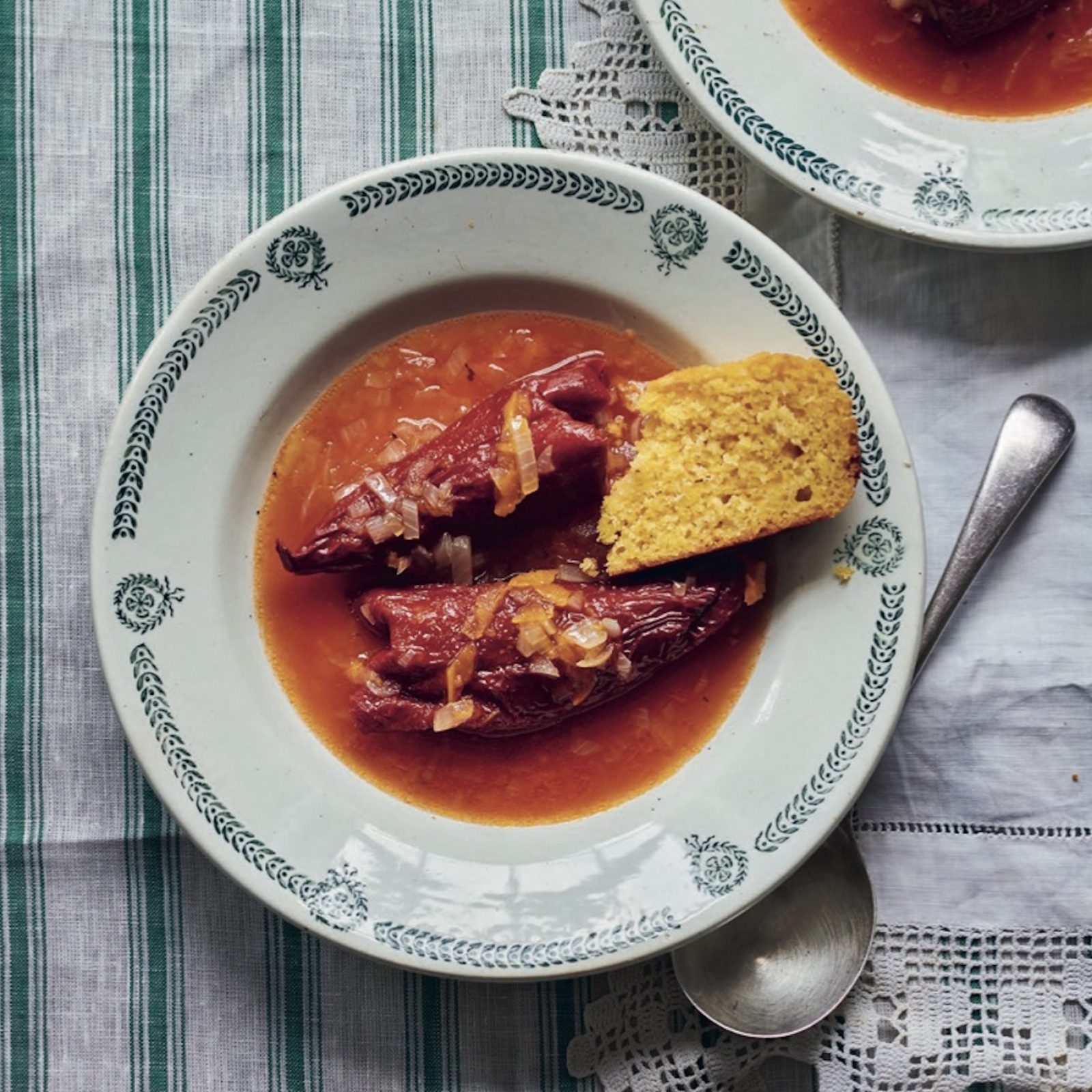
Christopher Kimball: This is Milk Street Radio from PRX and I'm your host, Christopher Kimball. Today, it's Irina Georgescu. She returns to the show to teach us about Romanian breads, sour soups and a little bit of folklore.
Irina Georgescu: We do make a very salty loaf, and we just eat a little bit and hope that our future husband will bring us some water.
CK: but first we're diving into the Baltic Sea first we're diving into the Baltic Sea. The Gribshunden is not your average shipwreck, while many sunken ships can be littered with artifacts, this one is filled with food. Brendan Foley is the lead researcher of the Gribshunden excavation, and he joins me now. Brendan, welcome to Milk Street
Brendan Foley: Thank you, Chris. I'm happy to be here.
CK: So, I love history, but this is, this is deep history. Something happened in 1495 off the coast of Sweden. So, what happened?
BF: Well, I got to correct you right there. It actually happened off the coast of Denmark, but it's now Sweden, (okay) And that's part of the story, because King Hans, who was the king of Denmark and Norway in 1495 his his ambition for his reign was to unify the entire Nordic region. So, what we now think of as Denmark, Sweden and Norway. He wanted to create sort of a greater Danish nation state, which would have been a pure competitor for the Tudor kings in England, for instance.
CK: So okay, so he, he wanted to build this empire. First of all, let's talk about the ship. This is like the Santa Maria from Columbus, right? This is a, not a huge ship
BF: That's exactly right. So, in the in the 15th century, there's a new style of vessel that evolves, that's built by the end of the century all up and down the Atlantic seaboard. And it's a combination, a fusion of the ship styles from the Mediterranean and from Northern Europe. So, this ship, Gribshunden, was King Hans flagship.
CK: So, he was going somewhere for a purpose. Where was he going? And did he ever end up getting there?
BF: Yeah, so in 1495 It's mid-summer. It's June 1495 and Hans sets out with a squadron of ships with groups 100 at its center, from Copenhagen and heading to Kalmar. And it's traditionally the place in the Nordic region where negotiations take place. So, Hans sets out to meet the Swedish region a fellow named Sten Sture and for some reason, they put into an anchorage near a place called Ronneby. Hans leaves the ship, and sometime in that first night, there's an accident. The written records that we have, which are pretty sketchy, say that there was an explosion followed by a fire. But of course, one of the records that we have is called stura kronic. It's the chronicle of Sten Sture himself, so it's pure propaganda. So, Sten Sture says that there's massive loss of life, and two or three ships sank, and it was a total calamity. But in the event, what happens is, after a day or two, Hans resumes his voyage up to Kalmar on one of the other vessels, and then he waits in Kalmar for four weeks, waiting for Sten Sture, who never shows up.
CK: Now, the reason we're talking is not because of the politics, it's because some weekend divers started diving off this wreck some time ago, and they found what?
BF: Well, the divers found the remains of the ship, and there's a lot of timber down there. 2001 2002 the archeology team recovered some oak gun beds in 2015 the wooden figurehead was recovered from the site, which is a wonderful, totally medieval, chimerical beast eating a screaming man. It's really, it's really macabre and quite wonderful in its way. But it was about 2018 when I got recruited to come in and try to catalyze some scientific investigation on the site.
CK: You talk about a barrel, you know, there was beef in it. So, you just find something that looks weird, and you put it under a microscope, and then you realize, oh, it's whatever, or is there anything that looks like what it used to be at all?
BF: When we're excavating, sometimes it's apparent what we're finding. It's quite obvious. Oftentimes things are covered in concretion. They're covered in muck, and you can't really tell what it is. But sometimes, like in the 2021 excavation, you come across something and it just smacks you right between the eyes. You can tell what you're looking at. So, one of the things in the 21 excavation were these lumps, these sort of fist sized lumps of orange, red filaments just sitting there in the mud. And it turned out it was saffron,
CK: Which I assume was pretty pricey, even back then,
BF: Extremely pricey. Yeah, and rare. And this is something that you just. Don't encounter in archeological sites. We've got the only archeological examples of saffron that have ever been discovered anywhere in the world, and it's particularly evocative in the Nordic Region, because there's this tradition here in Sweden, particularly to consume these saffron buns that are traditionally eaten around Christmas here. So, I like to think that the tradition started maybe in the 1490s with with King Hans and and the noblemen who were traveling with him.
CK: So you'd found 40 different types of fruits, vegetables, spices, nuts, cereals and other plants. So, this area, because the temperature the water, the salinity was particularly good for preservation?
BF: It's very good for preservation of organic material, because in the Baltic the salinity is quite low. The nice thing about that is that it doesn't allow the mollusks and other wood boring organisms to reproduce there. So, all of the shipworms and things like that that live in the world ocean system elsewhere, that eat wooden shipwrecks when they hit the bottom don't live in the Baltic. So, a lot of the wood is preserved. A lot of the organics are preserved.
CK: You find grapes, raspberries, blackberries, ginger, clove, mustard. So, was it the diversity of spices and organic material that indicated the trade was more widespread at that time? Was that this big surprise here?
BF: The surprises really were that while we have a few written records in the 15th century about spices being consumed, they're almost invariably from royal weddings or the weddings of senior noblemen. So yeah, we knew that there was some spice consumed, but we've never seen anything like this before. We refer to Gribshunden as the floating castle. We compare it to land castles. But the problem with the land castles is that all of the stuff inside of them, all of the markers of noble life are gone. I mean, they're really just stone shells. Gribshunden is a wooden castle, but it's still packed full of all the stuff that the king and the nobleman would have had with them. So, on, grips on them, we get this big variety of spices, things that we didn't know were consumed. For instance, clove. We found lots and lots of clove, and those are markers of, really, the first period of true globalization. So yeah, we think about Columbus, three years before Gribshunden sank sailing to the Americas and de Gama sailing to India at the same time. But here we have the physical remains of that trade. So, the clove, for instance, only grew in certain areas in what is now Indonesia. So, we know that that clove came from really the farthest corners of the earth, from the Scandinavian point of view.
CK: So, what happens to our King Hans? So, he continues his journey. He waits around. Does he get what he wants? He doesn't get what he wants. What happened to him?
BF: He doesn't get what he wants in the summer of 1495, and he returns back to Copenhagen, and he's utterly exhausted. He spent five weeks waiting for Sten Sture to show up, and two days after Hans departs from Kalmar, Sten Sture shows up, but by then it's too late. What does happen is two years later, there's open war between Sweden and Denmark. Hans ultimately prevails, but only for a short time. He goes up to Stockholm with his queen, and he negotiates with the Swedes. He uses force of arms, and he becomes king of Sweden, but but only for a very short time, and then the Swedes rebel, and the Swedes end up locking the queen in a tower in Stockholm. Well, Hans makes off with her 19-year-old lady in waiting and has an affair.
CK: This sounds like a Grimms fairy tale. Brendan. This has been fascinating. I really appreciate it. Thank you.
BF: Thank you, Chris, it's been a pleasure.
CK: That was Brendan Foley. He's an underwater archeologist and also researcher at Lund University in Sweden. Now it's time to answer your baking questions with special guest host Cheryl Day. Cheryl is the author of Cheryl Day's Treasury of Southern Baking. Cheryl, you told me that you were a valley girl, but in the summers, you went, was it Alabama? Where was your grandmother? And where did you live (Yes in Alabama) And what was that like?
Cheryl Day: Oh, gosh, it was such a great experience. And you can imagine being a valley girl and then going to the South was I learned to say yes, ma'am, and it was a totally different experience, but it was great. I learned that my grandmother loved to go to different farmer stands for whatever she was baking. She didn't care if she had to go to a half a dozen places to make one cake or pie. And it was such a great experience. I really loved it.
CK: Was it a small town in the country, or was it?
CD: Well, no part of the time. She did live in the country, in Dothan, Alabama, but I would usually go visit in Tuscaloosa, which is a small town. It seemed like a small town to me, just because her community was very close knit. And, you know, everybody knew my grandmother because she made the best baked goods.
CK: Obviously, you've continued the tradition.
CD: I have. I have continued the tradition, and I think my grandmother would definitely be very proud that I paid attention.
CK: Yeah, I think so too. Okay, let's take a call.
CD: Welcome to Milk Street. Who's calling?
Caller: Hi. This is Steph from Cape Cod.
CD: Hi, Steph, how can we help you today?
Caller: I have just finished making a beautiful chocolate cake, and it came out perfect, because I just found out about cake bands and clear vanilla flavoring, which I had known about. So, I wondered, what are the best? Most important, maybe newest, favorite pieces of advice that you would like to tell everybody about, maybe something nobody's ever asked you but you want to talk about, or something like, for the love of God, people get a kitchen scale, or just something that you really think all good cooks and bakers should know, or is your favorite thing or newest thing?
CD: Oh, I love that question. I just always tell bakers, you know, especially with baking, folks get so frustrated, but I say practice makes progress. I mean, read the recipe. That's a simple thing, an obvious thing, but the other thing I would say is master like three recipes, and continue to make those recipes like for me, it was a chocolate chip cookie, chocolate cake and biscuits, and just making those three recipes gave me three completely different techniques that I could then, you know, have the confidence to build on and make other recipes.
Caller: That's a great piece of advice.
CD: Oh, well, thank you. As far as equipment, I think these days, the price of them is not so high. I think Baker should have a baking scale, because that's when you're going to get the most consistent results with recipes. So that's my advice. What about you, Chris?
CK: Nobody salts enough. Taste a soup or a stew or whatever, before you serve it, because the last minute, you can adjust it. You can add some vinegar or lemon juice, you can add ginger or garlic. You can add some fresh herbs. You can take an okay, super stew and make it terrific by adjusting at the end. Make sure your knives are sharp. Dull knives are dangerous. You got to sharpen them all the time. I agree. Weigh your ingredients for baking, absolutely use grams, don’t use ounces and listen. Use your ears in cooking. That'll tell you a lot about whether you need to adjust the heat.
Caller: Using your ears. I like that one because normally you'd think nose or tongue, but ears is a really good idea.
CD: All your senses, yeah, definitely use all your senses
CK: And smell too. As Cheryl will say, if you smell chocolate when you're baking a chocolate cake, then you know that it's probably pretty close to being done.
CD: Right.
Caller: Wow. Wonderful.
CD: Great question. Thank you
Caller: Thank you both.
CK: Yeah, take care.
Caller: Thank you. Back to baking.
CK: This is Milk Street Radio, if you've ever had a dessert disaster, please give us a ring. 855-426-9843 one more time, 855-426-9843, or please email us at questions at Milk Street radio.com, welcome to Milk Street who's calling.
Caller: My name is Diane. I am from Western Massachusetts. We have geese, a lot of them, and so when my refrigerator is full of eggs, I thought it would be a great idea to make an angel food cake. And what I did was I used six egg whites rather than 12 like a chicken, but my cake rose and then it collapsed, and I've never been able to get a cake to rise using the goose eggs. So, I'm trying to find out what the reason could be. We are at an elevation of 1500 feet. I don't know what kind of adjustment could be made.
CK: I think there's an. Is the answer. What I would do is separate, obviously, the eggs, the whites from the yolks. And I would find out how much a dozen chicken egg whites weigh, and then you're going to have to weigh the whites from the goose eggs. It may be that a goose egg has, you know, three times the weight of whites as a chicken egg, or two and a half or whatever it is. The other thing is that a duck egg, the yolk is bigger as part of the entire egg than it is in a chicken egg. I don't know about goose eggs, but it may be the ratio of yolk to white is different as well. So that's why you can't just go like two to one. You'd have to weigh it. So, get the weight of a dozen egg whites from chicken egg, and then use the same amount of grams of the goose eggs. Did you weigh them at all? Or you just use?
Caller: No, I just used 12 egg whites from them. Yeah for the chickens, six for the geese
CK: My guess is you had too many whites, and so that's why it collapsed. There wasn't enough structure, because there were just too many whites. I don't think chemically, the whites are going to be that much different, but it's just the volume, right? I've
CD: I’ve never cooked with goose eggs. I have baked with duck eggs, and definitely the weight of an egg white. I'm trying to think off the top of my head, it's like 30 depending on the size. If it says medium egg or large egg, maybe like 40 grams or so, but you definitely want to weigh but then I'm also wondering about you said something Diane about the elevation where you are?
Caller: Yes, it's 1500 feet. That was the only two things were that we make our own vanilla extract and the elevation. And I just didn't know if the strength of the vanilla extract could cause it to fall.
CD: No, but do you normally like, do you have to do any adjustments for baking, because I know sometimes you do for high elevation
Caller: A little bit more when I can, maybe I'll add an extra two or three minutes when I bake.
CD: But I really I think it’s the weight
CK: Around 1000 feet or 1200 feet in Vermont, and it doesn't really make much difference. I think it's the weight.
Caller: Okay, sounds very true.
CK: Well, you could probably just look up the weight of an egg white from a chicken egg and the egg of an egg white from a goose egg. Somebody's measured this already.
CD: Somebody's done it.
CK: There's some, some nerdy science person out there who did it. So, you can just find out right away. All right.
Caller: Alright that sounds great
CK: Alright, thanks, Diane,
Caller: Thank you for your help.
CK: Your Listening to Milk Street Radio coming up Romanian sour soups and salty breads. Hey, Chris Kimball, here at Milk Street, we're doing a special episode all about Mexico, so I'm taking your calls with Aaron Sanchez from tacos to mole to chaolites, please send us your Mexican cooking questions. Email us at [email protected]. Again, please send us your questions about Mexican cooking to [email protected] And of course, we'll be in touch. Thank you.
CK: This is Milk Street Radio. I'm your host. Christopher Kimball, up next it's my latest interview with Romanian food writer Irina Georgescu. Last year, we traveled through Romania for an upcoming season of Milk Street TV. Irena, welcome back to Milk Street.
Irina Georgescu: Well, thank you. Nice to see you again.
CK: Yeah. I miss you. We had a great time in Romania. The Carpathian Mountains are all they're cracked up to be. But I just you know, before we go on, I have to say those small Saxon villages, which there are, what, over 200 or so. I mean, some of them are pretty much the way they used to be hundreds of years ago. People have these narrow plots of land, many of them grow their own food. They preserve it. We saw horses across the road bringing logs down from the forest. It was absolutely charming, absolutely
IG: Absolutely, Transylvania is beautiful. And the way they restored the villages, I know you think they are untouched, but some of them, many of them are restored, but they actually looked at how they used to look, what material they used to have. So, all of them are really, really well restored. And the people are so nice, I mean, and the food is so good, it's we had such a great time.
CK: People are phenomenal. So, let's just start with your new book, Danube. What countries or what area are you talking about? Let's start with that.
IG: Well, with Danube, we actually cross the Carpathian Mountains into southern Romania, and the border between Romania and Serbia and Bulgaria is the actual river. Is the Danube. And basically, I follow the river and the land. It's, it is a book about the land of the river, the banks of the river, and not the actual river. So, it's not a fish book. It's the book about the people and the land. Yes, with the fish chapter, indeed. But not only, it's not the pescatarian,(CK: it's a fish book) Yeah, absolutely, it's not. But I wanted to focus on recipes that are easy to make, recipes to feed a family at the end of a busy day, and also recipes for when you have time, you know, to put, let's say, a pilaf dish in the oven to to slow cook for an hour or so. But it's not like I'm asking anyone in the book to bake some meal for 24 hours in the oven or anything like this.
CK: You know, I think every cookbook author, deep down, wants to do a book where every recipe takes at least three days. I just, you know, because we, we all have to do recipes, which is the way we cook too, where, you know, you have to get food on the table, but deep down inside us, we all want our last book to be the, you know, everything takes forever to make, because that there's something so appealing about, you know, people used to have time (yes). So, there's a couple things. Let's just talk about some ingredients. So cornmeal. One afternoon, we watched someone make, essentially a polenta casserole with cheese and sour cream. So, cornmeal is a very common ingredient, which surprised me. In Romania. yes,
IG: Yes, we eat polenta, which you call Mămăliga in Romanian, we eat polenta more than Italians, I think. I say, if there is no cornmeal, there is no meal. Basically, we have a dish for cornmeal pies like cornbread with cheese and dill and, you know, something savory. We have cornmeal served as a side dish. You know, when we have a tocano, like a stew with a lot of sauce, but we have cornmeal stuff as a starter, you know, we mix it, make it into little like arancini, if you if you want, you know, put some cheese in the middle and put them on the grill. And also, the dish you had called bulls is layered cornmeal with a lot of cheese, and it's absolutely delicious. And what's interesting here in the south is that we have a cornmeal bread. It's mixed with wheat as well, but we ferment it the way we ferment bread, so we put yeast in it. And I have a recipe in Danube where I also put horseradish cream, because many cornmeal breads in the South were baked on horseradish leaves, and obviously in the UK, I can't really get horseradish leaves like anytime I want. So, I added horseradish in the actual mixture to get that flavor of horseradish that you would get if it was to bake it on the on the leaves, actually. So, it's a fascinating tradition.
CK: So, you grew up in Romania, in Bucharest, is that where you were
IG: Yes, in the capital, yes city girl.
CK: And you told me about what it was like speaking to your parents that are under Ceausescu. You said that even in an apartment, you would have to keep your voice down because you didn't want other people to know what you were saying. And now, obviously, Romania is very different, but that period from the 60s to the late 80s was a very different period in Romania's history, right?
IG: Yes, absolutely. I mean, now we're very proud of our ethnic multicultural country, culture and cuisine, but in those times, we were not able to speak about ethnic groups, or not even to learn in school about any ethnic group. And this is. The story you find in Danube when I talk about Tatars and the Turkish communities in Romania, nobody was telling you anything about their culture and their traditions, and even for them, it was very difficult to actually follow their traditions publicly, obviously. So, it's a different story now. Today, we have so many TV programs that go into these communities and record their traditions and music and folk dances and the cuisine, and we are very proud to be part of such a country. But after so many years, we were able to do this, like 65 years almost. So, it's a lot.
CK: So, there were a couple recipes in the book that really were charming and incredibly simple. So placenta, they look like a two-layer lemon bar. I guess they're baked in big rectangles. Could just explain that as a concept, because I think it's so appealing. It's sort of like if you don't want to make an apple pie, the way we do in New England. This is another approach to two layers of dough in a filling.
IG: So Plăcintă it's an old way of baking. You know, the Roman way. Roman pies were called Plăcintă because they were flat. Obviously came from Greek ____ was meant flat. Everything flat was a plaque was so a placenta Plăcintă in Romania is something flat with the filling in the middle. So usually, you have a layer of dough at the base and the filling, whatever that is sweet or savory, and then another layer of dough on top, and you bake it, and that's it. This is how you eat a Romanian pie. If it's sweet, it's not a dessert, necessarily. You you serve it as a snack, you put it on the table, and you leave it there for people to eat whenever they want something. And I'm glad you actually picked Plăcintă because it's also an example of our Roman heritage. That's why the country is actually called Romania, the Roman Empire also
CK: Wait, wait, wait (okay) Is that true?
IG: It is true.
CK: That's like, so obvious. This is the story that, why didn't I think of that? That just sounds like it's too it's too simple.
IG: Absolutely, there are, I don't know, almost 100 of Roman forts and walls everything. Can just go and walk on old Roman walls in Dobruja, and they are part of the landscape. Let's put it this way,
CK: So, you have a pro tip for one of your bread recipes, I have to ask you about it. Quote, “make the bread really salty and knead it before you go to bed. Your chosen one, this is probably around Valentine's Day or something will appear in your dream, bringing you water to quench your thirst”.
IG: It’s true.
CK: I knew you were going to say that. Where does this little piece of folklore come from? Or is that, or is that just from you?
IG: No, not just for me. No, no, I don't actually have to invent things because they are there in our traditions, we have a sort of Valentine's Day. It's on the 24th of February. But baking bread in Romania is a whole I mean I can write a book about it. It's an, it's a whole world. You express yourself by baking bread and the way you shape it, and the way you interpret those symbols of the shapes and the decorations and everything else is such an intricate, fantastic and fascinating world. So, I took inspiration from some wedding breads that are made in the shape of little birds, and also, they are surrounded by some like braided dough to look like a nest, because marriage is a bit like nesting. So, I put that inspiration into these breads to make a Romanian Drago better bread with that pro tip that you if you really want to know who your future husband will be, then you make one of the breads really salty and eat it and go to bed, and hopefully you will, you will have your answer in the morning.
CK: Hopefully the person who comes to you in your dreams is the person you want. Okay, chorba. What is chorba?
IG: Yes, well, chorba is a Romanian soup. It's a clear soup. It's a broth that has to have a sour element added at the end of the cooking time. So that sour element can be vinegar, like you will see in Danube, it can be sour cream, for instance, at the end it can be a lemon, sometimes plums. But also, you can add bosch, in which case the chorba, the broth, is called Bosch because it has this ingredient in it, and bosch is fermented wheat bran with water, and you use that borsch to add it at the end of the cooking time and give some sourness and some goodness to the chorba. But chorba is a whole world. You can make it with meat or without meat, anything that is in season, anything that you have in the house, in the fridge, in the garden, and you will see in Danube, you can make fish. There is fish borsch. I mean, it's delicious.
CK: So to go back to history for a second. So, you have this really interesting country, long history, going back the Romans, the Greeks, et cetera. And then you have this thing called communism shows up, and then the culture is put on hold. The food becomes terrible. There's no diversity of culture, language, and then all of a sudden it goes away, and you start to rebuild again. It almost sounds like just a really bad dream,
IG: Yes, well, it wasn't. It was bad reality. And we all hoped when the revolution happened that we will have such a wonderful, better life, and we have it in many ways. You know, look at the freedom of speech. I mean, that was nonexistent during communist regime, and that affects you. Freedom of writing, freedom of creating, access to information. We didn't have access to books. Everything was big albums of Russian painters or something like this. And also access to food. I mean, that was important, the queue’s you know that we had during the communist regime to queue for hours, sometimes for days, not knowing that you actually got anything at the end of it. So, I'm glad we are on a better path now, and I'm also glad that, you know, we are rediscovering our identity bit by bit and with effort. But you know, we need to do this.
CK: So, tell me about the Danube today. Did they like the Hudson River a long time ago, New York, they cleaned it up, and it's in much better shape than it was 40 50, years ago. Is the Danube been cleaned up, is it? What's the future of the Danube?
IG: It is better, but it's, you have ships and, you know, industry on the river, so it can't be clear water, you know, but it is better. But what's interesting, when I research and talk to people in the south and along the banks, it's like they all dream to have their own bridge over the Danube to connect them directly to Bulgaria and to Serbia. People want to connect. They want to go to the other countries, the, you know, Bulgarian Serbians to come to Romania, like, for everyday stuff, I mean, like for shopping or for just attending an event together, which is absolutely amazing, because in the past, let's say, you know, ancient times, the river, first of all, was a route for trade and migration, and bringing people together wasn't a separation. It wasn't a border. It's a natural border now, because we started to look at the world in terms of nations and countries so they needed we needed borders. But it wasn't like that in the past, and now, as you can see, people without necessarily knowing that or perceiving the Danube as a as a route for connecting people. They want to stay connected. They want to build more bridges to to be together and celebrate the cultures together, because very often it is the same culture. The climate is similar. You grow the same vegetables; you cook them in the same way. The influences of the Balkan cuisine in southern Romania are immense. So, people want to build bridges over the Danube all the time, everywhere we have bridges everywhere now
CK: Irina, thank you so much. This is I love the food. I love the book. You're so knowledgeable about about all of this, I feel like I should go back to school. Maybe I should take a semester off and go study. Irina thank you so much it’s been a pleasure.
IG: Thank you. Thank you so much. Been a pleasure. Thank you.
CK: That was Irina Georgescu, author of Danube Recipes and Stories from Eastern Europe. One of the recipes Irina introduced to me in Romania was a meringue top cake with rhubarb. I'm joined now by Rose Hattabaugh to talk about that recipe and how we adapted it here at Milk Street, Rose, how are you?
Rose Hattabaugh: Good Chris, how are you?
CK: Good On our trip, Irina Georgescu and I drove six hours north of Bucharest through the Carpathian Mountains. We ended up at ____. This is kind of an eco-tourism farm, small farm. And these two women, Carina and Ibolyka, old friends, started it together. And the food is great. But one of the things they made, which was surprising, they made a cake in a rectangular cake pan with pieces of rhubarb in it. They were originally frozen and then with a meringue topping. So, you got a meringue topping, a pretty light cake, and you get these pieces of rhubarb. Great recipe. The only thing I noticed, though the rhubarb wasn't sweetened, right? It was just frozen. I thought we might, might want to think about switching up the fruit or doing something the rhubarb. So, I came back, I was all enthusiastic and I gave you the recipe, and you took it from there.
RH: Great. Well, we were pretty enthusiastic too. It's such a beautiful cake, so what we decided to do was go with cherries instead and macerate them a little bit so that some of the liquid could drain out. So, when you put it in the cake, it's not going to make it soggy, but it also sweetened it. So, we were really happy with that change.
CK: So there are three layers here. So just explain, you make a cake beating whole eggs or yolks and whites separately.
RH: No, they're whole eggs with sugar, and then you want those to kind of double in volume. Then you add a little bit of flour, and we have some lemon and vanilla in there as well. So, it's a pretty simple sponge cake, and then that goes into the pan. The cherries are sprinkled on top. But when the cake is baked, the cherries actually sink to the bottom and give you this nice jammie layer. So that's a really nice component of this cake.
CK: And then the third layer is you take the cake out of the oven, add a meringue layer, and put it back in. Was anything tricky about that? Because meringue is not always easy to work with.
RH: Well, I think the trickiest thing about that was you have to make sure that you make the meringue right before you take the cake out of the oven. If you make it too soon, it's going to start to curdle, and if there's a little bit of rise that happens in the oven, and if you make the meringue too early, you're not going to get that so that was something. The timing was really a thing with that.
CK: So, you end up with this beautiful sort of lemon meringue pie topping, right?
RH: It's so pretty.
CK: You did it a spring form pan, right?
RH: Yes, yeah, a spring form pan. We thought was easier to kind of open it up and take it out to slice it.
CK: And then you have this light cake layer that's almost like a sponge cake. And then you have the cherries, which now drop to the bottom, so you get three layers cherries, cake, meringue, as I said, not what I would have expected, but absolutely delicious. And, you know, kind of a homespun dessert that would be perfectly at home in New England as it would be in Romania,
RH: Absolutely
CK: Rose thank you very much. I love it. I love it. I love this recipe. Thank you.
RH: Well, you're welcome. You can get the recipe for Meringue top cake with [email protected]
CK: This is Milk Street Radio coming up. The devil day gets a fine dining makeover.
CK: You're listening to Milk Street Radio right now, Cheryl Day and I will be answering a few more of your baking questions.
CD: Welcome to milk Street who's calling?
Caller: Hi, Cheryl. This is Nick from New Hampshire.
CD: Hey, Nick
CK: Hey, Nick. How are you?
Caller: Hi Chris,
CD: and how can we help you today, Nick?
Caller: so I have a question about some panforte that I've been making as fuel for long endurance activities like biking and skiing the panforte, it freezes when the temperature gets about 25 degrees or lower, and I'd rather not break a tooth on it, so I'm trying to figure out some ingredient substitutes so that I can just keep eating it when it the temperature drops into the teens.
CD: Wow. Old, so you're just all over the place in this cold weather, huh? Yeah,
Caller: Yeah, I live in New Hampshire, and we celebrate the winter.
CD: Love it.
CK: My kind of guy. Cheryl, I'm sure you love 15 degrees, right? That's just your cup of tea, right?
CD: I do not
CK: Is this in a knapsack or some other thing? The panforte?
Caller: I try to keep it in a pocket. Actually, make it in cupcake tin, so that it's a little bit smaller I can put it in a pocket. I did substitute half of the honey that goes into it with maple syrup, because maple syrup doesn't freeze, (right) That's what got it down to about 25 degrees from freezing at about 30 degrees. So, I'm trying to figure out what next to tweak, and I'm wondering if I should replace some of the butter with an oil, or maybe add a little bit more flour.
CK: I do a lot of rabbit hunting in the winter. I'm out for six or seven hours. It’s cold
CD: You do? Wow. I learn something every week.
CK: I'm a surprising guy. What I do is I use an inner pocket on my coat, and that's where I would keep something like this, and I would also probably slice it into thinner pieces before you went out as well, instead of a whole muffin size. But I think the oil should help definitely yeah
Caller: but what oil would you substitute with?
CK: I'm a big fan of grapeseed oil. (Same) it's used a lot in Europe. I hate canola oil. Tastes like fish to me all purpose. Vegetable iils, I don't trust what's in there. It's kind of low quality. But grape seed oil, it's kind of a neutral flavor, so that's what I use.
CD: Have you not tried the oil yet, Nick?
Caller: I haven't tried the oil yet. My next batch, I will.
CD: Well, I just love it that you're so prepared getting out there in the freezing temperatures. You've
CK: You've given me an idea, because, you know, I bring food out with me if I'm going to be gone hunting or whatever all day, and that's the perfect thing to bring, because it's a lot of galleries at a small space, and it's just perfect. So good idea
CD: Great question.
Caller: And it's got a lot of different types of fuel, and it's got quick sugars and the nuts and the flour just hits throughout different energy systems and the fat. So yeah, Chris, I'm happy to send you a batch if you want for your next rabbit hunt.
CK: Yes, that would be a yes, absolutely. The guy I hunt rabbits with probably has a pocket full of jerky, but I think this is better a pocket full of Panforte. Thank you,
Caller: Awesome. Thank you very much
CK: Thank you for calling. This is Mill Street Radio. If you're looking for some baking inspiration, give us a call. 855-426-9843. 855-426-9843 or just email us at questions at Milk Street radio.com Welcome to Milk Street who's calling?
Caller: Hi. This is Anne.
CK: Hi, Anne, how can we help you?
Caller: I had a question. I made a chocolate chip cookie recipe. They're my daughter's favorite kind of cookie. So, she found quote, the ultimate chocolate chip cookie recipe, and asked if we can make it. It was a little bit involved, but I said, Sure, let's do it. Part of it called for browning butter, which was great. The cookies came out delicious. The brown butter really did give it amazing flavor. But my question is, if I ever want to make it again, it's such a time-consuming recipe, I would love to just get rid of one of the steps. So, I was wondering if I was to brown butter. Can I brown a larger batch of butter and then freeze it or somehow preserve it for use in future recipes?
CK: Short answer, yeah, brown the butter, then you can portion it in one tablespoon amounts into ice cube trays or into, like, eight tablespoon amounts for, you know, a whole stick or whatever you want. Just measure it. When you're measuring it out and portioning it, keeps stirring it so that, you know, you get all the little brown bits are evenly distributed. I chill it in the fridge for an hour or two till it solidifies, and then put it into the freezer, which will last two or three months easily, you know, probably double wrapped. Yeah, that's not a problem at all, by the way. I'm just curious. Where did you get the recipe? Which recipe was it?
Caller: I think it was a recipe she found on the Tasty BuzzFeed. It was interesting. It actually called for bread flour, and then I believe, just regular, all-purpose flour as well, two different kinds of chocolate. It was chocolate chips, and then it also had a bar of like a darker chocolate cut up into some chunks as well. It was an excellent cookie, I will say.
CK: We make one with some rye flour, and we toast the rye flour, (yum) in the skillet, you know, rise slightly bitter, so you get a nice combination of sweet and slightly bitterness to it.
CD: Oh, that's awesome.
CK Yeah, it's quite good. But browning butter is a great trick for chocolate chip cookies. Cheryl, I remember you have a great recipe for chocolate chip cookies.
CD: I do and Anne, you are super mom with all those different types of flour and chocolate. That's awesome. They sound great, though, absolutely like Chris said, you can definitely make large batches of that. We did that at the bakery all the time. Just make sure that you're measuring it, you know, when you're making the next batch appropriately, too. You can use it for so many things, too, other things, you know, pasta,
Caller: It was my first time browning butter. I've seen it a couple recipes. I think I had honestly just been too lazy to incorporate it, but the flavor was just incredible with the brown butter. So, I definitely need to do it again.
CK: Ann thank you so much.
CD: Thank you.
Caller: Thank you so much. Take care. Bye.
CK: This is milk Street Radio. Now it's time to check in with our favorite French scientist, Alex Aïnouz.
Alex, what's going on?
Alex Aïnouz: Hey, Chris, I've got a little question for you. How familiar are you with a French dish that is called œuf mayo?
CK: Actually, a year ago, I was in Paris at a little bistro and and we made it. We made it. I watched the chef make it, but I loved it
AA: it. I am in love with the of œuf mayo. This is a starter I will order every time I go to a French bistro. I feel like it's the embodiment of the love for ingredients when you think of œuf mayo. So, egg with mayonnaise, that is the direct translation. That is just two things I am fondly attached to. The mayonnaise is, in my eyes, one of the greatest sauces ever invented. When it's done right, it is absolute perfection. And I'm in love with eggs as well. The omelet is probably the dish I've cooked the most in my life. So, because I'm in love with that dish, I've been looking for the place to have them proper here in Paris. And the restaurant is called La Grande brasserie. And last year, these guys have won the World egg mayo championship. I think it's amazing that there's a world championship for egg mayo is such a thing, yes. But also, it's amazing that every year it's a Frenchman that wins this competition.
CK: Well, the expression there always be in England, well, I think œuf mayo is like, there always be in France, right?
AA: Exactly, and so these guys at La Grande Brasserie, they serve a celery remoulade, so it's like celeriac that is shaved or like cut into julienne, so very thinly. And then it's mixed with mustard and some horseradish and a bit of vinegar as well. Then they use this as a base, and they put three halves of barely cooked egg on top, and then they place a good dollop of mayo on each one. So visually, it's pretty simple. It's very minimalist, but when you bite into that dish, when you take a full spoon of the acidic and pungent base, along with the decadence and the richness of the yolk and the mayo, it works amazingly. So, I had this amazing experience at the restaurant. I came back to my own kitchen, and I thought, what would be my version of an egg mayo? So, after a bit of thinking, I came up to the conclusion that I would love to see a ramen, Japanese noodle soup, turn into an egg mayo. And that's exactly what I did. I turned the broth of a ramen soup into a very thick and slightly acidic sauce that I use as a base. Then I placed my egg on it with the yolk, barely cooked, still very creamy, in the style of the egg that you would be served (with ramen) exactly with along with ramen. Then I topped it with mayonnaise, but a slightly looser, slightly whiter, one a bit in the style of Japanese mayonnaise, I obviously added a very crispy slice of nori seaweed on top and a few shavings of spring onion, and then I drizzled all over it a very unusual, at least unusual for the west oil called Mayu. It's a play on world, but it's definitely not connected to Mayo, but it's Mayu, and it's an oil that Japanese used to sprinkle on the ramen. It's made with completely obliterated, overcooked garlic in oil. That does wonder when it's used sparingly so that.
CK: Alex, Alex, this is not you said simple man, right? And now you've gone all chefy on me.
AA: I know, I know I went completely overboard, but I had the secret desire to maybe have my egg enter the competition, like the World Championship next year
CK: I see. The term World Competition got to you.
AA: Exactly, exactly. So that's why I went a little over completely. Located. But in the end, I think what matters with this dish is that it's beautiful when you can make the ingredient shine, if you have perfect technique, if you use premium ingredients, then you can turn this simple combination into something sublime. I think.
CK: No, at first, it sounded heavy, right or old school, yes, but you take a bite and it's not that, because the mayo actually has a little acidity in it and it's creamy, but then the egg white itself has got texture. Yes, it is one of the most perfect foods.
AA: Now it's amazing. I mean, it still is a very decadent dish. It still is old fashioned, but I think that's also why we love that dish so much, like the way my grandfather would do when he would go to a restaurant. Now these days, we eat little less. Obviously, we are more concerned and rightfully about our health, but in these days, they were like, completely unleashed.
CK: Yeah, I think we need permission to enjoy life now, right or something. I don't think people 50 or 100 years ago needed permission for that.
AA: So basically, the œuf mayo is a ticket for pleasure town.
CK: Yes, it's what it's one way trip to pleasure-ville.
AA: Okay, I like this. I like this.
CK: Oeuf mayo, which is, I have to say, one of my favorite old bistro dishes is a great starter for any meal. Alex, thank you.
AA: Thank you so much. Chris, bye, bye.
CK: That was Alex Aïnouz, host of Just a French Guy Cooking on YouTube. That's it for today. To hear all of our episode’s head to Milk Street Radio.com or wherever you get your podcasts. To explore Milk Street and everything we have to offer, please go to 177 Milkstreet.com there you can become a member and get full access to every recipe, free standard shipping from the Milk Street store and more. You can also learn about our latest book, Milk Street Bakes. You can also find us on Facebook at Christopher Kimball's Milk Street. On Instagram at 177 Milk Street. We'll be back next week with more food stories and kitchen questions and thanks, as always, for listening.
Christopher Kimball's Milk Street Radio is produced by Milk Street in association with GBH co-founder Melissa Baldino, executive producer Annie Sensabaugh, senior editor Melissa Allison, senior producer Sarah Clapp, Associate producer Caroline Davis with production help from Debby Paddock. Additional editing by Sidney Lewis, audio mixing by Jay Allison and Atlantic Public Media in Woods Hole Massachusetts. Theme music by Toubab Krewe, additional music by George Brandl Egloff, Christopher Kimball’s Milk Street Radio is distributed by PRX.
In this episode
ADVERTISEMENT
ADVERTISEMENT

Simple, Bold Recipes

Digital Access
12 weeks for$1
- EVERY MILK STREET RECIPE
- STREAMING OF TV AND RADIO SHOWS
- ACCESS TO COMPLETE VIDEO ARCHIVES

Insider Membership
12 weeks for$1
- EVERYTHING INCLUDED IN PRINT & DIGITAL ACCESS, PLUS:
- FREE STANDARD SHIPPING, MILK STREET STORE,
to contiguous US addresses - ADVANCE NOTIFICATION OF SPECIAL STORE SALES
- RECEIVE ACCESS TO ALL LIVE STREAM COOKING CLASSES (EXCLUDING WORKSHOPS & INTENSIVES)
- GET YOUR QUESTIONS ANSWERED BY MILK STREET STAFF
- PLUS, MUCH MORE

Print & Digital Access
12 weeks for$1
- EVERYTHING INCLUDED IN DIGITAL ACCESS, PLUS:
- PRINT MAGAZINE SUBSCRIPTION
- 6 ISSUES PER YEAR

