





Your email address is required to begin the subscription process. We will use it for customer service and other communications from Milk Street. You can unsubscribe from receiving our emails at any time.
Episode 817
August 8, 2024
August 8, 2024
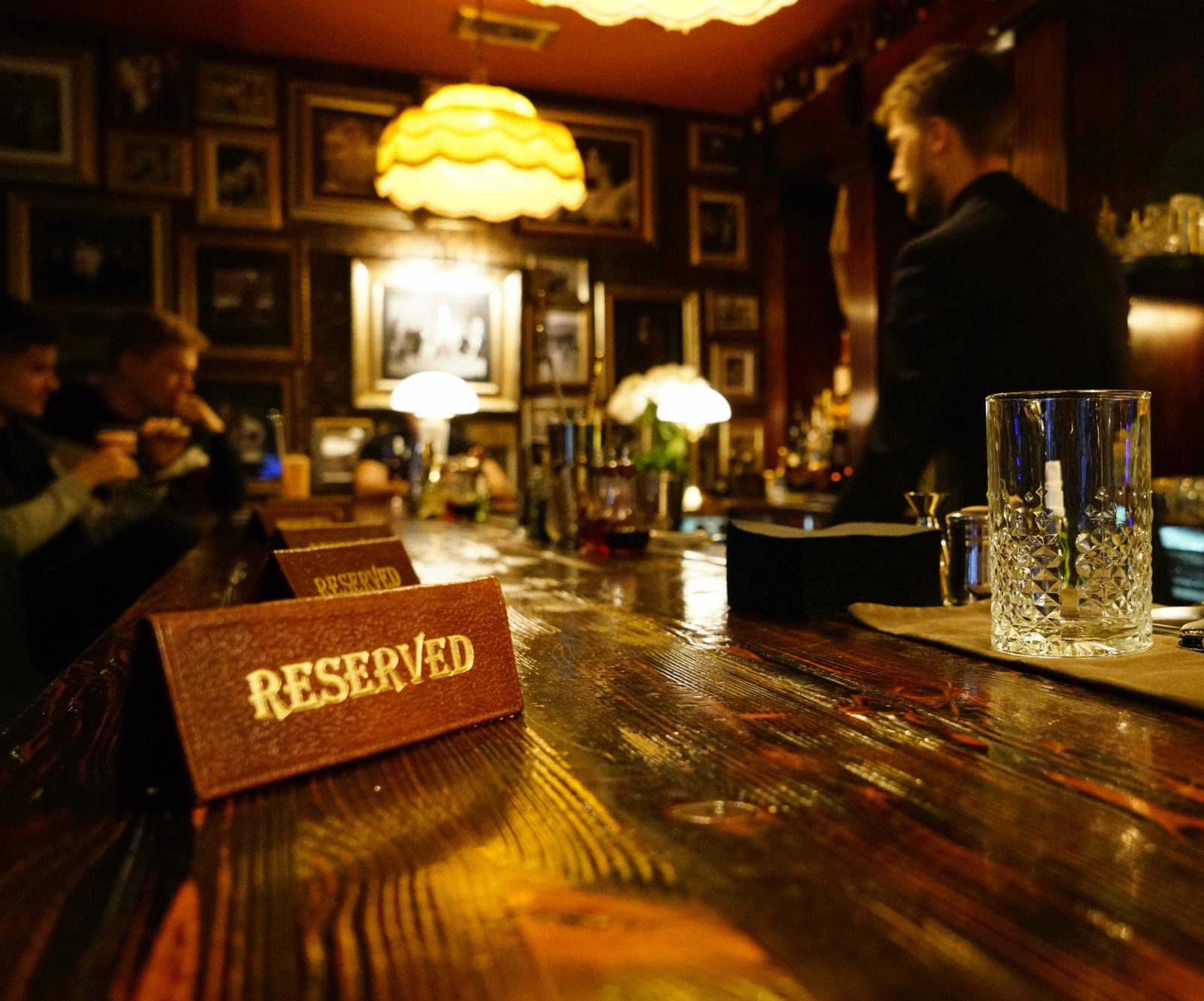
The Dark World of Restaurant Reservations: How to Cheat the System
Journalist Adam Iscoe takes us inside the underworld of restaurant reservations. Plus, Viola Buitoni teaches us about weeknight Italian cooking, Adam Gopnik shares Mark Twain’s favorite American foods, and Cheryl Day returns to answer baking questions.
Questions in this episode:
"Can you suggest a really great chocolate chip cookie recipe?"
"How can I extend the shelf-life of my homemade white bread?"
"I’m trying to make ice cream cookie sandwiches. How can I get my cookies to bake to the same size?"
"How can I get my blueberry muffins to be dense, moist and tender?"
Christopher Kimball: This is Milk Street Radio from PRX. I'm your host, Christopher Kimball today, Viola Buitoni is here to teach us weeknight cooking, Italian style.
Viola Buitoni: If you have a good can of tomatoes, you can get a tomato sauce ready in about 10 minutes. Generally, when I make pasta Pomodoro, the tomato and water for boiling the pasta go up at the same time, and by the time the water is boiled and the pasta is cooked, the tomato is ready, and I put it all together
CK: Inside Viola Buitoni’s Italian kitchen that's coming up later in the hour. But first I'm joined by Adam Iscoe to explain why some people are spending hundreds of dollars on restaurant reservations, his article for The New Yorker is called Why You Can't Get a Restaurant Reservation. Adam, welcome to Milk Street.
Adam Iscoe: Chris, thanks so much for having me. It's a delight to be here.
CK: The average diner in New York City is massively disadvantaged. It's as if they're bringing a knife to a gunfight. You want to give us a little background on that, yeah,
AI: I mean, so that's something that Ben Leventhal, who was the co-founder of the reservation site Resi, that's something that he told me, and he was kind of talking about this new reservation landscape, this new sort of ecosystem that exists wherein it's basically impossible to eat out at a sort of buzzy, trendy, fun New York City spot.
CK: So, in the old days, before I was old, how would you get into a buzzy restaurant on a Saturday night?
AI: Sure. I mean, so there always been sort of tough reservations, you know, the Four Seasons in the 60s, or Le Cirque in the 80s, or, Per Se, in the 2000s you know, maybe the way you get in is that you're a regular, or you're sort of a famous person. Maybe the way you get in is that you palm the maître d, you know, $100 at the door nowadays. Really, it all takes place on the internet, on an app
CK: Didn't New York Magazine back in the 80s, I think, do a piece where they said, how much would it cost to get, like, a really good table at the top restaurants on a Saturday night at eight o'clock? And I think they found that $20 at that time pretty much got you any table you want in New York
AI: Yeah. So, $20 in the 80s has become, you know, hundreds and hundreds and hundreds of dollars today. I mean, I was looking, you know, just online before I got here. And tonight, let's say, if you wanted to eat downtown, you know, in the West Village at 4 Charles Prime Rib, you could bid $480 that's the recommended bid on a website called appointment trader.com $480 and that's before you even sit down to eat that 37.99 wagyu cheeseburger that served with an $8 side of fries, ketchup upon request. You know this, this bid you're placing for a reservation is all before you even walk in the door.
CK: Does it go against the cost of the meal?
AI: On a website like appointment trader.com or on Seeta Marketplace? No, you're just simply paying for the right to walk in the door.
CK: So, let's be clear, I just this morning for fun, booked a table will be in New York this week, and a very well-known restaurant. It's not new. So, you know, I got a table at 6:30 and a Wednesday night with no problem. You're talking about the very top 10 or 20 places in New York.
AI: Yeah. I mean, yeah, I think that's a very important point you're making. There are perfectly good tables at perfectly good restaurants all over town where it's not at all hard to get a reservation. You know, I think there's an astounding amount of restaurants in New York City, you know, maybe 25,000 but I think we're talking about 100 150 really, really tough restaurants in New York City. You know, there's also really tough restaurants in Los Angeles and other towns as well, but we're really talking about a select few that are sort of extremely buzzy.
CK: Let's just go through the options. So, this one site, you bid on reservations that money never goes towards your bill. Where does the money go?
AI: The money goes to the person who is selling you that reservation, that user on the secondary marketplace. And so, you have all kinds of people selling reservations online. You have Ivy League college sophomores using bots to make reservations. And you also have industry insiders, hotel concierges, Maître D's, bartenders, line cooks, in many cases, people who are actually risking their jobs to sell reservations. One story I heard was about a kid who borrowed his parents Amex black card, then he telephoned the Amex Centurion concierge and booked a really hard to get table at a very difficult to get into restaurant that sets aside some of its tables for these elite credit card users, and then he resold that reservation online, and he pocketed the money. And restaurants, for their part, hate it. They absolutely hate it because they want to know the diners that are walking through their doors. They want to know the diners that they're that they're serving.
CK: So, they're essentially scalpers out there. They create a bidding war for these reservations, but then people are willing to pay exorbitant amounts of money like a first-class airline ticket, just for the convenience of bypassing the regular lines altogether. Is that right?
AI: Yeah, and I think comparing to Airlines is a really interesting thing to do here, because the appointment trader website is almost like buying scalper tickets to, you know, to a Knicks game or something to this effect, the first-class ticket is like logging into an app called Dorsia, which is a private membership club. And Dorsia takes its name from this novel, American Psycho this Bret Easton Ellis novel in which the protagonist, really everyone in the novel is sort of obsessed with status, nice suits, nice shoes, fancy restaurants. And in the novel, there's this one restaurant that's impossible to get into. It's called Dorsia. And so, what the app does is it offers people with the right amount of money, the right amount of connections to grab hard to get tables, you can put up $1,000 to get a restaurant reservation at Carbone, but that $1,000 is a prepayment against your meal, so if you don't order $1,000 worth of food or wine, you're out of luck. But if you can somehow manage to order the entire menu at Carbone, the money is not entirely lost.
CK: Why does this feel like Bonfire of the Vanities? I mean, are we getting close to the end of an era here. I mean, you sort of see things like this popping up, and people spending $1,000 for reservations, and you just go like this just can't possibly continue, right?
AI: It really does it. You know, one restaurant tour who's not on the app Dorsia told me she felt the practice of sort of prepaying for this expensive meal where you encourage the diner to eat and eat and eat feels almost like binge eating. She said this whole thing is psychotic. I mean, she used that word, you know. So, I think, yeah, whether it's Bonfires the Vanities or American Psycho, you know, we're in a sort of a strange, a strange moment, and I'm curious to see what happens next.
CK: There are other places where, like a pizza place in Brooklyn, for example, you just wait in line. So of course, there are people who will stand in line for you and charge you for it. Is that done through software or an app or is that just done some other way.
AI: Yeah, I mean, you know, I think the place in particular that you're mentioning is this pizza place called Luca e it's quite popular, and people line up at one o'clock, two o'clock, just to put their name on a list. At five o'clock to eat, maybe at 7:30 or eight. And you know, you can call a line waiting service, you know, Google, line waiting NYC or line waiting Los Angeles, and you know, service will pop up.
CK: Are there ways of cheating the system? For example, are there people who figured out a way through manipulating the software to get hundreds of reservations over the course of a couple weeks and then turn around and sell it?
AI: Oh, I mean, most certainly, you know, a huge problem for restaurants is that people are doing just that. They're using bots. Bots being basically simple software programs that are faster at clicking the confirm button on Resi or on Open Table than we are, and so they use bots to grab all of the available reservations and then resell it. People are also going to extreme lengths to make reservations for themselves. The maître d at Polo Bar told me that she had recently received a request for a last-minute reservation, and it was a woman who on the phone who said that her mother had just recovered from cancer and wanted to celebrate the recovery. And so, of course, being the maître d that she is, Nelly, squeezed them in, and at 5:30pm three, well dressed young people showed up. And there was no mom there, there was no cancer. It was all just a story. It was all just a lie to get a reservation, if that's not cheating the system, I don't know what is,
CK: And she had to let them have the table, I guess. Right?
AI: Yeah. I mean, you know, she told me we still took care of them, because that's what these restaurants are in the business of doing, is taking care of people. They're taking care of people because they love the food, they love the service, they love what they're doing. They're not making a ton of money doing it. And so, you know, at the end of the day, how they got in is not as important as the experience of the evening.
CK: Abandon hope all ye who enter here that will be the new restaurant logo from going forward Adam. It's a little frightening but thank you.
AI: Thanks for having me. Appreciate it.
CK: That was Adam Iscoe. His article for The New Yorker is called Why You Can't Get a Restaurant Reservation. Now it's time to answer a few of your baking questions with Cheryl Day. Cheryl is, of course, the author of Cheryl Day's Treasury of Southern Baking.
Cheryl Day: So, Chris, have you ever had a perfect peach?
CK: I have and it was from Georgia
CD: Okay, so I just got the most beautiful, delicious peaches, and I started feeling very nostalgic for figuring out some way to preserve that flavor for later. So, I made a pie, and I made it with a friend of mine, Nicole, who has a pie shop in Los Angeles. She made a peach pie with caramel sauce, and it looked absolutely incredible. So, I made that pie, and I wrapped it up and I put it in the freezer, and I'm going to pull that out like around Halloween, just to kind of have that reminder of the summer. Don't you think that'd be fun?
CK: I'm going to say trick or treat, because you don't know. I mean, the peaches in the freezer for two months or a month or whatever, maybe the caramel sauce will help preserve them do you think?
CD: I actually did discover I can make apple pies and freeze them, caramel apple pies, and I can freeze those. So, I'm hoping that I have the same result. But, I mean, it's just from now until Halloween, so I think it'll be fine. But, yeah, Trick or treat, I'll let you know.
CK: Well, I hope you don't give it out. (No, no) that's too good a treat.
CD: I think it's going to be good
CK: Absolutely. All right. Time to take a call.
CD: Welcome to Milk Street who's calling?
Caller: Danielle.
CD: Hi, Danielle, where are you calling from?
Caller: I'm calling from the Woodlands, Texas.
CD: How can we help you today?
Caller: I was looking for a chocolate chip cookie recipe. I mean, there's just 1000s online, but I'm just trying to find a really good chocolate chip cookie.
CD: What do you consider a great chocolate chip cookie? What qualities are you looking for?
Caller: Everybody has a different opinion about what's great, yeah. So, it would be like a soft, kind of a large size cookie.
CD: So, do you like it crispy on the edges at all or?
Caller: Yeah, yeah, a little bit crispy.
CD: Well, Chris, I know you have a great recipe for a cookie that has rye in it, which I love, rye flour and chocolate.
CK: If you want to get into a fight with anybody, just tell them about your favorite chocolate chip cookies and nobody agrees (true). But I mean, before we get to texture, using some rye flour and toasting it in a skillet, rye is slightly bitter, and I think it really offsets the sweetness of the chocolate chip cookie. Then you add the butter and melt it and finally mix it in with the other ingredients. So that's our version. But if you want a cookie that has more structure, a little dryer, you might use bread flour. If you wanted to spread more, you'd use a softer flour. You'd have to think about whether you melt the butter or not, right Cheryl, yeah, has a pretty big impact.
CD: One thing I've been doing, and I know we've talked about this before, Chris is a lot of bakers, we use milk powder, a little bit like a tablespoon toasting that gives a really great nutty kind of flavor. But as far as the texture, you might try using cake flour, I like a crisp on the edge and then chewy, (yeah, me too) that's what I love
Caller: Yeah. yeah, Now I've used, like, oat flour, like ground up oats that, and then places the sugar. I've used stevia. (I've never done that.) Personally, I do not eat sugar at all.
CD: Have you ever tried date sugar or coconut sugar?
CK: Yeah, that's good.
Caller: Yes, I have. I've tried the coconut sugar and I've tried the date sugar, and that was also good too.
CK: I just have to say that, you know, it's rare we get a caller when Cheryl says, Well, how about date sugar? You go, yeah, I tried that. And how about coconut sugar? Yeah, I did that. And you seem like you're a very adventurous in the kitchen.
Caller: I worked in a bakery for two years, and I used to make my own recipes.
CD: All I can say is, just make sure you use great chocolate chips. That's the most important thing
Caller: I do
CK: There's also one other thing we haven't talked about, which is baking. Because everyone except Cheryl overbakes their cookies, (Right true) And so those chocolate chip cookies, when you take them out, are going to look totally unbaked in the center. And so the texture is affected by taking them out at the right time,
CD: Very true
CK: So, if you look, (oh yeah) underneath, just the outside perimeter, underneath should be brown. That's really a good way. It's hard to tell from the top, but almost everybody over bakes because they're waiting for the cookies to firm up in the oven, and they never do.
Caller: Well, I usually put the temperature at 300 I don't use 350 because to me, it just it cooks too fast. And if I put 300 lot of times, what I'll do is, when it gets to 300 the temperature, then I'll turn the oven off and they'll still bake.
CD: Wow. You’ve got it down Danielle
CK: Wait a minute, we should have called you.
Caller: Well, you know, I mean, when I was working at this bakery, unfortunately, they closed down. But you know, I learned a lot. I went crazy. I did all kinds of stuff. I looked up all kinds of recipes, tried this, this and that, and then, I mean, everything turned out great. I mean, the orange cream cookies were great. The ginger snap with lemon filling cookies were good.
CD: Well, fun. It's always great to learn.
CK: Yeah, good for you. You're a ringer.
CD: Well, thanks for your question. Danielle
CK: Thanks Danielle, take care. Thanks for calling.
Caller: Thanks, bye, bye.
CK: This is Milk Street Radio. If your cheesecake cracks or your cookies don't bake up properly, give us a ring. 855-426-9843, that's 855-426-9843, or email us at questions at Milk Street radio.com,
CD: Welcome to Milk Street. Who's calling?
Caller: This is Matt from Washington, DC.
CD: Hi, Matt, how can we help you today
Caller: During the pandemic, I took up bread baking like everyone else. Instead of focusing on sourdough, I thought I would try to master the art of white bread. (Okay) my North Star has been the pain de mie recipe by King Arthur, and it comes out wonderful. It's buttery, it's flavorful, but whenever I make it, its shelf life is very low. It dries out very quickly, and so it's almost like coffee cake. And so, I was wondering what I might be doing wrong.
CD: I don't think you're doing anything wrong, but it sounds like what you're looking for is a different type of bread than a pain de mie, which is a French bread. Tell me about the texture that you're going for, or is it just the shelf life that you're concerned about?
Caller: Well, yeah, I mean, the texture I'm going for is something, you know, that I like, that my kids will like. I have kids, and, you know, just making them everything from PB and J to grilled cheese sandwiches. I use it for grilled cheese. I love using the Pullman loaf. It makes this perfect brick of bread. So, it’s nice square slice. And, yeah, it's just been sort of an everyday bread. And I don't have a mixer, I knead it by hand. (Wow) it gets to about the consistency of chewing gum, and I do the windowpane test where I'm stretching it, to see if you can stretch it enough so that light shines through it, but it doesn't break apart. And I also let it cool. I let it cool down to room temperature, and that first day, it is just bliss. It is absolutely beautiful. I store it in a bread box, or even if I store it in a plastic bag, the next day, it really just is very dry and crumbly when you when you slice it. And so, I was just wondering if there might be any techniques that could fix that.
CD: So, first of all, pain de mie, has a tighter crumb than I think is what you're looking for. I think you need to be doing a different style of bread entirely. My husband happens to be our bread baker, and he makes like a delicious honey loaf, which the honey is really helpful for moisture too and longevity. He does like a honey white bread.
CK: I just bought a week ago a long loaf of pain de mie from a local bakery about three blocks away. And I got one of those really long loaves. So, you know, I made some sandwiches and stuff. It was room temperature. I wrapped it in plastic overnight. It was inedible the next day. (Yeah) and so there's nothing to do with your technique. Look, the French buy bread every day, right, so they're not looking for a four-day shelf life. Here, I would do the Japanese milk bread. I've made that a few times. I agree, and it has that Tang Zong method, where you take flour and milk or water, and you gelatinize it, and that keeps it incredibly fresh. You can keep milk bread for days and days. So, I would switch over to Japanese milk bread, and you can also do it as a Pullman loaf, you know, in the rectangular square.
Caller: Well, that's great. I definitely want to do that. And I want to give that I've heard of that technique where you cook the milk and flour (Exactly). It helps keep moisture.
CK: It's magic.
CD: Yeah. I mean, I think you should definitely keep the pain de mie in your arsenal, for sure. But the Japanese milk bread, the texture of it is just like it's almost like that pillowy cotton candy. How you pull it apart is just almost like a brioche kind of texture. And I think you'll really enjoy it. And it will last longer.
CK: It'll last for three or four days. Yeah, so it's not you, it's the recipe.
Caller: Thank you. That gives me a little more confidence in my baking.
CD: it sounds like you’re doing great
CK: All right,
Caller: Well, thank you so much. I really appreciate this advice pleasure.
CD: Thank you.
Caller: All right, bye, bye.
CK: You're listening to Milk Street Radio after the break, Viola Buitoni transports us to her Italian kitchen. This is Milk Street Radio. I'm your host. Christopher Kimball, right now Viola Buitoni joins us for a look at Italy's most iconic pantry staples. Her latest book is Italy by Ingredient, Viola. Welcome to Milk Street.
Viola Buitoni: It's lovely to be here. Thank you for inviting me, Chris.
CK: You know. Let me start with an observation. I guess when you cook, it's very different than when most people cook here in the States. I know you live in San Francisco, and so you're very familiar with both sides, but the entire approach is different. And one of the things I noticed is you cook your food, right? I mean, you cook the food you're used to cooking doesn't mean you don't make things up or adjust things, but you're cooking your food, and it's very much an intimate part of your life, whereas we're going out and trying to, you know, cook something totally new every night. Could you talk about that? Because food means something very different to you than it might let's say to me, from my background,
VB: Well, I mean, first of all, food means life to me in that we can't really live a less we eat. So yes, it is a very intimate experience for me, because it is something that it's interwoven in the way that that I live and in the way that I function. So, I can't really think of me functioning without cooking at least once or twice a day. I think we've come to think of cooking as a lifestyle, whereas I don't really think of it as a lifestyle, in that it's not that I consciously choose to cook. I cook because I like to eat, because I have to eat. I cook because I love cooking is something that is just there all the time, my senses are all very in tune to the way that things sound, that they smell in the kitchen, the way that they look, that the way that they feel to touch, and ultimately, to the way that they taste. But the taste part is something that comes in the moment that I'm sitting at the table along the way, I am constantly thinking of, what are the colors, what are the the feels, what are the noises of the ingredients that I need, that I want to use? And I think also, cooking is not just when you're standing in front of the stove, you're cooking already when you're at the market stall, when you wake up in the morning and you're thinking, what am I making today? And so, it's a continuous conversation that happens between my senses, the food and the ingredients that are around me.
CK: So, there was a part in your book Italy by Ingredient, many parts I love, but your description of sitting underneath the cabinet, yes, yeah. And you said inside were salumi, salt cured air, dried pork and sausage, whole pieces and sausage, and that we all have scent memories or food memories from childhood, but that one, I can just imagine a kid underneath this cabinet breathing in salt cured pork. That just sounds really like, if you're going to have a childhood memory that that's got to go, that's a good one. (That's a good one), yeah. And then you're you would get for lunch, you'd have, you know, a mortadella sandwich, right? And they give you 500 lire to go out and get a hot sandwich.
VB: Yes, yes, it's, you know, it's actually, it is a very intense taste and smell memory. In fact, to this day, when I enter a an Italian grocer where there is that distinctive smell of the aging cheese and the curing salumi, you know, think of like the Italian deli where all the Salamis and prosciutto are hanging from the ceiling, I still get that rush, that sense of not just of taste, but also of feel all over my body. Because one of the reasons why I went into the pantry and hung out under the lanternon is because it was always cool. So especially when it was the summer and it became very, very hot, that was always a cool place to spend time in
CK: It’s sounds good. Tomatoes. You and I talked about this when I was there in Umbria. So, first of all, I was back. I was in Calabria a few weeks ago and I have to say, a tomato sauce is not complicated. You know, it like in this country, everyone has all these tricks, and they add all these other ingredients, and they cook it a long time. It's cooked quickly. They get it out of, you know, a bottle, a passata or whatever. And, you know, maybe they might use a couple cloves of garlic in the olive oil to start, or whatever. But it's simple, and they don't fret over it. Is that true? It just seems like, in this country, the tomato, it's like The Godfather, like, when you make Sunday gravy, and you cook it for eight hours with six pounds of meat in it and other things. It's a simple thing, right?
VB: Super simple thing is your last-minute thing. When you run out of everything else, you're like, oh, let's just make pasta Pomodoro. And it usually takes, you know, the sauce itself at the most, might take 15 20 minutes, and that would be dependent on the fact that maybe the tomatoes that you have are not amazing, and so you have to cook them a little longer to get that acidity out. But generally, if you have a good can of tomatoes, and most Italian households will have a good can of tomatoes, you can get a tomato sauce ready in about maybe 10 minutes. And in the time that it's cooking, you're doing other things. Generally, when I make pasta Pomodoro, the tomato and water for boiled in the pasta go up at the same time, and by the time the water is boiled in the pasta is cooked, the tomato is ready, and I put it all together, this is about maybe a 20 25, minute thing to do. So yes, you're right. We don't go crazy over it, we don't fret over it, we just do it. And then you mentioned passata, which is a wonderful product, right? Because passata is tomato that has already been cooked and milled. So, by the time you use it for for a sauce, you just have to do little more than heating it.
CK: And you mentioned that your favorite flavors for risotto are lemon and rosemary. (Yes) Could you explain how you make that?
VB: So, the way that I make that is that I when I do the when I do the onion or the shallot at the bottom, I also incorporate some lemon zest and some finely minced rosemary. And the heat, of course, is going to really take out all, like the essential fragrances of these two ingredients. And then I make my risotto the way that I always make risotto. And as you know, I don't really stir it, but I just put salted water and let it do its thing. And then I check it once in a while and listen to it. And then I finish it with butter and parmigiano, as one is one to do. And then I add some fresh rosemary and lemon zest and just a tiny bit of lemon juice.
CK: Here's another quote from you “smell your cooking before salting it Your nose will find it pleasing”, yes. So, explain that to me, please.
VB: This is, this is an ongoing diatribe that I have with with another, another wonderful person in the world of food. And I think that salt is subjective. Not everybody likes the same amount of salt. It depends on your culture. It depends on things like, do you smoke? Do you suffer from sinus? Or do you not suffer from sinus? Or does your health allow you to have salt? Or are you used to eating with less salt? So, your nose and your eyes are the things with which you eat first, something comes to the table, you see it, and you're like, oh my god, that looks beautiful. And then you smell it. It's like, it smells amazing. Smells amazing. So, there is a direct relationship between what you smell with the salt and what you taste with the salt. So, the exercise that I always have my students, as you know, I'm a cooking teacher, so I have them smell something before I salt it. So, let's say we're salting a steak, so I would haven't smell the steak. And if the steak is good, they will get this kind of pleasing, rather a sweet flavor that is just kind of like it's not nose deep, right, tt’s just at the at the beginning of your nose. And then you put in salt, and you give it a little more time, and you smell it again. And. And it's going to come to a point where you are going to get this smell in your nose, which is just right, that brings out the kind of like, you know, the blood of the steak, and it's the sense of like, has it been aged, as it not been aged, and it's going to turn into something that, you know, you'll want to eat, rather than something that is just bland and just slightly happy. And that happens also when you are, you know, when you're salting, if you're making a filling for something, if you are making even a salad dressing or a mayonnaise, a sauce, so that once you adjust the salt, you get something that really works for you, like you smell it. You're like, oh my god, this is amazing, right? And that point is different from from anyone.
CK: What about though, if you were to give me seriously now, if you were to give someone advice about because I think people ask how do I become a better cook? And they're always thinking like, well, knife techniques, or, you know, this and that the other thing, but, but really, other than those things, what is it that would make someone a better cook?
VB: I would say, first of all, consider salt all the time, like you should always think of the salt. Learn to trust your instincts. And also, don't be afraid. Like, don't you know you're going to fail. You're going to make something when you're like, oh my god, this is awful. Doesn't matter. Like, do it again. Mistakes are a way to learn. And also, one thing which is very important to me is you don't need 1000 ingredients. You maybe just need 50 ingredients that are always very good, and if they're seasonal ingredients are at their best, and if their pantry ingredients are also things that are of good quality and bring in a lot of flavor, and it's kind of the the philosophy of my book here is that a lot of these ingredients, especially the ones that are that are shelf stable, don't necessarily make your cooking more complicated. They actually make it simpler, because they have such layering of flavor already that you can bring it in with very little effort. So don't just, don't be afraid, you know, don't be afraid of the heat. Don't be afraid of of messing up. Learn from your mistake, and just master a few techniques that you can carry across the season and learn it to a point that is good for you. So, I might tell you, or Chris, you might say someone this needs to be like super salty or super acid. But what if someone doesn't like super salty and super acid, right? So, they should really kind of trust who they are and believe that ultimately, they have to like what they cook, otherwise they should be doing something else.
CK: There you go. I knew, I knew I would get a good response. Well, I would also say one of the best things is, and you do it, I've seen you cook, is you taste as you cook. And a lot of people don't. They just look at the ingredient list, put the thing in, and then they don't even taste it before they serve it, you know. And the salt could be off, or the acidity could be off, or any number of things, but that last two minutes, you can make lots of adjustments in like a soup or a stew or whatever, and you can go from being mediocre to really great just by making, you know, two little additions at the end.
VB: I mean, cooking is a product of the environment you're in, right? So, there are the ingredients, but then there's also your kitchen, and so no one's kitchen is going to be cooking exactly the same way. So, you're going to have your kind of pans and your maybe so many BTUs, or maybe you have induction, so many different factors come into your environment. So tasting is important because you are kind of have to deal with these differences in your environment. I always think of my grandmother. So, my grandmother had a cook my paternal grandmother, but she would stand when it was time to go to the table, and as the dishes were coming out, she would be standing by the door of the kitchen, and she would have spoons with which she would try every single dish before it went out. And if it wasn't up to her expectations, then she'd send it back and she just have the cook adjust it to where it needed to be.
CK: God, I want that job. I want to stand between the kitchen and the dining room with like four spoons. Sounds great.
VB: Oh, I thought you wanted to be my grandmother.
CK: Well, actually, it sounds charming. Viola. Thank you so much. As always, it's a pleasure, and I can't wait to see you back in Boston soon.
VB: It's my pleasure. Thank you, Chris,
CK: That was Viola Buitoni. Her latest book is Italy by Ingredient. This is Milk Street Radio coming up. Mark Twain's favorite American foods. I'm Christopher Kimball. You're listening to Milk Street Radio right now, Cheryl Day and I will answer a few more of your baking calls.
CD: Welcome to milk Street is calling.
Caller: It's Alice from Toronto, Canada.
CD: Hi, Alice.
Caller: Hi, nice to talk to you.
CK: How can we help?
Caller: I made some cookies. They were to do for a small sandwich cookie, I precisely weighed each dough ball, yet when I baked them, they ended up with a range of sizes, even though they were all baked at the same time on the same cookie sheet. So that meant was hard to find. You know, equal pairs for each sandwich cookie, and it wasn't the example of perfection that I strived for.
CD: How did they taste?
Caller: Well, they were good.
CD: Did you bake them straight after you mixed them? Or did you chill the dough? Or
Caller: I did chill the dough, but when I made another batch, I did some where I didn't chill the dough and same kind of thing.
CD: Oh
CK: Take us from the point you have the dough in a bowl. Then what did you do? You scooped it out with a scoop.
Caller: Yes, I scooped it out with, you know, like a little disher, and then I rolled them into balls, and I chilled them overnight
CK: And then you baked them that way. Did you press them down with the bottom of a glass or,
Caller: Well, no, I didn't press them out.
CD: Is this a butter cookie? All butter and sugar, typical cookie.
Caller: It had graham cracker crumbs along with flour, and did have butter and, I believe, brown sugar.
CD: Well, I would say, first of all, if you want to go forward with this recipe, I probably wouldn't chill that. So that's something you can try. Or I can give you some recipes that I know work. What do you think? Chris,
CK: Oh, definitely the latter. You can save yourself a lot of time in trouble and do what Cheryl does. Are you baking one sheet at a time in the oven, or two?
Caller: I did do two on convection,
CK: Okay,
Caller: but my oven is very even.
CK: I would not bake two sheets at a time and try that even if you do bake two sheets at a time, halfway through, you got to switch places and turn them around (right). Because cookies will definitely be affected by a second sheet in the oven. Ovens can vary 30 40, degrees from back, top, left to bottom, right, front. It's a box that's very uneven. So that could be the problem, right there. But Cheryl?
CD: I mean, I agree with that. Obviously, I do bake more than one you do have to rotate. But alternatively, I have a couple of suggestions. Chris and I made my s’more pie bars, which are incredible, but for a cookie, I have kind of like my version of a moon pie, and the cookie is actually the same type of cookie. It's made with graham crackers. It's a butter cookie. You do have to chill the dough and you roll it out and you cut it. And so, your cookies are going to be the exact size to, you know, stack them.
Caller: They'll also be thinner, because I thought these cookies, they were too thick, and also through the proportions of the you know how much marshmallow filling and chocolate you could get into it,
CD: Exactly. But also, the s’more pie bars, I’m just saying
Caller: They sound pretty good too.
CK: Could I just say you should, like, take off work for a week and make her smores bars? Because those are so goo
Caller: Well, I wish I could take a week's vacation to bake all day.
CK: Well, take a couple hours one weekend and make them. They're just phenomenal. Alice, thank you so much. It's been a pleasure.
CD: Thank you. Thanks. Alice
Caller: Thank you.
CK: This is Milk Street Radio. Cheryl and I are here to save you from baking disasters. Give us a call. 855-426-9843, 855 420-698-4031, more time. 855-426-9843, or email us at questions at Milk Street Radio.com
CD: Welcome to Milk Street. Who's calling?
Caller: Hi. This is Julia.
CD: Hi, Julia. how can we help you today?
Caller: I am working on trying to make the perfect blueberry muffins with my three-year-old daughter. She's very into baking. (Love that) Yeah. The struggle that I'm having is that a lot of muffin recipes out there, I've found are more like a cupcake. It's like light and fluffy with a resistance when you bite into it. And I'm looking for dense, moist and tender.
CD: And what have you tried?
Caller: I've tried various recipes, I've tried different ingredients, like almond flour added in there buttermilk, you know, different dairy products. I've also tried different techniques, like letting the batter sit in the fridge overnight, so that the flour becomes hydrated. And then I've tried, like, spacing out the muffins in the tins so that they don't touch, you know, so you get that perfect look as well
CD: I'm familiar with all of those methods. Okay, yeah, I've got a couple of ideas. I do make muffins, and I'm usually make the batter overnight. And I do like doing that, that trick, putting one every other muffin, definitely works. But it sounds like the texture of the style of muffin that I make is different than what you're looking for. But I think I know how you can get there, because it sounds like you want more of, like a dense, stickier kind of texture.
Caller: I know it sounds horrible, but a prepackaged like muffin, I used to buy them in college, and they're like in a cellophane package, that's the texture that I actually think is ideal.
CD: That's what you want, that food memory. Well, the only way that I know how to get that texture is something that a lot of bakers and pastry chefs use. We call it pastry cream powder, but basically, it's instant pudding mix that you can add, like a little bit to a recipe.
CK: I would ask how you make your muffins? Are you creaming butter and sugar. Are you just mixing the sugar in the eggs in one bowl and the dry ingredients the other, and then putting them together?
CD: Ah, good question. I hope you're mixing by hand.
CK: Is there a lot of beating going on, or is this is just stirring?
Caller: So I'm usually creaming the butter and sugar into the light and fluffy and then adding the eggs one another time.
CD: Okay, so you are making a cupcake.
CK: That's the problem.
CD: Good question.
CK: Don't cream butter and sugar because that aerates it. No. And as Cheryl just said, that's basically a cake recipe. It's not a muffin recipe.
CD: So, I make muffins every day of my life, and I can tell you literally how I make them. And, yeah, Chris nailed it. It's actually called the muffin method. You have all your dry ingredients in the bowl, so all-purpose flour, sugar, baking powder, and if you have any spices in a separate bowl, you're going to have your eggs, oil, and you'll emulsify those first until they're light in color and completely combined, and then I add buttermilk. And so, then I add the wet into the dry, folding it gently. You don't want to over mix, because you'll have a tough muffin. You could definitely add that pastry cream flour, which is basically instant pudding. I can't tell you how much, because, again, that's not what I use. And then you could keep it overnight in the refrigerator, and then the next morning, you scoop your muffins.
CK: I would also probably do half butter, half oil.
CD: I'm sorry, you're right. Actually, I do use oil and butter because you definitely want the butter for the flavor, right?
CK: I think we actually solved your problem. Thank you. And this method is easier, by the way.
CD: Plus, you know what's great is your three-year-old can help you make those muffins.
Caller: You know what, she's great at mixing and getting everything all over, and then she's even better at licking the bowl afterwards.
CK: Just hold the bowl tightly when she mixes. That's all I can say, because I've been down there anyway. Thanks for calling. I hope that helps.
Caller: Thank you so much. I love the show, and I really appreciate all your advice.
CD: Thanks for calling
CK: Thanks, Julia, you're listening to Milk Street Radio now it's time for some culinary wisdom from one of our listeners.
Caller: Hi, it's Ellen from Rochester, New York. I freeze pomegranate juice in silicone ice cube trays and. Add them to drinks, adding flavor, color and even some healthy antioxidants without diluting the beverage. A glass of Prosecco turns a pretty shade of pink. A pomegranate Margarita or Martini gets more intense in flavor as the cube melts. For a nonalcoholic drink, add one to some plain or flavored bubbly water. My favorite is coconut, but the berry flavors work great too.
CK: By the way, if you'd like to share your own cooking tip right here at Milk Street Radio, go to 177 Milk Street.com/radio tips. Now let's hear from one of our regular contributors, Adam Gopnik, Adam, how are you?
Adam Gopnik: I am fine, Christopher. And just back from Berkeley, California, where I was pulled into the Bancroft Library, where sits the great collection of Mark Twain's papers and letters, and the curator, Bob Hearst had pulled out for me a very remarkable text of Twain's. It seems that in Twain's second tour of Europe, he was so overcome with a longing for American food that in his hotel room in Vienna, he wrote this very long list of everything that he missed, if you can tolerate it, Chris, I'd love to read you a section of it, because it's the most beautiful inventory of Americana. It begins American coffee with real cream, American butter, porterhouse steak, Saratoga potatoes, broiled chicken American style, hot biscuits, southern style, blue points on the half shell. San Francisco mussels steamed Philadelphia terrapin soup, soft shell crabs, Baltimore, perch, brook trout from Sierra Nevada, lake trout from Tahoe, black bass from the Mississippi, apple dumplings with real cream. Apple pie, apple fritters, peach pie, peach cobbler, pumpkin pie, squash pie, American mince pie. And I'm barely reading you, Chris, a third of Mark Twain's inventory. I found it incredibly moving and inspiring. First, because this American list, which Mark Twain is recalling in a state of absolute longing and hunger in a Viennese hotel, is beautifully undifferentiated. Each flavor, each item has its own particular value. Secondly, it's also highly particularized. Baltimore perch, brook trout from Sierra Nevada, black bass from the Mississippi. All of it is in a completely unselfconscious way, rooted in the land what the French would call the terroir. And each flavor comes to us from that particular place, even American coffee with real cream, you can simply taste it. And if you'll allow me a slightly scholarly moment, one of the things I've always been fascinated by was exactly that 19th century affection for beautiful lists. You know, you think of Audubon's birds. And the great thing about Audubon's birds is that it's completely democratic. There aren't great birds that come first and then minor birds that come after every bird is given exactly the same dignity in the same space in Audubon's inspection. And this list of Twain’s is an even-handed celebration of everything on the American table. The only thing on the list that I at least have never tasted is Philadelphia terrapin soup. Have you, Chris?
CK: I’ve actually cooked turtle Yeah, it's quite delicious. And in the late, as you know, 1800s it was at the top of most menus. It got fished out to the point that it disappeared by about 1910 but
AG: Yes, it got replaced by Mock Turtle Soup, which is why we have the Mock Turtle in Alice in Wonderland. Well, I did a little digging because I realized it was the only thing on Twain's list that I was missing on my own list, and apparently there are still places that use non endangered domesticated turtle and serve Philadelphia turtle soup. And I am determined to go to the couple of Philadelphia taverns that still apparently serve it, because it sounds wonderful. I was so moved by this list, and I was so moved by the idea of this great writer taking the trouble simply to itemize and inspect to give us an inventory of American flavors in American foods. Finally, I think it's because exactly the difference, and here, I will not spare you a small nonpartisan political editorial, the great difference between nationalism and patriotism is that nationalism is rooted in the sense of grievance, and patriotism is rooted in a sense of affection. When people ask de Gaulle what his idea France was, he said all of its cheeses. And when I look at this list of. American tastes in American foods. My heart floods with a genuinely patriotic feeling for the pluralism of the American Table.
CK: Quite well said, I thought you were going to say something else.
AG: What did you think I was going to say?
CK: Well, I thought you were going to say, this is the highest example of food writing the list,
AG: I think that that's profoundly true. There's something truly poetic about a great list. That's why Homer in the Iliad just fills the poem with lists of the names of ships. And any time we do a beautiful inventory of anything, it has more poetic power than all of the rhetorical devices in the world, and this list, as I continue to read it and read into it, continues to inspire me and move me. Roast turkey, Thanksgiving style, Canvas back duck from Baltimore, Prairie hens from Illinois, on and on and on. The beautiful inventory of American abundance.
CK: Adam, you found the sublime in the simple. Once again,
AG: Well, I had the help of Samuel Clemens, and that's a big help,
CK: Adam. Thank you.
AG: My pleasure.
CK: That was Adam Gopnik, staff writer at The New Yorker. His latest book is The Real Work on the Mystery of Mastery. That's it for this week's show. Please don't forget, you can find over 275 episodes of Milk Street Radio right at our website, which is Milk Street Radio.com or wherever you get your podcasts, you can learn more about Milk Street at 177 Milk Street there you can become a member, get 1000s of recipes, access to our online cooking classes and free shipping on all orders from the Milk Street store. You can also learn about our latest book, Milk Street 365 the All- Purpose Cookbook for Every Day of the Year. Please check us out on Facebook at Christopher Kimball's Milk Street on Instagram at 177 Milk Street. We'll be back next week, and thanks, as always, for listening.
Christopher Kimball's Milk Street Radio is produced by Milk Street in association with GBH co-founder Melissa Baldino, executive producer Annie Sensabaugh, senior editor Melissa Allison, producer Sarah Clapp, Assistant Producer Caroline Davis with production help from Debby Paddock. Additional editing by Sidney Lewis, audio mixing by Jay Allison and Atlantic Public Media in Woods Hole Massachusetts. Theme music by Toubab Krewe, additional music by George Brandl Egloff, Christopher Kimball’s Milk Street Radio is distributed by PRX.
.
ADVERTISEMENT

Simple, Bold Recipes

Digital Access
12 weeks for$1
- EVERY MILK STREET RECIPE
- STREAMING OF TV AND RADIO SHOWS
- ACCESS TO COMPLETE VIDEO ARCHIVES

Insider Membership
12 weeks for$1
- EVERYTHING INCLUDED IN PRINT & DIGITAL ACCESS, PLUS:
- FREE STANDARD SHIPPING, MILK STREET STORE,
to contiguous US addresses - ADVANCE NOTIFICATION OF SPECIAL STORE SALES
- RECEIVE ACCESS TO ALL LIVE STREAM COOKING CLASSES (EXCLUDING WORKSHOPS & INTENSIVES)
- GET YOUR QUESTIONS ANSWERED BY MILK STREET STAFF
- PLUS, MUCH MORE

Print & Digital Access
12 weeks for$1
- EVERYTHING INCLUDED IN DIGITAL ACCESS, PLUS:
- PRINT MAGAZINE SUBSCRIPTION
- 6 ISSUES PER YEAR

