





Your email address is required to begin the subscription process. We will use it for customer service and other communications from Milk Street. You can unsubscribe from receiving our emails at any time.
Episode 825
November 7, 2024
November 7, 2024
Superhot Chili Peppers: The Agony, the Ecstasy, the Insanity!
Matt Goulding shares stories from his new documentary series, “Omnivore.” We find out why he followed a tuna on a journey around the world, what Big Ag can learn from Mexican corn farmers and what happened when René Redzepi served one of the world’s hottest chili peppers at Noma. Plus, Sonoko Sakai reveals how to “wafu” your cooking, J. Kenji López-Alt solves the problems of cooking fish at home, and we uncover the history of Ukrainian borsch.
Sonoko Sakai is teaching a gyoza class at our Online Cooking School on January 14. Register today!
Questions in this episode:
"How much sugar should I add to my chocolate cake recipe to balance out the 90% dark chocolate I’m using?"
"When is the best time to add honey to my sourdough mixture?"
"Help me fix my painfully flat chouxs!"
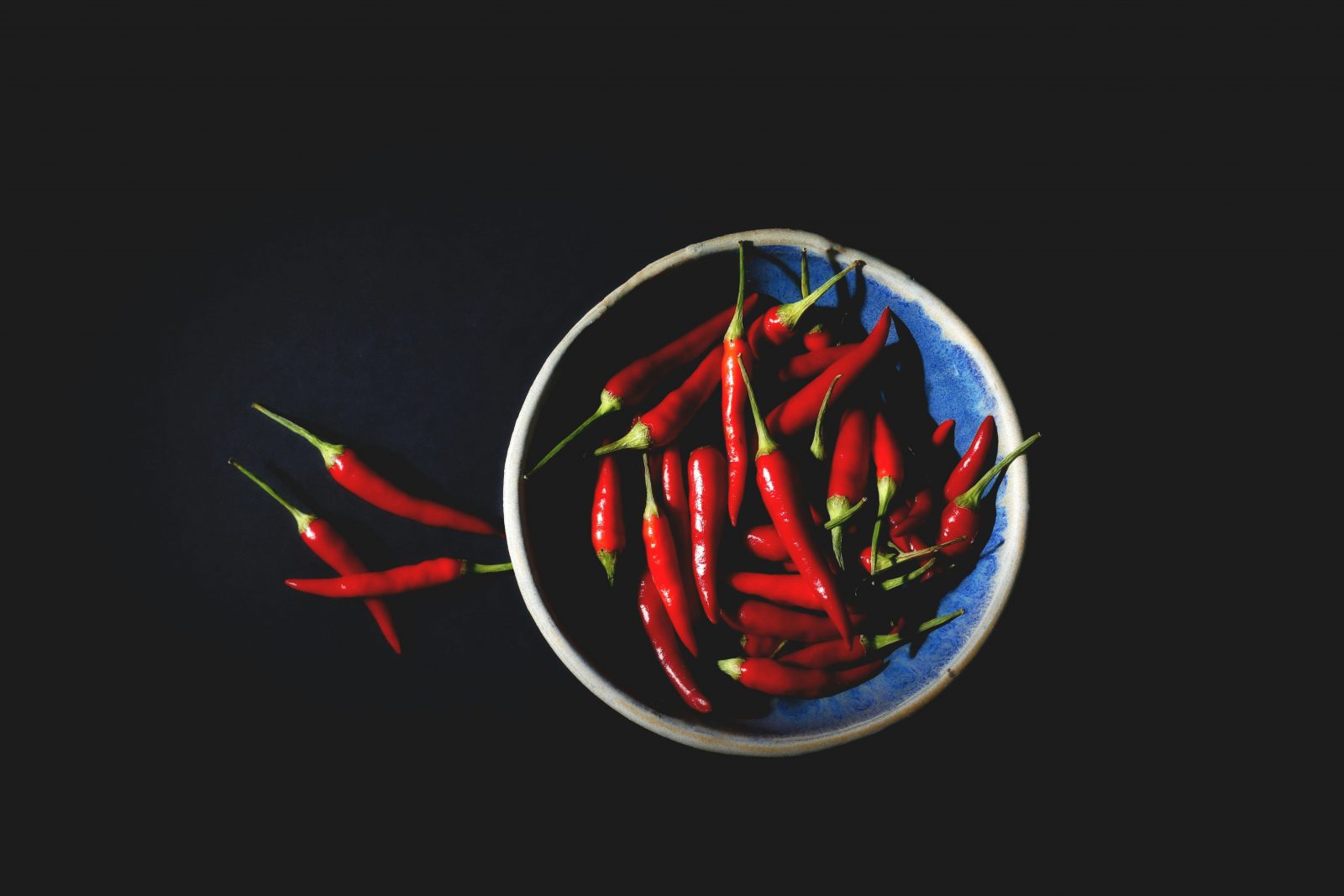
Christopher Kimball: This is Milk Street Radio from PRX, and I'm your host, Christopher Kimball, the next time you eat something spicy, thank a parrot.
Matt Goulding: Birds are the only other animal that eat chilies, and they don't have capsaicin receptors, and so they're the ones who were really responsible for taking the wild chili plants of the Amazon and flying them slowly, seed by seed, poop by poop, into the wider part of Mesoamerica, where eventually Portuguese traders take those chilies to India, and the world of cooking was forever changed.
CK: Today. Matt Goulding shares stories from his new documentary series Omnivore, which looks at the world through ingredients like peppers, corn and tuna. But first, it's my conversation with Sonoko Sakai about her new book, Wafu Cooking. Sonoko welcome back to Milk Street.
Sonoko Sakai: Thank you, Chris. It's been, what, a couple years since I saw you last
CK: and I still have the socks you bought me so I could jump up and down on your udon dough. They have little sailboats on them.
SS: I have so many people that come to my workshop because they say they saw me and you making udon together
CK: One of the many things I learned when I visited. So, let's talk about Wafu cooking, but let's do some history first before we get to that. So, until the second half of the 19th century, Japan was pretty much cut off before the Meiji Restoration. So could you explain why Japan was cut off from the west. And then how and why the Meiji Restoration in 18, what 70 came around?
SS: Yeah, so Japan had been trading or interacting with China and with the Europeans on a very kind of limited scale, because back then. I mean, it took a long time to travel to the east, but the Portuguese, of course, were out there trying to seek new territories, and they came to Japan in the 16th century and brought Christianity. And the rulers in Japan started to get a little bit worried, because they didn't want the influence of Christianity or colonialism, which was starting to happen in many Asian countries. And so, the Tokugawa Shogunate decided that we're just going to shut down the ports, and they did for over 200 years.
CK: And then the Meji restoration comes around in the second half of the 19th century.
SS: Yeah, in the 1860s
CK: Why did Japan feel they had to modernize quickly?
SS: Well, I mean, so it's interesting because my, the maternal side of my family, were from Kyushu, and it's basically the island where they bred all these progressive samurais that wanted to overturn the Tokugawa Shogun, which had been ruling for centuries, which is why they kept the country so isolated. And they said, look, we're in the South. We're seeing what's going on in the West, what's happening to China, and we are getting behind. We have to do something. So, I think Japanese knew that they had to change. And what really instigated the major change was Commodore Perry, an American person, who decided that there had to be a base where the whalers, American whalers, could anchor their boats and rest. And they said, well, if you are not going to open your ports, we're going to basically bomb you. So just the Japanese shoguns had no choice but to basically surrender, and that's how we started opening up and real, waking up, really, to the rest of the world.
CK: So now let's get to Wafu. So, this means, well, why don't you tell me what it means and how it relates to this opening up
SS: Well, so it's a very amorphous concept, but it means Japanese in style. So you could take a Western dish and when it landed in Japan, the Japanese looked at it and says, well, we like it, but God, it's so hard to eat with a knife and fork, why don't we slice it so we could eat it with chopsticks, and why don't we put a little soy sauce so it makes it more palatable? And so, they started adapting and adjusting to suit their palate, and that is sort of like the birth of contemporary Wafu. And I actually turn it into a verb, and I say it's been wafued. Yeah, WA means Japan Wa and fu is style. And wa also means harmony. So Japanese people are always looking for harmony. So even if you adjust, adapt, change, you're always in pursuit of harmony, and that's the beauty of Wafu
CK: We talked about the 1980s with all the fusion cooking, which I thought at the time was kind of silly. And now fusion cooking is actually starting to make some sense, because what's coming out of this actually are good recipes that actually have a reason for being, as opposed to what people were doing 30 or 40 years ago
SS: Right, I think they're, they have a bitter grip on the fermented seasonings, like from Asia, instead of just like pouring siracha on anything. I'm so impressed about how people want to learn, and people are traveling and tasting and yeah, like I see, like yuzu kosho, for example, used on many different things in western dishes, you know. And you know, nobody even thinks about it being fusion. It's like, oh, this works, you know, it's good.
CK: So, let's just talk about now some very specific recipes. So, cheese grits, dashi cheese grits, with miso, honey butter. So that's taking something obviously very southern American, I guess, and adding a couple Japanese ingredients. So that's an easy way to create something that's wafu, right?
SS: Oh, yeah, that's almost a no brainer, I think because, you know, it's just a softened butter, honey and a little miso to make a kind of a salty, sweet butter topping, and you just add it to your grits, and you have a little umami kick in your grits. I'm usually that umami is achieved by bacon or shrimp, or you could do it with cheese, lots of cheese, right? And I just love grits. But I was just playing around with what I could do to wafu it, and I the miso worked so well.
CK: I love corn chowder, and you do a wafu version. So, what do you do?
SS: Oh, I added a little miso in there. And instead of taking the dashi from, like, you know, bonito, I just use the corn, you know, the milky corn in season has so much flavor, right? You know, the I just husk it, and I just boil the core and cook it and get the broth from the corn and add some white miso. And you could also add a little bit of I put some clams in there, but you could do it without the clams. I love corn soup, and adding clams gives it another depth of flavor.
CK: So, we've talked about making miso and soba noodles, sort of basics that are not hard to do. Are there a couple other things that you think most people should be able to do in their kitchen that comes out of Japanese tradition?
SS: Miso soup. Definitely, you could do that with your eyes closed. I didn't even put a recipe in there, because really, you could do it, and I have some really nice shortcuts in there for you, but I would say pickles, because it's just rubbing vegetables with salt, maybe a little sugar and lemon.
CK: So Okay, three pantry ingredients most people here in the states don't have in their pantry. You think they absolutely should have,
SS: I think you should have mirin, m-i-r-e-n it's like sake, right? And miso and rice vinegar.
CK: And for the miso, what kind of miso Do you suggest (red) red, because it's kind of flavor, yeah
SS: because white miso is a lot of the white miso’s you get here have additives, corn syrup or something. And because, I guess we're getting older, I make a lot of protein-based foods, like I like to make a good chicken, yeah
CK: Well, I every Sunday, I roast the chicken, (yeah) So what, what Japanese ingredients do you use when you do chicken?
SS: Just soy sauce and mirin, you could put a little sugar in it to make, like a teriyaki sauce, but, and ginger, ginger, just like grated ginger. And it's really simple, but I cook it from the meat side up, and then baste it until it's kind of toasty. And I usually do thighs, and I debone it, and then when it's nice and toasty, I flip it and grill the skin side until it's really crispy. And that on rice or noodles is really good. I want to Wafu everybody.
CK: Well, Wafu is just a great name. I think it's time for the t shirt. It's a hey, that's Wafu.
SS: No but I want people to understand that when I'm Wafu-ing you, I'm not just trying to make you more Japanese. It's I want people to understand that the pursuit of Wafu is to be in harmony with your cooking or with the natural ingredients. So, the pursuit is not to confuse, but to harmonize the dish.
CK: I visited Sonoko Sakai and I got wafued. Sonako, as always, just an enormous pleasure. Thank you.
SS: Thank you so much Chris.
CK: That was Sonoko Sakai. Her latest book is Wafu Cooking Everyday Recipes with Japanese Style. You can find her recipe for corn soup with little neck clams and [email protected]. Now it's time to answer your baking questions with special guest host Cheryl Day. Cheryl is the author of Cheryl Day's Treasury of Southern Baking. So, Cheryl, do you adapt recipes because you have people showing up at your table that might want a vegetarian main course or something different, or that's not an issue.
Cheryl Day: I did have an event once at the bakery, and we had requests of someone was gluten free and someone was vegan. So, I did make my biscuits gluten free and vegan, and I was so impressed.
CK: How did you do that?
CD: So, I used a cultured vegan butter, and I used a gluten free flour, and then the other thing that I did was I used coconut like a coconut cream, and I soured it with vinegar. They were really delicious. I was shocked, because I don't typically do that. I've made chocolate cookies, and I have a cake that I do that's vegan, but I haven't really done that much. But, you know, it's definitely something that's more common these days so
CK: You know, it's interesting, because so much of the cooking in the world is naturally vegan or vegetarian, right, (right) So there's just so many great recipes out there that just exist on their own.
CD: I love vegetable side dishes. This, I think, is kind of rare, but I've just always done it this way. I do a vegetarian collard green, and without the pork, without the pork, I use, you know, just vegetables, usually, like peppers and things like that. And I really prefer it that way. So that's just something that I've always done. Well, that's
CK: Well, that's what I think. I think sometimes it is actually much better that way, true, and I'll come over for some of those biscuits.
CD: I would love that.
CK: All right let's take a call.
CD: Welcome to milk Street is calling?
Caller: Hi. My name is Alice, and I have a question for you.
CD: Great. Hi, Alice. How can we help you today?
Caller: I have a recipe for a dark chocolate cake and dark chocolate frosting, and it calls for eight ounces of dark chocolate. And I happen to have some 90% bars, but I didn't want it that dark. No, I like 70% or maybe 80 at the most for eating and for baking. And so, I looked around on the internet, and everything said, add sugar or add milk chocolate. But nothing tells me how much. And I'm one of those people who needs to understand the ratio and the recipe. I'm not good at eyeballing things.
CD: The answer is, it's complicated. Oh, and then the second part is, yes, sugar, I do have a great cake that I use a 99% but it has a fair amount of sugar in it. And so, there's definitely science to adding sugar to the chocolate, but it's pretty complicated to do, Chris, unless you know exactly what the ratios are?
CK: The fact the matter is, nobody, I don't think would really want to eat a 90% cacao because
CD: it's just going to be moist) It's going to be dry
CK: It's going to be nasty. I really think 65 to 70 is kind of a sweet spot. Anyway, there is one thing you could do. The recipe, I assume you have to melt the chocolate at some point. What I would do, I would just add a little sugar to it and melt the sugar in and stir it in and taste it, and when you get to the right sweetness, then you're done, right Cheryl?
CD: Absolutely, because I said it's complicated. I mean, really, that's the best way to do it without making it complicated, is to taste it and to get it where you want it to be.
Caller: I like to eat 70 to 80% but 90 was too strong, and yet it sat there in my cupboard.
CD: The reason why you don't want to just use it straight aside from you're not going to like the way it tastes, is because sugar really contributes not only sweetness, but it's going to keep your baked goods moist.
Caller: Okay, I didn't realize that.
CD: Yeah, it's the liquid that that 90% doesn't have, that the other percentages do have, and then the fat and, you know, so on. So, I think the best way to do it, to try, is like Chris said
Caller: When you said a little, I didn't know what. You know, does a little mean a scant quarter teaspoon or a tablespoon?
CK: If you're dealing with what, eight ounces, 6 - 8 ounces of chocolate, I'd start with a tablespoon. One other thing I found interesting last few years is, you know, we all grew up, or most of us did, eating sort of bad chocolate, especially milk chocolate. I. I found out there are some really good companies making really good milk chocolate now.
CD: Oh yeah
CK: I think milk chocolate is interesting because the chocolate flavor is different and it's almost more. I don't know complex, but it's as an adult, I've finally gone back and I like it
CD: It’s true for baking too. But I have one other suggestion, Alice, because it is tricky to make sure that you're going to have the right amount of moisture and all of that. What about making some confection like, you know, truffles or something like that?
Caller: Well, that's very helpful. I really appreciate it. That's fun to talk to you
CK: yeah, thanks for calling. Thank you
CD: Thank you, Alice
Caller: Thank you.
CK: This is Milk Street Radio, Cheryl and I want to solve all of your baking problems. Give us a call anytime. 855-426-9843, that's 855-426-9843, or please email us at questions at Milk Street radio.com
CD: Welcome to milk Street. Who's calling? Hi. This
Caller: Hi. This is Gordon up in Vermont, and I'm calling about using honey in my sourdough mixes, and the question I want to ask is, when the best time is to add the honey to the mix?
CD: Okay, well, you're in luck. I've got my husband, who is our excellent resident bread baker, Griff, can you take that question on?
Griff Day: Hey, Gordon, how you doing?
Caller: Great.
GD: I would have two suggestions for you. You could add it in the honey with your starter when you're adding all your ingredients together. Or another option you could try is incorporating it into your water,
Caller: Okay, yeah, that's actually what I found. Is the best myself, is doing it during the water a little warmer, perhaps, than adding the honey that. And I didn't know if there was a secret that I was missing out on or not.
GD: No, that's probably your best two options. Does Chris?
CK: How much honey are you adding to the recipe?
Caller: So, if I'm doing, you know, a 550 - 560-gram loaf, I'll add something along the lines of probably a little less than a quarter of a cup. Is that too much?
CK: I thought that would be about the right amount. But when you taste the bread, can you taste the difference between using honey and using another sweetener? Does it make a big difference?
Caller: You know, that's a good question. I haven't really tried, you know, I that's a good idea.
CK: I find sometimes, if a lot of honey is used, you know, obviously it makes a big difference. But if it's going to be over, you know, four cups plus a bread flour, which is, you know, 500 grams, or whatever it is, I'm not sure a quarter cup of honey was necessarily going to make a difference in the flavor, but that's something you could also think of to solve the problem. I think Griff's right, add it to the water.
Caller: Okay, I can experiment with maybe some more and maybe some other sweeteners, and I will now pay harder attention and see if that sweetness is honey.
CK: Gordon, thank you. Hopefully that Griff, answered your question. Thank you.
CD: Thanks, Gordon, thanks. Griff,
CD: My treat.
Caller: Thank you so much. I'm a big fan. Thanks.
CK: Thanks. Welcome to Milk Street, who's calling
Caller: Hi. This is Steph from Orleans, Massachusetts.
CK: And how can we help you?
Caller: I have a problem with painfully flat shoes.
CD: Oh, no,
CK: C H O U X, I assume
Caller: Yes, yes. I treated myself a few weeks ago to a beautiful cream puff from a bakery, and it was horrible. The pastry had no taste. It was too hard, and the filling was just shortening. And I thought I used to have a nice Italian grandmother that could make pastries. It should be in my blood. (It is) And I tried, and I've taken my baking up a level. I'm now measuring by weight instead of volume. I'm not using hot water from my water heater. I'm using bottled water, and it just didn't rise. What is my problem? All the info online is about if your pastry falls when you bring it out of the oven, but I can't even get it to rise in the oven.
CD: Oh, wow.
CK: Well, you're going to have to lay down on the couch, take off your shoes, and I'm going to ask you lots of questions. Yeah, we have to go through it step by step. So, we have ideas. We have ideas. So what are the basic ingredients?
Caller: I'm just doing butter, water, milk, salt, sugar, flour, eggs
CK: Okay, and how long are you whisking in each egg? Or are you doing them all at one time?
Caller: I think I was doing them all at one time.
CK: That's the problem.
Caller: Is that it?
CD: Before we even get to those eggs, which, yeah, that probably is an issue. But when you're doing the part where you're mixing in and dehydrating it, where you're getting some of the water out, you know, where you have to really stir it with elbow grease, are you getting it dry? Do you feel like it's getting that skin?
Caller: I did. I did see that.
CK: It’s coming off the sides of the pan, et cetera.
Caller: Yes, yes, it looked just like it should on YouTube videos. It looked like it was a really good consistency.
CD: Well, Chris is probably on to something then with those eggs
CK: The eggs, you have to stir each one for about 20 seconds. It's just like making a cake, and that could be a problem, because you're not getting enough aeration in the eggs.
Caller: Okay
CK: You put it in a very hot oven. And how hot is the oven?
Caller: Probably 400
CD: and your oven is calibrated?
Caller: It is. And I do have a independent temperature, a thermometer, yes, so I'm always checking that.
CD: Well, you are doing all the right things.
Caller: I know,
CK: You put it in a hot oven, it's not rising then in the hot oven,
Caller: No, I mean, it starts to rise up, and then I saw that I should prick it to let some of the air out, the steam out
CD: Not when it’s baking.
Caller: ohh
CD: No, no no no
CK: No, you have to finish baking. It has to be set.
CD: Golden, gorgeous.
CK: That's it.
CD: There you go.
Caller: Oh,
CD: You want to build up that pressure, but then you want to release it after you take them out, that's when you poke the hole. After
Caller: Okay That could be it then
CK: Once they rise, then you lower the oven temperature and you bake them until they really set, right?
CD: So, no poking, don't even open the door. Turn on the light.
Caller: I do have a window in this oven so I can look in
CD: Pull up a chair and watch it.
Caller: And I put some water on the I was using parchment, and I did brush water on that to create some steam.
CK: I don't think that's
CD: No, you don't want too much steam, so no extra water. Yeah, (okay) after they come out, you're going to release that steam just a little poke, yeah? Because
CK: Yeah, because you release the steam at the end so they get firm and dry out a little.
Caller: Oh, okay
CD: Honestly, I think you poked them, you opened the oven and then your shoe fell flat.
Caller: What a silly person I am.
CD: Try again, that's all.
Caller: Oh, I will.
CD: And please report back.
CK: I think that's a clear winner, right?
Caller: Oh, easy, easy fix. Easy peasy.
CK: There you go.
CD: Thanks for calling, Steff
CK: thanks for calling. Take care
Caller: You too. Bye, bye.
CK: You're listening to Milk Street Radio coming up. Matt Goulding talks about his new series on Apple TV Plus called Omnivore. You This is Milk Street Radio. I'm your host. Christopher Kimball, what you're hearing is the opening bell for the tuna auction at the central fish market in Osaka, Japan,
Rene Redzepi: hundreds of blue fin dozens of countries of origin and a legion of licensed brokers ready to fill orders for 1000s of buyers across six continents, if there was ever a display of the might of the global food economy, it's on the auction room floors of these fish markets all across Japan.
CK: That was a scene from the Apple TV plus documentary series Omnivore. Its co-creators are chef Rene Redzepi, who you just heard speak and Matt Goulding across eight episodes, the show explores how ingredients like tuna, chili peppers and corn have shaped societies and changed the world. To hear more about these stories, I'm joined now by Matt Goulding. Matt, welcome back to Milk Street.
MG: So happy to be with you. Chris.
CK: So, we're talking about the series Omnivore. You want to just describe what it is, what the concept is.
MG: So, Omnivore was inspired by the great nature documentaries of the world above all Planet Earth. Rene grew up watching that, as did I. And I think we had a huge admiration for the way that David Attenborough would instill a sense of wonder and awe, certainly around the animals and the environments they inhabited. And we thought, what if we could do that, but with food instead? And so, every episode is a different ingredient, and every ingredient is a different journey through the human experience.
CK: And I have to say, the filming is extraordinary. (Thank you for that.) You have the most gorgeous footage of a parrot pooping chili seeds. I mean, you should get an Oscar for that one moment
MG: One of my favorite shots. I mean, the amazing thing about that shot is that birds are the only other animal that eat chilies, and they don't have capsaicin receptors, and so they're the ones who are really responsible for taking the wild chili plants of the Amazon and flying them slowly, seed by seed, poop by poop, out of the Amazon and into the wider part of Mesoamerica, where eventually Portuguese traders take those chilies to India, and the world of cooking was forever changed.
CK: Let's actually dive into the chili and the corn. (sure) So, the Portuguese, let's talk about the Portuguese, because they sure they did so much to bring different kinds of foods to different places. So it was in the 1500s they brought chilies to the Far East.
MG: That's right. Chili peppers were one of those ingredients that kind of traveled very quickly. So, it comes to the Iberian Peninsula, the Portuguese traders and the missionaries who were so important in popularizing certain types of food, brought them to Goa in Southern India, and they really fit in there, whereas it was kind of a weird fit in Europe. People didn't really get the chili pepper there, but spice, real heat, found a home in places like India and China and Thailand. And so, we look at those countries as kind of the epicenter of spicy cuisine, and they are, but certainly not from a historical standpoint.
CK: So, the Scoville unit, which goes from a few 1000 to up to, I guess, almost a million. I mean, okay, why do I care about a million Scoville units or half a million? I mean, I've always thought it's never about the heat. It's always about the flavor, right? Like a ____ chili pepper is very fruity, or an out show or something, and so, yeah, the heat's part of it, but it's also about flavor. Is going up to hundreds of 1000s of Scoville units. Is this just a parlor trick? I mean
MG: I think that's right, honestly. I mean, I think, yeah, the world of the super hots and the kind of nuclear arms race that has taken place over the last 20 years. Honestly, it's largely between a bunch of men from the US, the UK and Australia, who all try to out breed each other into having the hottest pepper. But I think what's not absurd and when it is very real, is that the world has gotten spicier. That's largely due to hot sauces, you know. And we talk about this because we feature Tabasco. I was a little skeptical. I personally like Tabasco by I know it's kind of a hit or miss for most people. But it wasn't until I really read into the story and learned more about it that I was like, let's This is worth really looking into, because the story behind how they produce it and what goes into it hasn't really changed in 150 years.
We allow the pepper mash to ferment naturally. We want the warehouses over 100 degrees out there in the summer, because that really kick starts the fermentation process.
CK: It's like a five-year process, right from beginning to end
MG: Five years to make a bottle of Tabasco. And yet, to me, the more interesting part of it is that Tabasco is available in more countries than Coca Cola. That's how successful that little red bottle has been in traveling the world. And for countries where spice was never traditional, say where Renee is from, from Denmark, Tabasco would be one of those only sources of heat that you'd find on the table. And for certain people, you get a taste for it. You want a little bit more, and you want a little bit more. And it's that classic addiction. Classic addiction relationship, because there is a release of endorphins that comes with the ingestion of capsaicin. So, it's not just something that burns you, it gives you a sense of pleasure. Benign masochism is what the researchers call it if you eat one of these super hots. And I've honestly only done it myself once or twice, including the final scene of this episode. We use a ghost pepper, and you taste that. It has about 850,000 Scoville units.
CK: This is during pre-service at Noma that scene.
MG: Yes, this is the Noma scene.
RZ: Good evening, everyone. Good evening. This here is called the. Boot orange Copenhagen, and it's a pepper that has been bred by a Danish man called P___. And it's hot. It's like, seriously hot. It's the hottest thing that's ever been bred in Denmark. And I thought we'd serve it for the guests tonight, but before that, I think we should taste it. And yeah, because how can we have something our guests are going to try that we haven't tried?
CK: This is how perverse I am. Tell me, you know, Renee standing there, and everybody's dressed in their super cool gray and black outfits. There's like 30 people there. I was just hoping, like, a few people would throw up or fall to the ground screaming. I just wanted some reaction. And everybody's going, there's a little coughing, like, what? What actually happened during that scene, that’s what I want to know?
MG: Sure. I mean, this is, without a doubt, the scene. I think that is probably registered most with people, because you eat one of these and you go temporarily insane. Your heart starts racing. The heat gets bigger and builds, and it goes higher and higher and higher, and you're just wondering, when will it stop? But I think for some people, that creates such a deep level of anxiety, it becomes a bit of a vicious cycle, which, of course, is temporary. These people have always come back down to earth, and that's when you read about chilies and hospitalizations or things like that. It's almost always this.
CK: So what? So, what happened when you served, or he served these to the guests? Were they served in a dish? They didn't actually eat a whole one, right?
MG: Yeah. So the guests were served a dish of two peppers. One was like a roasted stuffed Shishito Pepper, and the other one was a ghost pepper. And so, it was madness. Three people ended up in the hospital,
CK: Sorry, and I just, I had to laugh, because it just satisfies my deep need for chaos and disaster.
MG: And I should say, most of the guests that were there that night were friends and family. Kind of knew they were going to be in for a wild adventure. It's meant to be fun. It's meant to be kind of the outermost limit of what we're willing to do in search of an experience like we jump off of cliffs with ropes attached to our waist and call it bungee jumping. You know, we're looking for some type of rush. And chili peppers fall into that same part of the human psyche. And so, this is a reflection on what makes us different than the rest of the animals out there.
CK: Let's talk about corn. (Sure). So, I'm watching the corn thing going, like, Okay, on one hand, you have the Midwest, you know, you're, you're going through and 100 acres at a time, and, you know, taking the corn kernels out, highly mechanized. And then you go down to Mexico, and, you know, the small family growing corn and making tortillas. My question is, like, I know where this is going to end. It's not going to end well, probably, or, or do you guys think that it might end well? In other words, where do you go from there from the two extremes,
MG: Right. No, that's it. That's that is the question without a doubt Chris, yeah, so corn is the last episode. For a reason. I think it's evolution from basically a wild grass called Tio Cinti, which was barely edible six, 7000 years ago, to what it is today. The most successful of our cultivated plants in the world is really a testament to human ingenuity, right? Because we, the people who grow them, are refining them, self-selecting, hybridizing, doing all these things as they were doing back in the early days of Mesoamerica, when the Mayans first started. You know, cross breeding Tio Cinti, to make it slightly bigger. And today, what we have with corn is basically a sun sponge, right, soaks up calories from the sun and transfers them into food for us, or, as the episode, sort of makes the point, into more than 4000 other items in the modern life. And so, corn, in essence, has become a building block for modern society. And that's kind of what we show through the Iowa system,
Corn grower: When you can plant one little, tiny seed, and in 160 days, you know this ginormous stalk with this ginormous ear on it? I mean, that's kind of cool. It makes you so thankful that you did this. That's going to be good corn.
MG: But this is a tale of two corns, as you point out. And so, the other side of the spectrum is sort of the milpa, which is the polycultural system that the Mayans used. In some ways, it looks a little bit like a romantic bite from the past, and it is. But what we discovered in doing this episode was that polycultures are actually more efficient at feeding people,
Change is inevitable, but sometimes, when looking at food, the best innovations have already happened.
MG If you look at studies, you can find that poly cultures grow up to six times more calories per acre than a monoculture does. So how do we tap into that on a large scale? It's not by abandoning innovation. It's not by putting away the tractors, right? We do want to find a way to continue to feed the world at this large scale, and we don't want to just rely on some romantic notion that's not actually realistic. So, what do you do?
CK: Yeah, it's it's complicated, because back in the 1970s I'm old enough to remember that everyone was claiming there were famous books written at the time that by 2000 millions of people would die of starvation here. What happened was modern agriculture, big ag, figured out how to vastly increase yield per acre, right? The problem is the long-term consequences of those solutions. I mean, now I have to put corn in my gas tank and, like other things, right, right. So, I guess, to defend your series, it's like the nature programs, right? I think the nature programs did do a service, because it did get a lot of people involved with preserving nature and animals. I think it actually was helpful. And so maybe getting people excited about how people grow peppers in Eastern Europe or corn in the Yucatan will provide a similar movement at some point, to get big, AG, to start to think about other ways of doing it. But it's, it's a big hurdle.
MG: It's, it's, honestly, it's a giant hurdle. And I, I think what we discovered is that the difference between a vicious cycle and a virtuous one is sometimes much smaller than we think. And I'll give you an example, the tuna episode. We follow a bluefin tuna, a single bluefin tuna, essentially from the southern part of Spain, where they're caught through an ancient fishing tradition called the El madraba, 3000 years old. And we follow that bluefin tuna on a plane all the way to Tokyo, where it's sold on an auction floor for 10s of 1000s of dollars, and then it's divided into little pieces, or primal cuts to begin with, and those primal cuts are then dispatched back out into the world. It's a crazy reflection of how globalization has always been driven by food. But what happened is that bluefin tuna was a trash fish for most of the 20th century, and in a matter of decades, it went from being a trash fish to being almost eaten out of existence. And then in the early 2000s the coalition of fishing nations that are responsible for Bluefin got together, and they put in place a handful of quotas. It wasn't especially strict, but it was just smart, and the populations on both sides have recovered miraculously. And so, the episode is a reminder, one of the power of the human appetite to reshape the world, oftentimes for the worse. But if there's a slight uptick in awareness, a slight uptick in the sense of wonder and awe at the scale of the food system that those people who are out there on the front lines feeding the world, wouldn't we be better eaters? So, what if we can use this series to instill a deeper sense of value in our food and in there, maybe there's a recipe for a future that is slightly less destructive when it comes to our relationship with the natural world.
CK: Matt, what a great pleasure, and I really appreciate your optimism. Thank you.
MG: Thanks, Chris man, always such a pleasure talking to you.
CK: That was Matt Goulding, co-creator of Omnivore. It's streaming now on Apple TV. Plus watching Omnivore, I was struck by the comparison of growing endless fields of corn with million dollar tractors versus families growing and drying handfuls of chilies. The problem is neither really makes sense. You know, big ag has fed the world, turning food into an inexpensive, but not particularly nutritious commodity. I love family farms. They build community, but Farmers markets are small and can't feed the entire world. So, what we really need is what many places in Europe already offer, the ethos of a family farm, but with the scale needed to feed millions, you know, healthy food grown sustainably is absolutely essential to our well-being as a nation. As I sometimes say, a tomato is not a tennis ball. One feeds body and soul. The. Is simply for fun. You're listening to Milk Street Radio coming up Kenji Lopez Alt’s secrets for cooking whole fish at home. Hi, I'm Christopher Kimball, and this is Milk Street Radio. I'm joined now by JM Hirsch to talk about this week's recipe, Ukrainian borsch. JM, how are you?
J M Hirsch: I'm doing great.
CK: You know, I look back at your trip to Ukraine over a year ago now, I guess year and a half ago, it was obviously fascinating and difficult at the same time. And you brought back a recipe for chicken Kyiv, and you also brought back a borscht recipe. Now, a friend of mine was actually born in Kyiv, moved to outside of Boston about 30 years ago. He invited me over for borscht and it was very different than I thought. It was really almost a chunky meat stew and was all about the pickles. He had 10 different pickles on the table, and it was lovely, but I gather their different types of borscht from different regions. So, what is it you had? And how would you define that recipe in terms of what you tasted?
JM: You know, it was actually fascinating, because when I went to Ukraine, I thought I really didn't care for borscht then I got there, and every time I ate it, it was really, really fascinating and delicious and kind of nothing like I was expecting. And I think it's important to note that borscht is very important to Ukrainian culture, and it's a dish that's actually become a rallying call for Ukrainian culture and heritage as they resist the Russian invasion. In fact, UNESCO declared it a unique recipe for the Ukrainian heritage. But as unique as it is to Ukrainian culture, there is no one way to make borscht, and everybody, of course, has their own way of doing it, but the base of it is almost always carrots, cabbage and, of course, beets. Beyond that, every cook told me it's whatever is in the garden. Potatoes are very classic, of course, but it could be meat based. It may not be. It could be very loose and soupy, or it could be very thick. Some people like to be able to stand a spoon up in it, and some people want it to be very brothy. In all cases, though, you get some real lovely fresh flavors from the sweet beets, the sweet carrots, the cabbage, the starchy potatoes, and then, of course, dill and there's always, always sour cream. But beyond that, like I say, it's really a case of anything goes. What I found particularly interesting was that it always starts in a skillet, so the base is usually the onions, the carrots, some tomatoes and those beets, and they grate them, and they put them in a skillet to caramelize the natural sugars and to concentrate their flavors, and then that is then moved into the stock pot or the Dutch oven where the soup is finished and becomes brothier. But it was a very interesting way of starting it, and it certainly is a great and very effective way of building lots and lots of flavor. The other part that I found interesting is, and again, this is kind of no surprise. Beets being the star of the dish, is that you often have multiple forms of beets being used in the same pot of borscht. And as we know that when you use the same ingredient in multiple forms or cook it in multiple ways, you're getting different tastes and textures from the same ingredient. It's not unusual to see in one dish a combination of raw beets added just at the end of cooking so that they retain their freshness, and then, of course, cooked beets that have been added at the very beginning. But then they'll also add pickled beets, and sometimes as part of the broth, they'll add just beet juice.
CK: What I had was really almost a beef stew. I assume our recipe. Does have beef as part of this?
JM: Well, we actually made ours. We found we could do a great borscht, either with beef used chuck roast or boneless pork shoulder, which was actually very common, like I say, in Ukraine, anything goes and so it wasn't uncommon to see actually even seafood-based borscht’s. But also, pork is very common. Beef is common. Vegetarian is common. One other interesting aspect of this is the smoky flavor that is really important to Ukrainian borscht. Now this is because, traditionally, it was cooked in communal wood fired ovens, which naturally imparted a smokiness. And over time, cooks started using a really interesting ingredient to give it that smoky flavor. They were using smoked pears. And it's a very traditional ingredient to add. You just throw one in, and it simmers away, and it really flavors it now, smoked pears are kind of tough to get in these parts, so for us, we use smoked paprika, but bacon is also very common, even in Ukraine.
CK: Well, the thing I love about this is there are lots of different ingredients, so lots of different textures. It has rich flavor, and it's not sort of a beet vichyssoise, right? Which is I used to see many years ago, which I never liked. But this has a lot of texture, a lot of different flavors. One thing you forgot to mention, which was actually the most important ingredient when I had it a few years ago, was the vodka. I mean, that made the borscht even sweeter. JM, thank you. A true Ukrainian borscht, although there are many recipes for it, this one meat based and absolutely an astounding recipe. Thank you.
JM: Thank you. You can get the recipe for Ukrainian borscht at Milkstreetradio.com.
CK: This is Milk Street Radio. Now it's time to hear from Kenji Lopez Alt, hey, Kenji, what's up this week?
Kenji Lopez Alt: Oh, not much. I've been cooking some fish,
CK: Something that I don't do indoors, at least very much. So, what have you found? Yeah,
JKA: Well, you know, my kids both love fish, and they particularly love whole fish, but yeah, like you you know, the problem I have with whole fish is probably the same thing that a lot of home cooks do, which is that most methods of cooking whole fish can leave the house kind of smelling, you know, (right) And so what I generally turn to these days, if I can't do it outdoors, is steaming. So, I like to do it in the sort of classic Cantonese style where you steam a whole fish and then finish it with a sauce and some hot oil. When you steam a whole fish, or when you steam filets, it's a lot more forgiving, because the window of time between properly cooked and overcooked is much wider. So even if your family comes in and distracts you, even if they're not ready for dinner at the right time, the right time, the fish still ends up kind of really silky and buttery.
CK: So, the fish is, well, bland is the wrong word, but it's not like a steak
JKA: I like the word subtle
CK: Subtle. There you go. And so, there's a sauce. So, what's the sauce here?
JKA Yeah, well, so the process is, you're you have basic aromatics. Generally, you're doing scallions, ginger and cilantro. You can mix that. Sometimes I put garlic in there, sometimes I put chilies in there. But then what you do is take the cilantro stems, set them aside, put the leaves aside. You take the ginger, you cut it into julienne and all the peels you set aside, and then the scallions, part of them, you cut into very fine slivers and soak them in water so that they curl up. And then the rest of them you set aside. And so, with all the bits that you set aside, you scatter them around a plate, and place the fish directly on top of that, so that it elevates it off the bottom of the plate a little bit, so that steam can circulate around it, and it also obviously infuses the fish with some of that flavor. So, I take some of that, I also shove it inside the cavity of the fish, and then you steam the fish. I use a bamboo steamer, you know, I put that plate directly into a bamboo steamer over a wok with simmering water. But if you don't have a wok, you can always use a Dutch oven. I find actually, the easiest thing to use is a roasting pan with a with a roasting rack set in it that you put directly on the stove top, and then put the plate on the roasting rack and cover it with foil. That works really well for any size fish. And then you steam the whole thing. And meanwhile you make a really, really simple sauce. So, it's just ____ wine. You can use Sherry, of course, instead soy sauce, a little bit of sugar diluted with warm water, because those are very sort of intense flavors. But you dilute it with warm water into a sort of nice, balanced sauce. And so, at the end, when the fish is done, you take that sauce, you pour it over the fish, you make a sort of little tangled bird's nest of all the other aromatics. And then you just get some hot oil, a couple tablespoons of hot oil, and pour it on top and sizzle it. Yeah, exactly. So, it kind of trickles down through those herbs and those aromatics, picks up their flavor, releases them into the air, and then kind of imbues the fish with all that flavor
CK: And that technique, the sizzling oil can be used for vegetables or lots of other things I do it all the time.
JKA: Oh yeah absolutely. And it looks really cool at the table, too. People, people love it. It's good when you have guests over to the sizzling oil thing.
CK: So last question is salting. We've spoken on this show about salting salmon overnight. For steaming do you need to do that overnight? Or you can pretty much skip it, because steaming solves those, those problems.
JKA: Yeah, you don't. I mean, certainly you can, and it doesn't harm it. So, I mean, what salting does Is it basically it'll firm up the flesh a little bit. It'll make it a little bit juicier, give it a little bit more of a bite. It also offers some amount of protection from over cooking. So salting is a good technique for if you're going to be grilling or broiling or pan searing fish with this method, with steaming, it's such a gentle method that you don't really need it. So, I typically skip that process if you want to do it. It doesn't hurt. It'll build you in an even bigger buffer against overcooking. But the fewer steps, the better for me when cooking for the family, you know?
CK: Yeah, well, you have two kids. I have two young kids. Your kids will eat steamed whole fish. My kids would run screaming out of the street if I, if I took the top off, off the bamboo steamer.
JKA: Yeah. I mean, you know, a meal that stares back at you is not, is not for everyone, and I get that, but, I mean, the good news is, the technique works really well with filets as well, and it works for virtually any kind of fish. So, I've done it with salmon. I've done it with tilapia, with fluke, with flounder. If you're talking whole fish, you know, typically I'll use trout or branzino, which are the most widely available fish at my market. But but it works with virtually any kind of fish that's around the two pound per fish size,
CK: Kenji, thank you. How to cook whole fish indoors, without the smell and the mess and with tons of flavor. Thank you.
JKA: Yeah, thanks for having me.
CK: That was Kenji Lopez Alt. He's a food columnist for the New York Times and author of The Wok Recipes and Techniques. He also co-hosts the podcast The Recipe with Kenji and Deb. That's it for today. You can find all of our [email protected] or wherever you get your podcasts. You can learn more about milk Street at 177 Milk Street.com. There, you can become a member and get all of our recipes. Access to all live stream cooking classes, free, standard shipping for the Milk Street store and lots more. Can also learn about our latest book, Milk Street Bakes. Can also find us on Facebook at Christopher Kimball's Milk Street. On Instagram at 177 Milk Street, we'll be back next week with more food stories and kitchen questions and thanks, as always, for listening.
Christopher Kimball's Milk Street Radio is produced by Milk Street in association with GBH co-founder Melissa Baldino, executive producer Annie Sensabaugh, senior editor Melissa Allison, producer Sarah Clapp, Assistant Producer Caroline Davis with production help from Debby Paddock. Additional editing by Sidney Lewis, audio mixing by Jay Allison and Atlantic Public Media in Woods Hole Massachusetts. Theme music by Toubab Krewe, additional music by George Brandl Egloff, Christopher Kimball’s Milk Street Radio is distributed by PRX.
In this episode
ADVERTISEMENT
ADVERTISEMENT

Simple, Bold Recipes

Digital Access
12 weeks for$1
- EVERY MILK STREET RECIPE
- STREAMING OF TV AND RADIO SHOWS
- ACCESS TO COMPLETE VIDEO ARCHIVES

Insider Membership
12 weeks for$1
- EVERYTHING INCLUDED IN PRINT & DIGITAL ACCESS, PLUS:
- FREE STANDARD SHIPPING, MILK STREET STORE,
to contiguous US addresses - ADVANCE NOTIFICATION OF SPECIAL STORE SALES
- RECEIVE ACCESS TO ALL LIVE STREAM COOKING CLASSES (EXCLUDING WORKSHOPS & INTENSIVES)
- GET YOUR QUESTIONS ANSWERED BY MILK STREET STAFF
- PLUS, MUCH MORE

Print & Digital Access
12 weeks for$1
- EVERYTHING INCLUDED IN DIGITAL ACCESS, PLUS:
- PRINT MAGAZINE SUBSCRIPTION
- 6 ISSUES PER YEAR

