





Your email address is required to begin the subscription process. We will use it for customer service and other communications from Milk Street. You can unsubscribe from receiving our emails at any time.
Episode 916
July 11, 2025
July 11, 2025
Summer Lollapalooza! Meathead Q&A, BBQ Road Trip and Grilling Pizza
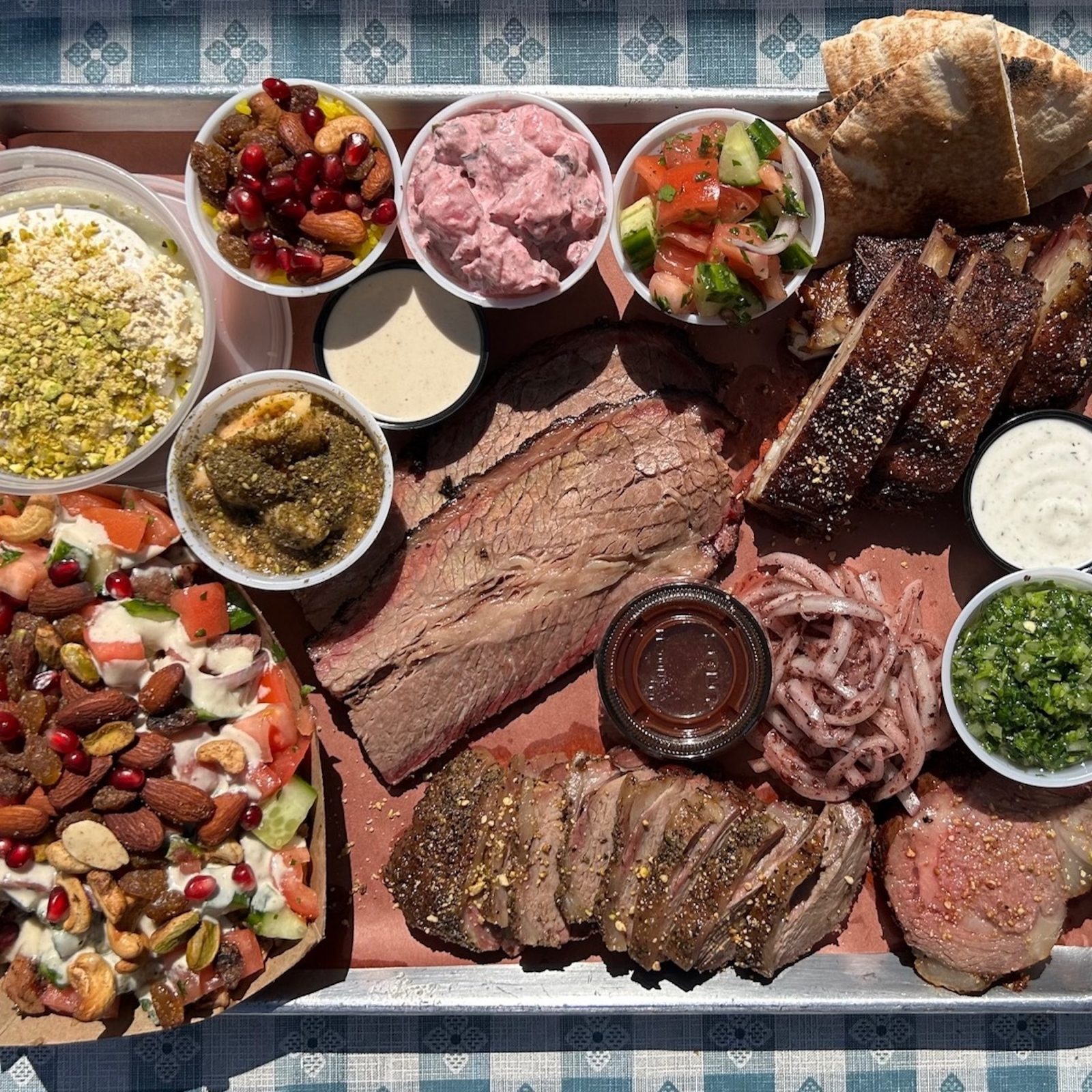
We’re covering everything you've ever wanted to know about grilling and barbecue. First up, a road trip with Daniel Vaughn, barbecue editor at Texas Monthly. We taste whole-hog barbecue in Greenville, coffee-rubbed brisket in Nacogdoches and cow-eye tacos in Brownsville. Then, Meathead joins Chris on the phone lines for your toughest cookout questions; Kenji López-Alt makes the case for his favorite backyard dinner; and Grant Barrett and Martha Barnette of “A Way With Words” cool us down with summertime treats.
Questions in this episode:
"Is it necessary to let meat rest?"
"I live in a high rise and our grilling section is a far walk from our unit. What are fast and simple dishes to make on the grill that are easy to carry?"
"What is the best way to clean a grill?"
"I heard that when smoking brisket, most of the smoke flavor is picked up in the first 2 hours. Is this true? If so, can I smoke brisket for 2 hours and then stick it in the oven overnight?"
Christopher Kimball: Hey, this is Milk Street Radio from PRX. I'm your host, Christopher Kimball, today it's our summer episode. Later in the show Meathead Goldwyn answers your biggest cooking questions like, how on earth do you actually clean a grill?
Meathead Goldwyn: I got to tell you the world of barbecue is full of old chest thumpers. I don't need to clean my grill, and it's seasoned. I seasoned it. No, you want to clean it. In fact, the Top competition cooks, I've seen them pull their big pits into car washes.
CK: We also have Kenji Lopez Alt with his favorite trick for the grill, and then we cool down and learn about the language of popsicles with A Way with Words. But first, we're taking a southern road trip with Daniel Vaughn as the barbecue editor at Texas Monthly. Daniel has eaten at nearly 2000 barbecue joints. Daniel, welcome to Milk Street
Daniel Vaughn: Thanks for having me.
CK: You've been to a zillion barbecue places. I've been to a few. I've been to Texas and Atlanta and the Carolinas and Kansas City. So, I've done a few. Here's what I think. I think the meat itself, they're all good. I mean, the differences between one place and other is usually not the burnt ends or the pork shoulder, it's the sauces, it's the rubs, it's the bread they choose or not choose. It's the sides, it's the people, it's the place, especially the place, I think that's really important. So, is it really the core? Is the meat itself the really big difference from spot to spot, or is it all the other stuff around it.
DV: Well, I think you're right in both senses. The you know, it is about the place and the people and the experience. I think my job at Texas Monthly is really especially for our top 50 list, is to go out there and evaluate barbecue joints and compare them, one to the other. And in doing that, it's it usually comes down to sometimes minute differences between the quality on a certain day from this place to that place. But I think certainly it's a lot easier for any restaurant owner or pit master, to differentiate themselves through the breads or tortillas or sides and all those different things they're serving along with the meat. It's certainly a whole lot more difficult to really set yourself apart in in doing a really great smoked brisket, right? It's become so commonplace nowadays it's almost not special anymore.
CK: So, I was trying to start with an argument. We don't have an argument.
DV: Okay, well, then, well, I mean, I think the meat is really, really important. And I also think that when you're out there eating the best of the best, the people who tell me that there's no such thing as bad barbecue, my answer is like, well, that's because you haven't eaten enough barbecue.
CK: That's true. So, what about sides? You know, are we still talking beans, slaw, mac and cheese, or are those sort of the old days and now there's a million options for sides.
DV: There’re certainly a million sides. I'd say some of those sides are really regional, like, very specifically in Kansas City, if you're a Kansas City barbecue joint, you better have fries, right? That's just one of those things that goes with the ribs and the pork and burnt ends and fries. That's that's a great platter right there. In Texas, just about every place you go to is going to have pinto beans, some form of coleslaw and a potato salad, whether it's with mayonnaise or mustard, but that's gotten a lot wider these days. A lot of Brussels sprouts strangely, I guess it's kind of like it's not too far from coleslaw, because it's still cabbage. And then a lot of canned green beans, thankfully, seeing some fresh green beans too, mac and cheese, and then corn, corn in so many varieties, whether it's corn pudding, a low taste cream corn, yeah, just lots of corn.
CK: Well, nothing wrong with that. So, if I was going to go to two or three places, and I don't mean just the top places, but maybe the most interesting barbecue joints you've been to. Where would I go?
DV: Well, I mean, first off, I would send you to Louis Miller barbecue in Taylor, Texas. It just exudes Central Texas style barbecue. It's in a small town. It's a beautiful building. They got the old brick pit. It's smoke stains on the wall, massive beef rib covered in black pepper, that would be the place to send you for the best party in Texas, they throw it every Saturday. Thats Snow’s Barbecue. You would meet 90-year-old Tootsie Tomanetz who is still cooking pork steaks and half chickens over direct heat. They serve great brisket as well. Their opening hours start at 8 am on Saturday, you can still hear the cows mooing in the auction barn down the street, and people get in line. They bring their chairs, starting at midnight the night before, really it is quite the party. Once things actually get fired up the next morning, (that's cool). And then those times where you've had something maybe several times, and you. Feel like you know what to expect when you go to eat it, but then it just wows you once more, right? And that is the whole hog barbecue sandwich at Skylight Inn in Aden, North Carolina. It is chopped pork with a light vinegar sauce, and it's a really sweet slaw on a squishy white bun. And one of the things they do that's a little different than other whole hog joints is they crisp up that skin over the fire, and then they chop the skin into the meat, so you get this tender, juicy meat and then these crunchy bits of skin. And every time I eat it, I'm like, oh, it is this good.
CK: So, what about the place out back that's got a couple old toilets sitting out there, and they're doing barbecue, or the place in Kansas City that's formica. And, you know, I personally don't want a fancy, nice looking barbecue place. But is that just me? Or is this reverse snobbery in action or what?
DV: No, it's not. I mean, it goes to like, what is a barbecue kitchen, right? A pit room? The level of cleanliness that you find on a floor and sometimes on the equipment of a pit room isn't something that you would find acceptable in any other kitchen environment. But seeing a not so neat stack of wood outside is, I think, a good sign that good barbecue is ahead of you. If the woods being used, it's not going to be stacked up real pretty, right? And smelling that smoke, these are all symbols that you're going to be in for a good meal.
CK: So, Third Coast barbecue?
DV: Yeah, Third Coast in Spring Texas. It's just north of Houston. It's a, it's a small, like neighborhood joint. It's, it's kind of strange to think of that in Houston, but it's like, you go back through all these different apartment complexes and boom, there's this restaurant right there in the middle. They they host crawfish boils on some weekends when crawfish is in season, and, you know, the the barbecue itself, the menu has like, a good Gulf Coast flare to it, as you might expect from a place called third coast. Like there, you know, their potato salad uses crawfish seasonings to boil their potatoes and then they're mixed in with your Cajun Trinity there of onions and green peppers and celery.
CK: Brendan's Barbecue, now this is, uses a lot of coffee grounds, so tell me about because I've done it with steaks and things. Tell me about coffee and barbecue.
DV: Well, most of my experiences with coffee as an important rub element are usually pretty negative, right? It either doesn't come through at all or it just helps, sort of muddy the surface of the barbecue. And so, when I was talking to Brendan Todd, who runs Brendan's Barbecues in Nacogdoches, Texas, he uses like two thirds of his rub is coffee grounds. And I mean, we're not talking like some high-end roaster here. He's just ordering essentially Folgers equivalent off on Amazon, and he finishes them off wrapped in foil. And so actually, what's collecting in that bottom of the foil as the briskets finished cooking and as it's resting is this, this brew that's made from the coffee on the rub and all the fat and moisture dripping from the brisket itself. So, it's like this meat fat coffee. And then he's pouring that over top of it right before he slices it up and serves it. So, you get this sort of double dose of coffee on the brisket.
CK: So, there's a lot of mythology around barbecue. There's a lot of excitement. It's been going on a long time. So what is it sometimes that makes one barbecue place really popular, even though it may not have the best barbecue
DV: Wagyu, (there you go, there's one). I mean, yeah, you say you're using wagyu beef and and all of a sudden, that's supposed to make everything better. And, you know, there's nothing against wagyu. I love wagyu beef, but it's like, it's, it's this sort of silver bullet, like, you know, I don't need to know how to cook. I've got wagyu beef. But, you know, it's one of those things where some of the best places out there doing it with choice beef, you know, a place that we've loved for many, many years, Snow's Barbecue in Lexington. All the briskets that they get in are either select or choice grade briskets, and they've routinely been listed as one of the best barbecue joints in in the country.
CK: This is going to sound really weird, but isn't there something charming about having your barbecue place, and some days it's great, and some days it's good? I mean, isn't that I don't know, there's something I like about that, that it's not always the same. I don't know, am I crazy or what?
DV: I don't think you're crazy. I think there is something really endearing. I love the honesty. When I can go into a place and I ask, what's good today, and they'll actually give me an answer, (yeah) if I hear everything, well, come on. But you know, going into a barbecue place and it's like, what's good today? And the. Ribs are popping like, I love to hear that. Or, man, I haven't made better chicken like this, you know? Yeah, there you go. Yeah. I mean, I want to hear that kind of stuff.
CK: Let's talk about wood. We haven't talked about it. Everyone argues about which kind of wood, Apple, alder, hickory, whatever. One, does it make a big difference. And two, where are people with that. Now everyone's going to find the most, hard to find wood or what.
DV: Yeah, you know, there are certainly differences. I think generally it's, it's all going to be hardwood, of course. But I find it more interesting if you're using the hardwood of your region, post oak specifically, has gotten very popular in central Texas, where it is, where it's native.
CK: So, when you say post oak, it's a very hard wood that was used to make posts, right? Fence posts?
DV: Yeah, yeah, a very straight tree, so good for making posts. Now, the flavors of different woods and how those flavors are actually imparted onto a piece of meat that's been smoked for 12 or 14 or 16 hours, I think it's played up a little too much. I think the differences between those hardwoods have a lot more to do with the intensity of the smoke based on the temperature that it's burning. Like an oak wood that's not burning so hot is going to put off a heavy smoke, but mesquite wood that's not burning real well is going to put off a just sort of disgusting ashtray flavor, but mesquite that's burning well, is going to put off a good flavor smoke. But the idea that, man, this barbecue tastes nutty because it's being done with pecan wood or I can really taste that Apple or that Peach from the wood. It's like, no, you can't this wood has nothing to do with apples. That's the fruit from the tree.
CK: What was the most interesting barbecue had just the the whole thing was the most interesting barbecue experience?
DV: Hmm. Well, certainly one of the most interesting barbecue experiences I've had, it was went down to Brownsville for the first time and ate at Vera's Barbecue and and I sat down with the owner, Armando Vera, and we were going through the different cuts of barbacoa that he serves. He does whole head barbacoa. And so, you get cheek meat, you've got lips and tongue, and you have ojos the eyes. And I asked him how he liked him. And his wife was back behind the counter, and she was laughing, and she's like, he's never tried them. And I was like, you've been doing this, like, for 40 years, and it's like, you've never tried them. And he's like, I'll try them if you try them. And so, we sat down and we we got an ojo, ho, they're rather large, like, a quarter pound. And so, we cut it in half, and he's like, I'm going to need it. He's like, I'm going to need a tortilla and salsa for this one. And so, I joined him with a with a cow eye taco. And it's, it's more gelatin than anything else. Like it is, it's soft. It is uncomfortably soft.
CK: So other times, I mean, you've eaten it 1800 barbecue joints, something like that. Are there times when you just want a piece of steamed fish and some rice? Yeah, you got, I mean, like, is there such a thing as too much barbecue, or you just need to take a little vacation from it and go back?
DV: Yeah, there's, there's certainly a thing as too much barbecue. And if you are going to have a party for a bunch of pit masters, like, just serve seafood. Don't try and serve barbecue to them. They don't want to eat it.
CK: Don't make French food for Jacques Pepin, (exactly) certainly not. Daniel. Thank you so much. I know a lot more about barbecue than I did an hour ago. Thanks.
DV: Well, thank you so much. It was great talking with you
CK: That was Daniel Vaughn, barbecue editor at Texas Monthly, you're listening to Milk Street Radio after the break, I'm joined by Meathead to answer your grilling and barbecue questions. Hi, I'm Christopher Kimball, and this is Milk Street radio. Now it's time to answer your grilling and barbecue questions with our special guest co-host, Meathead Goldwyn. Meathead is the founder of Amazing Ribs.com his new book is called Meathead, the Science of Great Barbecue and Grilling. So, Meathead, look, this is my question. I think we've talked about it, but I don't think you ever explain why it happens. So, I'm doing barbecue right, low and slow. I got a pork shoulder. It gets up to 160 ish or 165 and then I keep shoving the Instant-read thermometer in it, and nothing's happening. It just sits there. Why does meat get to a certain point and then it just stops going up in temperature.
Meathead: It's a really interesting phenomenon. The meat is warming up, and if you're cooking at a low temperature, like 225 to 250, in that range, what's happening is moisture is evaporating from the surface, and the warm air is surrounding, and it's heating the surface, but it hits a point where the evaporation cools the meat. It's called evaporative cooling, and it cools the meat at the same rate that the warm air is heating it. Now keep in mind, warm air cooks the outside of the meat, but it doesn't cook the inside of the meat. The outside of the meat gets warm, and it transmits the heat down to the center the outside of the meat cooks the inside of the meat, so now you've got it cooling at the same rate as heating, and you reach a stasis. And it stays there until the outside of the meat begins to dry out. It gets crusty. That's the bark that barbecue lovers rave over. It's a mixture of dried meat and the herbs and spices, in particular, sugar. And once that happens, then the interior can continue to raise in temperature, and it can continue to cook.
CK: Okay, I have another related question. So, I'm temping a burger or even a thick cut steak. Okay? It gets to 120 ish -115 and then, like, in two minutes, it gets to 140 it like, accelerates. And I'm going, like, Wait a minute. I just turned away for 30 seconds, and that perfect piece of fish or burger or meat just went from 120 to 140 I missed the perfect temperature. Why does it speed up at the end.
Meathead: This is why Tammy Wynette sang the song, Stand by your Grill. What happens is, if you're applying energy, we call it heat, but it's energy, and it builds up, and you have this thermal mass, and so you take it out of the fridge at 38 degrees or so, and it takes a while for it to get up to that 120 or so. But once it's at 120 it's now the home of a great deal of energy, a great deal of heat. And so, it cooks much faster. It starts out of nice gentle slope, and then it curves upward like a hockey stick in a hurry. And it happens on almost all meats. And you got to be aware of it. This is not the time when it hits 120 to go to the bathroom or to go get a beer you need to stand by your grill.
CK: I thought it was me. I couldn't figure out. Or was it, you know, an act of God, or it was, I don't know, (it's thermodynamics) thermodynamics, well, I guess that's a religion. Okay, okay, thank you. So, let's take some calls.
Meathead: Welcome to milk Street. Who's calling?
Caller: Hi, this is Jim Shepherd from Stokes, North Carolina.
Meathead: Ah, that's barbecue country. Yeah. What's your question today?
Caller: My question is concerning the ubiquitous instruction to let meat rest after it comes off the grill. I've experienced covering and resting with excess moisture leakage. I've experimented with slicing immediately after cooking and experienced moisture leakage. My concern is that this rest meat axiom has been repeated by every blogger and broadcaster over time, just because, of course, all steak commercials show meat sizzling as if it has just come off the fire, so I'm wrestling with this pot from the grill and juice on the plate where it can be consumed anyway, versus warm, rested meat. That's my conundrum.
Meathead: Christopher, can I take this one?
CK: I think we're going to agree. But go ahead,
Meathead: Oh, that's good to hear, because I've been raving and ranting about this for years. First of all, let's start off with the fact that most meat is about 75% water. So, if you take an eight-ounce filet mignon, you cut into it and two tablespoons of juice fill out onto the plate, you've got six ounces of liquid in there. Two tablespoons isn't going to hurt a darn thing. And that liquid, by the way, it's not blood, it's water with a pink tint from a protein called myoglobin. We call it mylo water. Now I've tried to figure out about this business, about the juices running out, and I actually hired a meat scientist, and he researched all the literature that we can't find any scientific literature on the subject, so all we have left is logic. Here's a question for you. After you've served a steak or a pork chop or anything, and the juices run out during the cooking, at the end of the meal, are there any juices sitting in the plate? (No) no, you mop them up with the meat exactly, so you're not losing anything. It's no big deal. And there have been a bunch of experiments that people have done in their kitchen where they bring in a pork chop or a steak, and they slice it all up and they measure how much liquid, and then they do another one and let it rest for 30 minutes, and they measure you don't slice up a whole steak like you would for a five year old, when a steak comes in, you cut one slice off, you take a bite at a steak, then you go to the beans, then you have a sip of wine. It's rested for 5 10 minutes. The only thing I worry about is if you bring in, say, a turkey, and you tent it with aluminum foil and let it sit around for a half hour, and you took it off the smoker or out of the oven at exactly the perfect temperature of, say, 160 it's going to continue to cook, and you'll have cardboard, because overcooked turkey is cardboard.
CK: Meathead, I think we're still going to be friends, but I'm not sure. So, I half agree, if it's a steak, like a thick cut steak, yeah, five minutes, tops. Don't let the steak sit there 15 20, minutes. You're absolutely right. Nobody wants to eat a cold steak if it's a flank steak or a hanger steak, even less than five minutes. But as you know, what happens is those meat fibers, as the temperature raises in the steak tend to twist and tighten, and that's why water is expunged from meat as it cooks. So that's why 150-degree steak is inedible because there's less liquid. I think letting a steak rest allows those fibers to slightly unwind and relax, so I think the texture of the meat is going to be a little better. My own experience is you will lose liquid, but five minutes will make a big difference. I think you get a better texture. So, I kind of agree, but slightly disagree.
Caller: Sounds like the sweet spot, maybe five minutes.
Meathead: I've tried to find a definitive answer. In fact, I even went to the people at Texas A&M and said I will underwrite a grad student to do this research. And it never took off. Chris, maybe we should chip in together and get a postdoc or a grad student at one of the meat science schools
CK: I'd like to be a post-doc for… anyway I hope that's helpful. We sort of agreed, but I think the answer is still out there somewhere.
Caller: This was excellent. Thank you both gentlemen, I appreciate it
CK: Thanks so much. Take care.
Meathead: Take care. Jim.
CK: Looking to shake up your grilling and barbecue. Give us a ring anytime. 855-426-9843, that's 855-426-9843, or simply email us at questions at Milkstreetradio.com. Welcome to Milk Street. Who's calling?
Caller: Hi, this is Rob from Chicago.
CK: Hey, Rob from Chicago. How are you and how can we help you?
Caller: Hey, Chris. Hi Meathead. I moved to Chicago about six months ago, and I know we have about six months of really nice weather to actually grill outside. I'm in a high rise. It's about a minute walk to get to our grilling section. I kind of want to know what you guys would think would be a great thing to bring down to our grilling section, something to really wow guests that we have come over to, like, come down and then bring up and be done with it. Since it's kind of a trip to get down there,
CK: What I would do is there are three kinds of skewers right? In West Africa, it's suya, which are very thin pieces of meat on skewers, and they have a dry rub, often with ground peanuts and other spices. In the Middle East, they often take ground meats and form them around skewers, right sort of a Kafta like thing. And then, of course, they're kebabs, which are pieces of meat or vegetables or both. I would assemble all the skewers up in the apartment and then have them in a pan or a tray or whatever, grill them, and then, you know, you're good to go have another pan that's clean to put them in after you cook them. But that's the simplest thing. All you need is a tray and, you know, a bunch of skewers, and you can mix and match all the different stuff. That's my answer. Meathead?
Meathead: Hey, I don't think you have to have a special dish. You can do lobster. You can do anything.
CK: Well, can I ask a question. So, Rob, this is for company or guests that are in the apartment and you're going down to cook and then bringing the food back to serve them in the apartment? (Yeah) I think part of the problem is you also don't want to disappear for an hour. I'm going to go for skewers again. You want something that's fast. I just think you want the simplest possible thing. I don't know.
Caller: I've already done the Kista on the grill here already, and it turned out pretty well. Yeah, I definitely want to try to get, like, some more Middle Eastern things going
Meathead: I do lamb burgers. And I take a pita, split it in half, and stick chopped tomato, shredded lettuce, make it tzatziki sauce, take the lamb burger, stick it in there, and that's delicious, and it's impressive, quick and dirty, and basically, it's just a hamburger made out of lamb.
Caller: That’s a great idea.
CK: The only other suggestion I have is using vegetable baskets. And so, yeah, when you bring it down, if it's already in a basket or a container, you just throw it on the grill, and that makes it much easier, too.
Caller: Actually, I was looking today for trays, and I couldn't find any that like was really great. But I think the basket might be a really good idea as well. That's helpful. I'm going to try to make the most of the next five months.
Meathead: Good luck.
CK: All right, take care. Thanks for the call.
Caller: Thank you, gentlemen. Appreciate it.
CK: Welcome to Milk Street. Who's calling,
Caller: Hi, this is Sydney.
CK: Is this our Sydney?
Caller: It is
CK: I recognize the voice you're calling into your own show, as it were, by the way, for people who don't know, Sydney Manning is a key person in the social media department. So okay, how yeah, how can we help you?
Caller: Hi. So, my question is, what is the best way to clean a grill? So, I grew up using a metal brush that frayed really easily and frankly, wasn't very effective. And later, I learned that the bristles can actually break off and wind up in your food and on TikTok. I have seen people use a cut onion and they run it over the grapes when it's really hot. Is that anything?
CK: No, no, that's ridiculous. Here's my problem. It really depends on the space between the grates and the design of the grates. Because you want a brush that's going to work on your particular grates, you have a Weber with those very thin grates. Cleaning them is very different than on very thick grates like the ones I have. So, I think getting the right design of the head of the brush is first of all, secondly, don't use the bristles. There are lots of other pads and other things that are not going to fall apart on you. The last thing is that I have one that's humongous. It looks like you're shaving wood, you know, it's probably three feet long, but it's getting in between the grates, that's really the problem, and also getting all the way back on the grate. So, I think it's the design of the grill brush that is really critical here. It's not just what it's made out of Meathead?
Meathead: I heartily agree. I am a fan of metal bristle brushes, but the solution here is to buy a really well-built bristle brush. The bristles are held in metal. If they're held into wood, they're going to wiggle free. If they're held into plastic, they can wiggle free. (Good point). If you get a bristle brush, make sure they're held in tight. And then after you're done brushing, look carefully at the surface of the grill for any bristles, wipe it down with a quick paper towel or something like that, to make sure there's nothing there. But there's a couple of new products on the market I want to tell you about. There's a brush out there called The Grill Rescue. I think it's called, and it basically is a sponge like material that's not going to catch on fire, and it's wrapped in a material that they use to make fire hoses. You dip it in water, and it soaks up the water, and then you scrub your grill grate. And the grill grate, if it's hot, and it should be hot before you use it, it steams and it really knocks off a lot of the oil and the crud, the pad gets dirty in a hurry, but it doesn't seem to matter. You can get replacement pads. I've got one that I've used dozens of times. It's really effective. There's a couple of other devices that have, like a little pump that squirt water. They're made out of plastic. I left one out over the winter, and, of course, it cracked, and so I'm not recommending that. There's one more gizmo out there I want to recommend, called grill floss. And it's a metal rod with like, a J shaped piece of metal on the end, and you can run it up and down those wire grill grates, and it cleans both the top and the bottom. (I've tried that). Yeah, and you don't want grease on the bottom, because it will burn. And, you know, I'll never forget when I first started grilling, you know, I fired up the grill and all that marvelous smoke came out, and I thought I was doing great. It was grease smoke. You don't want grease smoke. And whatever you do, do not put the grill grates in the dishwasher. (Oh, no) you'll be sleeping on the couch for a month. Now you can. I've taken them out and put them on the backyard and hit them with a power washer or a hose, but you definitely want to clean both sides
CK: Once you finish grilling, that's the time to clean your grill. Ah, yeah, because if you do that, everything's hot, the grease comes off. It's not welded to the cast iron, yeah. My father-in-law, every time I look at his grill, it looks like it's new, because when he's finished grilling the fish or whatever, he's always cleaning up the grate. That's the best advice I have.
Meathead: I love that guy, and I’ve got to tell you, the world of barbecue is full of old chest thumpers. I don't need to clean my grill, and it's seasoned. I seasoned it. No, you want to clean it. In fact, the top competition cooks, I've seen them pull their big pits into car washes. So, you want the interior of your grill clean
CK: Sydney, did we blow you down with all sorts of answers here,
Caller: You did. Thank you very much.
CK: All right, take care. See you in the office.
Caller: Bye.
Meathead: Welcome to Milk Street. Who's calling?
Caller: This is a Frany Schachter.
Meathead: Where are you calling from?
Caller: Paramus, New Jersey.
Meathead: How can we help you today?
Caller: Well, first of all, it's an honor to speak with you both. My question today is about smoking a brisket. Back when I lived in Kansas City for a few years, it was a culture there to get together with some friends and hang out by the smoker for hours on end, tending to the fire. But now that I moved back to the New York, New Jersey area, that's not so much of a thing, and I don't really want to stand outside all night by myself, so I heard that when you smoke a brisket, most of the smoked flavor is picked up in the first two hours. Now it's somewhat of a multi part question. Is that the case? And if so, what if I smoked a brisket for two hours and then just wrapped it up in some butcher paper and put it in the oven at like 200 degrees Fahrenheit overnight? Would that work just as well? Would I still get a bark and a smoke ring?
Meathead: Yes, yes, yes, yes on all your questions, absolutely correct. (Oh, wow) Smoke adheres to cold surfaces. So, you want to keep the brisket in the fridge until you're ready to start smoking, and then you want to take it straight from the fridge to the smoker, and within an hour or two, depending on how long you want to go, you'll get most of the smoke. You'll get a smoke ring. And then you can bring it indoors. You don't have to wrap it right away. A lot of people wrap the meat in foil or butcher paper, and it's kind of braises in there. You can just put it in a pan, in the oven for a couple hours, and then wrap it, play with it a little, find out the method you like best. But after a couple of hours, you're just after energy, just after heat. You're just after cooking the meat through. You want to try to take it up to around 205 200 205 you're looking for what I call the wubba. wubba, if you poke it with your fingers, it should go wubba. wubba. wubba. It's what happens when all the connective tissues turn to jelly and it gets very tender and soft and succulent. It's almost indistinguishable from a brisket that's been cooked on an offset smoker for many, many, many hours.
CK: Meathead, I do have a question, though, which is, it's not just getting it up to 205-ish doesn't have to sit at that temperature for a little bit?
Meathead: Yeah. You know, we had a question earlier about resting meat, and I draw a line between resting meat, which you might be doing with a steak, or holding meat, (right) And you know, if you're cooking a steak, you're cooking it up to 131 35 but a brisket, you're cooking up to 200 205, very different chemistry and physics going on inside that meat. Almost all the Top competition cooks will take it out of the smoker at around 200 205 wrap it with foil or butcher paper, then wrap it again with a blanket or a beach towel and stick it in a beer cooler and just let it sit there for an hour or two and it carry over cooks. Now the temperature is sliding downward more than going upward, but that seems to improve tenderness and juiciness.
CK: I wrap it and let it sit, and I think that really helps a lot.
Caller: So it should be wrapped then once it hits that temperature market, not before, because we don't want to braise it
Meathead: Well, you do braise it. When you wrap it, it's not a lot, but there's a lot of liquid that comes out of that meat, and it sits inside the foil and the paper. One of the main reasons for wrapping is it prevents the juices from evaporating and cooling the meat. They're trapped inside the foil and the paper, so the cooking goes much faster. So that's one of the main reasons for wrapping. It also tenderizes and there is some braising going on. But you can skip the wrapping altogether if you want and try it. Yeah, I mean, go your two hours on the smoker, bring it indoors. Don't wrap it at all, see how you like it. And then the next one, you do. Wrap it somewhere around 150 when it hits the stall and see how you like that. And pick the method that suits you best.
Caller: And then with overnight at 200 would that be an acceptable time and temperature you think,
Meathead: Yeah, 200 is fine. That's a safe temperature. We're worried about safety now. We don't want to getting down into a danger zone. 200 is plenty safe. I do 225 that's just my preference. But I don't think it's a huge difference, and I know a lot of them going up to 300 now
CK: I don't think overnight, though. I mean, I used to do a pig roast every year, and we get a 40-pound, 50-pound pig, something like that. And you could do that in five hours. So don't you think overnight, pretty long? Maybe not.
Meathead: Well, it's going to depend on his temperature and the size of the meat. I mean, if he's got an 18-pound brisket. Oh, one other thing about brisket, by the way, get all that darn fat off the surface. There can be a half inch of fat on there, and then you sprinkle your rub on it. And then when it's all done cooking, you serve it. And what's the first thing your guests do, they cut all the fat off, and there goes your rub. That fat is not going to penetrate the meat. The meat 75% water. The fat is fat, oil and water don't mix that fat will melt some of it and drip off. Cut the fat layer down to maybe a quarter of an inch. Now that will shrink down to about an eighth of an inch. People will eat a small layer of fat, but not a lot. I highly recommend getting rid of 90% of your fat.
Caller: Got it. I appreciate it.
CK: Does that answer your question?
Caller: Yeah, I think that did. I appreciate your time, and I'm about to spend a lot of money on briskets I think and play around.
CK: Take care. Thanks for the call.
Caller: Take care. Thank you. Bye, bye.
CK: Thanks again to our special guest co-host, Meathead. His latest book is Meathead, the Science of Great Barbecue and Grilling. I recently googled barbecue and found the following quote, while not a formal religion, barbecue can be seen as a form of spiritual practice. So, pit masters are preachers delivering the Holy Word of barbecue church barbecues are integral to faith. Even the Old Testament says, quote, heap up the logs, kindle the fire, cook the meat well, mix in the spices and let the bones be burned. Just like religion, barbecue aficionados argue about the type of wood, the amount of heat, the type of grill, the list goes on and on, but for me, barbecue is simply a question of faith. Something this good just has to be a gift from the gods. You're listening to Milk Street Radio after the break it's Kenji Lopez Alt with his new favorite cookout recipe you com. I'm Christopher Kimball, and this is Milk Street Radio. Now it's time to ask Kenji Lopez Alt what he's been grilling lately. Hey, Kenji, what's going on?
J Kenji Alt: How's it going Chris?
CK: Good, good.
JKA: So, it's, it's grilled pizza season. So, I thought we could talk a little bit about grilled pizza, which is my favorite way to entertain a crowd when we're cooking outside.
CK: Oh good, I have many opinions about this
JKA: Did you know that grilling pizza was my first restaurant job?
CK: Really?
CK: Yeah. And did you learn something useful at that job?
JKA: Oh, yeah. I mean, so the pizza place was called Cambridge One, and we learned how to make grilled pizza by one of the cooks from Al Forno in Providence, which is the place that invented grilled pizza. And I still use the exact same technique now at home for whatever 25 years later, something like that. I still use the same technique. The reason why you might want to grill pizza is because when you're making pizza, sort of a Neapolitan style pizza, you need a really, really hot oven, and most home ovens don't get hot enough to do that. You can get outdoor ovens these days, but you probably already have a grill in your backyard, and they definitely get hot enough to do it. And the idea is that by grilling the dough, you are able to get that really nice contrast between the light, crisp exterior the puffy center without drying it out. So, you get a sort of suppleness to the crust and a really nice crunch, a little bit of char to it, that I find that it almost replicates the flavor and texture of a good Neapolitan crust, although you get a little bit more smokiness than you would in Neapolitan, it's also it's got the entertainment factor. It also cooks really quick. You can pull a pizza off in about 90 seconds to two minutes. So, it's a really great way to feed a crowd of friends or a bunch of kids at a party.
CK: You just stole my speech. That's my speech, darn it. Is that it in our household. If I try to cook a pizza, it's on the grill, or we're not eating pizza. Yeah, I grill it on one side, pretty hot. Flip it over, brush it with oil, salt, herbs, sometimes a little raclette cheese. (Okay) is really good. And then I I'll put a big disposable aluminum pan over it, melt it and two minutes, three minutes, you're done. It's it, and you're right. You get char. The insides can be soft. You don't get a perfectly round. I find you don't really get the edges are not the same.
JKA: The edge, yeah, the edge, you don't get the same cornizione, the pizza bones, you don't get that because typically I do it in a sort of an oval, oblong shape, right? Build a two-level fire, you know? So, I have all the coals under one side of my grill, and so I take that oblong shape, I drape it over the grates on the hot side of the fire, let that first side cook, and then flip it over to the cooler side. And then you place the toppings directly on top of the side you just cooked. So, a little bit differently from a normal pizza. And typically, I will also put the cheese as the bottom layer, and then sort of dollop on the other toppings, including the sauce or pepperoni, whatever else it is. And the other thing to remember with grilled pizza is that the toppings don't really cook after they're on. So, if you have any sort of mushrooms or onions or any kind of vegetables that you want to be cooked, you need to par cook them and have them ready to go.
CK: I think about grilled pizza almost as flatbread, (sure) because that's really what it is, and I don't put big cheesy toppings usually, it's really about the bread. It's really not about the topping.
JKA: Well, I would argue that good pizza is also about the bread. (Yeah, fair). But, yeah, you're right. It's not the kind of pizza where you're going to want to pile on a ton of toppings. You’ve got to keep them very sparse and light, and then, you know, I cut it into squares so that people can grab a bite here and there, and I have a pretty wide selection of toppings, so that, you know, over the course of an hour or so, you can have six or seven different pizzas, and everyone gets a taste of each one
CK: So do you have, let's talk about the pizza dough for a second. Are you using a typical pizza dough recipe? Are you letting it cold ferment for two or three days? Are you putting yogurt in it? Are you doing anything different?
JKA: I mean, I've done it all kinds of different ways, but generally I turn to a no knead recipe, you know so I'll do very simple one flour, about 1% yeast, 2% salt, and this is also the weight of the flour, obviously. And then 65% hydration. So, for a kilogram of flour, that's 650 grams of water, two grams of salt, and a half to one gram of yeast, and I just kind of mix that up with my hand, let it sit in a bowl, and then the next day, divided it into balls, and then, you know, let them rise. And then with the, you know, with the grilled pizza, I don't even bother stretching by hand. I roll it out on a floured board with a rolling pin, because I find, you know, you don't, you don't really need to get that perfect shape. You don't need to get that raised crust at all. So, a perfectly flat oblong of dough works fine. Or it doesn't even have to be oblong shaped. You can get it whatever shape you want, and it'll taste just fine.
CK: Yeah. That's one of the big benefits. Is it doesn't have to be the perfect circle. So, when I do a poolish, it's sitting on the counter overnight. Yours is on the counter overnight?
JKA: Yes, on the counter overnight,
CK: It’s not refrigerated
JKA: No. I mean, you can do it days in advance, and it will improve over, you know, over the course of anywhere up to around five days or so, the dough will improve if you put it in the fridge and let it cold ferment. Flavor wise, it'll also brown more effectively once it's been a cold fermented for a little while. So, you can make it, you know, you can make your dough a few days ahead, leave it on the counter overnight, and then stick it in your fridge for your fridge for a few days before you ball it up and let it proof at room temperature before rolling. But I generally don't bother you know, because I find with pizza, and especially with grilled pizza, the ratio of bread to topping. It's a real thin piece of bread, and you're getting a lot of flavor from the char from the grill, so any sort of flavor development that you get from cold fermentation is mainly going to be lost. It'll be a very subtle thing. So, I really just think about my own convenience when I'm making the dough, I don't think too much about the flavor.
CK: The only thing you said, I'm not sure about it. When I flip it, I use a gas grill usually I'll flip it onto a separate area of the grill. And I first I thought, well, maybe I should keep the heat lower right, because you put the toppings on et cetera, I find if the heat's too low, you don't get the bubbling you really want right in that really nice exterior. So, I keep the heat pretty high, even when I flip it over.
JKA: So, what I do is I flip it onto the cooler side of the grill, I top it, and then I slide it back.
CK: Oh, I thought something was wrong there. I thought finally, after all these years, I finally caught you in a culinary mistake. So, this is a first. We agree
JKA: We agree. Yes, yes. Is the great unifier,
CK: Kenji. Thank you. Great recipe. I love it as well, and it's the best way I think, to make pizza. Thank you so much.
JKA: Thanks for having me.
CK: That was Kenji Lopez Alt. He's a food columnist for the New York Times, also author of The Wok Recipes and Techniques. He also co-hosts the podcast, The Recipe with Kenji and Deb. Now it's time to cool down with Grant Barett and Martha Barnette from A Way with Words. Grant and Martha what's going on?
Grant Barett: Hi Chris.
Martha Barnette: Hi Chris. We've been thinking about the fact that, you know, there's the sound of flip flops on pavement, or neighbors mowing the lawn for the first time in months. But there's one other sure sound of summer, and that's when you hear those vendors who are out on the sidewalk selling tasty things that help you beat the heat. And those sounds of summer have inspired us to look at some of our favorite words and names for cool foods. Grant, how cool are they?
GB: Ice cold. Martha
MB: They are. Well, let's start with the fact that in places throughout the US where you find a mix of international cultures, you'll hear that ringing bell of the paletas carts that are selling those Mexican popsicles, and they're full of fabulous fruit and tropical flavors. And they're called paletas because of the wooden handle that you use to hold it. Because in Spanish, Paletta means small paddle or small shovel. So, they're named for the way that you eat them you hold that paleta. (I did not know that). There you go. But there are lots of these cold treats that have names that involve what happens to the ice itself. For example, you might have had a raspado or a raspa, the coarse or crushed ice that's soaked with sweet syrups and fruit and topped with some sweetened condensed milk or ice cream. And raspado means scraped because you scrape large blocks of ice to get that particular consistency.
GB: But in Hawaii, that ice is referred to as shaved or shave ice. You don't want to add the D to shaved if you're Hawaiian local. That Hawaiian shaved ice concept, that comes directly from the Japanese kakigori, a dessert that goes back about 1000 years in Japanese tradition. In the late 1800s and the early 1900s Japanese immigrants brought the practice of shaving ice to Hawaii and flavored it with syrups using fruit like mango and coconut and guava. Now that kakigori is another word that translates simply is shave ice, though, there's one type of kakigori made with condensed milk that's called shirokuma, which is Japanese for polar bear. And speaking of condensed milk, ask for your Hawaiian shave ice with a snow cap, and you'll get it topped with condensed milk. And this might show the influence of the Philippines unofficial national dessert. That's Halo-Halo, which in Tagalog, means mix, mix, which is another thing you do with crushed ice. And so, it's crushed ice and coconut or evaporated milk, jam pressed, sweetened beans, Pinig pig, which is a toasted sticky rice. Pig, Penny pig, p, i n, i pig, sticky rice, yeah, and that name means pounded flat, which is how it's made.
CK: How come I haven't had these things?
GB: You're in the wrong part of the country. Martha and I live in California, and we have a large Filipino population out here, and we have many treats when we go to the beach.
CK: We ain't got no shave ice here in Boston, I can tell you.
MB: Well, you could also pop into a Chinese dessert shop where you can get Bao Bing. Its name also means shave ice. But in this case, the Chinese verb suggests a carpenter's wood planer. So that's the image that you have. And then you use that up with syrups or chewy tidbits and crunchy toppings.
CK: They have in Taiwan at the night market, they shave ice, they put a flavored sort of perfume sugar syrup on it, and they serve it with mochi balls, (oh, man that sounds good) in a long spoon. And judging by the people at the tables around me, I think it was kind of date night. You know, it was like, that's what you do on a first date. But it was, it was super good. It was excellent.
MB: and they were feeding each other with the spoons.
CK: No, they were probably just looking longingly at each other,
MB: Okay, yeah, I guess the spoons are the second date, huh?
CK: You actually eat on the second date
GB: Yeah. Well, in some corners of the world, granitas may be more familiar the Sicilian sorbet. It's granular. You can write there in the name granitas. And those respatos that we mentioned earlier also called granizados, because their ice is also grainy.
MB: And speaking of grainy things, I can't let this go without talking about the fact that granita is a linguistic relative of other granular terms, including grenade and pomegranate, because both of those things, a grenade and pomegranate are packed with granular items. And this linguistic connection apparently led to a serious misunderstanding a couple of years ago in Portugal. You may have read about this. There was a tourist who was using a translation app and apparently caused a bomb scare because the translation app rendered his request for pomegranate juice as grenade.
GB: The context was not clear that they wanted a fruit flavored, something not a gunpowder flavor something,
CK: Well, unless the tourist was an Army supply store asking for pomegranate juice. But right, that seems unlikely,
GB: Misled twice, first by their maps and second by the translation app.
CK: There you go. Grant and Martha thank you so much, and I'm looking forward to that little jingle bell down my street with shaved ice. Thank you.
MB: Stay cool.
CK: That was Grant Barrett and Martha Barnette, host of A Way with Words, Martha has a new book out in August. It's called Friends with Words, Adventures in Language Land. That's it for today. To hear all of our episodes, please head to Milk Street Radio.com or wherever you get your podcasts. To explore Milk Street and everything we have to offer, please visit us at 177 Milkstreet.com there you can become a member and get full access to every recipe, including all of our summer recipes. You can also learn about our latest book, Milk Street Back Roads, Italy. You can also find us on Facebook at Christopher Kimball's Milk Street on Instagram at 177 Milk Street. We'll be back next week with more food stories and kitchen questions. Thanks, as always, for listening.
Christopher Kimball's Milk Street Radio is produced by Milk Street in association with GBH co-founder, Melissa Baldino, executive producer Annie Sinsabaugh, Senior Editor, Melissa Allison, Senior Producer, Sarah Clapp, producer, Caroline Davis, Assistant Producer Mari Orozco, additional editing by Sydney Lewis, audio mixing by Jay Allison at Atlantic Public Media in Woods Hole, Massachusetts. Theme music by Toubab Krewe. Additional music by George Brendel, Egloff, Christopher Kimball's Milk Street Radio is distributed by PRX.
ADVERTISEMENT

Simple, Bold Recipes

Digital Access
12 weeks for$1
- EVERY MILK STREET RECIPE
- STREAMING OF TV AND RADIO SHOWS
- ACCESS TO COMPLETE VIDEO ARCHIVES

Insider Membership
12 weeks for$1
- EVERYTHING INCLUDED IN PRINT & DIGITAL ACCESS, PLUS:
- FREE STANDARD SHIPPING, MILK STREET STORE,
to contiguous US addresses - ADVANCE NOTIFICATION OF SPECIAL STORE SALES
- RECEIVE ACCESS TO ALL LIVE STREAM COOKING CLASSES (EXCLUDING WORKSHOPS & INTENSIVES)
- GET YOUR QUESTIONS ANSWERED BY MILK STREET STAFF
- PLUS, MUCH MORE

Print & Digital Access
12 weeks for$1
- EVERYTHING INCLUDED IN DIGITAL ACCESS, PLUS:
- PRINT MAGAZINE SUBSCRIPTION
- 6 ISSUES PER YEAR

