

Your email address is required to begin the subscription process. We will use it for customer service and other communications from Milk Street. You can unsubscribe from receiving our emails at any time.
Episode 923
October 10, 2025
October 10, 2025
Steakhouse Secrets: What Nobody Tells You About The Perfect Steak
Food writer Tim Hayward shares the juicy history of the steak. We take a peek inside the secret beefsteak societies of England and New York, learn a classic Argentinian salting method, and even try a steak from a 25 year-old-cow in Spain. Plus, Kenji López-Alt goes on a quest for the perfect teriyaki; Sara Moulton and Chris take your cooking calls; and we prepare a Sunflower Hummus from Georgia.
Questions in this Episode
"I have 25 lbs of hatch chiles in the freezer. What are some interesting ways to use them?"
"What is the best way to store steaks if you can't use them immediately?"
"A chef at a Spanish food and wine tasting said that cold-press olive oil is just a marketing term. He also said that EVOO has a higher smoke point than most of us have been led to believe. Are these true?
"I purchase a produce box 8 months out of the year from a farm. I've gotten pretty good at using most of the produce, but I'm still struggling with carrot tops and beet greens. Any ideas on how to cook with them?"
"I started a small bakery here in the UK where I make rice krispie treats. Is there a master method for browning butter?"
"How do you approach traditional brisket cooking?"
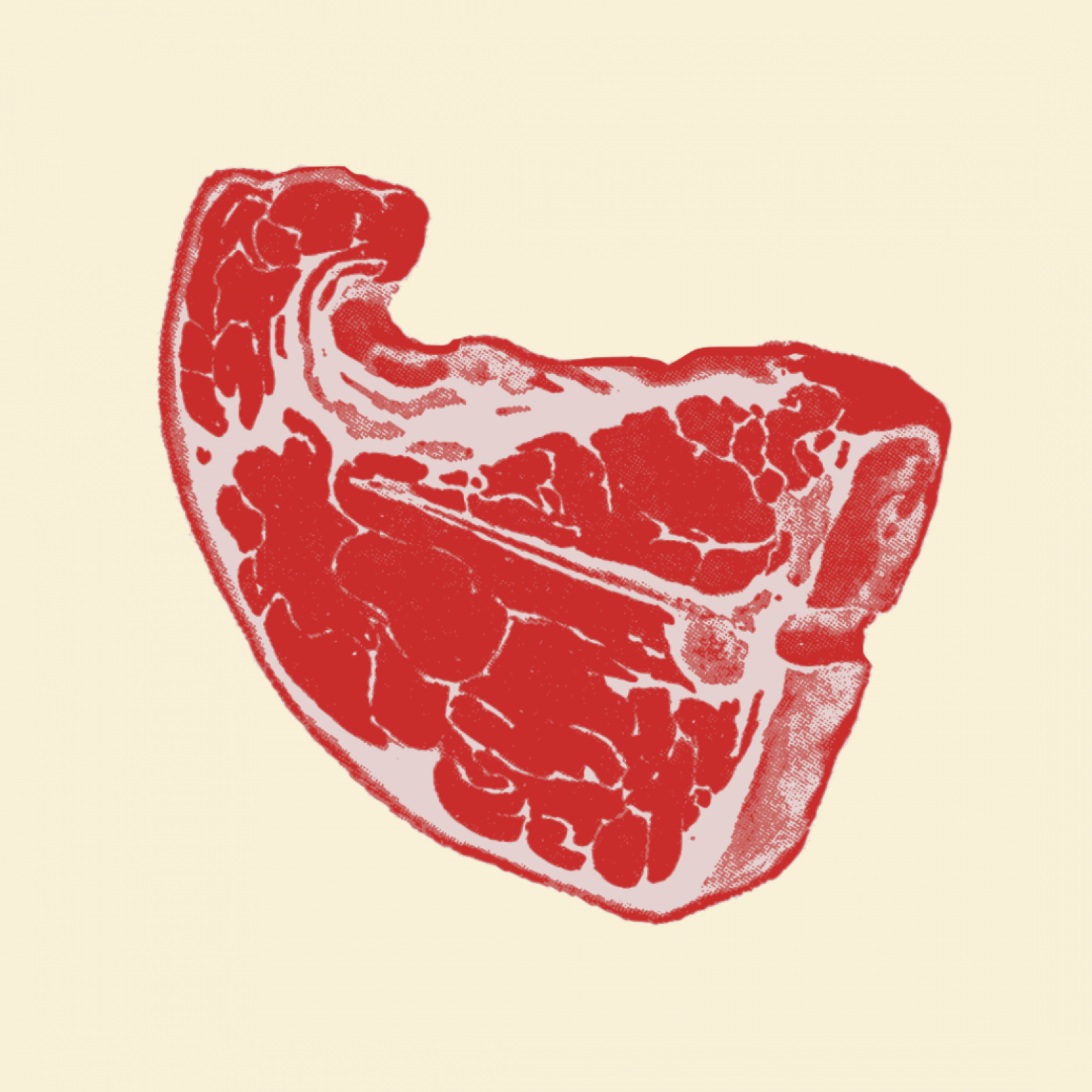
Christopher Kimball: This is Milk Street Radio from PRX. I'm your host. Christopher Kimball. Tim Hayward loves steaks so much he's inked it onto his body.
Tim Hayward: So, the symbol is a gridiron surrounded by a ring, and in the ring are the words beef and liberty.
CK: Tim claims the best steak he ever ate came from a cow that was 25 years old.
TH: These animals, they've lived long, really, really, really hard-working lives, and then when they're slaughtered, this guy's buying them up, bringing them in, and his wife's cooking them, and it's just the most glorious meat you've ever had.
CK: The Ultimate Guide to Steak that's later in the show. But first, I'm joined by my co-host, Sara Moulton, to answer a few of your cooking questions. Sara is, of course, the star of Sara's Weeknight Meals on public television. Her latest book is Home Cooking 101, Sara, how are you?
Sara Moulton: I'm good. Chris
CK: So, we're going to talk about steaks a little bit later in the show, but I have a question for you, like someone just went to a steakhouse, which is actually right near the studio where we are now. This is a guy I really trust who owns a bakery in Boston, Cambridge, and he said it was fabulous. So, I'm beginning to think maybe the steakhouse, no matter where you go, is actually a pretty good bet. Like, in the day, Howard Johnson's actually had good food.
SM: Oh, they really did but that’s because of Jacque Pepin
CK: Jacque Pepin was working there in the 60s, (yeah) But maybe the steakhouse is actually something we should rethink. Some of the really expensive steakhouses worth 70 or $80 for steak, I think is insane. But what about a regular steakhouse, like, if you're traveling, isn't that a pretty good bet?
SM: I think it is. I agree for starts, they have those really, really, really hot ovens, and so you get that really wonderful crust. And they, they cook age steak. They, you know, none of this, you know, recently butchered stuff, the aged steak that is much more tender and flavorful. So, yeah, I agree with you. I'm not a big meat eater, although I like steak every so often. My favorite steak is skirt steak, which is, you know, not a steakhouse steak, but (I like hanger steak), hanger steak too, because they have so much unique flavor both of them. Yeah, so, but no, I think you're right, a steakhouse is a good bet.
CK: Now, I'm hungry for steaks.
SM: No, but wait a second, what's your favorite sauce for steaks.
CK: Worcestershire sauce in butter.
SM: My grandmother would approve.
CK: Very simple.
SM: Yeah, very simple. I like au poivre. And I'll tell you, of course, my French Béarnaise. I love Bearnaise.
CK: The French really, they double down on their sauces.
SM: Yeah, they do. But any rate, let's take a call.
CK: Welcome to Milk Street. Who's calling?
Caller: Hi, this is Michael from West Hollywood, California.
CK: How are you?
Caller: I'm great.
CK: How can we help you?
Caller: One of the perks of living in Southern California is we get all kinds of interesting produce. And August and September, it was hatched chili season in New Mexico, and I went in 50 50 on 50 pounds of hatched chilies, and now I have a freezer full of 25 pounds of hatched chilies and trying to come up with interesting ways of using them.
CK: You know, my favorite was a recipe I saw 20 years ago for a hamburger with a hatch chili sauce on top. It's about the best hamburger I ever had in my life. So that would be number one. But then you could use it, you know, like you would. You could use anything. Use it enchiladas and stews, etc. You could use it in Shakshuka, because they're not going to burn your mouth out, but they have a ton of flavor, so, but the hamburger, I got to say, was killer. I still remember that
SM: Was it a hamburger or a cheeseburger? I bet it was a cheeseburger
CK: It was,
SM: I think it's a green chili cheeseburger.
CK: It's really good. Yeah, it's phenomenal. That would be my cheeseburger.
Caller: Okay, yeah, oh, it sounds so good.
CK: Just have the salsa, make up a salsa, and freeze it in ice cube trays or whatever you want, and you have it ready to go.
SM: Yeah, I was going to also suggest adding it to potatoes, like in a potato gratin, you know, with cream and cheese.
Caller: Oh, that's amazing. Okay
SM: It's great in quiche, you know, because I'm thinking of dairy things, because, I mean, hatch chilies have a unique flavor. They're sort of sweet and smoky and grassy, and some of them are hot, but not that hot, so it's always good to combine with dairy. And they're also, I think, very nice sauteed with mushrooms. So, I'm just trying to think of different places to take them than the usual.
Caller: Yeah, very helpful. I've made a lot of chilies verde, but we're sort of, we're over to that at this point
CK: I do have a question. So, when you get through 25 pounds of these, are you going to be sick of hatch chili's, or are you still going to be an enthusiast? I guess you'll have to wait to see
Caller: I think it might have to be an ever other year thing.
CK: Yeah, I think so
SM: Maybe you need to have a hatch chili party.
Caller: That's actually a good idea.
SM: You know, invite some other people over
CK: and give them all hot chilies in a little package.
Caller: That's chili Hanukkah might be the way.
SM: Oh, there you go
CK: That even rhymes,
SM: Yes. Love it.
CK: Michael, thank you
Caller: Thank you guys so much
SM: Welcome to Milk Street who's calling?
Caller: This is Pam from Hague, New York.
SM: Hi, Pam, how can we help you today?
Caller: Well, I have a question. What is the best way to store steaks if you can't use them immediately? I had quite the dilemma after purchasing some very nice strip steaks that were freshly cut and one inch thick, and I needed to hold them for three days. I wasn't sure what to do if I left them in the plastic bag that they came in, or put them on a plate, loosely wrapped. That was my dilemma, and so I'm asking you for advice.
SM: How did they come out? Was there a problem?
Caller: The steaks were very good, but I thought that they smelled little beefy when I opened up the plastic bag.
SM: Well, you know, I think that actually is not a problem unless, because they smell rotten.
Caller: Oh no. no.no. Nothing like that.
SM: In my experience, all these years, working in restaurants and also working at home, I almost always rinse every piece of protein and pat it dry before I cook it. And you will find that that aroma just disappears if you rinse it and pat it dry.
Caller: Okay
SM: So, you know, if I only had them in the fridge for three days, I would leave them the package they came in.
Caller: That's what I was wondering. But that's what I did
SM: Yeah, yeah. But then I would rinse them and pat them dry, you know. (Okay) and proceed. Chris, (okay) what do you think?
CK: Well, if we were in the 18th century, 19th century, in England, we would be hanging our game for a few days until it fell off the string, right? I mean, the English, you know, thought, and there's a lot of truth to that. Because you're dry aging, aging develops a lot of flavor. I would think, you know, a few days in the fridge, in the original packaging is fine for longer. You could vacuum, seal it or put it in a plastic bag and get rid of most of the air. Of all the things you could cook chicken or fish, forget it. But steaks are going to be very unlikely to have any bad bacteria on it. They can stay quite a long while. But I agree with Sara, I just rinse it off, pat of dry, and it should be good to go. You know, they may have actually tasted better than if you cook them on the day you bought them. There you go.
Caller: Thank you.
CK: You're welcome. All right,
Caller: I enjoy your program. Thank you very much. All right, bye, bye
CK: Thank you
SM: Bye
CK: This is Milk Street Radio. If you need a little inspiration in the kitchen, give us a call. 855-426-9843….855-426-9843 or just email us at [email protected].
SM: Welcome to Milk Street who's calling?
Caller: Hi, this is Tom calling from Chicago.
SM: Hi, Tom, how can we help you?
Caller: Well, my question is about extra virgin olive oil. I went to a Spanish food and wine tasting, and the chef there apparently had quite a following, because hands started going up, asking about his view on extra virgin olive oil. And he had some very controversial, to me, ideas. First of all, that first cold press is no longer a thing and it's just a marketing term. And most of all, he said that extra virgin olive oil has a higher smoke point than most of us have been led to believe. So, I wanted to call Milk Street and see if you could corroborate any of this.
SM: I mean, he is right. It used to be that when olive oil was harvested, when the olives were harvested, they were pressed, and the first time they were pressed, no heat was applied. So that was called first cold press. And then they'd go back and they, you know, add some heat and get some more oil out of it. And that was not as desired, because it had been compromised slightly. Now they do something called centrifugal separation, so it's a totally different process. So, yeah, I think the term is used loosely, too loosely. You know, the first cold press it's just marketing. But the fact of the matter is, olive oil, you know, really can be very high end depending on where and when it was harvested. I mean, the really good stuff is harvested once a year. It's not heated. It's still not heated. You know, it has a shelf life. And depending on when they harvest the olives, whether they're ripe or not ripe, there's a different flavor profile. And, of course, the terroir, and there's 1500 different kinds of olives, so there's so much that goes into it. So yes, I agree with the first statement that that is a misnomer. But there's nothing wrong with getting a high-end extra virgin olive oil that you know comes from a place that just makes that oil in terms of the temperature. Yeah, you sure can, you know it, I think you can get it over 400 degrees, and a lot of food is deep fried at. 365 360 but why would you want to do that?
Caller: Well, that is my question? (You wouldn't) If it’s so expensive why would you want to waste it on something like deep- frying
SM: Yeah, and plus which it will compromise its wonderful flavor. You want that as a finishing oil
Caller: Right
CK: You can buy inexpensive olive oil that comes in a big can I just did this test at Milk Strreet two weeks ago, and I fried French fries in it, yeah, and it was fine. It didn't smoke. It was great. And so you think about like Italians had olive oil, right? That's what they use. So of course, they fried in olive oil. You don't use a $25 dollar bottle to fry in, right? But you can buy very inexpensive olive oil and a big thing, and it's just fine if you want higher temperature, if you get a refined olive oil, like a light olive oil, that'll even have a 440, 450-degree smoke point. But there's nothing wrong at all with frying with olive oil. Just don't use, you know, a good, expensive one. That's all.
Caller: Alright.
CK: I think that one other thing is this nonsense about it's got to be an Italian olive oil or a Spanish olive oil. When I was in Lebanon a few years ago, I came across this very, almost yellow, cloudy, fruity olive oil without a lot of bite in the back of the throat. I still get it. I found the place that makes it. He makes very, little of it every year. It's great. So, I think especially Italy and Spain have sort of monopolized the market in terms of where you think of olive oil coming from. But there are dozens of countries. You know, lots of places make olive oil, (I agree) and they're olives. Olive oil still made by pressing. I've been in some of those places. So, you still get small operations that make wonderful olive oil.
Caller: I'm going to have to expand my reach of extra virgin olive oil then.
CK: The last thing is, I don't know if it's still true, but it used to be that a lot of the lower quality stuff was exported to United States, and the great stuff sure stays in country but that may have changed
SM: Yeah, and there's some very good olive oil coming out of California too
CK: Well, California has some great oils. Yeah. Anyway, that's most of what we know.
SM: Yes
Caller: Alright. Well, thank you very much. It's been a pleasure talking with you.
CK: Take care.
SM: Okay, Tom,
Caller: bye, bye.
SM: Bye
CK: Welcome to Milk Street. Who's calling?
Caller: Hi there. My name is Amy. I'm from Kitchener, Ontario, Canada.
CK: How can we help you?
Caller: So, I purchased a produce box eight months of the year from a local farm. It's filled with such a variety of beautiful fruits and vegetables, and it helps us eat more seasonally as a family. We've also found it's really cost effective and allows us to support local. I've gotten pretty good at using most of the produce over the years, but there's a few items I'm still struggling with, and hoping that you can help. Those two items are carrot tops and beet greens. Now, I know not everyone eats those parts of the vegetables, and maybe for very good reason, but I really try to utilize as much of the vegetable as I can, especially with the cost of living right now, it just physically pains me to throw out any food, but I find those portions of the vegetables to be quite bitter, so I was wondering if you had any suggestions on how to actually make them taste good.
CK: Well, there's A and B. A is the compost, and B is the cooking. So, the carrot tops go in the compost. I don't think there's anything can do with those. I don't think they have any redeeming features. Maybe they have vitamins, but beet greens, yeah, I mean beet greens, unlike kale or some other things, probably don't need to be blanched, unless these are huge beets and really tough. You might take a sharp knife and cut on either side of the rib if the ribs are tough, but usually they're not, and then you could just use like, you know, the Italians might cook them for an hour with some beans or something. But you certainly could sauté them. You could put them in a soup or whatever, but you could use them, you know, with almost anything. Sara?
SM: Yeah, I would sauté them with garlic and lemon or garlic and balsamic. I don't find them bitter, but if you do, you could blanch them.
CK: I mean, some beets look like huge grapefruit. Yeah, those might be better,
SM: In which case, then, yeah, go ahead and blanch them quickly, you know, in and out of boiling water, and then sauté them with garlic and lemon, or combine them with other greens, or put them in stuffings, like in spanakopita, you know, combine it with spinach, (right, that's a good idea) But, you know, it's interesting. You should bring up carrot tops, because it never occurred to me to cook with them. And the years ago, I went to France to do an apprenticeship at a restaurant. And I stopped off in Paris to stay with this couple, the husband of which fancied himself as a good cook. And he made us a soup for dinner that night, and it was a green soup, and it was very nice. It was sort of mild. It had a nice texture. And I was just so baffled. He was really trying to stump me about what was in there. Well, it was carrot Ttop soup. (Oh, wow) yeah, there was some potato in there and chicken broth and lemon. And when he pureed it was really very pleasant, mild, but pleasant. So that is a thought.
Caller: That sounds promising
CK: In Fannie Farmer's time and the French did the same thing. They'd have a huge stock pot on the back burner, and carrot tops, cabbage bits and pieces, other vegetable bits and pieces go into the pot.
SM: It'd be nice in a vegetable broth
CK: for 10 hours you slowly simmer it. Yeah, they would actually use the water you cook cabbage in as part of it. Nothing got thrown out. So that's what people would do with something like carrot tops. They would just make it part of a stock, right? You could do and you could do that too, yeah, but
SM: You can try the soup. You know, I didn't find it bitter, I have to say, I found it more grassy.
CK: So, with soup, okay, I say compost. She says soup. But you certainly could do it with stock put in the stockpile.
Caller: Those are great suggestions. Thank you so much. The soup idea I'm really drawn to.
SM: Okay, Katie,
CK: Thank you
Caller: Thanks so much. Have a good one
SM: Okay, all right, take care.
CK: You're listening to Milk Street Radio. Up next, why old cows make better steaks. Hey Milk Street radio listeners for this year's holiday special, I'll be taking calls with Vaughn Vreeland from New York Times cooking all about holiday cookies. If you're wondering how to tell when your cookies are done, looking for new recipes this season, or just want to avoid a holiday baking emergency, Vaughn and I are here to help. Email us at [email protected] Again, please send your holiday cookie questions to [email protected] and we'll be in touch.
This is Milk Radio. I'm your host. Christopher Kimball, right now it's my conversation with Tim Hayward in order to write his book on steak, Tim ate at some of the best steak houses all around the world. Tim, welcome to Milk Street.
Tim Hayward: Hi, Chris. It's great to be here.
CK: I'm going to quote you here, “though it's painful to admit throughout its history, steak has been co- opted by assholes, cornered by the strong and consumed by the powerful. So, you're a man with opinions about steak
TH: Yeah, I'm afraid so I'm sort of opinions for hire. And yeah, it was really fascinating getting into it in that sort of depth. But I think the sort of the ____ quotient runs through the entire history of steak right the way up to contemporary.
CK: So, is this a case of my steak is bigger than yours?
TH: I don't know. I remember as a kid. I mean, we weren't a very wealthy family, but very often dad would get a steak, you know, if it was a special occasion, but everybody else wouldn't. And I remember that still happening and, you know, and then I'm reading about Neolithic behaviors and hunting behaviors and how that operated, where obviously the prime cuts would have been saved for those people who actually went out and hunted and needed the nourishment that was there that made sort of sense within that. And then the same week, I was reviewing a steak restaurant in London, and it was full of Masters of the Universe, city boy ___ and kind of, you know, that's a that's a continuum of assholes
CK: Eons, (eons). You said something that, actually, I've never thought of, but is obvious in retrospect, some kind of steak. Quote, unquote steak is the most natural and logical way to turn prey into dinner. And I guess that's right, if it makes sense, that steaks were easy. Steaks were just a, you know, a knife swipe away from the fire.
TH: The belief that eating meat is good for one is as long as humanity itself. We can still argue it in contemporary science, but basically, it's always been there is this kind of primitive idea that if you take a big, strong and big, strong animal and eat some of it, it will make you big and strong. That kind of makes so much sense at such a basic level. Before we domesticated animals, you had to go a really, really long way to find where the animals were, and then collectively as a group, you had to kill them. And you usually sort of eat the liver raw. That's a tradition, actually, that a lot of hunters still do now. But you know, you're looking at that thing. You've got a couple of bits of sharp flint. You've got to reduce it to something you can carry back two days march. So, you take the prime cuts, and, of course, the easiest bits to take out of those huge muscles along the back, those great big pieces, which actually they last a long time because they don't have an enormous amount of the meat itself exposed to the air. It's just the surface. And so, you can sing that stuff over your back. You can trek back home and feed the entire family and leave everything else for the for the wolves and the other predators.
CK: So, there were a lot of steak houses in the early days. You talk about the sublime Society of Beef Steaks, you want to explain what that is. It sounds pretty cool.
TH: I love this. I only have one tattoo, and it is the symbol of the sublime Society of Beef Steaks
CK: So, wait, wait, wait, what's the symbol?
TH: So, the symbol is a gridiron surrounded I'm looking at it now on my forearm, and it's surrounded by a ring, and in the ring are the words beef and liberty.
CK: Oh, I love that.
TH: It's a nice one, isn't it? Also, my daughter's called Liberty, which is kind of convenient, although I had the tattoo before I had the daughter.
CK: And your wife's name is beef?
TH: My wife's name is not beef (just checking) but thank you. Nobody's ever said that before that. It's just brilliant. I'm going to tell her that I tell her that. So, no, the sublime Society of Beef Steaks was It was started. It was a Whig society. Whigs were a kind of a liberal political group who believed in freedom of the individual was largely their principle. They were 12 members, and one had to die for another one to join. And they would get together every month, and they would grill beef steaks on a griddle, and they would drink dozens of bottles of claret, and they would sing patriotic songs or songs that were rude about the French, (which is the same thing) and that was the sublime Society of Beef Steaks. But this predates your own beefsteaks in America by a couple of 100 years. But what then happened is you start getting these clubs in New York. They were called Beef Steaks. And at that point it was men only men, and they'd get together, and they would eat beef steaks. The only vegetable was a stick of celery, and they and they drink Porter with it, kind of thick black beer. And the whole thing was a kind of, I don't know, kind of false nostalgia for working manliness. It's, it seems kind of artificial and kind of weird, but it had this kind of strange democracy to it. And I found that just so fascinating. And then this tradition is born out. I actually went over to Manhattan to go to visit Keynes because I wanted to go to what's reputedly the best surviving steak house in Manhattan. And I was utterly delighted to be served a steak. I couldn't get porter. I had a martini, which seems like a much more sensible idea to me, but they actually serve it with a pickled stick of celery and a pickled carrot and a pickled gherkin. And it's so lovely that the tradition has kind of carried through. But I love that during the 1920s they started to invite women to Beef Steaks.
CK: Oh, well, that was the end of the steak house, wasn’t it?
TH: Well, it's interesting that you point in because there are loads of furious letters from gentlemen who used to like the Beef Steaks, and they complain about the fairer sex being allowed to come along. But weirdly, the complaint is not just their presence, but it was what they were bringing with them, these ghastly female affectations of cocktails. And it was born out, yes, at that, at that point, mixing drinks was a was a female thing, and that, consequently, the reason I was able to have an absolutely blindingly good Martini at Keynes was because somebody in the 1920s has started letting women in.
Great.
CK: Well, it wasn't that long ago, back in the 70s in New York, I think the New York Athletic Club never allowed women in. (That's…) I mean, so yeah, and that's, that's just a generation ago.
TH: So absolutely, absolutely.
CK: it's really changed, but, but I assume the menu changed as well, and they got away from just Porter and steak because they started, we started serving more vegetables than a pickled salad
TH: a few but in a way, what I like about the steakhouse tradition is it has to stay quite true to the mark. You know, there's not a lot of complicated stuff around your steak. So, some of the wealthiest people in the world, if you ask them what they want for dinner, they'll have a really, really good steak and, you know, and a side salad and a martini. And when I was a kid, we would go to a restaurant just once a year, and it was an early English steak house that managed this marvelous thing whereby even our family could afford to go, but they had a table with a checkered tablecloth, and, you know, Dad could get a glass of wine. And it was kind of we were able to go to that place. We were able to afford to go just once a year, and my first experience of restaurants was in that kind of steakhouse environment. And I treasure it, but still today, if you know, if you told me I had two days to live, you know, I'd spend those last two days in a steakhouse.
CK: You could probably drink a lot of martinis in 48 hours.
TH: I reckon I could.
CK: You do your best anyway
TH: I really would.
CK: Well, it's also interesting. I was in Argentina a few years ago, and I thought the steaks were good, but I think American beef was actually better. Now I'll never be able to go back to Argentina, but you said Argentina has completely changed its whole method of farming beef.
TH: When I first pitched the book, I wanted to go to Argentina because they were rearing their cattle on the Pampas in the old way, so they were eating grass. And in the end, it was impossible to find somewhere in Argentina that was still doing grassfed cattle, because they've gone over largely to corn feeding solely so they can sell into the American market. But there's an argument which I think is really quite interesting, which is that we are told that it is the fat that carries the flavor, and we're told that tenderness is everything in meat.
CK: Well, in the United States, but not in France, for example, they don't say that.
TH: It's exactly that. When you start traveling around and trying other people's traditions, you go, hang on a minute. Everybody is not looking for meat that you can cut with a spoon. Everybody is not looking for meat that's all about the fat. Certainly, the best steak I ate at any point while researching the book, much as I loved the USDA prime grade stuff that I ate in Manhattan, the best one was in Bilbao from a cow that was 25 years old
CK: Really?
TH: Yeah
CK: Because, well, I guess the reason here in the States, is the older the animal is, the more cost to raise. Yes, so I assume they have a, you know, a Venn diagram, or something, of the optimal age in terms of cost and revenue, right?
TH: That is so perceptive. People just don't get that. The really good steak I had in Bilbao was astonishing. It's from something that their term for it is a buey, which I believe is Spanish for ox. And the chef was brilliant, but cooking in a very, very simple way on a charcoal grill. But her husband, who was the beef supplier, traveled all around the sort of the poorer parts of the outskirts of Galicia in Spain, and then down into Portugal, buying up old draft oxen that were still being used in farms. Now, these animals, you know, some of them are taller than me at the shoulder. They've been working their whole productive lives. These are tractors. They're far too valuable to kill for meat, and they've lived long, really, really, really hard-working lives. And then when they're slaughtered, when they get too old to do their work, this guy's buying them up, bringing them in, and his wife's cooking them, and it's just the most glorious meat you've ever had. I remember the steak at Keynes because it was every man's dream of steak. It was perfectly tender, it was perfectly fat, it was smooth, it was buttery. I hardly had to cut it with a knife. By the time I got to about the sixth mouthful, I'm going, Christ, this is a 24-ounce steak. can I keep going? It's like chewing your way through Arnold Schwarzenegger's chest. What on earth? Why? But it's just it goes on and on and on and on, and then the buey I had a piece the size of a Snickers bar, and I was there with my wife and my daughter, and we shared it, and it was nearly too much for us, because it tasted so intensely and so beautifully. Just a pure meat. It was like eating a piece of sashimi. You know, you everything is in there, the concentration, the focus, and it's just you don't need the scale of it, and so that there's, there are huge differences within it. And of course, the social stuff and the historical stuff around why we are the way we are about those things I just find as a writer, endlessly fascinating.
CK: Now, you mentioned a cooking method, brushing steaks with a salty brine at every flip, and then maybe last couple of flips sprinkle on some port to it. So, does this? Is this something that makes you feel good? There's a little bit of performance art, or do you think it actually does something?
TH: I think, like everything in the book, it's a different technique. It comes from a different place, and it's worth trying, and it might be fun for you. So particularly if I'm barbecuing, there's a thing they do in Argentina when they have those parea grills, outdoor grills. So, they'll take the whole animal and put it on a sort of crucifix, almost, and hang it over the fire. But they season it with a very, very strong brine solution, which they splash on it. And as the splash hits the hot meat, the water's driven away, the salt encrusts the surface. If you do it for 20 minutes, you start building up an actual salt crust. You can see it. It's like diamonds. It's lovely. (That's interesting). So, if you're if you're cooking in hot air, as opposed to against metal, there's a great thing to try.
CK: That's putting that on my list ideas. So, I do have to ask you, you, years ago, came down with covid and spent quite a lot of time in a hospital, you said, having spent 14 days in a coma. So, was that a that happened once you ever get covid again? What was sounds awful?
TH: It was, it was quite weird. It happened once it was in the second lockdown, started feeling a bit ill. I'm lucky. I live very close to a great hospital. They got me into an ambulance and got me in there, and they woke me up to ask me if they could put me into a coma, because that was what that at that point, that was the only hope for survival. So, I said, yes, (good choice) Apparently, my wife and daughter said goodbye to me on an iPad three times. I didn't know any of that. It's tremendous. What they did. They saved my life. I think the only thing that's left me with, I've become massively intolerant, having, having died several times, I have simply no time for any bollocks. And I'm now, I'm now just, I'm not a grumpy man. I'm simply just one who won't take ___ from anybody.
CK: So, if you go to a steakhouse with someone. They complain about their steak. You just go, hey pal, like I almost died three times, (pretty much). Tim, this has been fun. I learned a lot about steaks, but the rest was even more interesting. Thanks.
TH: It's been enormous fun. Please. Let's do it again and with cocktails next time, I'll bring some you.
CK: That was Tim Hayward. His book is Steak, the Whole Story. You know, a friend of mine just had dinner at the Stockyard steakhouse outside of Boston, and he told me that it was truly excellent. Now, this is the same guy who runs a popular bakery in Cambridge and also collects rare wines. He really knows his food. Now, I've been to steak houses in Argentina. I tried bisteca a la Florentina in Florence, and also heavy Wagyu beef in Japan. But when it comes to steak, I'm a huge fan of the American Steakhouse. You know, I grew up in the 60s when the slogan was America, love it or leave it. And that phrase always made me think of coconut layer cake or blackberry pie, Southern biscuits, fried chicken. And of course, steakhouse, steak. You don't have to leave home to find true love. I'm Christopher Kimball. This is Milk Street Radio. Now let's head into the kitchen with JM Hirsch to talk about this week's recipe, sunflower hummus. JM, how are you?
JM Hirsch: I'm doing great.
CK: You and I have spent a lot of time discussing the pros and cons of different hummus recipes, but you recently came across a recipe that basically blew my mind, because it breaks every possible rule. So where were you and what was it?
JMH: So I was in Tbilisi, Georgia, and I was at a restaurant called Craft Wine restaurant, which it does indeed sell an awful lot of wine in addition to this amazing hummus. And the owner was telling me that he is addicted to hummus, but he was really frustrated because a lot of the core ingredients to a traditional Middle Eastern hummus simply aren't used in Georgia. And so, he decided to create his own version of hummus that drew heavily on the native ingredients of Georgia. He started with the sesame seeds, which are, of course, the base of tahini, which is an absolute must have ingredient for hummus. And he decided to use sunflower seeds, which Georgia has in great abundance to create his own tahini. And from there, it spiraled into this absolutely delicious, incredibly rich and yet still light and airy hummus that was just wonderful.
CK: So, what is the tahini made with sunflower seeds like compared to the sesame seed version.
JMH: Well, I'm going to say it was much richer. It wasn't heavy, but it was much, I guess, more savory. And that's part of what really blew me away about his hummus. So, he starts off by literally blending sunflower seeds and sunflower oil until it has a tahini like consistency. Now the thing to know about the sunflower oil in Georgia that really shocked me, and honestly, I thought the guy was lying to me, because when I tasted his sunflower oil, I looked and I said, that is toasted sesame oil. That is not sunflower oil. But I was as usual, wrong. It was so rich and so savory that I just couldn't believe it. So now imagine that as the base for your sunflower seed tahini that is then used in hummus. It really transformed it. Now he did make a couple of other changes as well. Again, leaning into the ingredients that are native to Georgia, for example, they don't use a whole lot of chickpeas. And so, he used kidney beans.
CK: Wait, wait, wait. Whoa, wait you can't just go like, oh, by the way, he used, he throws kidney beans. That's like, totally gonzo. I mean, really,
JMH: It is and but you know what? It was delicious. It was really really good. Now, I will be honest in our version of his recipe, we did stick with chickpeas because, frankly, we have them available here, and we did like the way the sunflower tahini played with the lighter flavor profile of the chickpeas. We thought it was a very nice balance. But I'll tell you, his kidney bean version was really, really delicious. I was quite impressed with it. And frankly, when I make it at home, sometimes I use kidney beans.
CK: So, are you going to buy sunflower seeds and throw them in a blender with sunflower oil or?
JMH: Or you certainly could, and it would be delicious. But luckily, here in the United States, if you go to the peanut butter aisle, you can buy sunflower seed butter or sun nut butter, as it's sometimes called, which is a wonderful substitute. Makes it really easy to make this hummus very quickly. And then, in terms of seasonings, he again leaned into some native Georgian seasonings. And so, he used ajika, which is a Georgian pepper sauce that has a lot of coriander and fenugreek in it. He also used Svanetian salt, which is kind of a seasoning blend that is, yes, based on salt, but it has a lot of other things going on in it. Dominant in that mix is red pepper flakes. So, when we were creating our version of his sunflower hummus, we borrowed some flavors from both of those seasonings to kind of stay truer to his version, although, you know, ajika is a little bit harder to come by here. Same with Svanetian salt, but we drew out the coriander and the red pepper flakes and added those to our version of his recipe. And it really is quite wonderful. And you know, again, he finished his with a drizzle of that incredible sunflower oil over the top. It's really delicious.
CK: So, one last question, so sunflower oil, doesn't it look like grapeseed oil, or any other vegetable oil? Is it have a darker color, like toasted sesame oil?
JMH: Well, again, this is part of what really threw me when I tasted it, because I am familiar with it looking like a very neutral oil, having not a lot of color, but in Georgia, and I think it's from the roasting process, it's much darker, much richer. And again, it looked like toasted sesame oil and tasted very much like it. It was wonderful. If I could have got it past TSA, I would have brought a whole lot of that home.
CK: JM, thank you very much. Time to blow up our hummus kitchen and do it totally differently, but it sounds delicious. Thank you.
JMH: Thank you. You can get the recipe for sunflower [email protected]
CK: You're listening to Milk Street Radio coming up. Kenji Lopez Alt goes on a quest for teriyaki. Hey, Milk Street radio listeners this year for Thanksgiving, we want to hear all about your most unusual Thanksgiving traditions, your antics, your games, your rituals and unexpected foods that you think no one else makes. To share your Thanksgiving story, please leave us a voicemail at 617-249-3167, or send us a voice memo to [email protected] and thanks. I'm Christopher Kimball. You're listening to Milk Street Radio right now. My co-host Sara Moulton and I will be answering a few more of your cooking questions.
SM: Welcome to Milk Street. Who's calling?
Caller: Hi. This is Christina.
SM: Hi, Christina, where are you calling from?
Caller: I'm calling from London, England, American in the UK. I love your show.
SM: Oh, well, thank you. How can we help you?
Caller: I'm started a very, very small bakery business in the UK making my favorite treats that I missed from home, which is Rice Krispies treat. But I like to brown the butter, and I work in a shared kitchen, and right now, I do everything very analog, like multiple pans, browning butter at once. By the end of the day, I'm like cover. In marshmallows and Rice Krispies. And I wanted to know if you guys had any tips for Browning butter in advance and not having like the sediment all fall to the bottom and being able to reheat it to a hot enough temperature to then add the marshmallows and melt this whole process. If that makes sense.
SM: Yeah, no, you could absolutely make it ahead and freeze it. And in terms of that sediment, what that sediment what that sediment is, is the browned milk solids, and you could certainly strain them out.
Caller: Okay, I actually like the color of them. I like the how they look.
SM: Well, then don't strain them out.
Caller: Okay.
SM: It sounds like what you're doing is probably excellent because of all the care you're putting into it. But anyway, you could make your life easier by just browning the butter ahead of time and freezing. It will freeze perfectly well, no problem.
Caller: And when you guys’ brown butter, is there a master method for this?
SM: The only way I've ever done is on top of the stove, but let's see. Chris, do you want to weigh in here?
CK: You definitely want to do the stove top, because you want to look at the color and monitor it. I think doing the oven would be dicey, but you can certainly chill it for a little bit and then package it in the right quantities and freeze it, and that would be fine. Yeah. Let's get back to the rice Krispie treats here, which is what excited me. So, is there a great market? I know that Claire Patak has her bakery, and she specializes in sort of American confection. So, it sounds like there's a pretty good market for that in London, right?
Caller: Yeah, slowly but surely, trying to make the revolution happen.
SM: Christina, do you call them artisanal Rice Krispie treats?
Caller: My brand is called Fine and Warm American treats made in London, and I don't use rice crispy treats. I call them crispy marshmallow squares.
CK: Oh, good marketing. Anyway, congratulations, and we wish you all the best.
SM: Awesome
Caller: Thank you, guys, so much, this was really fun thank you
CK: Take care.
Caller: Bye.
CK: This is Milk Street Radio. Give us a call anytime. 855-426-9843. 855-426-9843, or email us at [email protected]. Welcome to Milk Street who's calling?
Caller: Hi there. It's Kate Bennett.
CK: Hi. Kate Bennett, how are you?
Caller: I'm doing well. How are you?
CK I'm good. How can we help you?
Caller: I'm calling about brisket, okay, and wondering what you guys think about traditional brisket cooking. I make brisket a couple of times a year. It's always good, but I'm always looking to make it better. And the recipes are pretty divergent around some things. Some swear by first cut brisket. Some swear by second cut. Some cook for four hours. Some cook for just two hours. Some slice the brisket midway through the cooking, and some implore you to sear the meat before you braise. Others say you really don't need to do that. So, I'm just curious what you guys think about just cooking sort of traditional Jewish brisket. How you approach it?
CK: If memory serves, I think the second cut is the fattier cut. (That's right) and that's hard to find. If you're going to cook brisket, I would definitely go to a butcher shop and get a good cut and get the second cut. I've actually had luck using a pressure cooker slash Instant Pot. It seems to do a good job. That I remember is, like, 50 minutes or something. I don't know whatever it is. And then I turn it off, and I let the meat sit in the liquid, and I make this like an hour before I serve dinner or something. So that seems to work out pretty well for me. I've also done a slow cooker, which also seems to work pretty well. But the key, as you know, is getting the internal temperature up to probably 190 or 195 because you want all that collagen and connective tissue, because it's a gnarly piece of meat to dissolve. But of course, at the same time, you don't want to overcook it. I would say internal temperature for me would be 195 (okay) Now I know some recipes also say slice and leave in the sauce or the juices for half an hour, or let it cool overnight in the juices, I haven't tested that. I'm a little suspicious of that, because I don't know if meat actually absorbs juices as it cools or not, but I do let my brisket and pressure cooker sit in the liquid, so maybe it does help. It's all about getting enough fat in the original cut. Everything else is going to be secondary, so I just get the right cut, cook it low and slow or pressure cook it and then make sure you're up to 195 that would be my answer
Caller: And do you sear before, or do you not bother with searing?
CK: I don't, you know, I've pretty much given up searing for most things that are cooked long time, like beef stew. I don't do it anymore. I don't bother because I don't think you're adding that much flavor to all the other things in the pot. So, I would skip that personally.
SM: You know what I'm going to weigh in, because my brother in law makes the best brisket ever. He said he's done both the first cut and the fattier one. I agree with Chris. I would always try to get the fattier one if I could, but he said it even worked with the leaner cut. He does sear it, and then he raises it, he adds red wine, reduces it, and then he cooks it for three and a half, four hours, covered. And then what he does is he chills it overnight, but he separates the meat from the liquid. The next day you can skim off the fat, if you want to, it'll rise to the top. And then he takes out the brisket, and while it's cold, it is so much easier to slice, it doesn't shred. And he puts it in a lasagna pan, you know, like a nine by 13 with a couple cups of the broth, covers it in and puts it in a 350 oven for like, 20 - 30 minutes, just to reheat it. I have to say it's the best brisket I have ever had, so I would recommend you try that. That's great.
Caller: Well, thanks. That's super helpful.
SM: All right. Well, thank you. That was a good question, because brisket is gnarly, as Chris said.
Caller: Thank you.
CK: Yeah, thank you.
Caller: Okay, all right, take care.
SM: Bye, bye.
CK: This is Milk Street Radio. Now it's time to check in with our friend Kenji Lopez Alt. Kenji, what's up in Seattle these days?
JKA: You know, I've been on this quest for the last year or so to try every single teriyaki shop in Seattle, of which there are nearly 100. I don't know if you're familiar with this, but Seattle is the cradle of chicken teriyaki. Chicken teriyaki was invented in Seattle.
CK: Now, if you asked me what a big staple of Seattle would be, I would not say teriyaki.
JKA: Oh yeah, no, it is. It's, you know, Seattle. I think of Seattle teriyaki almost the way that New York has its pizza. You know, where every neighborhood has its teriyaki joint, and it's the kind of place where everybody, you know, from construction workers to bank workers, everybody goes in and gets teriyaki. It's a real sort of democratizing meal in Seattle. And what's more interesting is that Seattle, you know, you think of teriyaki as a Japanese dish, but Chicken teriyaki is actually a as we know it, at least, is actually a Japanese American dish invented in Seattle in 1976.
CK: Really that late?
JKA: Yeah. So, it's Toshi Kasahara. He's a Japanese American immigrant. He opened up a restaurant in the Queen Anne neighborhood by the Space Needle in 1976 serving a version of Japanese teriyaki that was sort of more suited to local palates. So, you know where Japanese teriyaki is typically made with just soy sauce, mirin and sake. Seattle style of teriyaki typically will also have the addition of garlic and ginger as well as often pineapple juice, which comes from that Hawaiian influence. But after Toshi opened up that place, it became popular. And then there are all sorts of copycats, and Toshi himself in the 80s, he started franchising his name, so there's now a bunch of restaurants called Toshi’s in Seattle that were all eventually sold off to the individual Mom and Pop owners. So, none of them actually have anything to do with Toshi or with each other anymore, but Toshi still cooks teriyaki at a place in Mill Creek, north of Seattle. So, the guy who invented Chicken Teriyaki, he is still cooking chicken teriyaki to this day, and you can go get his teriyaki.
CK: So, what's the difference between really good teriyaki and pretty good teriyaki?
JKA: Well, there's a bunch of things. So, you know, really good teriyaki, the best Seattle teriyaki places you have chicken, obviously, that's nice and juicy and tender, as opposed to dry some places over marinate their chicken so the chicken sort of gets a, like a sort of hammy texture to it, you know, real cured texture, which I don't like. I think real difference between the places that are great and the places that are just okay is that you get a really nice textural contrast. So, you get really crispy charred bits in a way that they balance out the sweetness of the marinade, because teriyaki marinade can be quite sweet, although all that said, you know, similar to New York pizza, even the worst teriyaki is still very good, but the exceptional stuff is exceptional.
CK: So, when you cook it at home, what's the secret? Is there something you do that's different?
JKA: No, I mean, I do it pretty much the way they do it at the restaurant. So boneless skinless chicken thighs that are butterflied out. You want them to be sort of relatively the same thickness throughout. So, you can butterfly them, pound them a little bit, and then I make a marinade with soy sauce, sake, mirin, a little bit of added sugar, minced garlic and ginger and pineapple juice. And the marinade doubles as the sauce, essentially. So, I reduce some of that to become the sauce, until it becomes sort of a syrupy texture. And so, you marinate the chicken overnight, and then you grill it hot until it becomes nice and charred. And that's really the key with teriyaki, is getting that really nice char on them and getting that texture.
CK: So, can you finish this off? Cook this in a skillet or under a broiler, or does it have to be grilled?
JKA: Ideally, it is grilled. You know, Yaqui does mean grilled, and that's really how you get the best flavor. You can do it under the broiler. You can do it in the skillet. In fact, you could even do it in a convection oven, in the toaster oven, as long as you do it at a really high heat. You know, this year actually, if you go to the T Mobile Park where the mariners play they serve teriyaki now in their walk off cafeterias there, and they're cooking it in a way that doesn't require a grill, just because they don't have a grill there to cook it with. So, they're cooking it in really powerful convection ovens to get some of that charring in there. So it is possible, but you lose a little bit of that, that real flavor, you know, because a lot of the flavor in teriyaki and grilled foods in general comes from when bits of fat or sauce fall directly onto the coals or the hot iron grates underneath and vaporize and, you know, release a little bit of smoke, and that smoke then deposits some of that flavor back onto the food that's cooking. So, you miss that bit of it, but you can still get something really tasty, (right). You know, I've been trying to get to know Seattle better, and the way I've been doing that is by attempting to visit every single teriyaki shop in the city, which really gets you around. You know, it'll get you into every single neighborhood. And the real interesting part is that the restaurants are still run mainly by immigrants, but now you see much more of a sort of pan Asian influence. So, some of them will be run by Vietnamese families, and you'll see teriyaki and pho, or teriyaki and ban mi on the menu. Or some are run by Korean families, and you'll find teriyaki and bibimbap on the menu. So, depending on where the families are from, they're going to serve teriyaki along with something else on the menus. Kenji.
CK: Kenji. thank you, the ultimate teriyaki in Seattle and in your own home. Thank you.
JKA: Thanks for having me.
CK: That was Kenji Lopez Alt. He's the author of The Wok Recipes and Techniques. He also co-hosts the podcast The Recipe with Kenji and Deb. That's it for this week's show. To hear all of our episodes, please go to Milkstreetradio.com or wherever you get your podcasts. By the way, we put together a collection of our all-time favorite recipes from Milk Street. You can find this collection at Milkstreetradio.com can also find us on Facebook, at Christopher Kimball's Milk Street. On Instagram at 177 Milk Street. We'll be back next week, and thanks, as always, for listening.
Christopher Kimball's Milk Street Radio is produced by Milk Street in association with GBH co-founder, Melissa Baldino, Senior Editor, Melissa Allison, Senior Producer, Sarah Clapp, producer, Caroline Davis, Assistant Producer Mari Orozco, additional editing by Sydney Lewis, audio mixing by Jay Allison at Atlantic Public Media in Woods Hole, Massachusetts. Theme music by Toubab Krewe. Additional music by George Brendel Egloff, Christopher Kimball's Milk Street Radio is distributed by PRX.
In this episode
ADVERTISEMENT
ADVERTISEMENT

Simple, Bold Recipes

Digital Access
12 weeks for$1
- EVERY MILK STREET RECIPE
- STREAMING OF TV AND RADIO SHOWS
- ACCESS TO COMPLETE VIDEO ARCHIVES

Insider Membership
12 weeks for$1
- EVERYTHING INCLUDED IN PRINT & DIGITAL ACCESS, PLUS:
- FREE STANDARD SHIPPING, MILK STREET STORE,
to contiguous US addresses - ADVANCE NOTIFICATION OF SPECIAL STORE SALES
- RECEIVE ACCESS TO ALL LIVE STREAM COOKING CLASSES (EXCLUDING WORKSHOPS & INTENSIVES)
- GET YOUR QUESTIONS ANSWERED BY MILK STREET STAFF
- PLUS, MUCH MORE

Print & Digital Access
12 weeks for$1
- EVERYTHING INCLUDED IN DIGITAL ACCESS, PLUS:
- PRINT MAGAZINE SUBSCRIPTION
- 6 ISSUES PER YEAR