





Your email address is required to begin the subscription process. We will use it for customer service and other communications from Milk Street. You can unsubscribe from receiving our emails at any time.
Episode 908
April 10, 2025
April 10, 2025
Lidia Bastianich Hotline Plus Rome's Best Unknown Eateries
Lidia Bastianich joins Christopher Kimball to answer our listeners' Italian cooking questions—from the best recipe for ravioli to tips for avoiding soggy lasagne. Plus, The Great British Bake Off's Giuseppe Dell'Anno shares the joys of Italian baking, from cannoli cake to sfogliatelle; culinary guide Arianna Pasquini takes us on a tour of Rome's hidden food gems; and J.M. Hirsch reveals secrets from a Neapolitan trattoria.
Questions in this episode:
"Lidia, what were your favorites dishes to make at Buonavia and Felidia?"
"I’m trying to recreate my aunt’s recipe for St. Joseph’s pie. Can you help me?"
"How do I keep my fresh mozzarella from making my lasagne soggy?"
"What’s the best recipe for ravioli dough?"
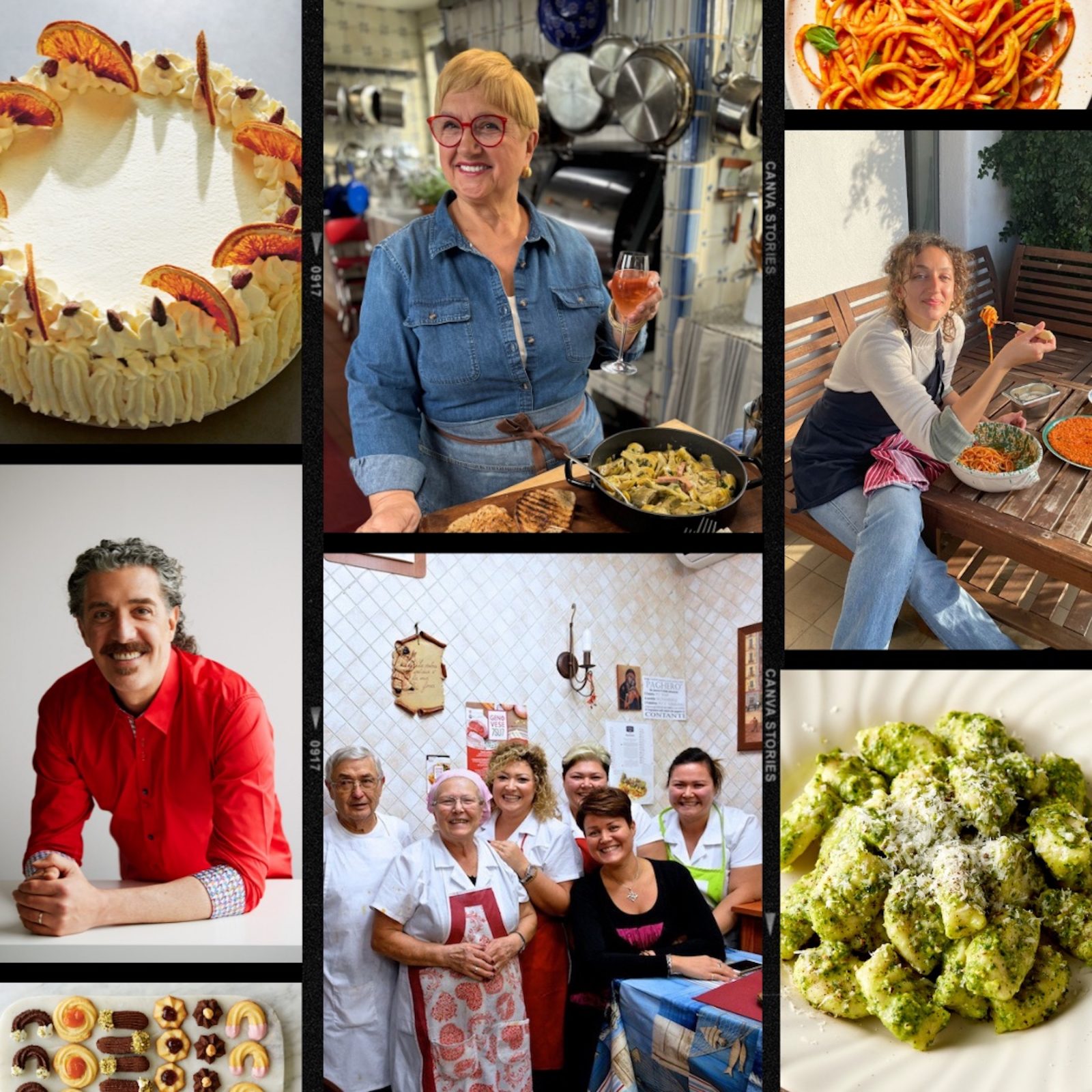
Christopher Kimball: This is Milk Street Radio from PRX, and I’m your host Christopher Kimball. Every time I travel to Italy, I get surprised. I found out that Italian cooks throw away their garlic, they don't stir polenta, and they occasionally break all the rules of pasta. Today we're paying tribute to the lessons Milk Street has learned from Italian chefs and home cooks. Later on the show, I'll be joined by Lidia Bastianich
Lidia Bastianich: Buongiorno, welcome to Milk Street. Who's calling?
CK: We'll answer your questions and help one caller figure out how to make 500 raviolis listen.
LB: Listen, Zach, 500 raviolis. That's a lot. You can use that machine,
CK: Plus, Great British Bake-Off winner Giuseppe Delano shares the joys of Italian baking.
Giuseppe Delano: You know, I should be starting to wear one of those T shirts that Madonna used to wear in in the 80s where she says, Italians do it better. Obviously, I'm referring to baking.
CK: But to begin our tour, we'll start in Rome. When I last traveled there for Milk Street. I was led around the city by a local guide. Arianna Pasquini, she joins me now to discuss the current state of Roman food. Arianna, welcome to Milk Street.
Arianna Pasquini: Ciao, Chris, thank you so much.
CK: It's been a while I was in Rome. You took me around. I would say Rome. Rome is a hard city, because unlike, you're not going to like this comparison, but like unlike Paris, which I think has got a lot more diversity of choices, Rome tends to be a little more monolithic in what you get there. Is that fair? Or would you bristle at that description?
AP: Okay, I sure disagree with that statement, but I will explain why. So, the comparison with Paris was legit, so I didn't get offended. But on the other hand, Rome is known pretty much almost exclusively for his historic center. We are 6 million and the majority of us don't live in the historic center anymore. So, for this reason, the majority of things that you find in the center are pretty homogeneous, because they are meant to be standardized to the tourism that is coming and expecting something. But on the other hand, if you really know how to navigate the center, so just avoiding the very touristic spot, there are still some places that develop their own spin off of variety and fusion of Roman cuisine and became what I would call the new school of the Roman cuisine nowadays,
CK: Nothing like talking about Rome to a Roman, yes please. But you describe Roman food as being poor countryside cuisine of farmers, nothing prestigious or elegant is is that a well, those are your words so I guess, I guess you would say that's your description. But I get the sense as a tourist that there's nothing wrong from a Romans perspective of serving dishes that have been served for a long time, I get a sense that that that connection with the past is, is fine. It's more than fine. It's it's expected, and there's nothing wrong with that. I think that's more true in Rome than many other places.
AP: Actually thinking about what you just said is pretty deep thought, because we have a relationship with history, so we stick to the past in a positive way, in the sense that the expectations are very high when you serve the food that, as you said before, you quoted myself, but like Roman cuisine was traditionally sort of poor countryside, few ingredients, quick preparation. But on the other hand, our food is very technical to make cacio e pepe, as you know very well, it's only two ingredients, pecorino cheese and black pepper. So, to serve it well, it must be very precise. It's a very technical dish. It takes seven minutes, 11 if you overcook the pasta, but no more than that, and you don't get the chance to correct the dish while you're making it, like if you were doing Bolognese sauce, which takes three hours to be done. You have time to correct with the cacio e pepe. You can't. So, we have very high expectation, because our food is very technical, but yeah, on the other hand, it's like sometimes you want something new, because our cuisine being poured doesn't have such a huge variety as other regional cuisines in Italy.
CK: You said something once to me, which I thought was really interesting. You know, Italy wasn't a country till the what mid 19th century, it was, you know, a collection of different regions. And when you talk about diversity and food in Italy, maybe you're thinking more about regional diversity, because the regions were so different.
AP: Italian cuisine doesn't exist, period. No, I'm joking, but yeah, seriously, it doesn't exist because Italy, as a common nation with a common language in the way we know it nowadays, is actually a new invention. It exists since 1861 and 1861 is yesterday. It means that for more than 1000 years, we have been something else. The thing is, when we talk about fusion here, most of the time, not exclusively, but most of the time, we speak about something that is different from what you mean for fusion overseas and in the rest of Europe too, for the simple reason that we used to be separate states and entities. So, one very good restaurant in Rome, for example, is Tavernacchia da Bruno. They are known to do traditional Roman cuisine, but actually the chef is from Sardinia, the island, and you can see the influence there. He does these creative twists that are unexpected for a Roman we would never do just simply because he's from another region, but it's like really being from another country.
CK: So, I get off the plane and I get into Rome on Saturday morning, and I want to go out to eat lunch or dinner. Let's assume I knew I know nothing about Rome, and you're going to give me some tips about what to avoid. What are some of the signs that it's a probably a restaurant you don't want to go into?
AP: Okay. Red flags are very clear in Rome, if the staff is outside asking people to come in and try the restaurant, that's a no go. Even for coffee, even the coffee is a disaster in that kind of places, then a menu that provides standard pasta, standard, I mean, like pasta with tomato sauce and lasagna from Bologna and eggplant parmigiano that is actually from Naples and carbonara that is from Roma. That's, you know, an impossible blend. You cannot mix all of those tradition and do it properly inside that single menu, then this sort of wax model or fake model of food outside this kind of very tasty,trappy restaurant, that's a no no no no no.
CK: Okay, so if I'm not going to go to the outskirts. I'm going to stay in this sort of historic area. What should I look for? Are there good restaurants there and how do I suss them out?
AP: Oh, yeah, absolutely, a place that I truly love that is not very touristic. People don't know a lot about it. Just the one that live in the neighborhood that is called Flaminio is Granina. So Granina is this tiny, tiny little spot inside an ancient farmer market with few open air tables. And they are two chefs. They used to work in Michelin restaurants. Now they work in this tiny, little spot that is open five days a week only for lunch and sometimes in summertime for Aperitivo. So, there you can find very well done Roman food, but just with creative twists, and it's not pricey at all.
CK: So, so wait a minute. Wait, you didn't take me there? (No) Well, yeah, great, that's
AP: No, no, come on, Chris. That was only because it was very far from where we met. Only reason for that, I promise. So, the other one that I really like in Trastevere, and this is another one I didn't bring you to, but it was probably close by the time, because they take very long vacation during summertime, it’s a family, run business called da Augusto. And Dao gusto is a place that has this sort of menu that follow the authentic daily Roman diet. Because I don't know if you know that, but for example, on Thursday with gnocchi, you don't eat gnocchi on Wednesday.
CK: No wait, no, wait. Now this sounds, this sounds like you're making this stuff up. Really.
AP: No, no, no, no, I can promise you that's 100% true. Ask any Roman in the world. I'm a representative of the Romans in this moment, and I will tell you Thursday gnocchi.
CK: So, what if you're on the go and you don't want to sit down for long lunch, you want to grab something? Are there places that actually sell pretty good kind of, you know, lunch to go in Rome that you would recommend.
AP: Oh, yeah, plenty of those. Allora. Let's start from the products. Then I will tell you the list of names. So, there are two products, one is on the sweet side and one is on the savory side that are very common, both for breakfast or little snacks. One is called maritozzo, and the other one is called tramezzino. So now the tramizino is a triangle sandwich with a very simple white bread that we call pancare, that is usually stuffed with fresh and made mayo, and some like fresh products, sort of tuna and ____or hardpoint eggs. One excellent one is actually in Prati behind the Vatican that is called Big it's a new one. We didn't go together because it opened, like six months later. Then you last came, and
CK: You know, you have an excellent reason why you took me to none of the places we talked about, it was closed. It was the vacation time. It was too far away.
AP: Yeah, I have a lot of explanation. And for maritozzi, they do the classic sweet one with rising pine nuts and some citrus zest in it, stuffed with fresh whipped cream without sugar, pretty much everywhere. But my favorite one at the moment is in a pretty iconic place. It's Rochelle Cafe. That's a good one.
CK: So, you look back, you know, you grew up in Rome, I think, right? And so, (yes) you know, people here always say, hear this all time. You know, I spend time in a little Vermont town of 900 people, and in the some of my friends, “oh it’s not the way it was”, and they're more traffic, and there used to be cows walking down the main street and everything else. And I look at the town and go, you know, it's pretty special still. So, what do you think about Rome? Do you think like, oh boy, it's really it's not the way it was when I was growing up? Or do you think that Rome has really managed to keep its its character and vibe pretty, pretty well over the years?
AP: Wow. So first of all, we are very opinionated as Italians in general. So right now, I will give my opinion and say, did out loud, okay, Rome has a very strong character, very strong identity. Can be unpleasant, can be, you know, very tough and rude, sometimes even the aptitude of people, the way we even drive the car is pretty harsh, you know. But on the other hand, you know, it's the main cities with the biggest population, so it sort of has a lot of cities within the city. And for me, the negative aspect of the changing is the gentrification of the center, because this place has always been touristic, even the 1200s in the early middle age, where the pilgrims were coming on the via Francescana. But right now, it's more like this over tourism, these huge quantities of people coming all at once in a place that wasn't built for this amount of people. That's the sort of tourist that doesn't have a vision, is not organized, that is not working. It needs another plan, and this is for the center for the rest of Rome. I think that is increasingly becoming more and more interesting as a city, and a lot of people is coming to live here. It was very surprising, like a lot of young people that came back after COVID, and they're, you know, bringing their knowledge from the outside back in here. And this is a new phenomenon. And, I mean, it's very, very interesting, anthropologically speaking, to watch
CK: You should run for office. That was a great answer. Nicely done. Ariana, I’ve got to come back and you're going to have to take me to all these places
AP: Consider it done.
CK: Yeah. I mean, you know, come on. So, thank you so much. It's always a pleasure, and I really appreciate the tour. Thank you,
AP: Grazi Chris. The pleasure was all mine. See you soon.
CK: That was Arianna Pasquini. She leads food tours and teaches cooking classes in Rome. You can find more of her recommendations at Milkstreet.radio.com. After the break Lidia Bastianich and I answer your most pressing questions about Italian cooking. Hey, it's Chris Kimball here. You know summer will be here shortly. So, I've asked my friend Meathead to join me in answering all of your questions about grilling, from barbecue to which grill to buy, and fresh ideas for your future cookouts. Email your grilling questions to [email protected] Again, please send your questions about grilling and barbecue to [email protected] and we'll be in touch. Thanks.
Hi, I'm Christopher Kimball. This is Milk Street Radio. Now it's time to answer your Italian cooking questions with special guest, Lidia Bastianich. Lidia is a restaurateur, cookbook author, and also host of Lidia's Kitchen on public television. Lidia, it's great having you on the show. Thank you
Lidia Bastianich: Oh, my pleasure being here.
CK: I do have a question for you. You know, years and years ago, I was at Julia’s in Cambridge, in Boston, and I made a mistake of saying something like, you know, you're such a great entertainer on television. And she was taken back a little bit and defended her role as an educator, and she didn't really care to be an entertainer. But of course, she was entertaining. If I said the same thing to you, because you've been on television for so long and are so good at it, is entertaining part of what you consider your job description, or does that just happen naturally?
LB: You know, Chris, I think Julia was right. It happens because it happens, but the satisfaction, the pleasure of being on television, is the actual teaching. Now, you see, I'm an immigrant. I came here I was 12 years old, so I have very much my Italian heritage, and then I have my American heritage. I feel very American. So, for me, it was unifying, you know, I had the best of two worlds. And I kind of thank America by sharing with them what I know, and bringing the American audience into my life, into the Italian life through food, you know, coming here in the beginning, the American were buying foods prepared, not necessarily, you know. And I was asking myself, do they really like this? Is it really real? You know, they can have a regular chicken and make some good stock or whatever. And so what I noticed along and it's, you know, me and many other of us, you included, that have sort of put out there for Americans to really want to cook. And that gives me great satisfaction that I know that maybe I moved the needle a little bit into the getting the Americans back in the kitchen.
CK: Yeah, you know, I think you're right. I think being a good cook is a big deal for people, right? I mean, it's one of the few things you can do for other people that they can really appreciate. So, I think helping someone become a better cook is just very satisfying. I agree,
LB: You know that cooking doesn't have to be all that complicated. Something it is, it is made complicated, maybe by chefs that are inventive chefs and whatever. I'm not an inventive chef. I am a sort of a conduit of a culture, and cooking, the Italian way is very simple and straightforward. You get Lidia, I didn't think I could cook, but, you know, that wasn't so hard, and I love that, because that's the idea.
CK: I totally agree. Okay, let's take a call.
LB: Buongiorno. Welcome to Milk Street. who's calling?
Caller: Hi. This is Mark from Columbus, Ohio, formerly of New York City.
LB: Hi, Mark, how you doing?
Caller: Hi, Lydia, how are you? How's Chris?
LB: Oh, he's fine. He's behaving these days.
Caller: That's good to hear.
LB: Tell me, Mark, what is your question?
Caller: Well, my question is just a little background. In 1996 for my 40th birthday, I ate at Felidia in New York City. When I told my sister about my wonderful experience there, she said, oh, you've eaten Lidia's food for years in Forest Hills at Buonavia, right? And I said, 0h my gosh. I didn't know that was her first restaurant. My question is, what was your favorite dish to make at Buonavia, your first restaurant, and what was your favorite dish at Felidia?
LB: You know, Mark Buonavia, I opened in 1971 and at that time, the Italian food, the Italian recipes, were all the Italian American recipes, so meatballs, chicken parmigiano, chicken ____ and all of those kind of Italian American dishes which are delicious and I still love and make, but some of them are not traditional Italian, but the one that I loved making there, and people really got into it was linguine, clam sauce, (my favorite). Oh, okay, you know, it's easy, but in its simplicity, it is hard. And that went like mad over there. It really did when I sort of sold that. And. Came to in 1981 Felidia, things got more, you know, more products from Italy coming. And risotto was my sort of go to dish. So much so that, you know, Julia Child and James Beard came when I first opened and they wanted to know what this young woman, Italian chef, is cooking this risotto. And so those two dishes are my favorite.
Caller: Can we get back to the linguini in clam sauce one moment? (Sure. Sure. Ask me) For cherry stones, little necks, middle necks?
LB: Well, you know, the bigger the clam, the tougher it is. Let me just go through the whole thing. How simple it is, lots of sliced garlic, olive oil, and I put a little pepper __ in there, and then, when the garlic gets golden, I have the pasta cooking. I take one or two ladles of the pasta water and throw it right in the garlic, and it sort of fizzes up and makes a sauce of its own, lots of parsley. Now, as far as the clams, if you like to use whole clams, then the little ones, the little neck, are best. You wash them, you scrub them, and you throw them in the pan with the garlic, and then you throw the water and a little bit of white wine, and you let them open up. If the clams are big, then I like to shuck them before, and then shuck them a little bit, and then throw them in again. Once the garlic is golden, you throw them in, and then you make the sauce. If you have difficulties in shocking, actually clams, you know, you just put them in a pan with a little bit of wine, and you let them open. Don't overcook them, because they're going to be tough. And then you can pull them out and trap them and put them in there, and that's it. Then you sort of pull out your pasta, throw it in the sauce, toss it together, and that's linguini clam sauce
Caller: My mouth is watering.
LB: All right, go and make it
CK: Mark. Thank you very much.
LB: Thank you very much for your questions.
Caller: Thank you.
CK: Take care.
Caller: Bye.
LB: Welcome to Milk Street. Who's calling?
Caller: Hello. My name is Donna Cassese, and I'm calling from Skowhegan Maine.
LB: Oh, Donna Cassese, what a nice Italian name. How can we help you?
Caller: Well, Lydia, my family is Italian American, and when I was growing up in the Bronx, we celebrated the feast of St Joseph on March 19, and my Great Aunt Grace always made St Joseph's pie. It was just delicious. And I don't believe there was ever a recipe, but I remember a mixture of anchovies, onions, black olives and tomatoes in a pizza dough. It was shaped into a circle then sliced to eat. And our family is originally from Bari, Italy, and I'm hoping you can help me recreate the recipe.
LB: Ah, the recipe, yeah, St Joseph's big feast, especially in southern Italy. And it is pizza dough. It's simple pizza though. Donna, (okay) yeah, let it rise, and then you treat it almost like a strudel, you know, you make the filling, and you roll it, and then you can make it long, or you can sort of seal it and make it round and bake it. Now, the inside usually is, like you said, the onions, the black olives, and a little bit tomato sometimes, and that's sort of smothered, but a little bit al dente, because it's continued to bake. So, you don't want it to come into a mush. You spread it out with your hands, almost like a pizza. You know, you don't not rolling it, just spreading out. Make it a rectangle, put the stuffing, roll it in like a strudel, and then you can seal it at the end and bake it. It's quite simple. And, you know, St Joseph's, the houses open up their doors, and they put tables full of food, and they share it, and it's still being practiced today. So, if you go down south, even in Campania, Naples or Puglia, and you walk the streets of the town, the doors will be open and you'll find these tables, and you can just partake and celebrate with them. And of course, every facility has its food.
Caller: I love the idea that you have giving me more background on the feast day as well. This sounds wonderful. Would you use fresh tomatoes, or would you use canned tomatoes?
LB: I would use fresh tomatoes in there, you know, in chunky because you don't want to overcook the filling.
CK: Lydia. I should have a question for you. Would this recipe have used baccara salt cod in the past, or just anchovies.
LB: Southern Italy is very rich in sardines and the blue fish, salted anchovies, sardines is common. But on the other hand, so is baccala, baccala, you know, salted fish. These are fishes that were sort of kept for leaner times. You know, so absolutely, whenever they can fit some proteins there, you know it was either the anchovies, the baccala and sometimes cooked eggs also.
CK: Excellent.
Caller: Oh, this is wonderful. I really can't wait to share it with my family. You've inspired me to start experimenting.
LB: Let us know. Let us know.
CK: Thanks, Donna.
Caller: I will thank you,
CK: Pleasure.
LB: Bye, bye.
CK: This is Milk Street Radio. If you're looking for some inspiration in the kitchen, give us a call. 855-426-9843. 855-426-9843, or simply email us at questions at Milk Street radio.com, welcome to Milk Street who's calling?
Caller: Hello. My name is Samantha.
CK: How can we help you?
Caller: My mother actually had this question. She's a big fan of yours. Leah, my mom was wondering, when she cooks with fresh mozzarella, which is more watery when she's making the lasagna, she finds that the mozzarella makes the lasagna soggy. And she was wondering what would be a way to make that not happen as much.
LB: She's absolutely right. A fresh mozzarella is great to eat directly. You get that milkiness in your mouth, and that's what you want from fresh mozzarella. But when you're cooked with mozzarella, whether you bake, whether you make pizza, whether you make pasta, you want the dry mozzarella, the one that usually comes in a pack that's aged a little bit. It's dehydrated, the flavors are more concentrated, and it melts very nicely and creamy. So, tell your mom to buy the dry mozzarella. But just in case she has fresh mozzarella, and you want to use it then try to drain it a little bit, you know, maybe put it in a colander, break it up in pieces, and slightly pressure it and let it stay there overnight, and it will dry out a little bit.
CK: Well, Samantha, I have two quick thoughts. One is, when I was in April's years ago at Michael's the pizzeria, they do three pieces, and they all have fresh buffalo mozzarella on them. And I noticed everybody was eating the pizzas with a knife and fork, and the reason is because the center of the pizzas were soggy. So, you know, nobody cared. Everyone loved the pizza. So that was the first thing. Secondly, lasagna when I was in Bologna, they use bechamel, which is essentially a bechamel, and they used grated parmesan in it, so essentially a cheese sauce. And I when I've made that recipe a number of times, if you're going to make lasagna, I think using the bechamella rather than mozzarella is really makes a much creamier, better lasagna. But Lydia, what do you think?
LB: Well, let's go back to Naples. You know pizza Napoletana is a wet pizza. That's the nature of it. They like it like that. The center is wet, so fresh buffalo mozzarella and all that fits right into that. But if you're baking at home and want to use mozzarella, the dry mozzarella keeps better. It melts creamier, and it doesn't SOG up or make the dough wet.
CK: Samantha, does that answer your question?
Caller: Yes, that clarifies a lot. I'm just such big fans of you guys. I've been watching you Lidia since I was a little kid, and then I got into Milk Street because of my mom. So, like, this is really exciting to talk to you guys.
LB: Give my best to mom.
CK: Take care.
LB: Ciao
CK: Lydia, the bechamel, I just thought that was the best lasagna ever had in my life.
LB: You know, they don't use mozzarella in Bologna. Italy, if you go really to the source or to the tradition, it's very regional. So, what cheese does that region have? You know, it has lots of cows, big pastures, and parmigiano, ___ grana, all of those cheeses are what they use. And so, yeah, the bechamel ties the whole lasagna together, and then the cheese in between. Sometimes, you know, even ricotta, which you go down south, whether you go to Rome, or you go to Naples, they use that in lasagna, in Bologna, they don't. So, you know, Italy, 20 regions, small country, a lot of different opinions.
CK: Well, I just liked it better than any lasagna fat here. I just thought it was creamy and smooth and, aha, delicate. But hey, what do I know? But I just, I really liked it so
LB: you know, you know your stuff, Chris,
CK: I know my stuff. Okay, next call, let's take call. Welcome to Milk Street. Who's calling?
Caller: Hi. This is Zach Lewis.
CK: How can we help you?
Caller: I have a question about ravioli dough. My family, every Christmas makes like 500 ravioli. We've been doing it ever since I was a little kid. But the recipe that we've been using is something that we got from, like a great, great aunt, or something like that was written down on paper, and we had no kind of problems with the filling. We love the filling, but whenever we make the dough, we're never really quite sure what we should be doing with it. I've never seen a recipe like it before. It calls for water, flour, egg whites, a little bit of olive oil and a little bit of salt. But when I was a kid, it was like the most difficult thing to roll out. It's like eight cups of flour for just three egg whites. And then, like, you know, maybe just shy of, like, two cups of water. So, over the years, we've added more water and eggs and stuff to it, but we're just always kind of flying blind, and we're wondering, like, was there something special or magic about that original recipe that we thought was so hard to work with?
CK: Well, I'm going to let Lydia take most of this. She knows more than I do. But when I was in Bologna, I mean, they used egg yolks and flour, and it's a very rich dough, and the fat and the egg yolk makes it relatively easy to work, but it sounds like the recipe you have. It just sounds way too lean, but Lydia would know the answer. Lydia?
LB: Yes, hi, Zach, so let me just go to the spectrum of making pasta dough. So you can make pasta dough with flour and water only, and you can increase that from flour and egg whites, flour and whole eggs, flour until the very end, like Chris was saying in Bologna, you have flour and egg yolks. So that's the richest. Each of those differences give you a difference in the texture of pasta, in the flavor of pasta, in how you can work pasta, on how you can roll pasta, how resilient pasta is. So the less egg yolk, the less fat, because egg yolks are fat, the more resilient the pasta, more of the protein. Egg whites are protein and water. So, you know, it becomes tougher to roll. So, I would go up the scale in your recipe, and I would mix some whole eggs, a little bit of water and flour. And of course, the flour is important also don't get high gluten flour, because high gluten flour is protein. Gluten is protein, and again, it becomes stuff in all of that. But when you make the dough, you got to give it a chance to rest so that then you can manipulate it and roll it out. Well, does that help you Zach?
Caller: I think so. The only thing I was going to ask also was, like, is there just kind of like a basic starter recipe you would recommend, like, if I've got, you know, one cup of flour, should I be adding like, one egg to that cup of flour to start or, like, two or, okay, just, like, some, just kind of like basic parameters to start with, would be great.
LB: Okay, so what I would do for a simple pasta, let's say you use one cup of flour, one egg, and a little bit of water, if that egg does not incorporate all of the flour. Now the dough, when you make it, you can make it by hand, or you can put it in the processor, which is fine, and in the processor, when it's at the right kind of moisture, it should sort of pull off the side and sort of collect around the center blade. That should be okay. If it's a little crumbly or something, it's too dry, just add a little bit of water on top, little bit at the time. But try one cup, one egg, and use water as a sense of adjustment.
CK: I’ve been using a food processor for years to make pasta dough, and it does as Lydia said. Once it comes together in a ball, you have enough liquid, then I let it rest, and then I put it in an atlas crank machine, which is 40 bucks or 50 bucks. And so, the whole issue of rolling out the dough is moot because the machine will do the rest of the kneading. And the machine as you make it thinner and thinner. I mean, it takes away the charm of rolling out and kneading your own dough, but that's a good cheater way of doing it.
LB: Listen, Zach, 500 raviolis. That's a lot. You can use that machine
Caller: Well, we've got a big, huge rolling pin that used to be the foot rail in a family member's bar from 100 years ago. So that's what we roll out on the ravioli with. But we do those big sheets like you're talking about.
LB: What happens with a rolling machine is that, once you set it, all of your raviolis are at the same the dough is the same density, so hence it cooks the same time and so on. Sometimes rolling by hand depends on where you put the pressure. Some parts the dough is a little thicker, or some is thinner.
Caller: Oh, yeah, absolutely, yeah.
CK: Hey, if I was going to do 500 raviolis, I’d go out and spend 1200 hours on an electric machine, but that would just save up your money, because, man, that would be useful. So anyway, Zach, good for you. 500 raviolis. That's great.
LB: Keep on making them. Zach keeps the family together.
Caller: It's a great tradition. We love it. And my, lot of my cousins have their own kids. So yeah, it's a multi-generational thing for sure.
CK: Zach, take care. Thank you.
Caller; Yeah, thanks everyone.
LB: Bye, bye.
CK: Special thanks to Lidia Bastianich. You can learn more about her TV shows, cookbooks and line of pasta sauces at LidiasItaly.com you're listening to Milk Street Radio after the break, the best of Italian Baking. Hi, I'm Christopher Kimball, and this is Milk Street Radio. After almost 10 years at Milk Street. JM Hirsch and I have visited nearly every corner and island of Italy. JM joins me now to talk about some of the research trips he's taken for our latest book, Milk Street, Back Roads, Italy. JM, how are you? I'm doing great. I think Italy, from all the places we travel to, is absolutely unique, because it really wasn't a country to the 1860s as Arianna told me in my interview with her earlier in the show. And so diversity for them is like Calabria versus Bologna, right? You know, each region has a totally different approach to food and cooking and different ingredients. So, you get highly localized recipes, because Italy's still kind of a collection of different regions, right?
JM Hirsch: It really is. You never want to accuse a Sicilian of being Italian,
CK: but that's what makes it charming. They still make a lot of the old recipes, and it's highly regional.
JMH: Yeah, you know what's amazing is Italian food is so ingrained in the American culinary heritage that we think we know what it is. But then you go to Italy, and you encounter people and recipes that you just never thought possible. You know, get away from the central piazza and walk down the back alleys, and you are going to find something amazing and delicious and just wonderful people behind it. Hands down my absolute favorite restaurant in all of Italy, maybe all of the world, is la Tarunato Vitosi, and it's run by five sisters, their parents and their grandmother. You know, the menu is handwritten and photocopied every day, and one of the sisters belts out opera in the middle of the dining room. And their food is just killer. I mean, it's the sort of thing that, you know, it's just we, we have a habit of over-romanticizing Italy, but you know what? It deserves it.
CK: Well, it's the real deal if you know where to go. I mean, I think if you go to the touristy areas of Rome, yeah, you're going to get bad pizza and bad gelato and, you know, bad focaccia, probably. But if you go to the right places, that's just a whole different world. So, what are a few of the recipes that you really like from from these travels?
JMH: Yeah, well, certainly, if you're going to stick with the Vitosi sisters and you really should, their meatballs are amazing. They're like, the size of a bowling ball, practically. And they have an incredibly high ratio of bread, which, you know, undoubtedly was born out of Cocina povera to, you know, stretch their meat. But the result is incredibly light and tender meatballs. I've never had a meatball so tender, so light and so delicious. So that is a must. But if you go further south in Italy to Puglia, which is the, you know, the heel of the boot. Little Town Bara is home to what is considered the best focaccia in all of Italy, and I'll tell you, it earned that title. The bottom is cracklingly crisp because it's cooked in just a ton of olive oil, but the top is chewy, airy, tender and wonderful because it's an incredibly high hydration dough, and it's allowed to over proof for hours and hours. So, it rises, it falls, it rises again, it falls again, and it is just incredible. They top it with tomatoes and green olives, and that recipe is so good I don't allow myself to make it anymore, because I would literally sit down and eat the entire pan. I can't trust myself around it.
CK: That doesn't sound like a problem to me.
JMH: And you know, this is a classic, but I'm going to have to say pesto Genovese. I mean, we all know basil pesto, right? But in Italy, it's other worldly. It's nothing like what we have here, and it's all in the way they make it, as we learned when you do it, right boy, it is miles above anything that we'd ever made, and it's so good.
CK: Well, I think now that we've done this book, Back Roads Italy, we need Back Roads Italy Two, because, I mean, of all the places that travel, I know it sounds corny, but it just is. There's so much to learn. It's so satisfying. Yeah, we could do this for the rest of our lives. Sounds good tonight. Bad idea. Yeah. JM, thank you. Thank you. You can find some of our favorite recipes from all across Italy at Milk Street Radio.com/italy, including Neapolitan meatballs and no fry eggplant parmesan from the Vitosi sisters. We'll go out today with a little clip of Anna Vitosi singing opera in her restaurant.
We'll end our tour of Italy today with dessert. Our final guest is Giuseppe Delano, the 2021 winner of the Great British Bake Off on the show he was known for his bakes inspired by his childhood in Gaeta. Since winning the show, he's published two books, Giuseppe Italian Bakes, and Giuseppe's Easy Bakes. Giuseppe, welcome to Milk Street.
Giuseppe Delano: Ciao Chris, how are you?
CK: I'm good. So, I had a whole bunch of questions. I found these recipes. I mean, the thing I love about your two books is I found things in there that I've never heard of before, and so it's sort of like someone opened this door in this large house into a room I've never walked into. So sunken ricotta cake before you put it in the oven, you pipe cream on top on a zigzag pattern, and it sort of sinks into the cake as it bakes, which I just thought was brilliant. I mean, that's that's just a great thing. Could you talk about that?
GD: Yeah, well, you're stroking my ego there, because that recipe is probably one of the very few ones that I have made up myself, and it is a creature of my creativity. I was trying to transfer the flavor combination that Sicilian cannoli’s have made famous all over the world into a form that it's easier to make and you can get on the table or in the oven in about 20 minutes. And I had the idea to do that after a visit to Siracusa in Sicily, where I was served, I think, one of the most delicious Gelatos in my life. It was a ice cream made with ricotta, a lot of orange peel, orange blossom water, so all the flavors that make the cannoli feeling. And I thought, well, if they can turn it into an ice cream, I can certainly turn it into a cake. And it's probably one of the very few in there that doesn't come from the pile of handwritten notes that my dad left me, and my extended family keeps circulating between yourselves. It's, yeah, it's just the fruit of my creativity. So, I'm very glad that you you like that one.
CK: What about semolina flour? So, it's made from durum wheat. It's a little pebbly and coarse. It's hard. Is it something you add with regular flour? Or do you make you make some dessert recipes entirely with semolina. When would you use it?
GD: So, semolina is one of those ingredients, like ricotta, for example, that is very it's not very glamorous. It feels very common and very popular. But because of this, is also very versatile. So semolina finds its way into desserts, typically originally from the area in Campania. So that's central Southern Italy, where they are used a lot in one of the quintessentially Neapolitan pastries, as well as probably one of my favorite pastries ever, which is called ___Atella, which is made with a crumbly, flaky, layered shell, filled with this creamy filling that is made with semolina, cooked in hot milk or hot water, and to which you have added ricotta, candied orange peel and orange blossom water as a flavoring and a pinch of salt and lots of sugar and cinnamon, it smells heavenly, but you can also use semolina for savory dishes. In Rome, they make some what they call gnocchi, and they are made entirely with semolina, salt and milk. It goes into a baking tray with loads of bechamel sauce, you know, an obscene amount of parmesan. And it's utterly, utterly delicious.
CK: You said, bechamel, which brings up this old French Italian rivalry. So, and I just love to talk about this. So, I mean, the Italians would say they invented puff pastry or this thing or other thing, where do you stand on? Who invented what?
GD: Oh, my God, Chris. I mean, this is one of those arguments that nobody will ever be able to resolve. But I love the fact that there is this, this, this sort of rivalry, although in my head, there is no doubt that Italians do it better than French do (of course) you know, I should be starting wearing one of those T shirts that Madonna used to wear in in the 80s where she says, Italians do it better. Obviously, I'm referring to baking only. But I don't think it matters. We are all just different declination of the same base recipe. It could be that it was developed in different places at the same time, independently who knows.
CK: So, let's talk about cinnamon. I'm famous for yelling at people about putting too much cinnamon in their apple pie, because I just think cinnamon. I'm sorry. Cinnamon is great, but it's like the strongest it's one of the strongest spices out there, and people just use too much. It just overwhelms everything. So, I'm looking for an ally here, or maybe I'm going to get a fight. But I mean cinnamon, United States is just in everything. Like when people want to sell their house, they put cinnamon on a baking tray in the oven, so the house smells like cinnamon.
GD: We do it with coffee. In Italy, we put coffee on the stove. (There you go). Yes.
CK: So, I mean, is cinnamon something you should be wary of in terms of not overdoing it or not
GD: Well, I'm afraid I won't be siding with you on this one. Chris, honestly, if you're feeling down, open the jar of cinnamon, sniff it, and it will be much more effective than a strip of cocaine, honestly (and a heck of lot cheaper too) but really, really good. I love it. I love the stuff. No, I'm sorry, the more the better. I do. Agree with you that it can be overwhelming at time, and it does taste a little bitter if you go overboard, but in an apple pie. Come on, apple and cinnamon is a marriage made in heaven.
CK: Oh no, it's the taste of the apples that's that's important in the apple pie. But anyway, okay, supermarket apples have no flavor anymore. So, I guess we should dump cinnamon in that.
GD: You know, that is, you've just put your finger there, Chris, on the most critical aspect of all of this. I mean, the thing that I like a lot about Italian cuisine, that I try to export as much as possible is the fact that the ingredients list is usually very short, okay, if you think of like Pan di Spagna, which is the basic sponge that goes in pretty much every single cake made in Italy for birthdays, weddings. Everything is made with three ingredients, eggs, sugar and flour. But the crucial aspect of this is that when you've got ingredients listed are so short, the quality of those ingredients makes a massive, massive difference.
CK; You know, one last thing that caught my eye was pisto. You describe it as a series of spices used in baking, peppercorns, cloves, coriander, anise. Now, there's so many spice blends around the world, especially in the Middle East, where every family has their own mixture. But you know, they're generally savory, so I really like the idea of having a spice mix that's specifically for baking.
GD: The pisto is very, very similar. I mean, there is no single recipe. For example, the addition of black pepper is something specific to my own hometown, something that my dad used to do very often. And they love it because it gives a bit of a like a hot aftertaste to whatever you're having. And considering that this is a spice mix that is typically used for the festive season. You know, to me, it's what Christmas tastes like. The beauty of that is that every time I open that jar with pisto in it, you know, it brings back so many childhood memories that I wouldn't dare changing it, because I want it to be that way. I want to bake with those spices for Christmas, because I want my house to smell the same way it used to smell when I was a kid. On the other hand, I've got this smell of orange blossom water, which is the mix that is typically used for making Pasqua, which is an Easter cake, and in my head, that is what springtime smells like. And it's fair to say that the main reason why I started baking in the first place, it was because I wanted to spoil my kids the same way I was spoiled as a child, and I wanted them to have the same, you know, sweet memories and association of fragrances and flavor. One of the things that made me happiest lately was that I was, I was cooking at home, and I was making some pasta with beans and celery, some vegetable stuff, and my eldest comes in the kitchen, and he goes, oh my God, this smells delicious, Papa, what are you making? It smells like Italy. And that made me so happy. I was there you go. I've achieved something.
CK: Giuseppe it's been it's just been a lot of fun. Thank you so much
GD: My pleasure. Thank you for having me, Chris. It's been a pleasure talking to you.
CK: That was Giuseppe Delano, author of Giuseppe’s Italian Bakes and Giuseppe's Easy Bakes. You can get his recipe for sunken ricotta cake at Milkstreetradio.com. Italy is full of myths. The founders of Rome. Romulus and Remus were raised by she wolf. Sicilian fairies are said to be beautiful women with feet shaped like cats or horses. And finally, Italian food is mostly pasta and pizza. The myth of Italian cuisine is that it actually exists. Dinner in Calabria doesn't resemble supper in Umbria or lunch in Naples. That's why so many of us love Italian food. It's still a mystery. That's it for today to hear all of our episodes. Head to Milk Street Radio.com or wherever you get your podcasts to explore Milk Street and everything we have to offer, go to 177 milkstreet.com there you can become a member and get full access to every recipe. Can also learn about our latest book, Milk Street backroads Italy, which is out right now. Find us on Facebook at Christopher Kimball's Milk Street. On Instagram at 177 Milk Street. We'll be back next week with more food stories and kitchen questions. Thanks, as always, for listening.
Christopher Kimball's Milk Street Radio is produced by Milk Street in association with GBH co-founder Melissa Baldino, executive producer Annie Sensabaugh, senior editor Melissa Allison, senior producer Sarah Clapp, Associate producer Caroline Davis with production help from Debby Paddock. Additional editing by Sidney Lewis, audio mixing by Jay Allison and Atlantic Public Media in Woods Hole Massachusetts. Theme music by Toubab Krewe, additional music by George Brandl Egloff, Christopher Kimball’s Milk Street Radio is distributed by PRX.
In this episode
ADVERTISEMENT
ADVERTISEMENT

Simple, Bold Recipes

Digital Access
12 weeks for$1
- EVERY MILK STREET RECIPE
- STREAMING OF TV AND RADIO SHOWS
- ACCESS TO COMPLETE VIDEO ARCHIVES

Insider Membership
12 weeks for$1
- EVERYTHING INCLUDED IN PRINT & DIGITAL ACCESS, PLUS:
- FREE STANDARD SHIPPING, MILK STREET STORE,
to contiguous US addresses - ADVANCE NOTIFICATION OF SPECIAL STORE SALES
- RECEIVE ACCESS TO ALL LIVE STREAM COOKING CLASSES (EXCLUDING WORKSHOPS & INTENSIVES)
- GET YOUR QUESTIONS ANSWERED BY MILK STREET STAFF
- PLUS, MUCH MORE

Print & Digital Access
12 weeks for$1
- EVERYTHING INCLUDED IN DIGITAL ACCESS, PLUS:
- PRINT MAGAZINE SUBSCRIPTION
- 6 ISSUES PER YEAR

