





Your email address is required to begin the subscription process. We will use it for customer service and other communications from Milk Street. You can unsubscribe from receiving our emails at any time.
Episode 910
May 1, 2025
May 1, 2025
Behind the Scenes of Top Chef with Kristen Kish
We get real with Top Chef host Kristen Kish. She speaks out about her career her show and what bugs her most about restaurant goers. Also on the show—we chat with Reya Hart about eating and traveling on tour with her father, Grateful Dead drummer Mickey Hart; Kim Severson explains why meat is on the rise again; we make Puff Pastry Khachapuri; and Chris Kimball and Sara Moulton answer listener calls.
Questions in this episode
"Is my bourbon-infused vanilla extract going to intoxicate the people who eat it?"
"How would you suggest cooking beef cheeks?"
"Is there anything I can use celery leaves for besides as a garnish?"
"I’ve been getting into sourdough bread baking and I’m reevaluating my equipment. Should I start using wooden bread bowls?"
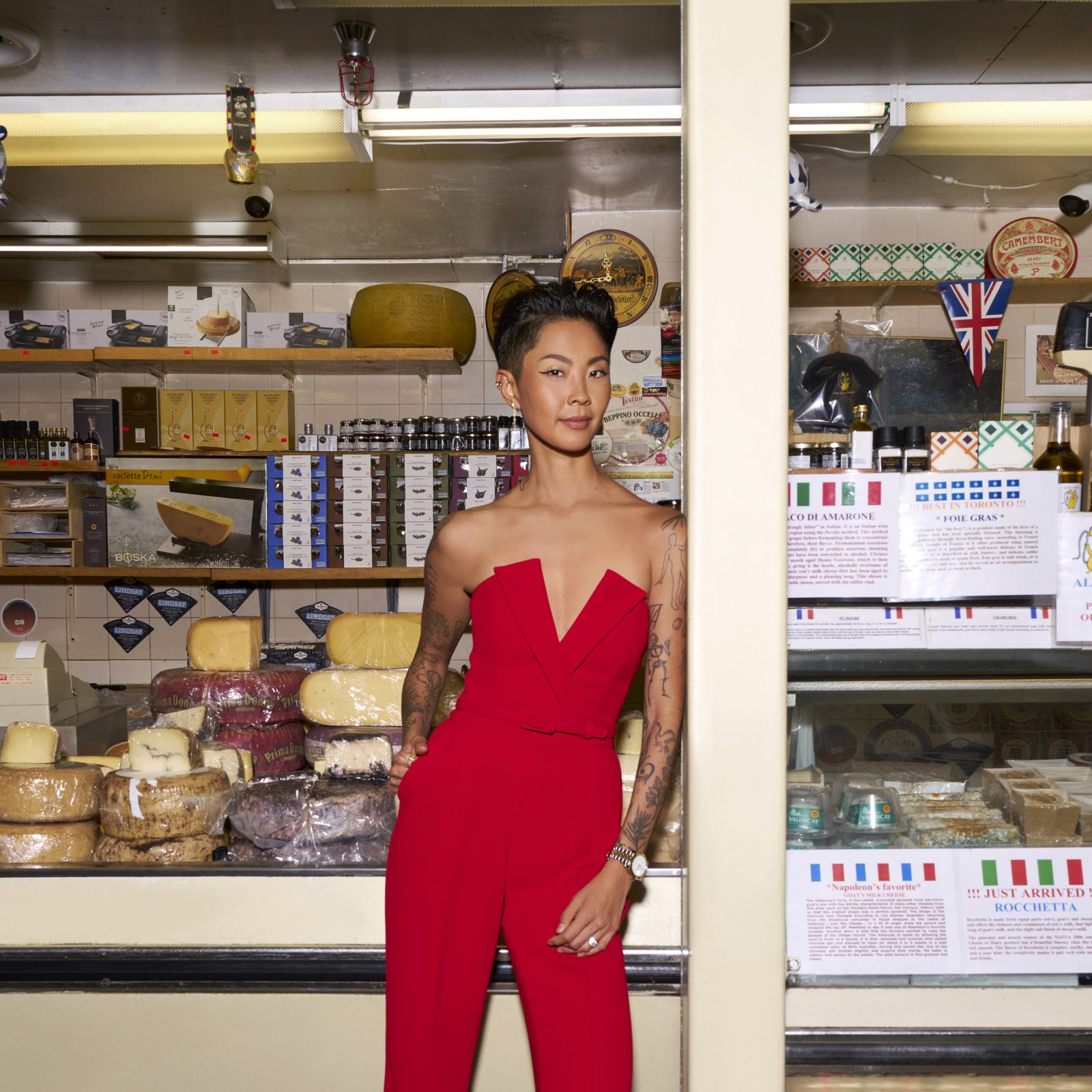
Christopher Kimball: This is Milk Street Radio for PRX. I'm your host Christopher Kimball, tonight's my interview with Top Chef host Kristen Kish. She reveals what she really thinks about diners who behave badly.
Kristen Kish: Don't stack the plates. Just don't stack the plates. I just I hate it so much. (Wait. Diners stack the plates?) Diners stack the plates because they think they're being helpful, and they kind of push it off to the side because they're like, we don't want these dirty dishes in front of us anymore. Plus,
CK: Plus, she shares stories from Top Chef, including her winning mushrooms.
KK: I sweat down some aromatics, garlic, shallots, thyme, de glaze with a little bit of Vermouth, finished with some butter, sherry vinegar, fresh parsley, salt, pepper, perfect. (God, sounds good) I want $10,000 for those, by the way,
CK: and you deserve every dollar of it.
KK: Thank you.
CK: Kristen Kish speaks out that's coming up later in the show, but first I'm joined by Reya Hart. She recently wrote an essay for The Atlantic about eating and traveling on tour with her father. Grateful Dead drummer, Mickey Hart. Reya, welcome to Milk Street.
Reya Hart: Thank you so much. I'm really happy to be here.
CK: I promise not to sing any Dead songs. Talk about all the concerts I went to, so I'll spare you all of that which you've heard 1000 times. I will just say that my first concert was February 1970, 2nd show Fillmore so (Wow) and Pig Pen was still there.
RH: That's a great time to get on the bus. I'm happy for you that you made it in 1970 that's great.
CK: And I met your dad. I may have met you too about 12 or 14 years ago, I used to cook for Bob with his band Rat Dog. (Oh, wow) at Worcester Centrum, so could you just talk about the reality of traveling with the Dead with your dad being in the band?
RH: Yeah. Well, I, I can't tell you when I started, but probably maybe a month after I was born, really, really little, and basically my entire life I spent touring in the summers and taking off school or going on breaks on the road. And a lot of people would imagine backstage as a kid to be like a really chaotic place. But for me, there's a lot of sameness and repetition and consistency, and as everything kind of changed outside in the world, going on the road was pretty much the same, and we all got to come back together. We all got to hear the music again. And that's been kind of a constant comfort through my life.
CK: I sort of saw, you know, Bob Weir had his own room, and Mickey had his room. And people were doing different things. It seemed like, you know, backstage, everybody had their family, or they had their friends, but the whole band wasn't sitting down so much and talking to each other, at least at that time I was there. So, did that change? Like sometimes the whole band would sit there after a concert and talk or smoke something or have something to eat, or you sort of stayed apart for a lot of the backstage.
RH: Yeah. I mean, I think especially after the show, we're definitely in our own worlds, but between sound check and the time that the band walks, there is time for us to all be together. And I think that really only happens when we're eating and around food and in catering is really the only time that all of the members of the crew, band members, everyone gets to spend time together.
CK: So, I love one of the my favorite things was Jerry's contract writer about the refreshments, three bottles of good French red wine, one and a half cases of Heinekens, four quarts of orange juice, no sugar, added bacon, lettuce and tomato sandwiches, and I love this, and good cheeseburgers, cigarettes, Bacardi light rum. So was this a standard writer so that everywhere you went, it was pretty much an unchanging list of requirements.
RH: Yeah, pretty much it stays for a tour. So, a rider will make adjustments to it, kind of tour by tour, but it's pretty consistent. And I don't think people realize that, like, that's how we're surviving, really is we're taking whatever is on the rider, and it comes on our bus with us, and then becomes, any time we're not at the venue, what we're eating as well. So
CK: So, you're five or six years old, it's your birthday, you're on the road, on tour. What happens on the road?
RH: Yeah, I mean, I think one thing about being a kid on the road is that it's very difficult to make your own decisions about food or find your own food. You're really relying on people all of the time, and I had this really intense craving for cheesecake one year, and dreamt up this birthday cake moment where I would finally get the cheesecake that I had been fantasizing about. And my mom came to give me my birthday cake, and it was chocolate, but I had found a plastic bag of Kraft cheese on the catering table, so I hid the cheese underneath my shirt, I carried the chocolate cake underneath the stage and poured the cheese on top of it and then made my own cheesecake. And for me, it was really a finding of my independence and my own ability to be self-sufficient. And was a huge growing up moment for me really looking back.
CK: You mentioned sometimes summer all of you would go out to eat, I guess so, what were some of the favorite places to eat around the country when you had a night off?
RH: Oh god. Well, I talk about in my article Wo Hop, which is like the first and foremost go to of all time, Madison Square Garden and Wo Hop are like the same place in my mind
CK: What is Wo Hop?
RH: Wo Hop is a really cool old school Chinatown institution. It's the second oldest Chinese restaurant in New York. And Wo Hop has been a tradition since way before I was born. My dad used to go there with Balushi when he was in this band, the Stink Band, with him and a bunch of the other SNL cast members, (is it still open today?) still open today, but not all night, like it used to be. It used to be we would show up at Wo Hop after a show at two in the morning and know everybody in there.
CK: Did some of these people who kept coming to concerts? Did they become sort of VIPs in some way they got access backstage, or was there a special group of people?
RH: Oh yeah, absolutely. I mean, all of the people really that work for us or that I depend on now as an adult, years and years after Jerry died, or people who started touring with the Grateful Dead when they were kids, like my dad's assistant, who's like my second mother, got a handwritten note from Jerry Garcia backstage at the Fillmore East when she was 15 years old that said, let this girl in. She needs to be here and now, 50 60, years later, she's a part of my family, you know. So, I think there's a lot of stories like that, of people who just dedicated their whole lives to this thing.
CK: Are you post Jerry? Or were you born before he died?
RH: No, I was born before Jerry died, a few years before Jerry died
CK: And do you remember anything about him at the time, or you were just too young?
RH: Well, I remember him, to be completely honest with you, I remember him being kind of an ominous figure because he had his big beard and, you know, kind of big person. And we used to take the same limo to the gigs together. We always shared a limo, and I was kind of frightened by him. He was like a Santa Claus type figure that was somehow, you know, intimidating to me when I was little, and he was such a sweetheart, he used to put a towel over his head for the entire drive so I wouldn't cry, and would still drive with us, still do the whole thing and just cover up his head so that I wouldn't be freaked out. (That's cool. Incredibly good story) yeah, sweet, caring person.
CK: Tell me about your dad. What was it like growing up on the road with him? How do you do fatherhood on the road?
RH: I mean, I got really lucky because I was born after the kind of madness of the 80s, and I got to really spend a ton, a ton of time with him. I mean, my dad and I are really, really close, but he's a prankster. He really has a hard time taking things seriously. He likes to kind of subvert expectations and mess with people, which I think is super fun, too, and we play, you know, we don't get hung up on stuff.
CK: You say that after the last show, you can now eat what you want. So as soon as you got off the road, you could go really eat some Thai food, or eat something else, or, yeah, what was craft services like?
RH: I mean, it was pretty consistent, but less than it being about the food being the same, it's really about being able to make your own decisions. And it can be a great thing. It can be a freeing thing, but for me, it kind of feels really lonely and weird and just a big shift when you're finally going home after those experiences, when you're finally not having a road manager say, oh, that's the gate you need to walk to, or this is the time that you're you have to, like, go run to the bathroom if you need to. This is, you know, down to that level, when you are free and able to make whatever decisions, you want. It feels strange. It's like free falling a little. I like being able to choose what I eat. I like being able to have long, luxurious meals that, you know, involve friends and other people. But I also like the sense of community and the sense of purpose that you get from being in the situation like we are on the road, where it's like, eat this now, now move to the next thing. Now do this. You know it's both. I feel both ways about it,
CK: Reya, it's been a pleasure visiting once again with the Grateful Dead and Mickey and you. Thank you.
RH: Thank you so much, Chris. It's been great to be here.
CK: That was Reya Hart her essay for the Atlantic is What the Band eats. Now I'm joined by my co- host, Sara Moulton to answer a few of your cooking questions. Sara is, of course, the star of Sara's Weeknight Meals on public television. Her latest book is Home Cooking 101, so you probably spend some time on like Instagram, I'm sure. I'm amazed at the breadth of the food videos on that and impressed. I'm really impressed. Is there something you've seen this year in a food video that was amazing, memorable that really stood out for you?
Sara Moulton: That would be true if I watched a lot of food videos. I mainly watched dog videos, and mainly dachshunds. So, I could talk about that, but
CK: You don't wait, wait, you never look at people cooking on YouTube or Instagram or
SM: Mostly not. I really try to get away from it. So, yeah, dogs
CK: Some of the baking you see is just amazing.
SM: Tell me some of them.
CK: Well, the ones I like are people who they have a simple recipe. It's well done. They're not putting on airs, and it's just a practical recipe that makes sense. There's all this talent out there, and the great thing social media has done, it gives people an opportunity to show it off or share it. And some of its garbage, but a lot of it's actually, I am really impressed by their cooking skills.
SM: Well, I'm going to have to start watching
CK: I think it's worth watching some of it anyway.
SM: All right, let's take a call.
CK: Welcome to Milk Street. Who's calling?
Caller: Hi. This is Patty from Barrington, Rhode Island.
CK: How can we help you?
Caller: Well, I decided to make my own vanilla extract, and basically I just infused some bourbon, and I made a vegan chocolate pudding with avocado, and I added the vanilla to it, and I gave it to my three year old grandson, and he got a little tipsy, but, you know, I tasted it, and it tasted like straight up bourbon.
CK: Well, it was straight up bourbon, yeah. I mean, let's be honest, yeah, it wasn't like you added water here. I mean, it was, it was Bourbon is about, you know, 50% alcohol. It's about 100 proof. And average, I would say, in general, the extract that you buy in the store has to be 35% alcohol, right? So, the bourbon versus vodka versus something else isn't going to make a big difference. And I make stuff for my kids all the time with vanilla extract in it. And (who doesn't) nobody's getting drunk on it so I can't imagine, you know, a third of a teaspoon or whatever amount this person's getting in their chocolate pudding or whatever is going to make any difference. You'd have to drink a lot of extract to get even a three-year-old drunk. I think.
SM: I agree 100% maybe he was just swooning over your pudding.
Caller: No, because no one ate it. It's tasted like straight up alcohol because I didn't. Oh, if it wasn't a cooked pudding, it was just avocados with
CK: Oh, I see, I see, oh, I see,
SM: I still can't see that getting you all drunk
CK: Well, no, that's a good point, though, because normally you would use vanilla in something that's baked or cooked on the stove, (right) I haven't used vanilla in a raw recipe. If you cooked a pudding on top of the stove, you're absolutely correct. You would get rid of a large percentage of the alcohol. I think you're right. You didn't cook it, none of the alcohol evaporated. And I can imagine with five, four-ounce servings, and you said people could taste the alcohol, right?
Caller: You could taste it, yeah, I've never had that issue before, but I've never not cooked it off.
CK: Well, I hope it was good bourbon.
Caller: It was good bourbon. It was expensive bourbon. But yeah, lesson learned.
SM: Well, Patty that is, if nothing else, a fun story.
CK: That is a fun story.
Caller: It is
SM: Thanks for sharing.
Caller: Well, okay, take care.
SM: Bye, bye. Welcome to Milk Street who's calling?
Caller: I'm Lynn ____ from Manchester, New Hampshire.
SM Hi, Lynn. How can we help you?
Caller: Hi, well, I was at my local farm picking up some meat, and I noticed that they had beef cheeks. And since I'd never seen them before, nor had I ever had them, I decided to buy them. And then when I got home, I went online looking for recipes, and really didn't find very much at all. A lot of recipes from England, actually, from the UK but I thought I could use so I thought I'd call you guys and call you guys and find out what you have to say about them.
SM: Well, beef cheeks, they really, they're like essence of sort of yummy, tender stewy flavorful meat. They have sort of a similar makeup of brisket. They're very fatty, which is why they're so yummy. But they're tough because they're used a lot. You know, they're cheeks. So, the best way to cook them is as you would cook stew meat or short ribs, low and slow in liquid, because they create a wonderful gravy naturally, and they give off a lot of gelatin, so you'll have a nice rich sauce in the end. Chris?
CK: Yeah. I mean, just any short rib recipe you could substitute. I mean, you could cook them in an instant pot, like you could pressure cook them. I do that for brisket. It's great, but we're, you know, a slow cooker would be perfect as well. You want to break down on all that connective tissue, but sure.
Caller: Okay, great.
SM: Wine is with it nice too. Yeah, I was just going to say red wine is very nice,
CK: Okay, great the red wine, you should reduce it first and then add it Yeah, right at the end, yeah, okay, oh, okay.
Caller: All right. Thank you.
SM: Okay
CK: Thanks. All right, yep,
Caller: Bye.
CK: This is Milk Street Radio. Sara and I are here to answer your toughest questions. Give us a ring. 855-426-9843, or email us at questions at milkstreetradio.com
SM: Welcome to Milk Street. Who's calling?
Caller: Hi. This is Katie.
SM: Hi. Katie, where are you calling from?
Caller: I'm calling from San Francisco.
SM: Oh, you lucky person. How can we help you today?
Caller: Well, I was at the farmer's market the other day, and I bought a head of celery with the most celery leaves I've ever seen, and I was wondering if there's any more that I could do with them, other than just using them as a garnish.
SM: You could use them in anything. You use celery in. You could put them in egg salad. You could put them in tuna salad, potato salad. You could add them to a stew, you know, anywhere you'd use celery. And another thing that might be fun, especially if they're large, and sometimes they are, is to batter them and fry them shallow fry them like in a tempura batter.
Caller: Oh, that's a really interesting idea,
SM: and then sprinkle them with salt. That would be like a fun hors d'oeuvre with a glass of wine. I'm always thinking about what would be nice with a glass of wine,
Caller: Oh, you and me both,
SM: Chris, what do you think?
CK: What I would do is chop them up, and I would use them every time you sauté or anytime you sauté onions to start a recipe, which is most recipes, I would just throw a bunch of them in with the onions, because they have a really lovely I think the flavor celery is one of my favorite subtle flavors, and the leaves have a lot of flavor. So, I would just chop them up and throw it in as part of your sofrito, right? And then, you know, go on with a recipe, and you'll have that little additional flavor, and you get to use it up. So that's what I would do
Caller: Those are all great ideas. I was curious. Have you ever seen anything sort of akin to, like, almost like a pesto in which you would use celery leaves or anything along those lines?
SM: Sure,
CK: Sure. It's funny, people think pesto is basil, but pesto, there's a million pesto’s. Sure, you could use celery leaves in pesto. Why not?
SM: I think that would be great with fine nuts and parm, yeah, yeah, a little almond oil..
CK: I mean, almonds would work fine, yeah. You know, you could use any different kinds of tart cheeses and
SM: walnuts would be great, with celery leaves, yeah.
CK Or you could mix it with something else, like parsley. A lot of parsley pesto’s. You can mix it with celery leaf, sure. The two things, I think, have great flavor as a background, flavor leeks and celery, those the two things that really people don't think about. I just made a leg of lamb, and I put, you know, a couple onions in with the skins on. I caught a garlic, couple heads of garlic in half with the skins on, threw it in, you know, a bunch of celery with the leaves, and threw that in some leeks, you know, all that stuff. And then you just strain out the juices at the end and defat them, and now you have this lovely sauce. Yeah, so, yeah, sure,
Caller: That sounds delicious. Well, thank you both. I appreciate it
SM: Okay, all right, Katie, take care. Bye. Welcome to Milk Street who's calling?
Caller Hi there. This is Angie. I live in Seattle.
SM: Hi, Angie. How can we help you today?
Caller: I have been baking sourdough for a little while, and I'm still kind of working out the kinks. And part of that, I've been trying to figure out what kind of equipment works best. You know, I had a bunch of stuff from goodwill that I just used for general cooking, and my flour would spill all over the place, and my bowl wasn't the right shape. So, I've been kind of like looking into what people use for sourdough baking. And I am really curious about those wooden dough bowls that I see at like, antique stores a lot. It seems like they're around enough that maybe they were a standard at some point when people are making a lot of bread. And so, I'm just curious what those were for and why. I don't know anybody who uses those anymore. It's interesting
SM: It's interesting that they went out of fashion, though that was something that was used, and it was passed down from generation to generation. And what was so good about them is that you could mix the dough in the bowl and then cover it with the damp towel and let it rise and it would keep its heat covered and so the counter wouldn't get dirty. It really is a good tool for the job. The trouble is, it's hard to find them. You know, as you said, you can find them sometimes at flea markets, but you'd want to clean it. I believe online there's directions about how to do like a vinegar bath and dry it out, and then you want to rub it with mineral oil, you know, like you do a cutting board afterwards. I think there's a place in New Hampshire that sells new ones. We should say they're oblong and they're deep and they're rustic looking. They're sort of cool.
Caller: They're cool. Yeah, I actually am interested in woodworking too. So, I was like, oh, I could make one of those. But maybe there's a reason that nobody uses them anymore. My approach now is to do the folds in a bowl instead of on a counter. And my goal doesn't work that well for it. That's interesting that that is exactly what people are doing with it.
CK: I don't think it's about mess so much as I think it was designed specifically for kneading. I would think, yeah, right. Why is it oblong? It must be oblong for a reason. So, I think it has to do with it's designed to make kneading easier. That's what I think anyway. It's an excellent question. I've never thought about this, and now I'm fascinated.
SM: Yeah, yeah. Maybe you have to start somewhere
Caller: Yeah. Now you do bread baking. I want to try it now.
CK: Yeah, me too. great question now I'm going to go buy one. no, no I think it’s really interesting. Right
now I'm getting on.
SM: Okay, all right Angie
Caller: Alright well thank you so much.
SM: Bye
CK: You're listening to Milk Street Radio coming up we're getting real with Top Chef host Kristen Kish. This is Milk Street Radio. I'm your host. Christopher Kimball, right now. It's my interview with Kristen Kish. She won top chef in 2012 and became the show's host in 2023 she just published her memoir, Accidentally on Purpose, Kristen, welcome to Milk Street.
Kristen Kish: Hi, Chris thanks for having me.
CK: Let's start with who you are. As if not everybody knows. I'm sure everyone does, but you went to Cordon Bleu, you worked with Barbara Lynch in Boston. Just tell us a little bit about your Boston years.
KK: Sure. I mean, my Boston years were probably the most formidable life altering years that I've had. I was there for about 10 years, working in kitchens and restaurants, you know, I'd say that my chef, part of me, my professional self, certainly grew the most in Boston, and I really started to find who I was and how I wanted to cook.
CK: So, let's talk about Monton in Boston. This was Barbara Lynch's very high end, very big white plates. I'd say Barbara told me this was, you know, why shouldn't Boston have a kind of upscale New York style restaurant? But I always thought it was, unlike Stir or Sportello or No. 9 Park or other restaurants. It felt, I don't know, a little out of place for Boston. So, tell me about working there, about the food. What was the story of Monton?
KK: You know, I was working at stir for a couple years, and during that time, that's when I went on to top chef, and I had come back and, you know, the show played out. I won, and all the things, you know, life started to happen. And Barbara came to me, and whether it was her trying to find, you know, a way to put more eyes on Monton, or whether it was purely just for the benefit of me, or a combination of both. She came to me and she said, you know, by the time you're 30, I want you to have Chef de Cuisine overlay Chateau property on your resume. I want that for you. And so that kind of really started the wheels turning. She has always advocated for me and for all the places that I never felt like I belonged or where I was not welcome. She got me into those rooms and, you know, Montan and relic chateau, yeah, so maybe a little bit out of place ahead of its time, but, you know, one that definitely carried a lot of lessons. You know, working there was a challenge. It wasn't the easy kitchen. I don't think that everyone wanted me in that role. Barbara and a few others did, but a lot of the company did not feel like it was mine to have, and that made it really difficult, and I only lasted about nine months there.
CK: So, what's it like walking to a kitchen when a lot of people there don't think you have the chops or have earned it that the boss has brought you in, and I assume, I assume working in a kitchen is highly can be divisive, can be political, it could be lots of things. How did you manage that? What was it like living through these nine months?
KK: You know, manage it. I don't know if that's what I'd call it. I think it was survival more than anything. I went in and very quickly I was showed that I was not welcome or respected. And so how did they show that the there was a lot of a lot of things happening behind my back, nothing was overly like in my face, which also made it really hard. It almost was like a kind of gaslighting, because I couldn't pinpoint why, but through some trusted cooks, one in particular that really was my eyes and my ears, she would start coming to me and telling me all the things that they were saying and doing behind my back, whether that be changing my menu or making fun of my food or just being just like bullies. And there was one rumor that floated around and said, I only got the job because I was having a relationship with Barbara. And now, (oh Lord) yeah, oh yeah. So like, not only being a woman in the kitchen, being like, gay and already feeling unworthy of being in there, and then you, like, pile all that stuff on. It's just it was a lot. But I, you know, I’ve got to say, as tough as it was, I tried to work harder, work smarter, be nicer. That didn't really help me. It didn't, it didn't solve the problem, but I was strong enough at, you know, at nine months to say, you know what, let's like, enough is enough.
CK: Yeah, I guess you know, it's like being captain of a ship, and you have a lot of people who don't really appreciate you, I'll tell you. But Barbara, going back to her for a second, you know, I've known her for many years, and she's also been known in Boston for having a really loyal cadre of people working for her over very long periods of time. But then, of course, in 2023 there were articles in the New York Times and elsewhere detailing accusations by employees. So, you know, I don't know, would you say she was still someone who was a great mentor and teacher to you during that time?
KK: You know, I will preface this all by saying I don't discredit anyone else's experience with her. Back over a decade ago, me working for her, she changed my life, like personally, professionally, she changed my life. And she definitely was ahead of a lot of different things, and she was my very first mentor, true mentor, and one that I still consider a mentor today.
CK: So, let's talk about Top Chef. I know a lot of people are interested in what happens behind the scenes, but I'm also interested in why you did it, because I know from reading your book, it's pretty different than what it looks like on television. So how did it work, and what was it like?
KK: You know, I didn't want to do it. I am deeply introverted, socially anxious. Best case scenario, I can move through this world, and no one thinks I'm a weirdo. Television was not made for a person like me. Barbara came to me and said, you know what? They're asking for more women, and they are asking for recommendations I might have from the company I put your name in. And I was like, you’ve got to be out. You're like, no, absolutely not. I'm the one. My hand was shaking so bad on my first day at stir that I nicked my finger trying to carve a chicken. So like, don't put me on television. This is absurd. And she was like, you know, I really think you need to go long story short, I just kept saying yes until I was like, I want to say no, but I never said no. And I just kept getting further and further in the production. It's a wild adventure, but it was the right time, and Barbara truly advocated for me like my resume was a sous chef at a 10-seat restaurant. I had no nominee award things. I had no write ups, No one wrote a single thing about me or my food, and there I am in this room with these people and these other chefs, and she told producers, like, trust me don't go off a resume like, you've got to trust me. I know she can win. And so knowing that, going in, I felt pressure not to disappoint her or embarrass myself. But the thing about cooking, whether there's a television set or a camera in your face, when you start to cook, and this is what I do, everything kind of just goes away, like everything starts to fade away, and I could focus on the challenge at hand, which I think was really helpful for me
CK: So obviously, you had it in you. To but do you think you had to change in some way because of Top Chef? I mean, what happened to get you from an introvert to being a host of a major TV show?
KK: Well, I'm very much still an introvert. My time before going on camera and my time after are in deep silence by myself recharging. I know what it takes for me to be on for 12 hours, so I manage my life around it. It's like preparing for any job or any sporting event, like you need to be the best version of yourself for your job. But that doesn't mean you have to be that all the time, I will say going on and hosting Top Chef. I am still very much me. I am a little bit more talkative. I find ways to like project that don't feel necessarily natural to me, but I you know, we are multi-faceted people that are really good at a lot of different things, and I did a lot of therapy too before I started Top Chef.
CK: Excellent idea. Yeah, I find what's really important, I think, is the ability to go through the camera to the person, watching and making a connection with that person.
KK: Yes, it's about connection. You're right.
CK: And I think that has nothing to do at all with your regular personality. How do I put this? It's not the people necessarily like you. I'm talking about myself right now. It's not because people like you, they can kind of, like, find you annoying, but you you connect, right? There's a connection made. And I think that's why Hollywood always used to do screen tests, because people in their normal life just doesn't seem like they'd be good at it, and you put them up on the screen, all of a sudden there's electricity. And I think, obviously you have that, but I'm not sure where that comes from. Maybe you're just born with it, or not. I'm not sure.
KK: I think it's compassion. It's compassion for that's (that's interesting), that for the chefs that are standing there, I once was then left everything. That's a good point. You know, you walk away from your business, your life, your spouses, your partners,
CK: and how long did you have to how long is this process for Top Chef?
KK: It's about eight weeks.
CK: So how do people, I mean, I couldn't possibly go away for eight weeks and do something, not that anyone would invite me to do it. But how do people do that?
KK: Well, you have to make sure you have a really great team at home, but there is a greater purpose for the rest of your life. Eight weeks is a small chunk of time, God willing, that we all have on this earth. So, for eight weeks, you can change your life and have an opportunity that for the remaining years of your life, far longer than eight weeks, will help carry you through. I will say, it's not without challenge. It is very difficult. When I went on competing, I was not married. I can't imagine not talking to my wife or having, like, supervised telephone conversations. Just be like, how you doing? You know, like that feels really bizarre, but, you know, there's a greater purpose when you go on.
CK: So, what else did you cook on Top Chef and what worked out? Were there any? Do you have any failures along the way for example,
KK: You know, I cooked a lot of great things that I was proud of, some that I look back on TV and I'm like, oh my God. But like, it's a marker of time. You know, I won several challenges. My very first challenge that I won was simply cooking mushrooms and frying onions. And I was like, okay, like, this isn't going to get me anywhere, but sure, let's just scoot by on this episode, and it secured me my first win. Okay,
CK: Okay, so how do you cook mushrooms and win?
KK: So regular white button mushrooms. I love them. I destem them. Put them on a grill sheet. I put them in an oven about 325, and I let them cook for about 30 45, minutes depending and all that moisture releases. Then I take those mushrooms, I put them in a colander, I cover them up, I let them continue to steam and leach out any other moisture that they have. Then I take them, I dry them really, really well with paper towel. And then I sweat down some aromatics, garlic, shallots, thyme, you add the mushrooms, oil, you get nice caramelization. Deglaze with a little bit of Vermouth, finished with some butter, sherry vinegar, fresh parsley, salt, pepper, perfect.
CK: God, that sounds good.
KK: I won $10,000 for those, by the way,
CK: And you deserved every dollar of it
KK: Thank you.
CK: So, let's talk about restaurants, are there things you think restaurants just should never do? I mean, it's sort of like, if they do this, then you've lost the customer. Are there things you've seen chefs do restaurants do as a diner that are just no no’s that kind of ruin the experience for you?
KK: You know, I will say I don't like when people get pushy on me and I don't like when I feel like I'm being upset, there is this one instance I went to a restaurant in Austin, and I sat at the bar with my wife, and we had ordered food and ordered what we wanted. All the food came. The manager came up and he said, you know what, you've really got to try our lamb. I said, I hate lamb, like lamb and lamb and smoked salmon, you're not going to get me to eat. He's like, no, no. Like, trust me, you got to try the lamb. I was like, Sir, I don't want the lamb. And my wife is chiming in. She doesn't like lamb. She's not going to like your lamb. He was like, no, no. Our lambs the best. And after a certain point, I was just like, fine, give me the damn lamb. So, the lamb comes. I take a bite. He was like, best lamb. I put it down. I said, Yeah, still don't like lamb. Okay, fine. That would all be fine. And then he gives us the bill, and the lamb is on the bill. (Oh, no) that lost me. I will never go back to that restaurant ever again.
CK: So okay, let's flip the tables. You're the chef. I'm the diner. There are a couple of rules that you should give diners just things you should definitely do or not do.
KK: Oh, you need to voice if something is not to your liking, don't hold it in. Don't wait to write a review. Like give us an opportunity to change it. You know, if your chicken is you feel it's over seasoned, whether I believe it is or not, like we're going to make it to your liking. If you just let us have that chance, like we didn't purposefully send you out something that you don't like, why would we do that bad business. So, I think that there's a responsibility to say, if something's not to your liking, don't stack the plates. Just don't stack the plates. I just, I hate it so much.
CK: Wait, diners, stack the plates?
KK: Diners stack the plates because they're thinking helpful. And they kind of push it off to the side because they're like, oh, we don't want these dirty dishes in front of us anymore. I'm like, hold on, they are your dirty dishes first of all, and we will have our team come get them, like in a timely manner, but like the stacking and pushing them off to the side as if they're a nuisance (I've never seen someone do that) Gosh, yes, it happens. There's another thing that when I get up from a table, I always fold my napkin, I fold my napkin, I push in my chair. It really bothers me. And again, and maybe this is just a me thing, I don't know, but like, when you're done eating and you get up and you're just like, throw your napkin on the table, it feels like a like, I know that's not what it means. And you don't have to fold your dirty napkin for us just to put it in the laundry, but it's a thing. It's like, going to someone's house, you don't leave dirty appetizer napkins all over the house.
CK: See, I knew it. I knew if we spoke long enough, we'd find your thing. This is your Kristen this is your thing, folding napkins. I would say one other thing in defense of your industry. You know, I have immense respect for the wait people, because it's just such a hard job. But I would say, have some empathy for the people serving you, because they're dealing with difficult people frequently, and hospitality is really hard, but so I would just say, have some sympathy for the people serving you
KK: well also I also think it's you know, like, if your food is dragging and your course is 10 minutes late, the job of my floor manager, server is to come and just make sure, like, you know that we're on it. Please don't get mad at your server. It's not their fault. It's likely, probably my kitchen or me that like, mess something up. Like we are at the end of the day humans trying to do a perfect job that's impossible to do perfectly.
CK: Kristen, it's been this has been fun. Thank you. I really enjoyed talking to you. Thank you.
KK: Well, thank you. I just met one of my culinary heroes, Chris. So, thank you very much for having me
CK: Take care. That was Kristen Kish, your memoir is Accidentally on Purpose. Speaking of cooking competition shows, Iron Chef is still a high-water mark for the genre. Now, I just watched the original episode, and it occurred to me that Iron Chef is nothing more than American football played out in the kitchen. Both are limited by time there are scorecards, judges or referees, costumes, spectators and, of course, live commentary. The set of Iron Chef is even referred to as a kitchen stadium plus food and football have always gone together. Think Super Bowl snacks and tailgate parties. So, is cooking a competitive sport? Maybe, but win or lose, everyone gets to sit down to a good meal. I think that is referred to as a win win. You're listening to Milk Street Radio coming up Kim Severson on the rise of the carnivore.
Hi, I'm Christopher Kimball, and this is Milk Street Radio. Now let's head into the kitchen with JM Hirsch to talk about this week's recipe, puff pastry, Kacha Pori. JM, how are you?
J M Hirsch: I'm doing great.
CK: So, you spent some time in Georgia. I spent some time in Romania, but Georgia has a lot of things I didn't expect, including khachapuri, which was not anything like what I would refer to as khachapuri. So let's start with that. What is khachapuri?
JMH: Well, in its most basic khachapuri is bread stuffed with some sort of cheese. And the khachapuri that Americans tend to know best is kind of shaped like a canoe or a boat, and it's filled with melted cheese and usually topped with an egg right to the last bit of cooking. To serve it, you take a fork, and you stir the melted cheese and the egg in the center, and you kind of whip it all together, and then you tear off hunks of bread from the sides and you dunk it in. It's Georgian fondue, if you will. But that is the best known khachapuri. in the United States, and it's actually called Ajarian khachapuri and it's from the Ajara region of Georgia. But what I learned when I went to Georgia is there are some 50 plus variations of khachapuri from across Georgia, and they're not all boats of cheese and egg. It's always some sort of combination of bread and usually cheese, but also sometimes meat. And there are just so many ways of doing it. At its heart, it is comfort food. Now, I was lucky enough to be invited to a Supra, which is kind of a Georgian feast, and I was at a winery in the Elizani Valley, which is Georgia's kind of premier wine region. And by the way, Georgians are very proud of their wine because they've been making it for some 8000 years. They claim that it's the oldest wine making region in the world. And I'm not going to argue with them.
CK: Well, the Armenians and the Iranians would fight you to the death about that. But anyway,
JMH: Precisely, I'm going to stay out of that fight. So I was at this winery, and one of the owners, Annie Lamedze, offered to make me a different take on khachapuri i. She was making me what's called pennovani khachapuri. And it was so simple and so wonderful. I was actually really surprised, because, you know, the ajarian khachapuri, or that we know better, is actually a little bit involved to make it's more involved in making a pizza, certainly. And what she did was she took a sheet of purchased puff pastry, so right there, it's easier, and she rolled it out, and across half of it she spread, kind of crumbled up, grated up, imaruli cheese, which is a local cheese that is kind of tangy, kind of salty, kind of squeaky, and kind of a halloumi sort of way. But you spread this over half the dough, then threw some tarragon and other herbs on top of it, and then folded the other half up over it and sealed the edges. Now basically what we're talking about here is a cheese Pop Tart at this point, at least, that's what it resembled. And she brushed it with egg and baked it. And when it came out, you know, the puff pastry was so tender and flaky, and it kind of wrapped itself around this salty, briny, tender cheese in with the herbs cutting through. It was really, really wonderful and such a simple khachapuri i. I was really surprised by how good and how simple it was.
CK: This sounds like an Instagram post. It really does use store bought puff pastry. So how does this qualify as khachapuri? If it's a store-bought puff pastry. It's just one of many variations on a theme?
JMH: Exactly, it's just one of 50 or so odd khachapuri’s found across Georgia. And the doughs for each can be different, and often are and so, you know, obviously some people could make puff pastry, but, you know, I'm certainly not going to do that. And you know, plenty of Georgians just buy puff pastry and whip this up. It's really a shortcut catch a poor in many ways, because it came together so quickly and so easily.
CK: And there's no egg, right?
JMH: They just brushed a little bit of egg on the surface to give it a nice lacquered look. The only challenge for us when we were adapting this recipe back at Milk Street was the cheese itself, the imaruli cheese. You know, it's hard to find in the US. It has a very. Distinctive flavor and texture. But I took one for the team. I ate a whole lot of imaruli cheese while I was there, just so that I could master the taste and what we would have to do to try to replicate it. And what we came up with was a combination of cheeses. We ended up with queso fresco, feta cheese and mozzarella, and if you combine those, you actually get a flavor and texture and kind of melt ability very similar to the imaruli cheese, cheese used in Georgia.
CK: JM, thank you. Puff pastry khachapuri., this sort of updated Instagram version of a Georgian classic. Thank you.
JMH: Thank you. You can get the recipe for puff pastry [email protected]
CK; This is Milk Street Radio. Now it's time to check in with our newest contributor, Kim Severson. Kim, what's in the news this week?
Kim Severson: Meat, my friend. We are in the age of the carnivore. The demonization of meat is over. One of the stats that I found really interesting from this big study that was done for Cargill, 61% of consumers are actively increasing protein in their diets, and that has gone up 13% since five years ago, and 74% of them say that eating meat is an important part of their diet and are calling themselves carnivores. As you will recall, there was a time not too long ago when chefs were trying to expand their menus to have vegan entrees and the eat mostly plants, not too much. Michael Pollan, moment was was big, but it looks like those days are waning, which I found fascinating.
CK: Well, I'm going to blame it entirely on the Impossible Burger. One thing that struck me was a couple years ago, Jordan Peterson, he's the sociologist from Canada, and putting aside his politics, at the minute, he said that he went on an all-meat diet. That's all he eats is meat, and he had severe allergies, and he claimed he's been totally cured. So now meat is not just okay to eat. It is a medicine. It's like food is medicine, which is something I'd never heard before when it comes to a meat diet.
KS: Well, Chris, clearly, you're going to have to start hanging out with the Carna bros, who are eating meat like crazy. But it is interesting, meat is getting this health halo that sort of surprising, right? And I know I for some of my reporting, talk to butchers who run a shop in the village, and they, you know, handle beef tallow and beef and animal fats all the time, but they've noticed their skin is better. Their hair feels stronger, you know, their nails feel stronger. You'd be interested in to know that this also extends into social media right now. Big trend, beef tallow TikTok. People are rendering their own beef tallow, mixing it in with things like jojoba oil and making it into this kind of fluffy cream and putting it on their face. But it is the reason that tallow, I think, is having its moment, is also because of politics and other diets that were very meat centric. Keto, Atkins did not have this attachment to politics in the way the new meat moment does, and part of it is, of course, because our health and human service Secretary Robert Kennedy Jr, is famously a fan of beef tallow as sort of a symbol of pushing against processed food and big food companies. He has fried his turkey and beef tallow, and more recently, was sitting in a steak and shake restaurant which had announced they were changing all of their deep fat fryers from vegetable oil to beef tallow.
CK: Here's my question, when Kennedy said he wants to go after the big food companies for all the artificial ingredients and the processing. I was just going, wait a minute, you know, the circle is coming around again, and now you have this guy who's, you know, you'd say on the right, culturally, who's saying something that Bernie Sanders or Alice Waters would say on the left. So, is there a confluence here of of the left meets the right in terms of food?
KS: I think there's a stripping down of a lot of the federal agencies that handle food. And I don't know how that's going to work out, but I do think there is a place that is taking now the progressive left and the very conservative right, and bringing them together in a place that I never thought we would be, where Bobby Kennedy and Alice Waters are sharing values on this one weird little part of the Venn diagram.
CK: So where do you think this ends up? Do you think that we’re going to start eating meat like we did back in the 50s, or this is going to be a new way of thinking about meat entirely.
KS: I think you and I have both been in the food game long enough to know that two trends can often happen at the same time, right, especially in the broad swath of the American dining public. So, I think that we will be seeing meat returning to a place of prominence. But I think ultimately what's bubbling up is this movement toward real food, and the goal is to get the food that you're eating to come from the earth or be raised from the earth, whether it's meat or it's vegetable. So, I think this is ultimately a good thing. It's fascinating. I never thought I'd see it, but here we are.
CK: Well, I have one other hope. You know, I like to eat food, not philosophy. So maybe we should take all the philosophical underpinnings out of all of this and just talk about the food and whether it's healthy. Because it seems to me, all these food movements are based on, you know, a concept, a bigger notion, and maybe we're getting to the point where we just want to have healthy food, right?
KS: And deliciousness, healthy, delicious food, right?
CK: Yeah. Kim, next time we get together, it's steak night on me. How about that?
KS: Okay, I'm going to take you up on that. Chris, thanks.
CK: Okay, thanks. That was Kim Severson, food correspondent at the New York Times. Well, that's it for today. To hear all of our episodes. Go to Milkstreradio.com or wherever you get your podcasts. To explore Milk Street and everything we have to offer, go to 177Milkstreet.com. There, you can become a member and get full access to every recipe, free, standard shipping for the milk Street store and lots more. You can also learn about our latest book, which is Milk Street Back Roads Italy. You can also find us on Facebook, at Christopher Kimball's Milk Street, Instagram, 177 Milk Street, we'll be back next week with more food stories and kitchen questions and thanks, as always, for listening.
Christopher Kimball's Milk Street Radio is produced by Milk Street in association with GBH co-founder Melissa Baldino, executive producer Annie Sensabaugh, senior editor Melissa Allison, senior producer Sarah Clapp, Associate producer Caroline Davis with production help from Debby Paddock. Additional editing by Sidney Lewis, audio mixing by Jay Allison and Atlantic Public Media in Woods Hole Massachusetts. Theme music by Toubab Krewe, additional music by George Brandl Egloff, Christopher Kimball’s Milk Street Radio is distributed by PRX.
.
In this episode
ADVERTISEMENT
ADVERTISEMENT

Simple, Bold Recipes

Digital Access
12 weeks for$1
- EVERY MILK STREET RECIPE
- STREAMING OF TV AND RADIO SHOWS
- ACCESS TO COMPLETE VIDEO ARCHIVES

Insider Membership
12 weeks for$1
- EVERYTHING INCLUDED IN PRINT & DIGITAL ACCESS, PLUS:
- FREE STANDARD SHIPPING, MILK STREET STORE,
to contiguous US addresses - ADVANCE NOTIFICATION OF SPECIAL STORE SALES
- RECEIVE ACCESS TO ALL LIVE STREAM COOKING CLASSES (EXCLUDING WORKSHOPS & INTENSIVES)
- GET YOUR QUESTIONS ANSWERED BY MILK STREET STAFF
- PLUS, MUCH MORE

Print & Digital Access
12 weeks for$1
- EVERYTHING INCLUDED IN DIGITAL ACCESS, PLUS:
- PRINT MAGAZINE SUBSCRIPTION
- 6 ISSUES PER YEAR

