Grate Expectations
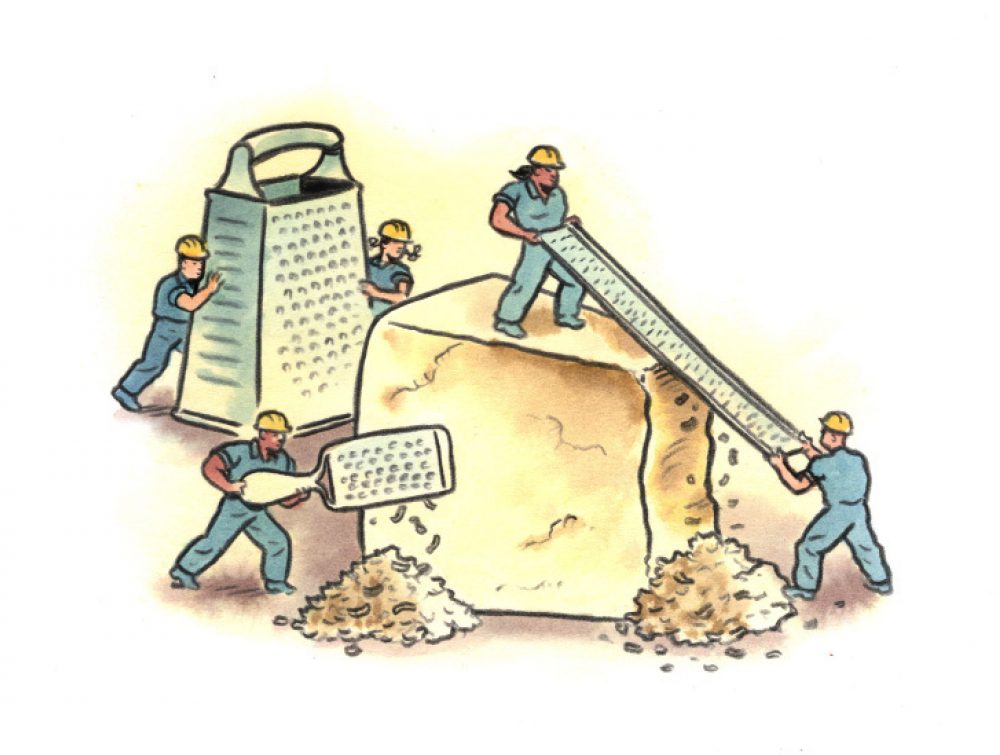
Measuring grated Parmesan cheese by volume can be a frustrating exercise. Listeners have noted that the same weight of cheese produces wildly different volumes depending on method of grating. So what’s the best bet?
The short answer is: It depends. Pick your tool based on how you plan to use the cheese. Wand-style graters, such as a Microplane, have sharp, laser-etched teeth that create delicate, airy shreds that melt almost instantly. Used to grate 1 ounce of cheese, the wand grater produced 1 cup of feathery, fluffy shreds ideal for emulsifying sauces, as in cacio e pepe, or for adding a delicate finish to risotto. A rotary grater, such as a Zyliss, uses a hand crank to produce evenly sized, dense shreds. It created ½ cup of pebble-like pieces that stayed distinct, providing bursts of cheesy flavor for pizza or baked dishes. The food processor, fitted with a fine grating disk, produced the same volume and texture as the rotary grater, but because of its size is best for bulk tasks. Finally, the zesting side of a box grater created just ⅓ cup of dense, fine granules best suited for sauces, dressings and toppings for gratins.
How the Cookie Crumbles—and Why
Are you team soft and chewy or crisp and crunchy? Plenty of folks in the latter group have asked us for easy tips to make any chocolate chip cookie recipe bake up with a bit more texture.
Creating a crispier, crunchier cookie all comes down to moisture control. To find the best way to adjust this, we baked classic Nestlé Toll House chocolate chip cookies—a balanced, chewy cookie—making small adjustments with each batch. We tried substituting white sugar for brown, the latter containing more moisture thanks to the molasses. This produced slightly crispier cookies, but the difference was minimal. Next, we focused on the fat, replacing butter (which can be up to 16 percent water) with shortening (which has no water). This did create a crumblier, crunchier cookie, but it had an unpleasant shortbread-like texture and the flavor suffered. Next, we prepared the recipe as written, but tried resting the dough for various periods (from four to 24 hours) to allow the dough to hydrate more evenly. This had little effect. Our final test tinkered with cooking time and temperature, not ingredients. The original recipe calls for baking the cookies at 375°F for 11 minutes. Instead, we baked them at 325°F for 22 minutes. The result was a uniformly crunchy cookie with a delicate snap and even texture. So if you’re looking to add crunch to your cookies, leave the ingredients alone and bake them low and slow.
Eggplant: To Brine or Not?
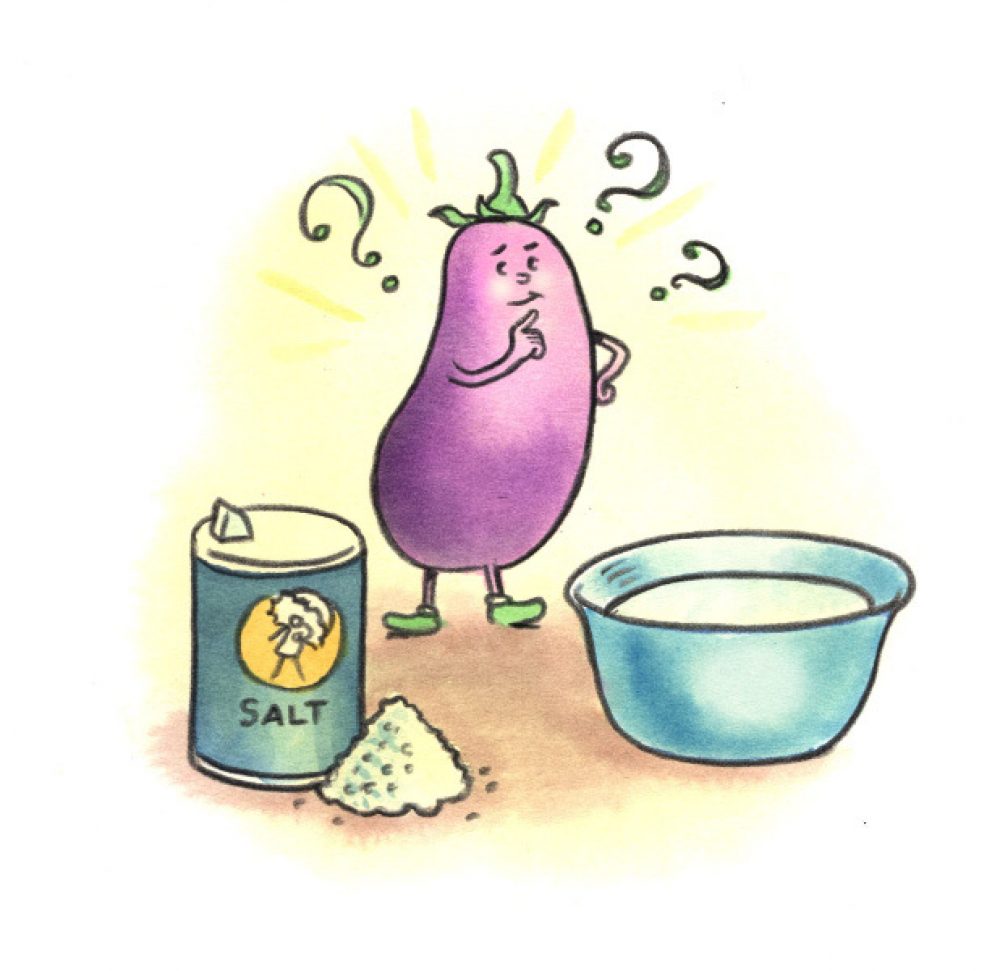
Conventional wisdom calls for salting eggplant to remove excess water and firm its texture. But some recipes instead call for brining, which strikes some listeners as counterintuitive. We wondered which was best.
To test the best way to prep eggplant, we cut it into 1-inch cubes, then salted some, brined others and left a control group as is. When sautéed or roasted, the unsalted eggplant cooked unevenly, with tough skins and bitterness. The salted eggplant had better texture but tasted overly salty. Brined eggplant, however, browned evenly, with tender skin, creamy flesh and superior flavor. Why does brining work so well? Through osmosis, the salt solution penetrates eggplant’s spongy structure, distributing salt and water evenly to ensure a creamy texture, tender skin and uniform seasoning. It’s ideal for dishes like ratatouille, caponata and baba ghanoush. It also works well for grilling, ensuring a creamy interior and an exterior that browns without drying. Because of the higher water content, brining does increase cooking time. The exception to these results was frying, as for eggplant Parmesan. In those cases, we found salting, which produces sturdier, meatier pieces, was better. So ultimately, whether you brine or salt depends on the dish. To brine, we submerged the eggplant in enough water to cover the eggplant, adding 1 tablespoon kosher salt and letting it stand for 30 minutes. To salt, we used 1 teaspoon kosher salt per pound of eggplant, rubbing it into the flesh and letting it stand for 15 minutes.