


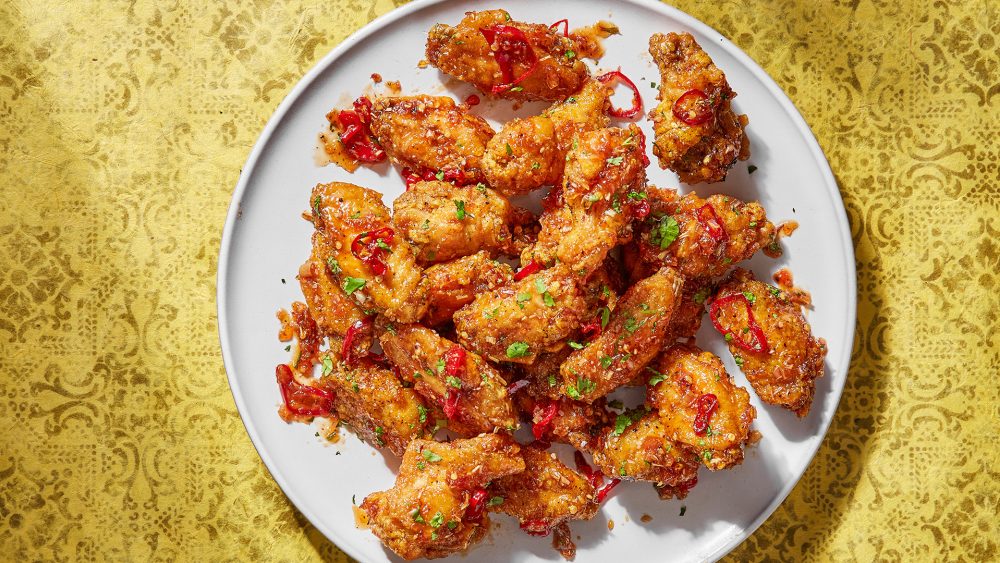
How starch keeps chicken wings from getting soggy
Starch does two things that helps the breading on a chicken wing retain its crunch. First, it absorbs moisture on the surface of the meat, trapping it in its granules. When the moistened starch hits hot, sizzling oil, it gelatinizes, forming a gel-like network that hardens into a porous, brittle structure when cooled. This keeps the chicken moist and tender inside while the exterior stays crunchy.
Which starch is best for crispy chicken wings?
On a trip to Paris, Chris Kimball was surprised to find a chicken wing that was so good, it put visions of baguettes out of his head, at least for a time. Chef Stéphane Ung’s Vietnamese chicken wings were “a big step up from the classic American version,” he wrote. “The first step,” he continued, “after trimming the wings...is to coat them in potato starch and fry them. Step two is to stir-fry them in a small wok along with fish sauce, Thai chilies, sugar, lemon grass, turmeric and shallots. Finally, they’re sprinkled with cilantro to serve. It’s bold; it’s bright; it’s a fresh makeover for classic chicken wings”
Starch is starch, right? Not quite. And while we’re big fans of corn starch here at Milk Street—we use it to oven-fry all sorts of things, from cauliflower to (you guessed it) chicken wings, we decided to give Chef Ung’s potato starch trick a try.
It worked beautifully, even better than cornstarch.
Turns out, potato starch ensures your wings stay crispier longer. This boils down to granule size. Potato starch granules are larger than cornstarch granules. Larger granules gel less readily, giving the moisture on the surface of the meat a little more time to evaporate. Less moisture in the final product means it is less likely to turn soggy, so the coating gets crunchy and stays crunchy.
Additionally, potato starch has a higher percentage of amylopectin than cornstarch. The long, branchy, tangly chain of a molecule is unlikely to rearrange into an ordered structure as it cools—a process known as retrogradation, which causes starch to lose its crunch over time—so its crispiness lasts longer.
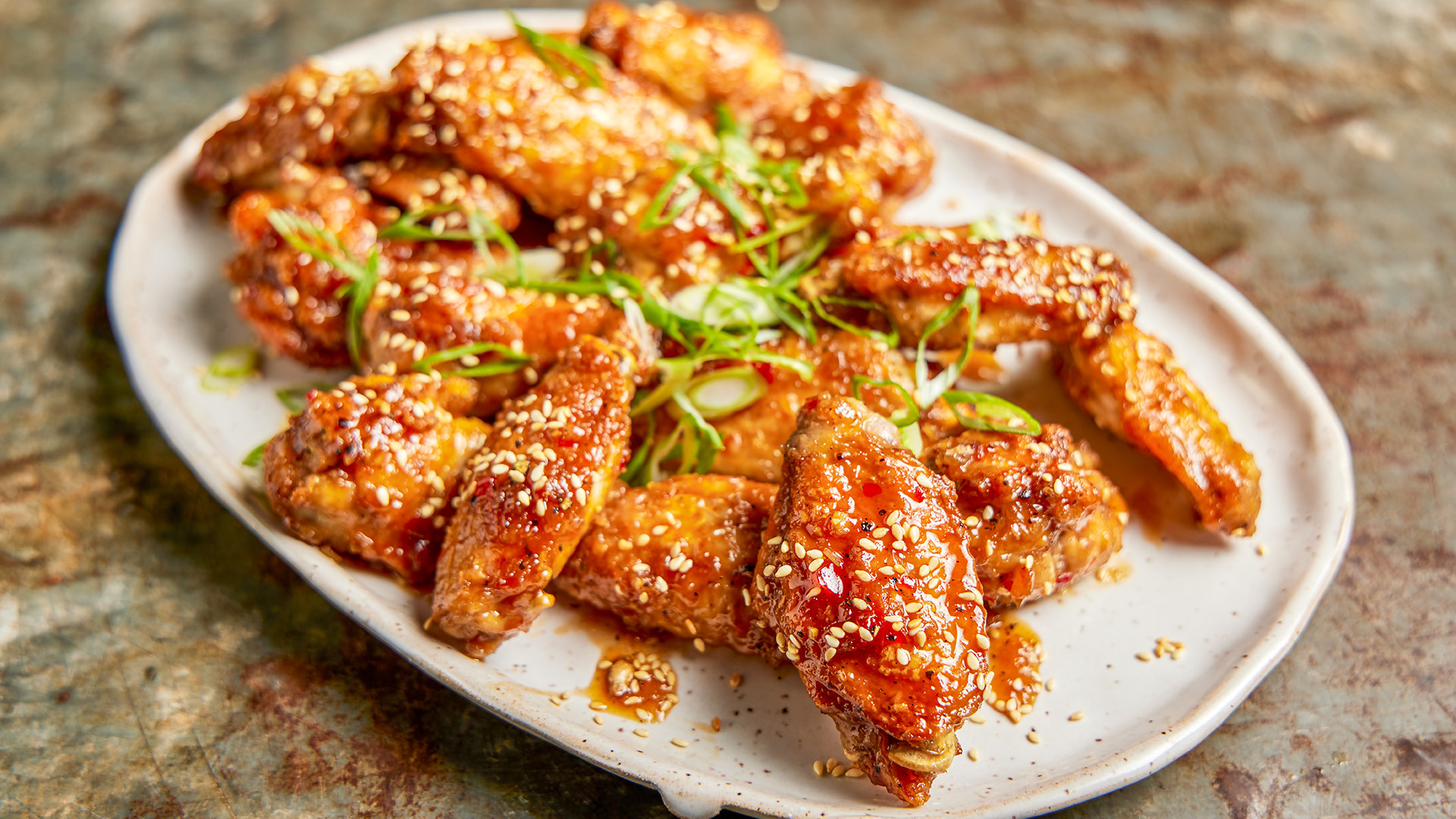
Once you’ve achieved a crispy, craggy exterior, you’re free to sauce with abandon, whether you favor a basic Buffalo, or something a little more dimension, like salty-sweet Garlic-Lemon Grass, Sweet Chili or fiery Harissa.
Join the conversation on Facebook, Instagram, TikTok and Pinterest.
And if you're looking for more Milk Street, check out our livestream cooking classes with our favorite chefs, home cooks and friends for global recipes, cooking methods and more.






