


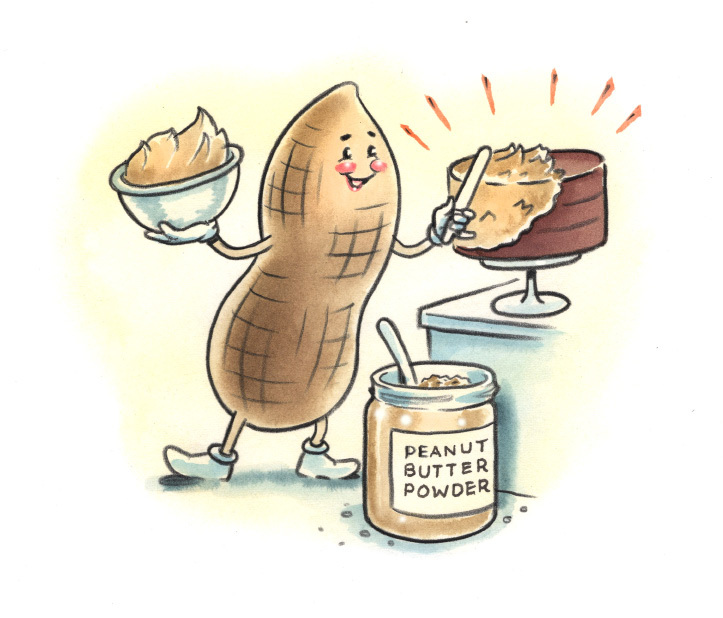
A Nutty Idea for Frosting
Peanut butter frosting is delicious, but callers have complained that it can be overly fatty. We wondered whether powdered peanut butter might be a better solution.
Both buttercream and peanut butter are loaded with fat, so combining them can create a frosting that tastes overly greasy. Powdered peanut butter offered an intriguing possibility. Widely available alongside regular peanut butter, it is made by pressing roasted peanuts to remove most of the oil, then pulverizing the solids, a process that dramatically reduces the fat content while retaining the peanut flavor. It often is used as a lower-fat alternative to traditional peanut butter in smoothies, baked goods and sauces. We wondered how it would perform in a frosting. To test, we made batches of peanut butter buttercream frosting using standard Skippy peanut butter and PBfit powdered peanut butter. To one batch, we added ¼ cup of Skippy; to the other, we used the equivalent amount of PBfit powder. The powder dissolved easily into the frosting, though we did need to beat it a bit longer to achieve the same smoothness. Both versions offered pleasantly strong peanut flavor. The powdered version, however, produced a slightly lighter, less greasy frosting. And though it lacked the expected creaminess of buttercream made with traditional peanut butter, it was equally delicious, and we’d gladly use it as a substitute. To use it in frosting, add 1 tablespoon peanut butter powder per 1 cup frosting, then beat with a stand or hand mixer until light and fluffy. For best results, you may need to add just a bit of cream (or other liquid) to adjust the frosting’s consistency.
Better Than Buttermilk?
In the past, we’ve found that kefir (a fermented dairy drink) can be a good stand-in for buttermilk in some baked goods. But listeners wondered whether it also can be substituted more broadly for buttermilk.
Both kefir and buttermilk are cultured dairy products. Buttermilk traditionally was the acidic liquid left behind from churning cream to make butter. Today, most is made by fermenting low-fat milk with lactic acid bacteria. Kefir is made in a similar way, but uses a more complex fermentation process involving a broader range of bacteria and yeasts, which results in a sharper, more pronounced tanginess, as well as a thicker and creamier consistency. We’ve previously found that kefir worked well as a substitute in baked goods, though they sometimes were slightly denser than buttermilk versions. To see how kefir worked elsewhere, we tested two highly buttermilk-dependent recipes: buttermilk fried chicken and custardy buttermilk pie. In both cases, the stronger flavor of the kefir stood out. The fried chicken made with kefir had a gamier, tangier taste compared to the cleaner, more balanced flavor when buttermilk was used. Similarly, the kefir-based pie had a pronounced sourness, while the buttermilk version was preferred for its sweeter, milder flavor. Overall, we found that kefir is a fine buttermilk substitute in baked goods where its flavor is mostly in the background. But when it has a more prominent role, stick with the real deal.
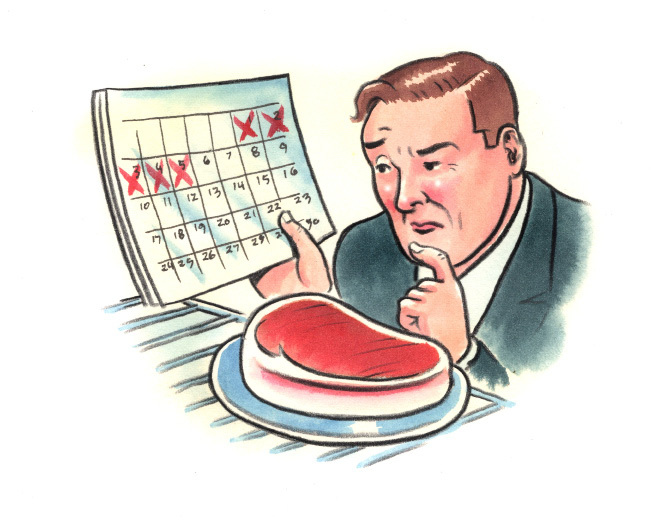
How to Keep Your Steaks Prime
Most of us grocery-shop a week at a time, meaning fresh items such as meat might not be used for several days after purchase. Our listeners wondered about the best way to store steaks and keep them fresh until cooked.
Controlling oxygen and moisture exposure is key to preserving the freshness of meats. To determine the best way to do this, we stored raw strip steaks for three days in a variety of ways in both the refrigerator and the freezer. In the refrigerator, we stored them in their original packaging (plastic-wrapped in the foam tray); vacuum-sealed; tightly wrapped in butcher paper; and unwrapped on a rack in the open air (a popular loose approximation of dry-aging). In the freezer, we tried them vacuum-sealed; wrapped tightly in plastic wrap; and in their original packaging. In both the refrigerator and freezer, leaving the steaks in the original foam tray packaging performed worst, with pronounced off flavors when cooked. Refrigerated steaks wrapped in butcher paper or stored open-air also performed badly, the latter drying out too much and developing an unappealing texture. Vacuum-sealed refrigerated steaks held up quite well, but this only works if you either buy them packaged this way or own a vacuum sealer. Because of this, our favorite method was to remove the steaks from their original packaging, wrap them tightly in plastic, then freeze. These steaks retained the rosiest, freshest hue and cooked up beautifully. To cook, thaw the steaks overnight in the refrigerator and—as with any steak—let stand at room temperature for at least 30 minutes before cooking.






