


Getting to Grips with Garlic
With so many alternatives to fresh garlic available, our listeners asked whether they ever are a good substitute. And if so, how is each best used?
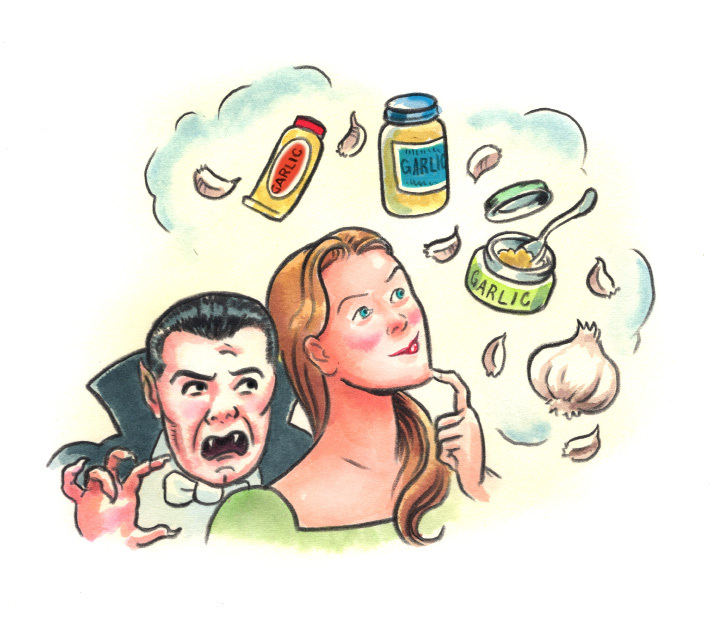
While we generally prefer fresh garlic, there are times when alternatives such as granulated or jarred pastes are preferable, and not just for convenience. Each offers a different flavor profile and can be used in ways other forms of garlic can’t. Granulated garlic, made from coarsely ground dehydrated garlic cloves, has a mild, toasted flavor. It is ideal for seasoning rubs and dry spice blends where even dispersal is key. Similarly, garlic powder, with its fine texture and sweeter, toasted notes, works well in high-heat applications where fresh garlic might scorch, such as seasoning vegetables for roasting. Freeze-dried garlic chunks taste closer to fresh than most of the others because the drying process preserves more of garlic’s intense flavor. It rehydrates quickly in dishes with plenty of liquid, so use it in soups, stews, marinades and dips. Garlic paste and jarred minced garlic—which combine garlic with oil, salt and/or preservatives—lack the punchy flavor of fresh, but they can easily be stirred into stir-fries and marinades. That said, many brands have off or metallic flavors.
Loaf Logic
Professional bakers know that taking the internal temperature of a loaf of bread is the best way to determine doneness. Our listeners wanted guidance on how to get it right.
While nicely browned crusts and heady aromas are good clues for fully baked loaves, a bread’s “doneness” is better determined by its internal temperature, which varies slightly depending on the type of bread. For lean breads (which typically contain only flour, water, yeast and salt) such as French baguettes, ciabatta, sourdough and other rustic loaves, doneness ranges from 190°F to 210°F. For enriched breads (which include additional ingredients such as butter, eggs, milk and sugar), the range is slightly lower, from 180°F to 195°F. These signify the temperatures at which a bread’s gluten structure is set and the moisture levels are balanced. As the dough heats up during baking, the gluten proteins reconfigure, essential for setting the structure of the bread. This intensifies at 160°F and continues up to around 180°F. In addition, starches in the flour absorb water and gelatinize, further stabilizing the loaf. But why is there a slight doneness difference between lean breads and enriched breads? This is more about desired finished texture than actual doneness. Enriched breads are meant to have a softer crumb and crust; lean breads, meanwhile, tend to be less moist, so the higher temperature evaporates additional water to create their chewy crumb and crisp, crackly crust. In our experience, most lean breads are best at 205°F, while most enriched breads are best at 195°F.
Chill and Grill?
Social media is awash in recipes for cooking steaks straight from the freezer. Our listeners wondered whether it really works and whether it’s any easier than just thawing the steak first.
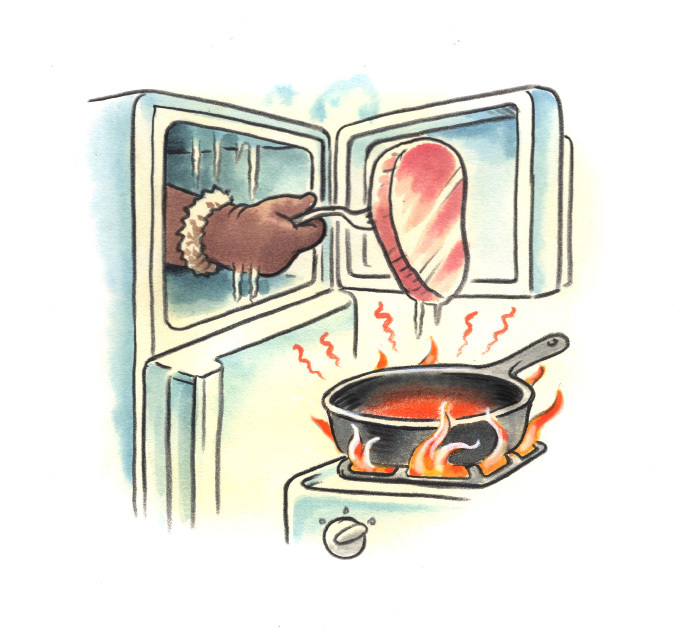
To see how well this works, we cooked frozen 1-inch strip and/or ribeye steaks (this method is not recommended for thicker steaks) multiple ways: baked at 450°F to an internal temperature of 110°F, then seared to finish at 120°F; baked at 250°F, then seared to finish; as well as two in the reverse order, seared first, then finished in the oven at 450°F and 250°F, respectively. For comparison, we also cooked two additional steaks, one fresh and one frozen, but thawed first under running water. Right away, we found it difficult to season frozen steaks; salt either bounced off or simply stuck to the exterior and never penetrated the meat. Unsurprisingly, fresh steaks consistently outperformed frozen. Among the frozen steaks, those baked in a 450°F oven—both before and after searing—fared worst. The meat was gray at the edges and had inconsistent doneness. These steaks also took 50 minutes to cook, compared to 20 minutes for fresh. The sear-then-bake method at 250°F performed better, with a surprisingly rosy interior. However, the initial sear did not produce much browning, and it took about 1 hour from start to finish. Better still was baking-then-searing at 250°F—the frozen steak was tender with a pleasant crust after searing, though it grayed once sliced. But this also was the most time-consuming approach, requiring 1¼ hours. In all of the frozen steaks, we also found that the fat stayed chunky and solid, never turning melty and tender. Meanwhile, the steaks thawed under running water produced perfect medium-rare results. Factoring in a 35-minute thaw, this method took just under an hour. Ultimately, if you forget to thaw your steaks overnight in the refrigerator, we suggest thawing them under running water, then cooking them “fresh”; it takes the same time or less as cooking them frozen and delivers far better results.






