


Whether it’s fettuccine in Rome, pesto-drenched spaghetti in Lima or—in this case—savory-sweet rice noodles studded with chunks of chicken in Bangkok, we’ve learned the same lesson around the world: With noodles, less water often means more flavor.
That’s because cooks everywhere have taught us that the thirsty nature of noodles is a chance to use sauce—whether a basic tomato puree or a mix of tamari and Sriracha—to not just render them tender, but also infuse them with deeper flavor.
It works like this: Slightly undercooking—which amounts to underhydrating—noodles in water leaves them primed to absorb the moisture of whatever sauce they are paired with. And with that sauce comes flavor.
It’s a trick chef Piched Kaewhem put to good use when he taught me his take on kuay tiew kua gai, or stir-fried noodles and chicken, at his home on the outskirts of Bangkok.
He built his version of this classic street food in a wok, starting with slightly underhydrated thick rice noodles. After they charred just long enough to develop deep, smoky flavor, he doused them with oyster sauce, soy sauce, a bit of sugar and a splash of chicken broth. Quickly, all that liquid disappeared, sopped up into the noodles and taking all that umami-rich flavor with it.
It’s easy to see why the dish—tossed with sprouts, carrots, tender bits of chicken and scrambled egg—is a popular late-night snack. Comforting and over-the-top good, much of that due to the deeply flavored noodles.
An almost effortless trick for more flavorful noodles
Bangkok’s Chicken Noodles Offer Smoke and Char
By
J.M. Hirsch
From
July - August 2024
Get the Recipe
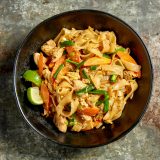
Thai Stir-Fried Noodles with Chicken (Kuay Tiew Kua Gai)
Sauced in the wok, the rice noodles become flavorful and fully tender.
Photos: Christopher Warde-Jones
Related Recipes
Shop the Milk Street Store






