


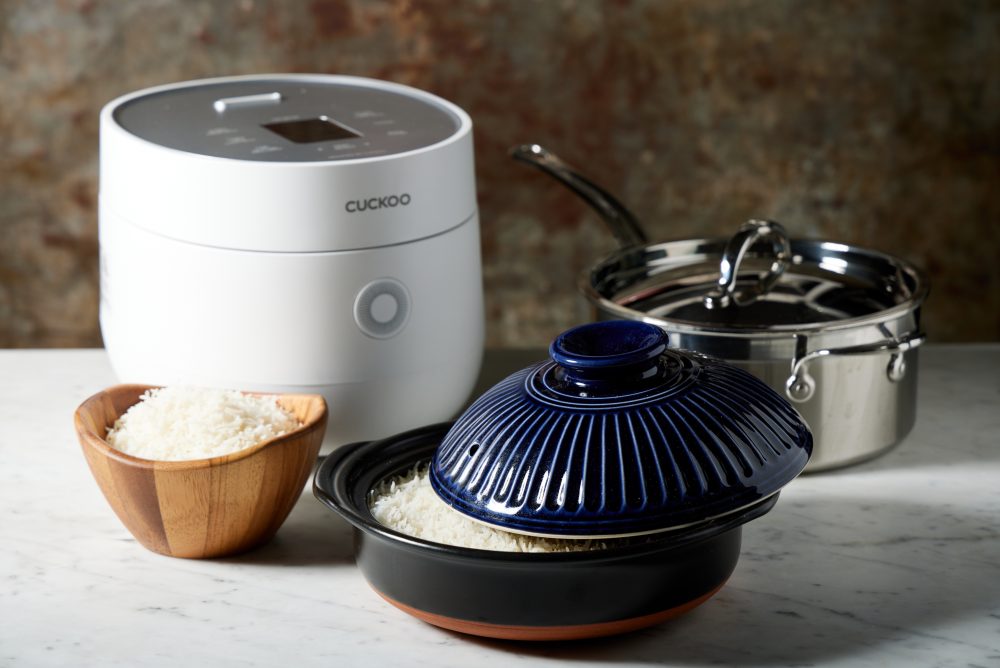
Basmati rice benefits from even moisture distribution and a gentle cooking method that does not agitate the rice too much as it cooks. Without those factors in place, your rice is likely to come out broken or unevenly cooked. We tested four popular rice cooking vessels to find our favorite: a stainless steel sauce pan, a glass bowl in the microwave, a dedicated MICOM rice cooker, and a Japanese donabe.
All rice was thoroughly washed and drained, an important, un-skippable step, no matter which cooking method you use. Rinsing the rice not only removes dust and debris, it gets rid of excess starch, which can cause the rice to clump together instead of cooking up into fluffy, individual grains. Each batch of rice was prepared according to the directions for the respective piece of equipment. Here’s how they stacked up.
The microwave is too finicky
There are several methods for cooking rice in the microwave, the appeal of which is obvious. Most people already have a microwave—and a bowl—so there’s no need to buy an extra piece of equipment. However, the method was a little too finicky for our liking.
Microwaves vary in wattage, so you have to spend a lot of time figuring out what works for you—and our results were wildly inconsistent. In most cases, the rice ended up raw on top and overcooked on the bottom, with unappealing puddles of water in the bowl. Other times it came out cooked but shriveled and lifeless. It was never fluffy.
A stainless steel pot on the stove was the biggest letdown
This one surprised us. It turns out stainless steel doesn’t retain heat all that well, which led to a big discrepancy between the top and bottom layers of rice. Cooking the top layer of rice to fluffy perfection rendered the rice closer to the bottom of the pan overdone and mushy; focusing on the bottom layer left the top portion underdone—a huge drawback if you cook rice in large batches. As much as we wanted the classic stovetop method to do well, it just didn’t offer consistent, delicious results.
An electric rice cooker scored high marks across the board
This wasn’t all that surprising, but a dedicated MICOM rice cooker like a Cuckoo removed all of the guesswork with stamped-on water level lines and automated soaking and resting settings. Rice cookers like this use “fuzzy logic” to adjust the temperature as the rice cooks, so you don’t have to worry about monitoring anything (except the timer). It consistently produced ultra-long grains of basmati rice that were intact, evenly cooked and fluffy.
This stovetop-safe donabe produced the prettiest, fluffiest grains
A donabe is a traditional Japanese clay pot, usually used for open-flame cooking, though the glazed model we used is also safe for electric stoves. Clay is much better at retaining heat than stainless steel, and this is what gave the donabe an edge. The entire vessel heated evenly and retained that heat well, resulting in perfectly cooked rice—no matter where it was in the pot.
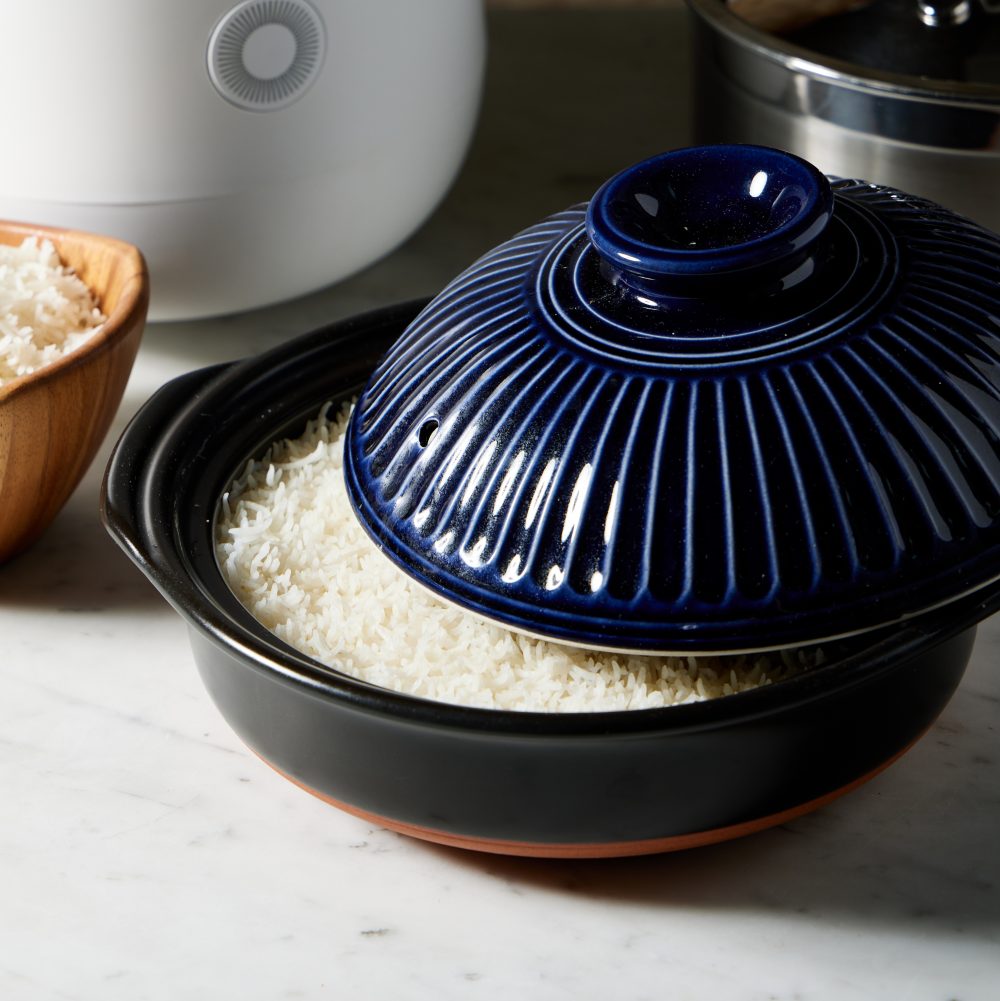
To the donabe: Add 2 1/4 cups water and 1/2 tsp salt for every 1 1/2 cups of cleaned and drained rice. Watch it closely as it heats on the stove over medium to medium-high heat. (Start with medium if you’re using an electric burner.) Once you see a good head of steam coming out of the vent, set a timer for two minutes, then remove from the heat and let rest for an additional 20 minutes. Fluff with a fork and enjoy the simple pleasure of perfectly cooked rice.
And if you're looking for more Milk Street, check out our livestream cooking classes with our favorite chefs, home cooks and friends for global recipes, cooking methods and more.






